
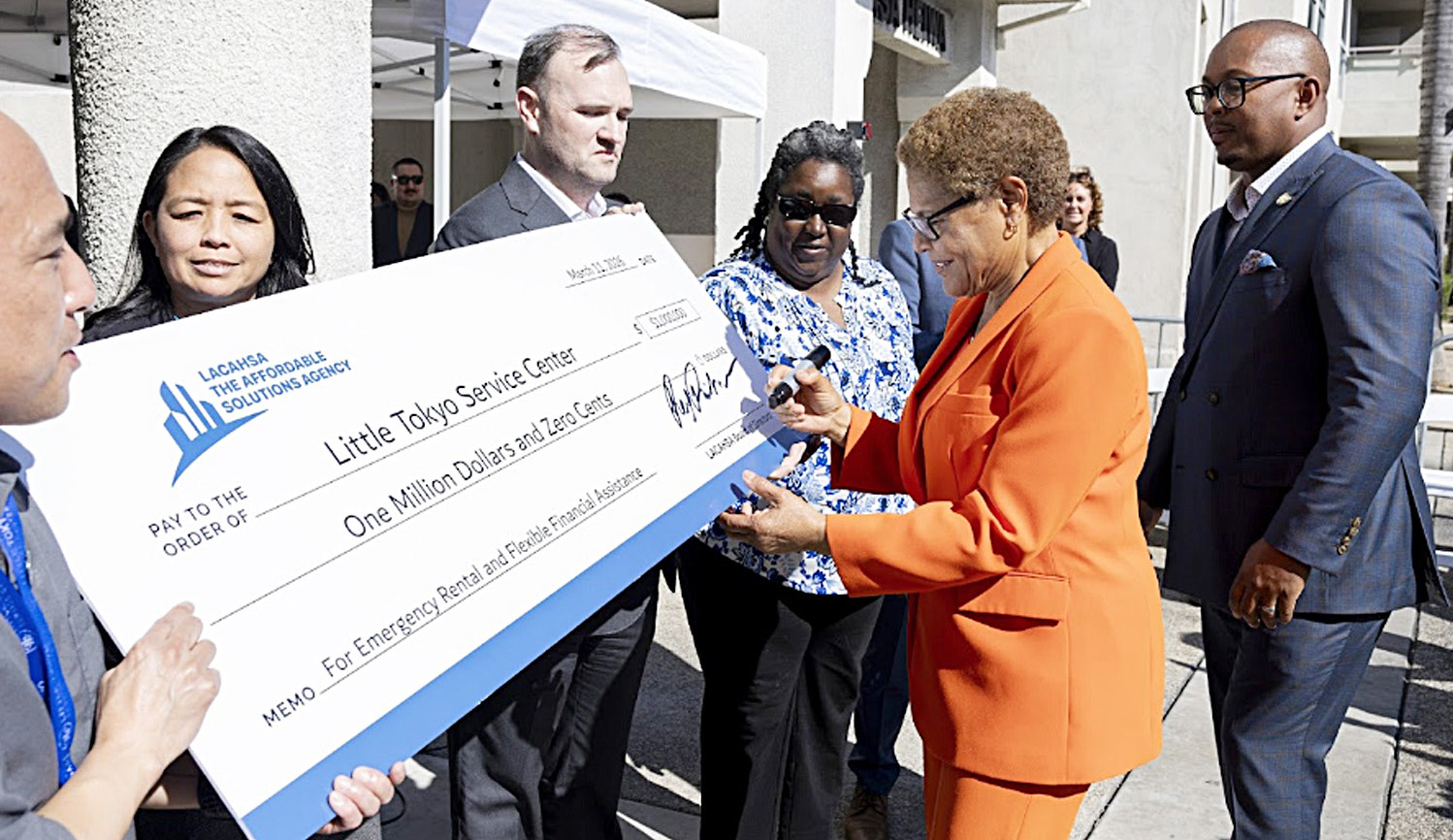
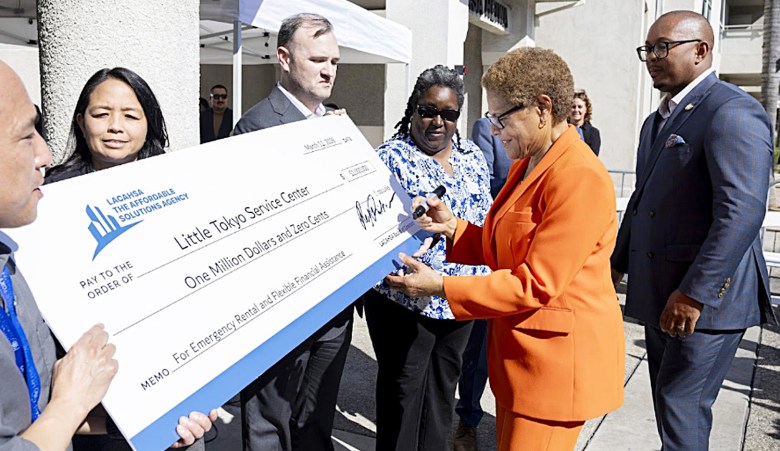
 From left: Peter Gee, co-executive director, Little Tokyo Service Center; Aqui Soriano, executive director, Pilipino Workers Center of Southern California; Ryan Johnson, interim CEO, Los Angeles County Affordable Housing Solutions Agency; Zerita Jones, interim citizens oversight chair of ULA, LACAHSA board member; Karen Bass, mayor of Los Angeles; Rex Richardson, mayor of Long Beach and LACAHSA board chair.
Los Angeles Mayor Karen Bass on Jan. 11 joined fellow members of the Los Angeles County Affordable Housing Solutions Agency to announce a $1 million grant to the Little Tokyo Service Center to support housing stability for vulnerable Asian American, Native Hawaiian, and Pacific Islander (AANHPI) households.
The funding is part of the first round of grants from the LACAHSA Renter Protection and Homelessness Prevention (RPHP) Program, designed to help Angelenos at risk of losing their homes. The program is funded by Measure A, the countywide ballot measure Bass helped lead as part of her comprehensive approach to protecting renters and preventing homelessness.
Bass was joined at LTSC by Rex Richardson, mayor of Long Beach and chair of LACAHSA; Ryan Johnson, CEO of LACAHSA; Victor Sanchez, Bellflower city councilmember and LACAHSA second vice chair; and representatives from LTSC and the AANHPI Collaborative, which will administer the grant locally.
“Preventing people from falling into homelessness in the first place is a cornerstone of our strategy to end homelessness across Los Angeles,” said Bass. “After so many years of increases, our work has finally reversed the trend and brought homelessness down in our city. With culturally competent emergency rental assistance and flexible financial support like this, we can help families stay together and in their homes.
“AANHPI communities can sometimes face additional challenges, such as language barriers, that make accessing support more difficult. This partnership with the Little Tokyo Service Center empowers communities and addresses urgent housing needs.”
“Homelessness is a regional challenge that requires a regional solution,” said Richardson. “This $1 million investment through LACAHSA’s Renter Protection and Homelessness Prevention Program shows what collaboration can achieve. By partnering with organizations like Little Tokyo Service Center and Long Beach-based United Cambodian Community, we’re delivering rental assistance, legal support, and stabilization services that help families stay housed and prevent homelessness before it starts.”
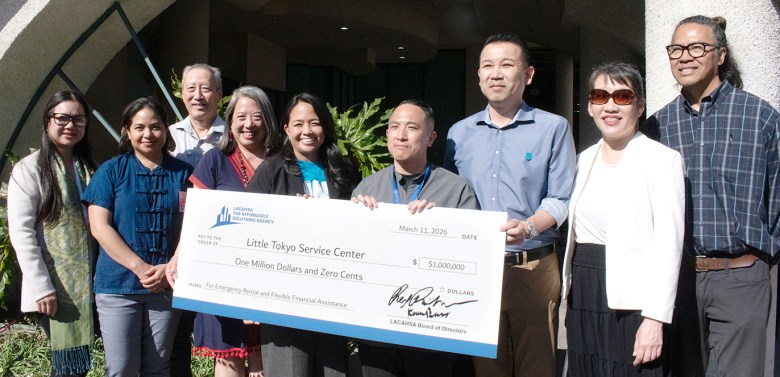 From left: Susana Sngiem, executive director, United Cambodian Community; Panida Rzonca, directing attorney, Thai Community Development Center; Erich Nakano, director of special projects, Little Tokyo Service Center; Chanchanit Martorell, executive director, Thai Community Development Center; Aqui Soriano, executive director, Pilipino Workers Center of Southern California; Peter Gee, and Takao Suzuki, co-executive directors, Little Tokyo Service Center; Sissy Trinh, executive director, Southeast Asian Community Alliance; Sayon Syprasoeuth, program director, United Cambodian Community.
“Little Tokyo Service Center is grateful for this one-time investment from LACAHSA to help residents at risk of losing their housing remain in their homes and avoid homelessness,” said Peter Gee, co-executive director of LTSC. “We are proud to be part of a collaboration of 11 community-based organizations rooted in Asian American, Native Hawaiian, and Pacific Islander communities across Los Angeles County.
“Organizations in this collaborative serve as trusted messengers – with the cultural and language capacity to connect community members to resources they might otherwise struggle to access. We also look forward to continuing to partner with LACAHSA and public leaders to address the systemic barriers that leave many residents struggling to achieve housing stability.”
The grant funding includes short-term, flexible financial support to households experiencing sudden crises, including job loss, medical emergencies, delayed public benefits, or unexpected essential expenses. LTSC will administer the funding in partnership with the AANHPI Collaborative, providing culturally and linguistically competent services to low-income AANHPI renter households.
Support will reach seniors, limited-English-speaking households, families with young children, people with disabilities, and immigrants facing barriers to housing and public benefits.
According to Bass’ office, the mayor has leaned into long-standing challenges facing the city to make progress that had been lacking for years:
After years of rising homelessness in Los Angeles, Bass drove unprecedented reductions in homelessness, including a 17.5% reduction in street homelessness.
Bass signed into law the first update to L.A.’s Rent Stabilization Ordinance in 40 years to cap rent increases and strengthen protections for renters of more than 600,000 homes.
Los Angeles underbuilt housing for decades, a leading driver of housing costs. Bass’ Executive Directive 1 fast-tracks affordable housing and is already accelerating tens of thousands of units.
Bass signed into law an innovative initiative to convert underused commercial buildings into housing citywide, creating homes faster and at lower cost.
The “We Are L.A.” program supported by the Mayor’s Fund for Los Angeles has supported people in 88,000 households who were at risk of losing their homes.
Articles for you