
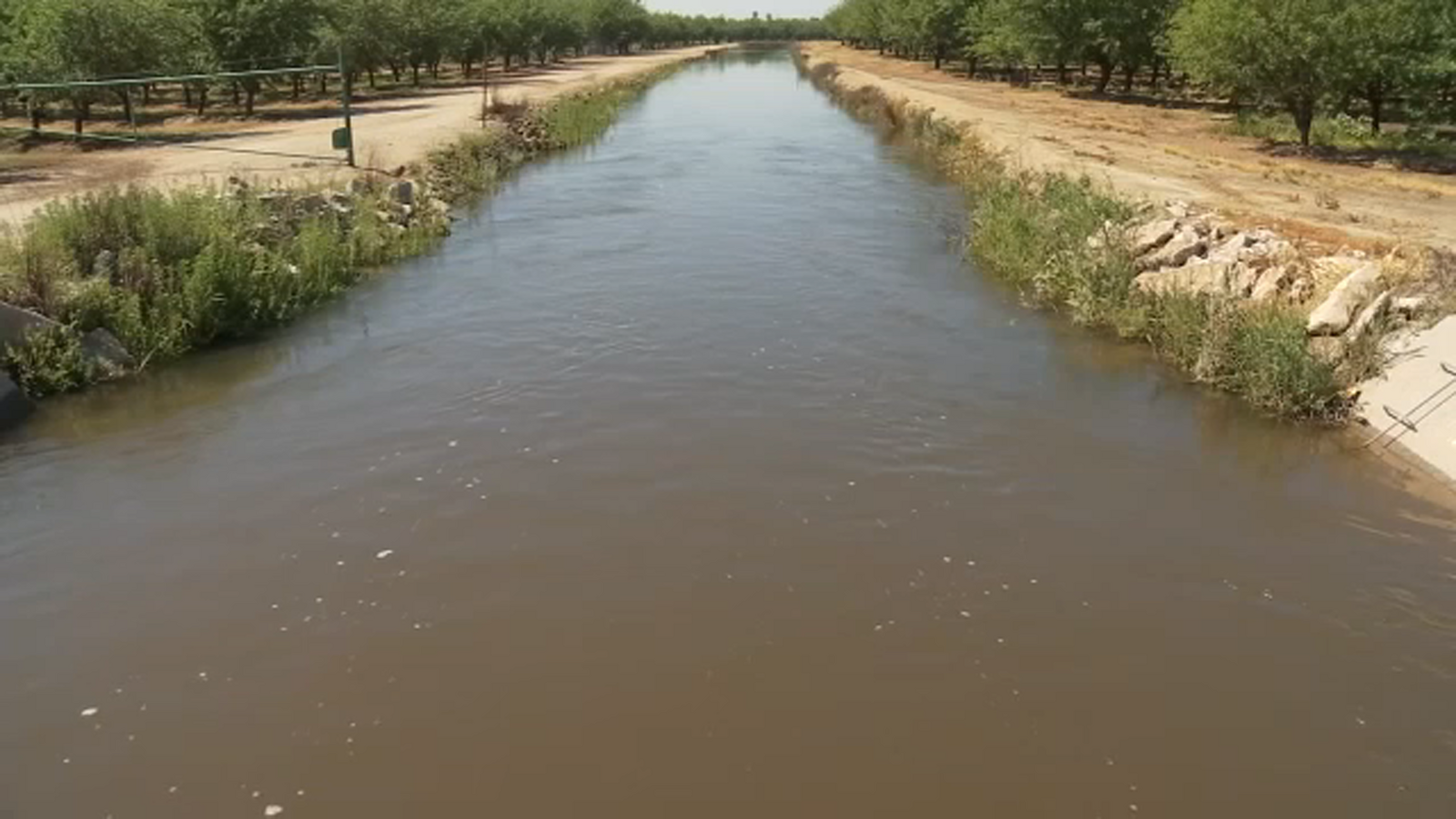
FRESNO, Calif. (KFSN) — Record-breaking temperatures this week are drawing more people outdoors while putting the region’s agricultural community on alert, prompting the Fresno Irrigation District to begin releasing water earlier than planned.
Police were not involved in this story; instead, officials with the Fresno Irrigation District said the unusually warm March conditions led the district’s board of directors to start scheduled water deliveries to agricultural customers on Monday, about two weeks earlier than anticipated.
Temperatures climbed above 90 degrees this week, creating summer-like conditions across the area. At local parks, residents took advantage of the warm weather, though some said it was harder to prepare for the heat.
“No one is ever ready, no. We are going to find a cool place, stay at the house. Bring out the pool,” one parkgoer said.
At Woodward Park, people were seen walking their dogs, playing with children and exercising earlier in the day to avoid the hottest temperatures. Fresno resident Alejandro Bonilla said shaded areas make it easier to stay active despite the heat.
“Regardless of the matter, there are some fresh areas like right here where we are right now. I think its important to still go out and have some fun even though there is a little bit of heat,” Bonilla said.
While residents adjust their routines, farmers are watching conditions closely as warmer temperatures raise concerns about water availability later in the year. Bill Stretch of the Fresno Irrigation District said the early heat influenced the decision to release water sooner to avoid losing supply.
“If we would have waited until April first, more than likely we would have lost water because our storage volumes is only so much in Pine Flat Reservoir,” Stretch said.
Some canals in Fresno are already filled as a result of the early release. Stretch said there is uncertainty about how long deliveries will last this year, noting that water could run out as early as July, though the goal is to extend supplies into August.
Stretch said the current conditions are part of a broader pattern of unusual weather.
“It’s the warmest winter in the past 130 years in the western united states, which we have felt here and recorded history looking at snowpack, rainfall, for the month of March were going to receive 0 and that has never happened in the past 102 years,” he said.
Stretch said the district expects to learn more about the water year ahead when snowpack levels are measured and reported again on April 1.
For news updates, follow Elisa Navarro on Facebook, X and Instagram.
Copyright © 2026 KFSN-TV. All Rights Reserved.