
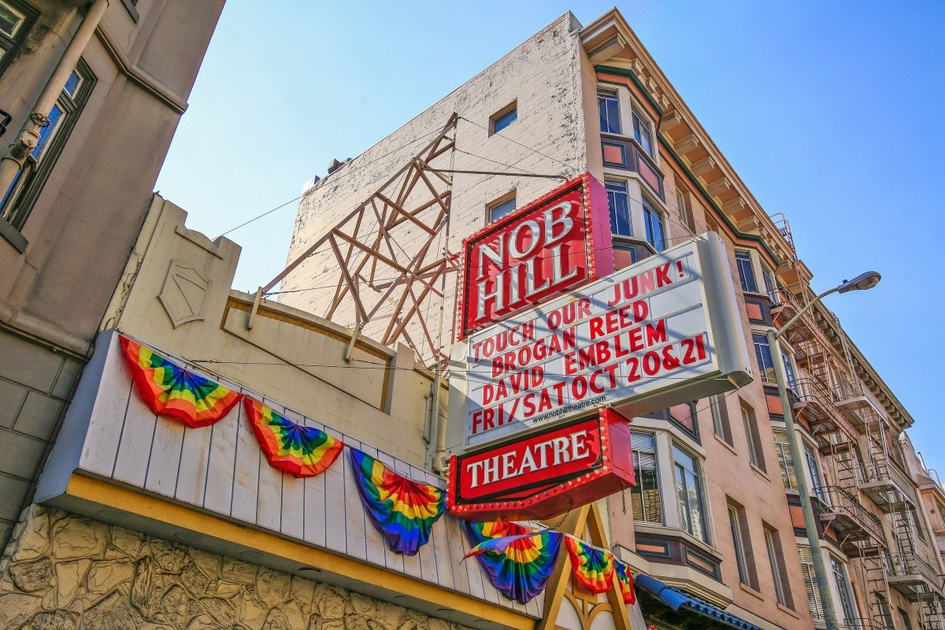
For decades, an enormous sign above the world-famous Nob Hill Theatre asked passersby to “Touch our junk!” But since San Francisco’s first — and last — all-male strip club had its final curtain call in 2018, no drawers have been dropped on its storied stage.
Now, after plans to redevelop 729 Bush St. into a medical-residential building have evaporated, the space may be reborn as an entertainment venue once again — if the right operator comes along. The one-story structure is up for sale at $2.8 million, though the owner is also open to a lease agreement, according to listing agents Steven “Stu” Gerry and Kevin Wong of Compass. Gerry estimates that the property would need a $250,000 renovation budget to reopen as a theater, smutty or otherwise. He hopes to have a new owner or renter by the summer.
“I would call it a theater in distress, but revivable,” Gerry said.
Most of the strip club’s vintage memorabilia was sold off or donated to the GLBT Historical Society’s archive, but the theater seats, projector room, and ground-floor stage are still there, as are several private pole-dancing rooms in the basement.
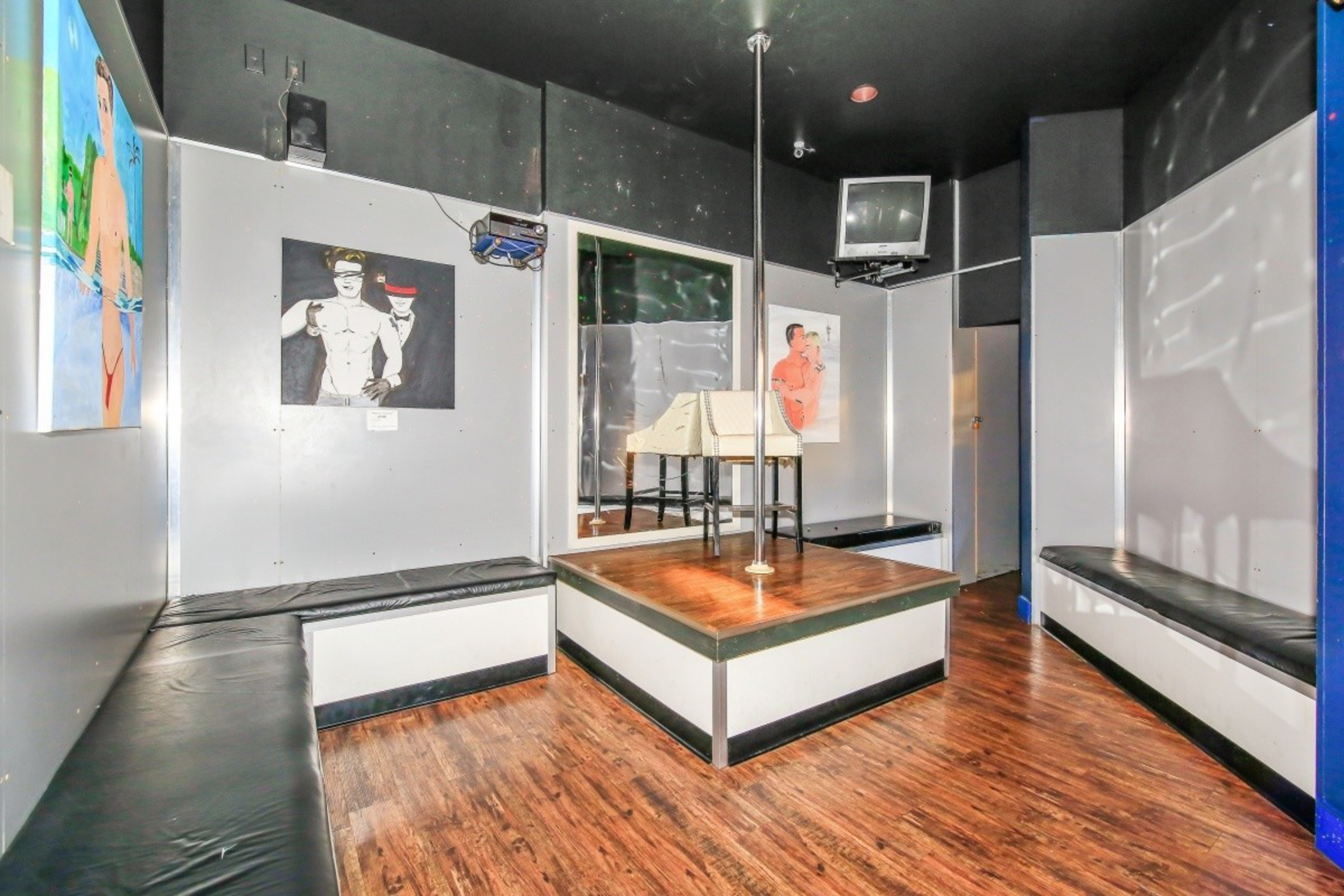 Some pole-dancing rooms remain. Courtesy of Steven Gerry
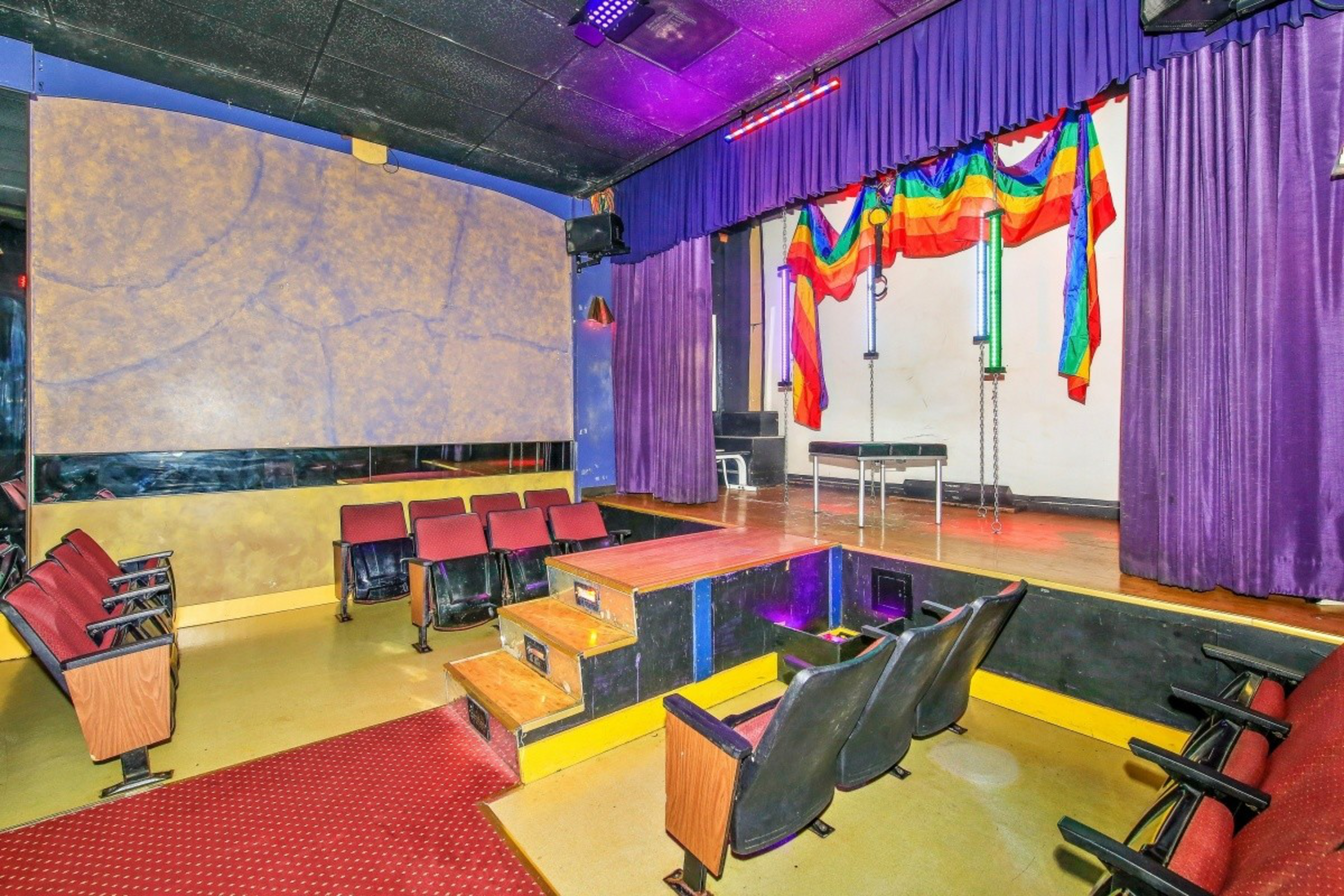 The stage and seats are also still in the building. Courtesy of Steven Gerry
The famous sign, which was stripped off the Fairmont and bolted to the theater in the 1980s, has been restored and will soon be reattached, though not with the racy slogan. The red-and-white display must remain to appease preservationists, along with the 115-year-old building’s faux stone facade, which was deemed historically significant to the queer community — though Gerry, as a gay man, finds that decision baffling.
“That’s horribly ugly design,” he said. “No gay would approve that.”
Gerry said there’s no doubt that the theater was a cultural touchstone. He was delighted to hear John Waters name-check his listing this week during a Q&A after a screening of “Serial Mom” at The Castro Theatre.
“He described two places in his mind that were important to him: The Castro Theatre and a parking space across from the Nob Hill Theatre, where he slept nights in his car when he first got into town,” Gerry said of the filmmaker.
Thus far, the agents have heard from parties interested in using the space for a traditional theater, nightclub, comedy club, or restaurant. But no strip-club operators have approached them — yet — nor have any developers or doctors looking to revive plans of creating a surgical center with condos above.
The property owner, an orthopedic surgeon who has an office around the corner, gave up on the conversion project after seven years due to the increasing cost of construction, pressure from the city to build higher and denser than he had intended, and the complexity of building out his dream surgical suites while abiding by strict preservation standards.
“Our client was not a big-time developer. He didn’t have those kinds of resources,” Wong said. “It’s just another example of how the city just completely kills projects. You could have had at least four to five housing units, but now you have zero, because it’s just untenable.”
Dan Sider, chief of staff for the Planning Department, said that while the city encourages developers to maximize opportunities to create housing, the idea that the push to do so somehow slowed down the approval process “is nonsense.” He added that the city quickly approved a revised project for the site that didn’t include housing in 2024, and that under new housing development rules, a project like the one the owner originally put forth could be approved in four months.
As for the historic protection of the sign and “stone” facade?
“There’s absolutely room for debate about whether PermaStone is patently ugly or ’60s chic, or whether a historic sign is useless metal or vintage architecture, but it’s tough to argue that preserving either would meaningfully impede a successful development project,” Sider said.
Before its 50 years as a strip club and adult film venue, the Nob Hill Theatre building was a grocery store and, in the 1940s, a jazz club called Melody Lane, where baseball legend Joe DiMaggio held court, according to Gerry. Later, it became Club Hangover, a New Orleans-style Dixieland nightclub that hosted Louis Armstrong several times in the 1950s. The owner who turned it into a strip club in the late 1960s did so only after his original plan to create a theater that screened international films failed to draw a crowd.
“No one came. Nobody,” Gerry said. “He decided, ‘Well, I’m going to pivot. I want to make a porn theater where the actual actors in the film will also be onstage live, performing in front of their films.’ And that was the draw.”
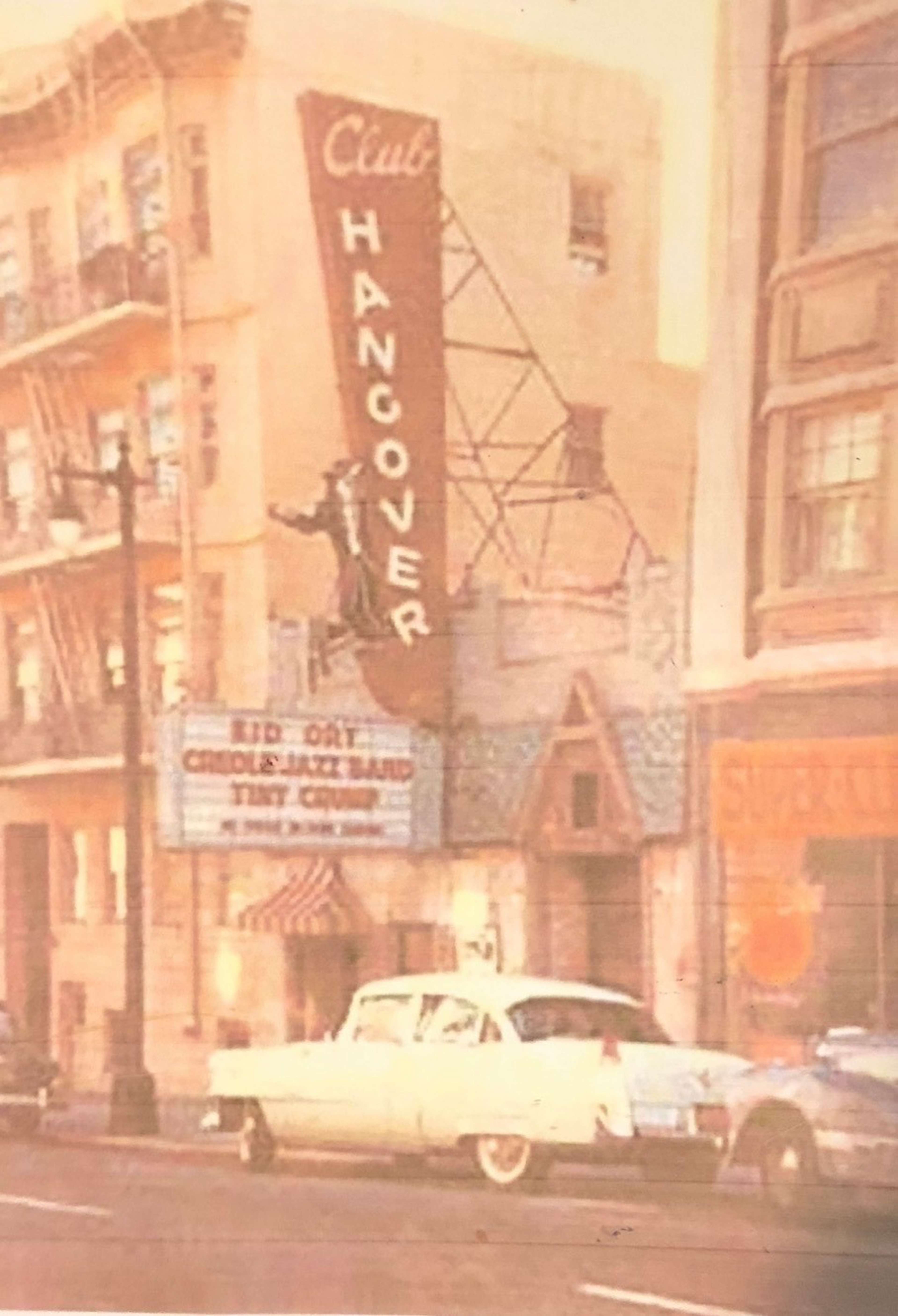 Before its days as a strip joint, the venue was a jazz nightclub. Courtesy of Steven Gerry
The venue’s history has been part of the draw to those interested in making it rain there once again, including some in the LGBT community. But others are just drawn to the Nob Hill location and 5,500 square feet of space, with not a clue that the theater was internationally known for X-rated antics for half a century.
“San Francisco is so transient,” Wong said. “I’ve had some young agents [tour] who had no idea that something like that even existed.”
For the city’s part, Sider said he would be happy to see more or less any new use for the historic structure, from the approved medical project to a larger housing development, to a cultural or entertainment destination.
“We would happily partner with anyone serious about reactivating this forlorn property,” he said.