
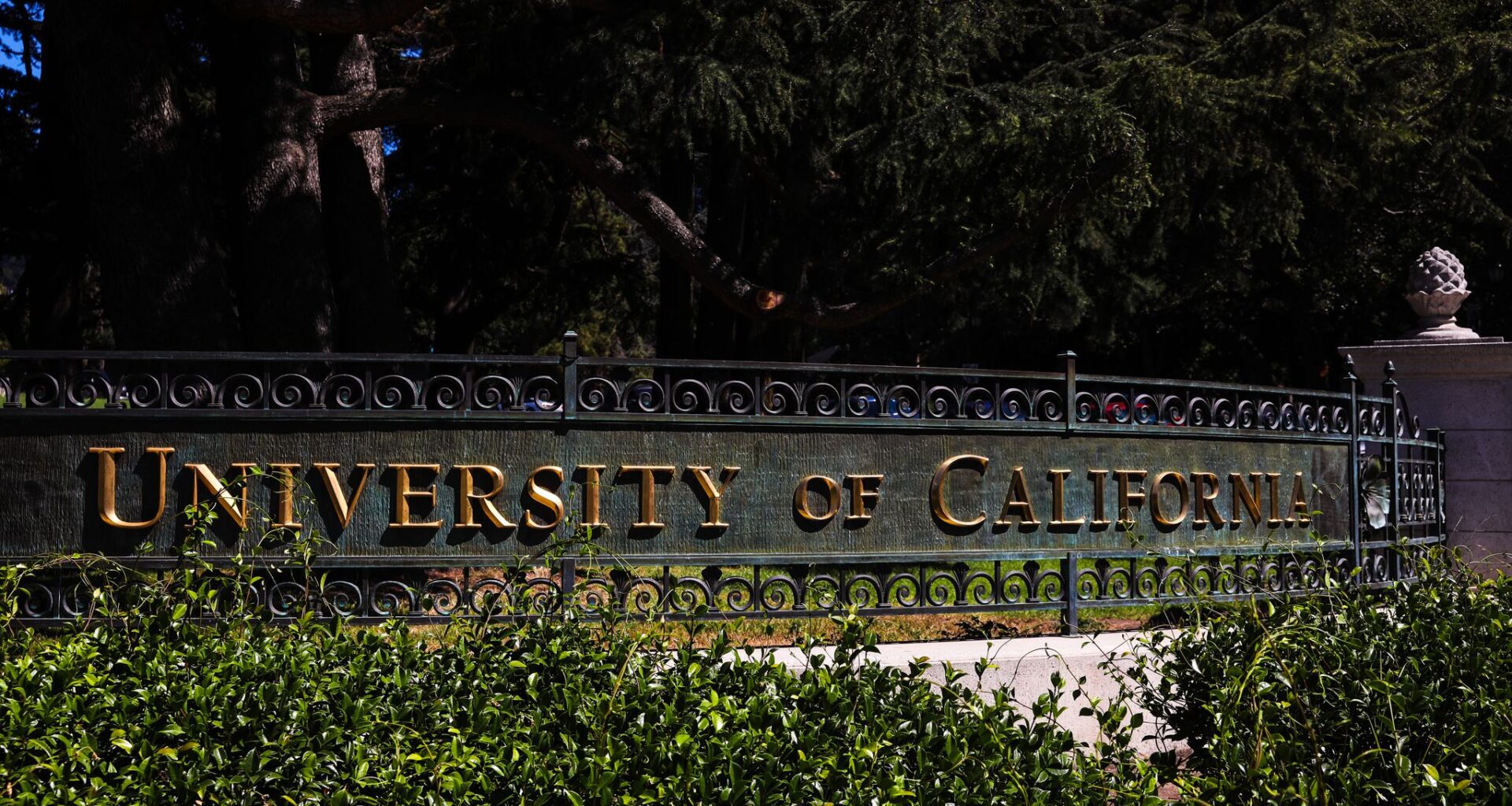
Undergraduate computer science enrollment across the UC system declined in 2025.
Yalonda M. James/S.F. Chronicle
For the first time since the dot-com bust in the early 2000s, undergraduate computer science enrollment across the UC system declined in 2025, data show.
Only one UC has defied the downward trend: UC San Diego, the sole campus to have launched an AI major.
The reasons behind the system-wide decline, which comes after more than a decade of rapid growth for the field, aren’t yet entirely clear, though they are likely a sign of how artificial intelligence is rapidly reshaping the tech industry.
Article continues below this ad
Across the UC system, 12,652 students are majoring in computer science this year — about the same as in 2021. That’s a 6% drop from last year, on top of a 3% drop in 2024. Still, that’s almost twice as many students enrolled in computer science than a decade ago.
San Francisco Chronicle Logo
Make us a Preferred Source to get more of our news when you search.
Add Preferred Source
Unlike the other campuses, UC Merced didn’t identify computer science as its own school or field of study in the data kept by the UC system. But data from UC Merced shows that enrollment in its “computer science and engineering” major dropped in fall of 2025, as well. That decrease coincided with the addition of an electrical engineering major, suggesting the drop could be at least partly due to students enrolling in electrical engineering who would have previously been bundled into computer science.
The enrollment shift comes at a time of great uncertainty and disruption in the tech industry — perhaps the greatest since the dot-com bust. As AI increasingly takes the place of entry-level software development jobs, many companies have conducted widespread, high-profile layoffs. And while the AI companies and startups themselves are growing, traditional career paths in computer science, which have been among the highest-paying entry-level jobs in the state, now seem like less of a sure ticket to success.
Article continues below this ad
David Reynaldo,the founder of admissions consultancy College Zoom, said he’s seen this play out in his work with students applying to college. But the biggest shift, he said, is coming from parents.
In past years, parents saw a computer science degree as a clear path to a high-paying job: They might push their children to apply and enroll in those programs. But now those parents are turning toward hard, physical sciences, like mechanical or electrical engineering, as the better option.
“Parental pressure plays a lot — a lot, a lot, a lot — on the kids,” he said.
UC admissions officers first flagged the shift in September at a college counselors conference in San Jose.
Article continues below this ad
“The biggest surprise is us trying to fill computer science,” UC Santa Barbara’s admissions director, Cuka Acosta, told a roomful of student advisers from high schools and community colleges. “Changing times! Students are looking at more AI programs.”
It’s not just the UCs. A recent report from the National Student Clearinghouse Research Center found that enrollment in computer science programs declined across different types of institutions in the fall.
Still, UC San Diego’s enrollment numbers underscore that, while AI appears to be dampening overall interest in computer science, it may also be key to growth for programs that can launch offerings explicitly focused on AI.
UC San Diego professor Steven Swanson, chair of the department of computer science and engineering, said in an email to the Chronicle that over the last two years, 20% of applications to the computer science department’s undergraduate programs have been to the AI major, which aims to train students in both the algorithmic design of and ethical questions around AI.
Article continues below this ad
“For a program that’s so new, it’s a great start,” Swanson wrote. “I expect that fraction to grow.”
Enrollment for the first couple of cohorts was limited, Swanson said, to ensure the AI program gets off to a good start. But the department plans to “relax the limit over the next couple years, and that will lead to significant growth.”
The UC system overall declined to comment on the shift in computer science enrollment, referring the Chronicle to individual campuses.
UCLA computer science professor and vice chair of undergraduate programs Glenn Reinman said in a statement that both the job market and the rapid rise of AI have likely contributed to a leveling off of computer science applications in recent years. But demand remains high — it is still the most applied-to major in the school of engineering, he said.
Article continues below this ad
Reinman also stressed that the university’s curriculum is regularly updated to “keep pace with this rapidly evolving field” and includes many opportunities for students who wish to use or work in AI to gain the skills and knowledge to do so.
“Generative AI has tremendous potential to transform industries, including computer science, but it does not replace the need for trained humans,” Reinman wrote, adding that students still have to know how to check and correct AI-generated code and handle “higher-level tasks” that AI can’t yet automate.
“Our curriculum ensures students are prepared to use AI responsibly, enhancing productivity while maintaining ownership of the code they produce,” Reinman said.
UC Berkeley spokesperson Janet Gilmore argued that, while the school’s computer science major is down in enrollment, the data was an incomplete picture of students studying computing, as it does not include related majors like electrical engineering and computer sciences and data science, the latter of which has continued growing in popularity since it was introduced in 2020.
Still, even taking all three majors together, applications have fallen slightly from a peak in 2023, Gilmore said.
Changes to the requirements to declare the major due to limited space could also have an impact on the data, she said, and “it is hard to determine the level of influence” for those types of factors compared to the changes in the tech industry. She emphasized, however, that demand for the programs still remains very strong.
Computer science majors remain among the most popular at several UCs, including at Berkeley. And Reynaldo, the college counselor, noted that plenty of students remain very interested in computer science programs, even if they already know how to code. Those students, he said, are more interested in computer science programs to help shape their thinking or to build networks within the industry.
While it’s unclear whether or how long the reversal in computer science enrollment trends will last — or how steep the declines will be — it presents the schools with a challenge: how to respond to the rapid changes confronting the discipline.
“The biggest and hardest problem is how you change computer science curriculum because of generative AI tools,” said professor Leo Porter of UC San Diego, co-director of the Google-funded Gen AI in CS Education consortium. That group first convened in July to “ensure that computer science departments are capable of adapting to these new tools to prepare graduates to succeed.”
“If we don’t shift our curriculum, then they probably won’t” succeed.