
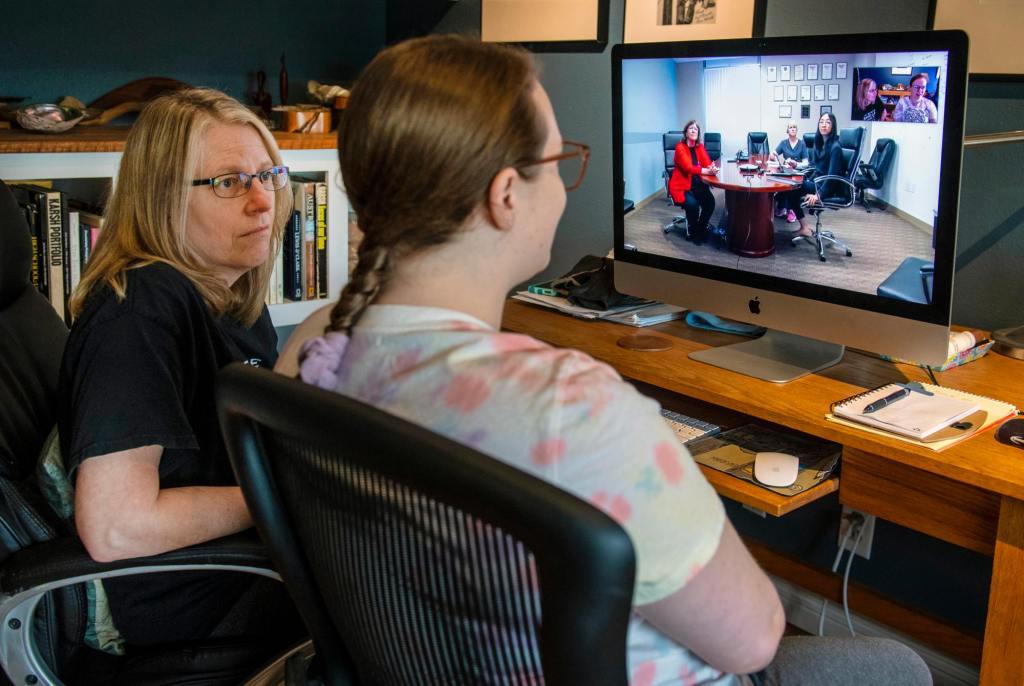
Dr. Gene Dorio and Robin Clough spent their careers looking after their neighbors’ needs. In Santa Clarita, they were the kind of couple every community quietly relies on—running programs for seniors, checking in on isolated neighbors, and making sure residents had support when things went wrong. They were the helpers.
Then came their own brush with death.
When Robin was diagnosed with cancer, the couple discovered what so many Californians learn the hard way: when a serious diagnosis hits, the right specialist is not always in your ZIP code, or even in your state. The most knowledgeable experts may be at a renowned cancer center across the country. Robin’s path to survival depended on an out-of-state specialist and on telehealth as a lifeline.
Telehealth allowed them to consult with that specialist, decide whether the grueling trip for in-person treatment was worth it, and stay in touch once they returned home. It meant fewer exhausting trips and more time healing from their California home while receiving world-class care.
But California draws an arbitrary line right where their story—and thousands like it—enters its most fragile chapter: remission.
In 2023, the Assembly passed the David Hall Act, recognizing both that patients with an immediately life-threatening diagnosis sometimes need out-of-state specialists and that telehealth can be the difference between life-saving treatment and no meaningful options at all. Under that law, an “eligible patient” can receive telehealth care from an “eligible out-of-state physician,” so long as strict safeguards are met.
A new bill, Senate Bill 1002, makes a modest but essential update. Under current law, patients lose access to their out-of-state specialist the moment they enter remission—even though remission often requires careful, ongoing monitoring.
This bill fixes that. It amends existing statutes so that an “eligible patient” includes not only someone with an immediately life-threatening disease or condition, but also someone whose condition is in remission and who is continuing care with their previously established out-of-state physician.
This is not a broad opening of California’s borders to out-of-state practice. It applies only to patients who already qualified under the David Hall Act and have already established a relationship with an eligible out-of-state specialist—patients who need continuity, not disruption, in their follow-up care.
All existing safeguards remain. Patients must give written consent for telehealth and record-sharing. A California-licensed primary physician must document eligibility and may withdraw that documentation if circumstances change. Only eligible out-of-state physicians—licensed in another state, in good standing, with no prior discipline and relevant expertise—may participate.
SB 1002 simply says that when a patient like Robin reaches remission, the law should not sever the connection to the out-of-state specialist who got them there.
For many Californians, especially older adults or those with financial, mobility, or health limitations, the law offers no real choice. Once remission is reached, patients must either travel out of state for every follow-up visit or sever a trusted therapeutic relationship and start over with a new provider based in California.
Imagine telling Gene and Robin they must either repeatedly fly across the country for routine check-ins or roll the dice with a new doctor who hadn’t seen them through the worst of it. For a couple who have spent their lives serving their neighbors, that kind of policy failure is more than an inconvenience; it’s cruelty.
By removing unnecessary travel barriers and preserving existing safeguards, SB 1002 will protect vulnerable patients from losing access to the specialists who guided them through life-threatening illnesses, reduce costly and burdensome travel for patients and families, and support better long-term outcomes by maintaining continuity of care with proven experts.
For Gene, Robin, and countless Californians walking the long road of remission, that connection can mean everything. Remission is a fragile, hard-won reprieve that depends on the steady hand of a doctor who knows their case inside and out. This bill respects that reality.
This reform is the next, necessary step: a modest, common-sense approach that keeps patients connected to the specialist who saved their lives, even after the moment of crisis has passed.
Rees Empey is the State Policy Manager at Pacific Legal Foundation.