
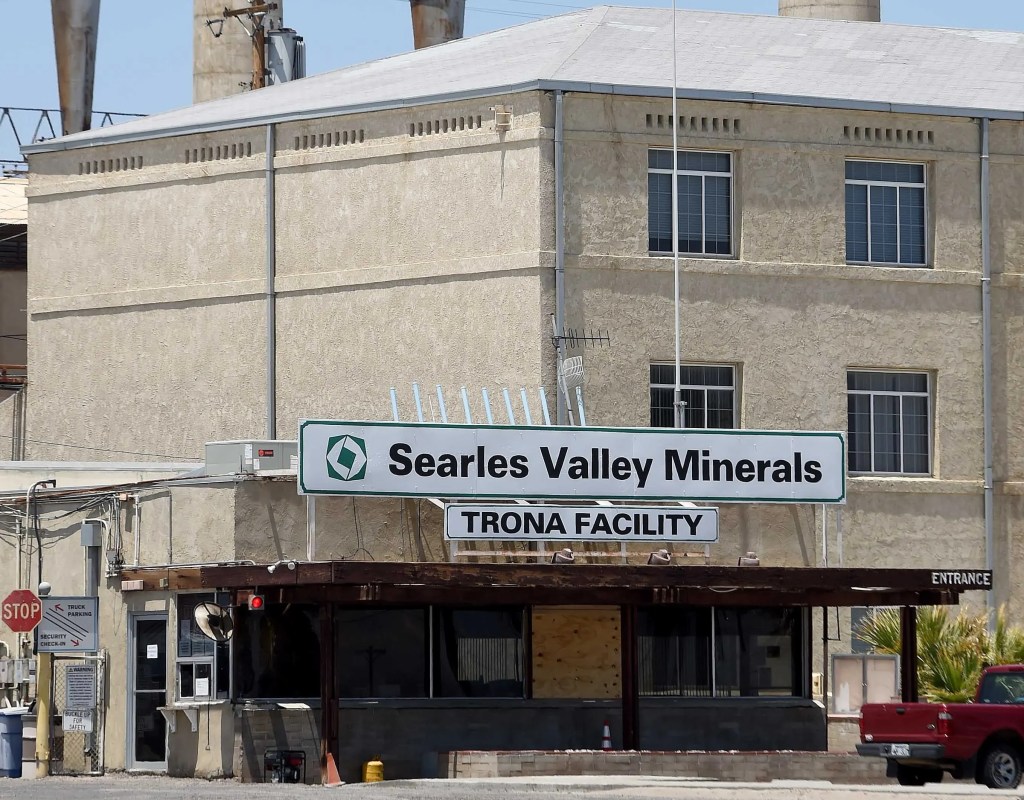
The permanent layoff of approximately 300 workers at the Searles Valley Minerals Trona plant will have an incomprehensible impact on our High Desert communities. More than half of the facility’s workforce is gone. In a small town like Trona, that kind of loss does not stay inside the gates of a single operation. It moves through the entire community. It affects families, small businesses, school districts, and every household that depends on a stable local economy.
When a 150-year-old facility is forced to reduce its workforce because the cost of doing business in California has become unsustainable, it is more than a local setback. It is a reminder about the direction our state is heading.
The pressures facing the Trona plant have built steadily over years of rising energy prices, increasing regulatory burdens, and growing compliance costs under California’s Cap and Invest program. In formal comments to state regulators, the company made clear that compliance costs in California exceed those in other jurisdictions with emissions trading systems. Industrial allocation levels here are lower than in competing regions, leaving California manufacturers more exposed to rising carbon costs while competing against global producers that do not face the same requirements.
That imbalance has real consequences.
When production costs rise sharply in one jurisdiction but not in others, manufacturers lose market share. Over the past decade, global soda ash production has expanded significantly in regions without comparable carbon pricing, while California’s share has remained small. That is not an environmental victory. It is carbon leakage. Emissions are not eliminated. They are relocated.
The Searles Valley Minerals Trona facility produces materials that are essential to the clean energy technologies California says it wants to lead. Boron from Trona is used in solar panel glass, wind turbine blades, high strength magnets, and lithium-ion batteries. Soda ash produced at the plant is critical for manufacturing the high purity flat glass required for solar panels and for refining lithium used in electric vehicle batteries. These are not legacy products disconnected from the future. They are foundational to renewable energy and advanced manufacturing.
At the same time, there is currently no cost effective, carbon neutral technology capable of fully sustaining high heat soda ash production at scale. The company has explored significant emissions reductions, renewable energy partnerships, and long-term transition strategies, including options that could dramatically reduce carbon output over time. But those investments require stability, regulatory clarity, and long-term certainty. Instead, manufacturers face escalating compliance costs, funding uncertainty, and shifting policy frameworks that make long term planning increasingly difficult.
The Trona community has already endured extraordinary hardship. The 7.2 magnitude earthquake in 2019 shut down the plant for more than two months and caused tens of millions of dollars in damage. Production levels have never fully returned to pre-earthquake levels. Layering rising regulatory costs and global competitive pressures on top of that fragile recovery compounds the strain on a town that has fought hard to survive.
Now consider the broader energy picture. California continues to consume vast amounts of oil and energy every day. We fuel our cars, power our homes, support agriculture, and sustain one of the largest economies in the world. Demand has not disappeared. Yet instead of supporting responsible, in state production under some of the strictest environmental standards anywhere, we have made it increasingly difficult to produce energy here.
The result is predictable. Production declines within our borders while imports increase from countries with weaker environmental and labor protections. That does not reduce global emissions. It shifts them. It does not strengthen energy security. It weakens it. And it certainly does not protect California workers.
Three hundred lost jobs at the Searles Valley Minerals Trona plant represent more than payroll reductions. They represent families wondering whether they can remain in their homes. They represent young people questioning whether there is a future for them in rural California.
California cannot claim to support domestic manufacturing, critical minerals, and clean energy while driving the very facilities that supply them out of business. We cannot promise affordability while pushing energy and production costs ever higher. And we cannot speak of equity while eliminating some of the best paying blue collar jobs in rural communities.
The layoffs at the Searles Valley Minerals Trona plant should be a wakeup call. If we continue down this path without recalibrating our policies to protect domestic production, address leakage risks, and provide long term certainty for industrial investment, more communities will face the same painful reality.
Rosilicie Ochoa Bogh represents California’s 19th Senate District.