
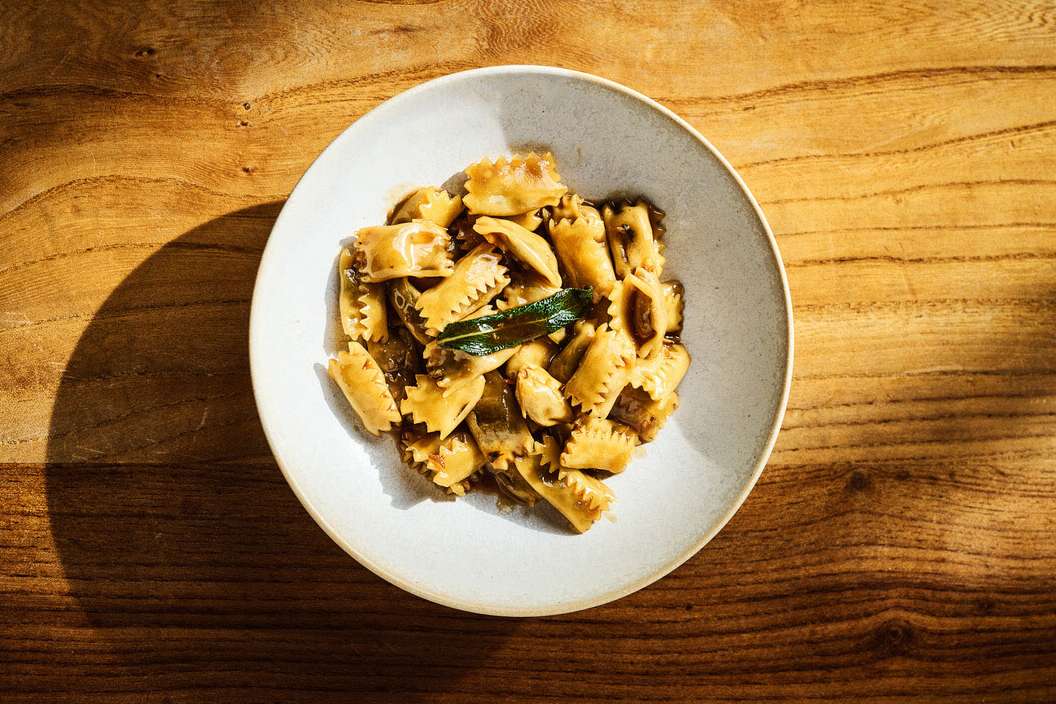
Michael Tusk, renowned chef of three-Michelin-starred Quince in San Francisco, and its more casual next-door neighbor, Cotogna, says that a single bowl of pasta altered the course of his career.
As he visited Italy’s Piedmont region during the 1990s, Tusk dined at Da Guido Costigiole, a restaurant that has since earned a Michelin star. At the time, it was run by three brothers and their mother, Lidia.
Known by locals as the “agnolotti angel,” according to Tusk, Lidia made an especially delicate version of the pasta.
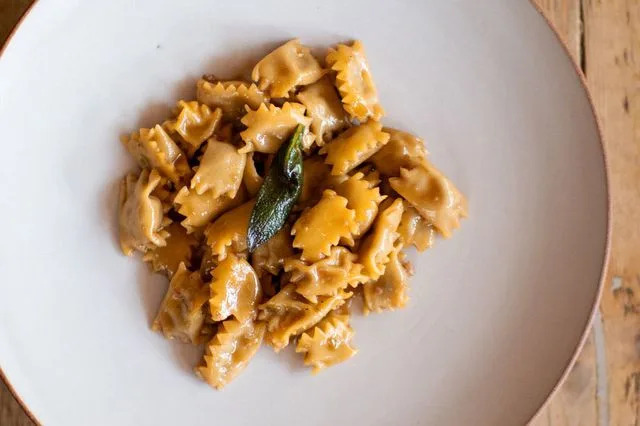
Common in northwestern Italy, agnolotti are small parcels of pasta dough filled with meat and vegetables and pinched together. In Tusk’s version, which follows tradition, there’s roasted pork, veal, and rabbit mixed with carrot, escarole, leek or onion, and rosemary or sage, all ground together with a touch of Parmigiano-Reggiano.
Credit: Courtesy of Cotogna
When Tusk opened Quince in 2003, he added agnolotti to the opening menu at $18. Guests could not get enough. He would sell as many as 100 orders per day, and dedicated one cook to making the dish to meet demand.
In 2010, he opened Cotogna, a more rustic, casual sibling to Quince. He felt that the agnolotti belonged there. On the menu, it now reads “Agnolotti Del Plin ‘2003,’” in reference to the original version, and sells for $34.
The pasta dough starts with finely ground 00 flour, egg yolk for color, and whole eggs for water content. The agnolotti are cooked for a mere four to four-and-a-half minutes to achieve just the right amount of bite. The roasted meat and vegetable filling bursts with flavor, and the “sugo,” or sauce, that it’s served in is velvety smooth.
Related: 30 Spring Pasta Recipes That Taste Like the Farmers Market
The sugo is made with the “sugo d’arrostro,” or the browned bits from the bottom of the pan where the meats are cooked, and it’s deglazed with Nebbiolo. When an order is placed, a little bit of pasta water is added in, plus more rosemary or sage, and a knob of butter to emulsify and bring it all together. The dish is garnished with a single sage leaf.
Throughout the years, Tusk has played around with his agnolotti, especially within the fine-dining setting of Quince. He has filled the pasta with squab or guinea hen. He has added black truffle and white truffle. He has made a spinach pasta dough and experimented with larger and smaller pasta pouches.
He’s always tweaking the recipe, but the original, best-selling version from 2003 has always been on the menu at Cotogna, and for good reason. It’s simply delicious.
Read the original article on Food & Wine