
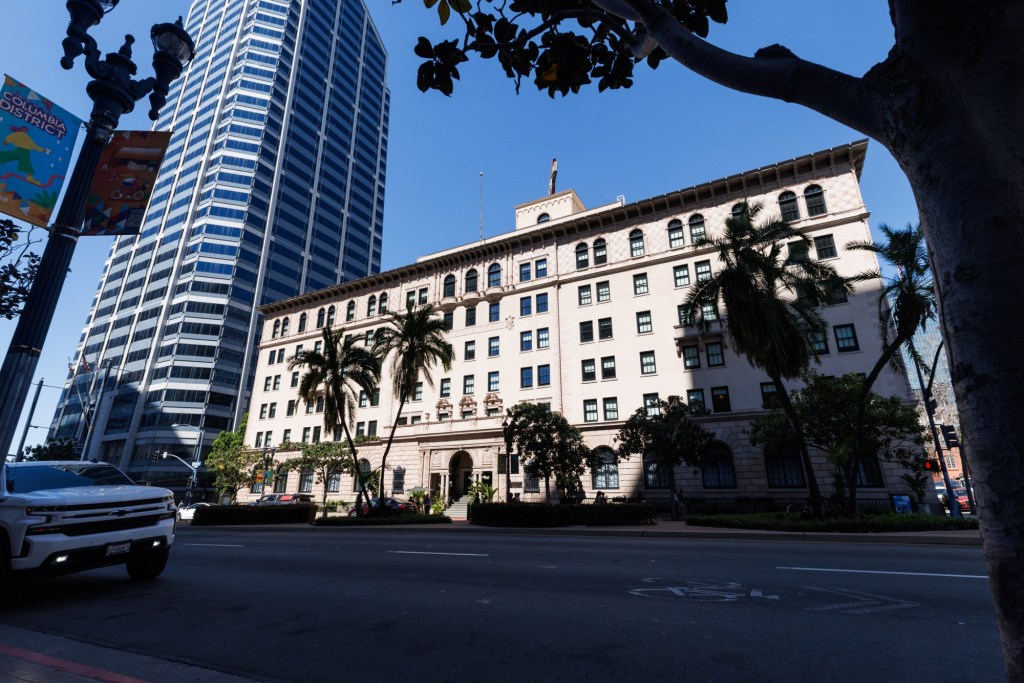
The Mills Act is a 1972 state law that allows local governments to offer tax breaks to owners of buildings deemed historic. Owners then are supposed to use the tax savings to invest in the upkeep and historic preservation of the building.
Overall, San Diego County owners participating in the Mills Act saved about $29 million on their taxes last year, according to data from the county assessor analyzed by The San Diego Union-Tribune.
The city of San Diego has the largest Mills Act program in the state, with more than 1,600 properties whose owners altogether saved about $23.6 million in property taxes during the 2025-2026 tax year.
After San Diego, Coronado has the most Mills Act properties in the county, with about 200 properties that generated $3.4 million in savings.
The five properties in the county that are getting the biggest tax benefits are all commercial and multifamily buildings in the city of San Diego, and the five homes getting the biggest savings are in San Diego and Coronado.
San Diego’s biggest Mills Act tax savings
John D. Spreckels Building, 625 Broadway — $1.2 million tax benefit
San Diego’s first high-rise office building was erected in 1927 in downtown’s Core-Columbia neighborhood and has a Florentine Renaissance architectural style. It was built by the sugar, shipping and railway magnate John D. Spreckels, who helped transform San Diego into a modern city. It has since been converted into an apartment building. The property would normally be assessed at $138.5 million under Proposition 13 but instead is assessed for taxes at $19.9 million under the Mills Act.
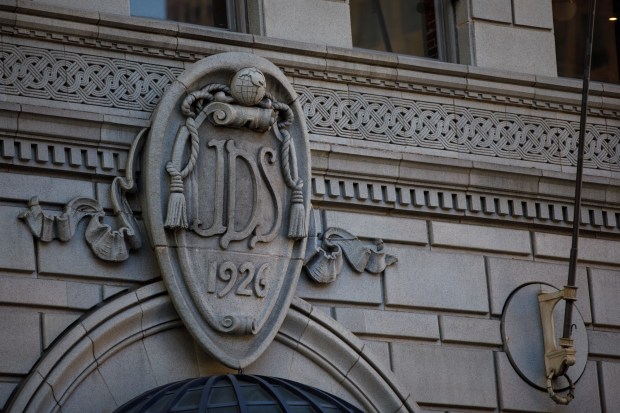 An architectural design is displayed above the John D. Spreckels building entrance in downtown San Diego on Wednesday, March 18, 2026. The Mills Act, enacted in 1972, allows historic property owners to receive tax relief by maintaining and restoring the property. (Kristian Carreon / The San Diego Union-Tribune)
464 Prospect St. — $761,356 tax benefit
The former site of Scripps Memorial Hospital, this 1924 property was repurposed into a condominium complex in 2002. The property’s units altogether would normally be assessed at $93.1 million but instead are assessed for taxes at $17 million.
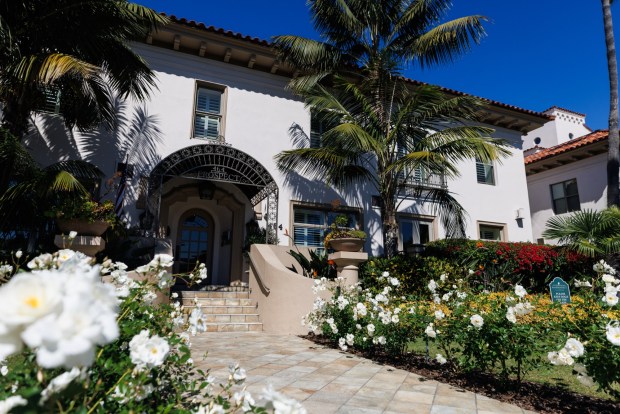 The condominium complex at 464 Prospect in La Jolla on Wednesday, March 18, 2026. The Mills Act, enacted in 1972, allows historic property owners to receive tax relief by maintaining and restoring the property. (Kristian Carreon / The San Diego Union-Tribune)
Prospect Center Building, 1020 Prospect St. — $711,664 tax benefit
Built in 1966 in La Jolla, this condominium building sports an International modern style. The property’s units altogether would normally be assessed at $79.6 million but instead are assessed for taxes at $8.4 million.
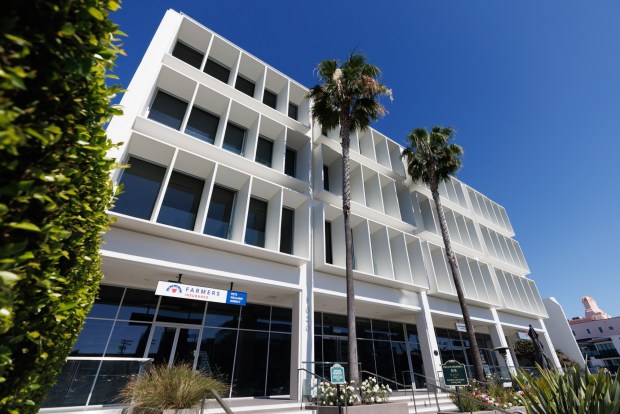 The Prospect Center Building as seen in La Jolla on Wednesday, March 18, 2026. (Kristian Carreon / The San Diego Union-Tribune)
The Guild Hotel, 500 West Broadway — $696,585 tax benefit
Built in 1924 in downtown’s Core-Columbia neighborhood, the building was originally the Armed Services YMCA. It was deemed historic for its Italian Renaissance revival architecture and for the YMCA’s role in the community. The property would normally be assessed at $71.8 million but is instead assessed for taxes at $2.2 million.
 The Guild Hotel, formerly the Armed Services YMCA, in downtown San Diego on Wednesday, March 18, 2026. (Kristian Carreon / The San Diego Union-Tribune)
Del Prado/William Krisel Condominiums, 666 Upas St. — $401,694 tax benefit
Built in 1973 in Hillcrest, the building has an International modern style. It was designated as historic because it represents the work of architect William Krisel. The property’s units altogether would normally be assessed at $53.6 million but instead are assessed for taxes at $13.4 million.
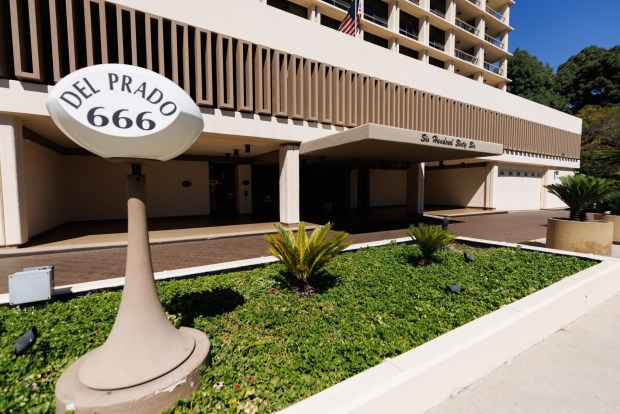 The Del Prado condominium complex in the Marston Hills neighborhood by Balboa Park, as seen on Wednesday, March 18, 2026. (Kristian Carreon / The San Diego Union-Tribune)
Single-family homes with the biggest benefits
325 Dunemere Drive, La Jolla — $201,874 tax benefit
Built in 1922, this five-bedroom, six-bathroom Spanish eclectic estate is associated with La Jolla landowner and developer Phillip Barber. The property would normally be assessed at $23.1 million but instead is assessed for taxes at $2.9 million.
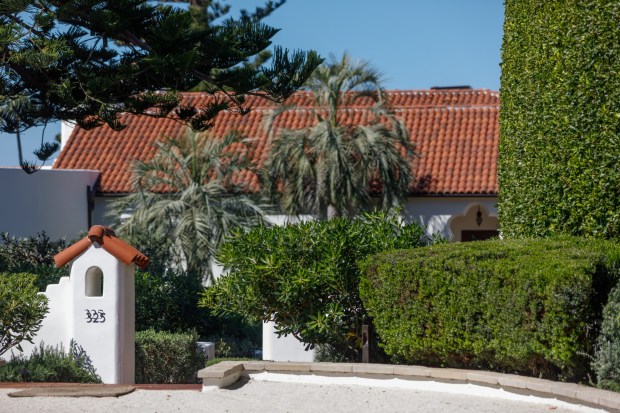 The gated entrance to three homes, including the 325 Dunemere Drive residence, in La Jolla on Wednesday, March 18, 2026. (Kristian Carreon / The San Diego Union-Tribune)
Crown Manor, 1015 Ocean Blvd., Coronado — $166,081 tax benefit
Built in 1902, this Tudor-style estate with seven bedrooms, nine full baths and seven half baths was designated for being notable work of architects William Sterling Hebbard and Irving Gill. It was previously owned by M. Larry Lawrence, former owner of the Hotel del Coronado. The property would normally be assessed at $18.8 million but instead is assessed for taxes at $2.2 million.
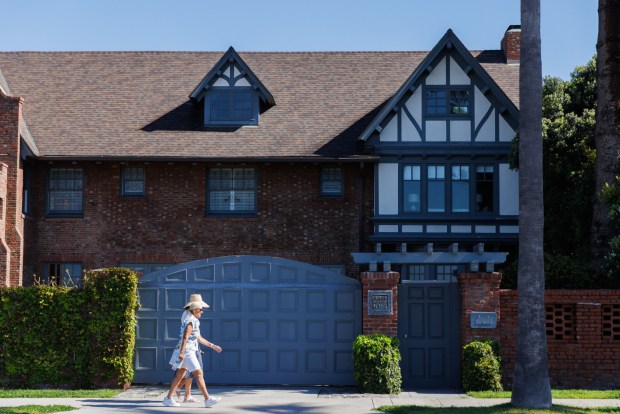 The Crown Manor home on 1015 Ocean Boulevard in Coronado on March 19, 2026. (Kristian Carreon / The San Diego Union-Tribune)
Anna Vickers House, 1419 Virginia Way, La Jolla — $145,472 tax benefit
Built in 1928, this four-bedroom, four-bathroom home is an example of the Tudor Revival style. The property would normally be assessed at $15.3 million but instead is assessed for taxes at $752,793.
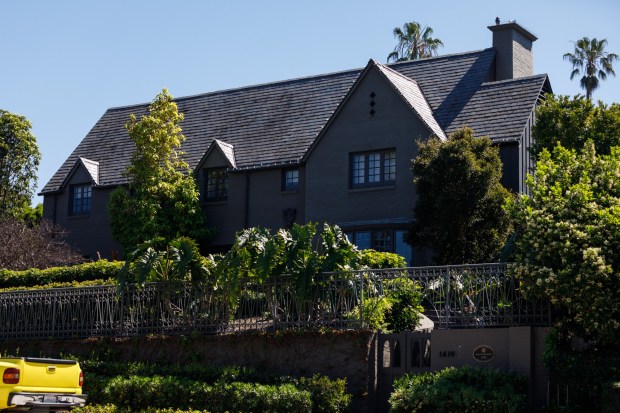 The Anna Vickers home on 1419 Virginia Way in La Jolla on Wednesday, March 18, 2026. (Kristian Carreon / The San Diego Union-Tribune)
Coronado Castle, 1127 F Ave., Coronado — $127,744 tax benefit
Built in 1924, this five-bedroom, nine-bathroom estate was designated for being an example of the Mission Revival architectural style and a notable work of architect Richard Requa. The property would normally be assessed at $28.6 million but instead is assessed for taxes at $15.8 million.
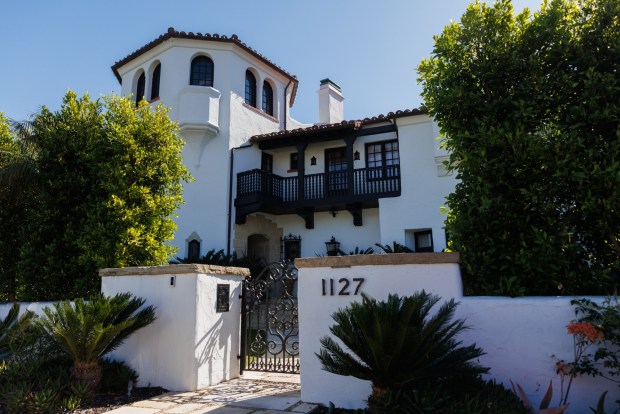 The home at 1127 F Avenue in Coronado on March 19, 2026. (Kristian Carreon / The San Diego Union-Tribune)
1045 Loma Ave., Coronado — $120,858 tax benefit
Built in 1926, this four-bedroom, five-bathroom home was designated for being an example of the Mission Revival style and notable work of Requa and builder A. E. Keyes. The property would normally be assessed at $21.2 million but instead is assessed for taxes at $9.1 million.
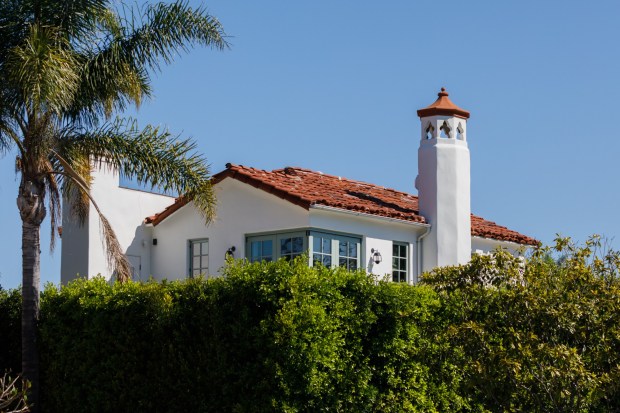 A portion of the home at 1045 Loma Avenue in Coronado on March 19, 2026. (Kristian Carreon / The San Diego Union-Tribune)