
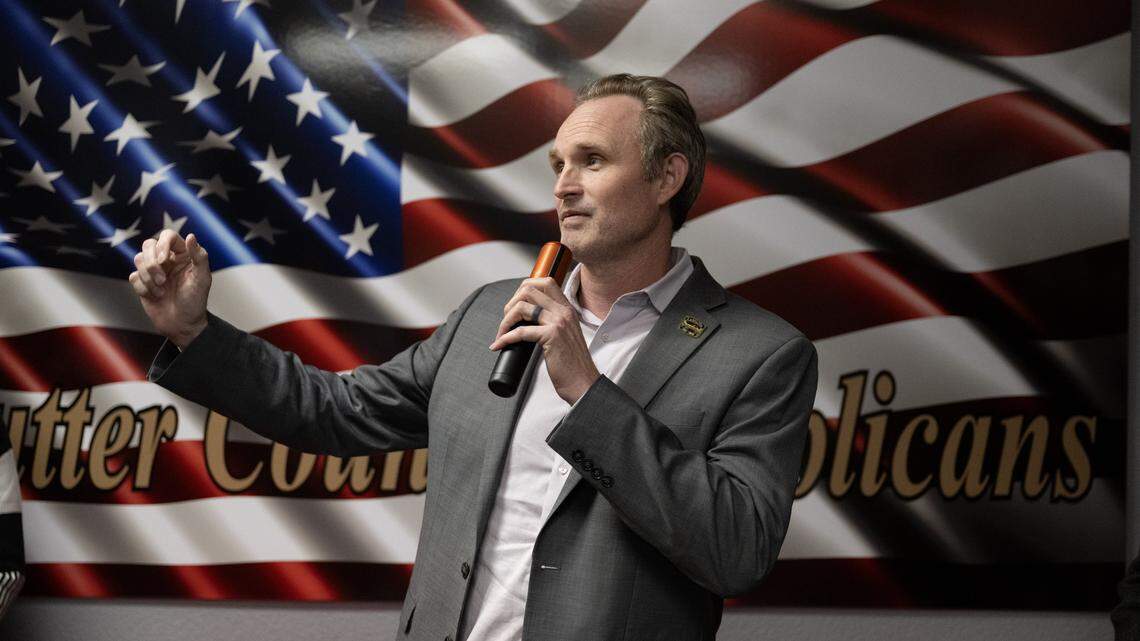
At an otherwise-empty restaurant at the edge of town, the Sutter County Republican Party came together for its February meeting.
A crowd of two dozen locals caught up over pizza and beer. Many had known each other for decades. A farming region with a population 16 times smaller than neighboring Sacramento County, Sutter County keeps close.
To start the meeting, Chairwoman Ashley Carr introduced some new faces, including Bryan Burch, a campaign finance expert from Think Right, a compliance consulting group in Sacramento.
“You might have noticed there’s some more money coming in,” he told the room. “I’m here to help with that.”
Indeed, the Sutter County Republican Party, which between 2006 and 2020 raised an average of $1,070 per year, pulled in over $743,000 in 2025, according to campaign finance filings from January. The money came from a range of major Republican donors, including the oil company Valero, Pacific Gas & Electric Corp., and unions representing firefighters and prison guards in the state.
Although Carr attributes the increase to her fundraising prowess, campaign finance experts say other forces are likely at work. In fact, the money started coming in soon after Republican legislative leadership – including former Assembly leader James Gallagher, a Sutter County Republican from Yuba City, broke from a longstanding joint fundraising agreement with the California Republican Party.
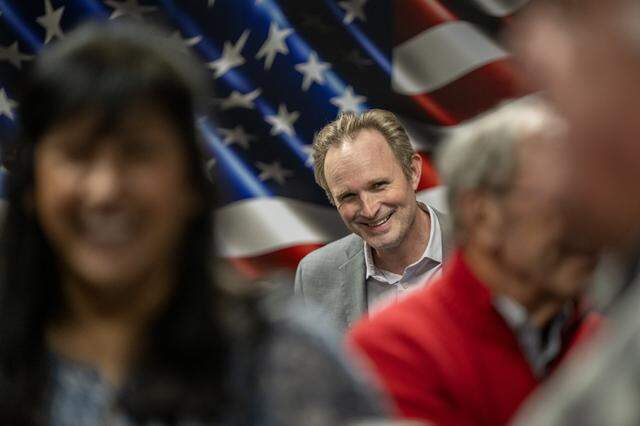 Assemblyman James Gallagher meets with volunteers and supporters at the opening of the Sutter County GOP headquarters in Yuba City on March 5. JOSÉ LUIS VILLEGAS jvillegas@sacbee.com
People close to the situation have been reluctant to speak on the record, but several Republican insiders say it appears Gallagher and his team have encouraged special interests to donate to the small local party. Since those committees have few limits on how much they can raise and spend, critics say both Democrats and Republicans have long used them as pass-throughs to circumvent campaign finance limits and raise more money from special interests, to the detriment of a transparent financial process.
In an interview with The Sacramento Bee, Gallagher said raising money through central committees is a common practice used by both parties.
“Different county committees that are going to focus on state races, they’re getting money from members and others to help support that,” he said.
A workaround with a hard-to-follow trail
In 2000, California voters approved Proposition 34, which capped how much a person or group could donate to a campaign to under $6,000, but allowed state political parties and their county satellites to raise and give virtually unlimited amounts.
At the time, the public was eager to limit the influence of money on politics, said Dan Schnur, a political science professor at UC Berkeley and USC. Schnur said Prop. 34’s proponents portrayed the measure as campaign finance reform.
However, “it opened up an immense loophole in California campaign finance law,” he said.
In the aftermath of Prop. 34’s passage, special interests could max out their donations to a candidate, and then give tens of thousands more to the party or a central committee to give to the candidate.
Republican campaign strategist Matt Rexroad remembers using the law to the Republican Party’s advantage in 2002, when he was its political director.
“We moved money all over the state through the central committees. And oh, the Democrats had a conniption fit,” he said. “The next cycle, they stopped yelling about it, and the Democrats started doing it as well.”
What followed has been an open secret in the Capitol community, where special interest groups can give large sums of money to both state and county parties, which then give directly to candidates, effectively bypassing campaign finance limits on individual contributions.
“The purpose of this legalized money laundering is to prevent voters from following the money,” Schnur said. “It’s not clear how much the voters would care what the original source of these contributions are, but they certainly deserve to know.”
A break from ‘one-ask’
In July, Republican legislative leaders emailed a letter to lobbyists in Sacramento, announcing the group would be breaking away from fundraising with the state party.
Gallagher, state Sen. Brian Jones, R-Santee, and Assemblymember Heath Flora, R-Modesto, told recipients that although they’d enjoyed a longstanding joint fundraising agreement with the party, legislative leaders would be “pivoting towards new fundraising mechanisms” including a “variety of new networks that will help ensure our Senate and Assembly candidates have the resources needed to compete and win.”
“We will be asking you to contribute directly to these new initiatives,” the letter read.
Legislative leadership was frustrated by the lack of control they had with the existing “one-ask” arrangement, where all the money flowed through the party, Rexroad said.
“If the leaders are the ones raising the money, should they have the ability to influence how it’s spent? I would say, yes, the party has said, no,” he said.
Since then, the Sutter County Republican Central Committee’s campaign expenditures have started to resemble those of a legislative campaign operation – spending big on campaign consultants and fundraisers with Sacramento ties, and receiving tens of thousands of dollars from sitting Republican lawmakers and special interests across the state. In five months, the county party brought in about $740,000.
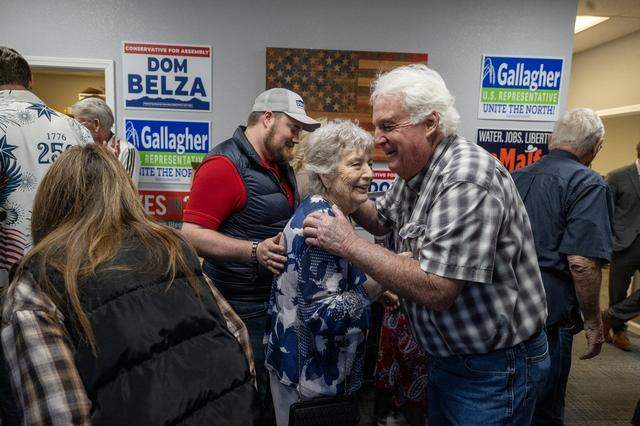 Republican Party supporters Richard Campbell and Jo Finn embrace at the Sutter County GOP headquarters in Yuba City on March 5. JOSÉ LUIS VILLEGAS jvillegas@sacbee.com
“There’s no doubt that the Sutter County Central Committee’s finances have increased dramatically as a result of the breakdown of the one-ask process,” Rexroad said. “That’s just not debatable.”
Money from sitting legislators’ campaign accounts and special interests has also flowed to another central committee, in San Bernardino County, as well as a new entity called the “Legislative Action PAC,” which raised over $3 million in its first six months of operation.
In a March interview, Gallagher acknowledged the “differences in fundraising,” but called the state party “a critical partner” in raising money for legislative races. He said the money from the Legislative Action PAC would be spent on legislative races throughout the state.
“It’s not new. It’s been done on the Democratic side for many years,” Gallagher said. “Maybe Sutter is – this is maybe the first time that they’ve done it, but many county central committees have done similar things.”
The California Republican Party did not respond to questions about the end of the one-ask agreement or whether the party had lost funding due to the altered fundraising arrangement.
“The CRP does not direct the fundraising decisions of county committees or legislative campaign committees,” party spokesperson Matt Shupe said in an email. “County committees and other political committees operate independently, questions about their specific fundraising decisions or transfers are best directed to them.”
Sutter County joins the arena
Although the Sutter County Republican Central Committee saw its greatest financial surge in 2025, it has been steadily raising more money since 2022, the same year Gallagher became the Republican leader of the Assembly.
In the years prior, the county party had limited involvement in state races. It had spent its money on mailers for local races and placing ads opposing state propositions in the local newspaper.
However, four years ago, the county party’s money popped up in a deep Southern California race, over 500 miles away.
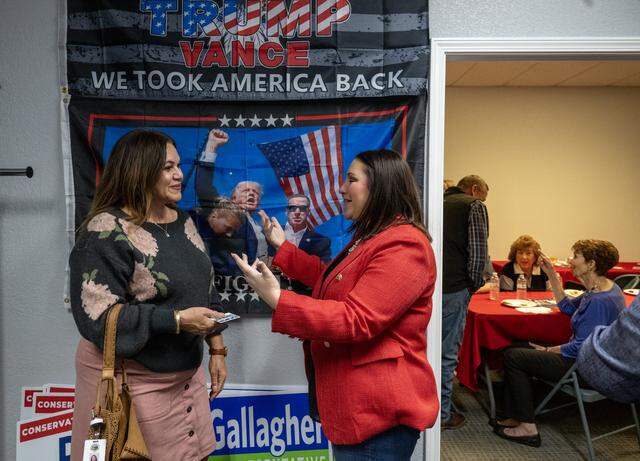 Sutter County Assessor Kathy Scriven, left, meets with Ashley Carr, chair of the Sutter County Republican Central Committee, at the opening of the Sutter County GOP headquarters in Yuba City on March 5. JOSÉ LUIS VILLEGAS jvillegas@sacbee.com
During a three-week period in October, several sitting Republican legislators including Scott Wilk and Frank Bigelow, plus the United Auburn Indian Community of the Auburn Rancheria in Sacramento, gave over $130,000 to the Sutter County Republican Central Committee.
In that same three-week period, that committee gave $120,000 to Republican newcomer Greg Wallis, who was fighting a close battle to represent the 47th Assembly District in the Coachella Valley, southeast of Los Angeles.
Wallis needed all the help he could get. His competitor, Democrat Christy Holstege, was getting significant contributions of her own through the same back door for campaign cash, including a combined $115,000 from the county Democratic parties in Yolo, Marin, and Los Angeles.
The donations followed significant contributions to those central committees from various labor unions in the state. Later in the race, the Del Norte Democratic Party in far Northern California gave $75,000 – money that came from a pool of money provided by multiple high-dollar donations from unions like the powerful service employees union, SEIU, and national municipal employees, AFSCME.
Wallis won 84,752 votes that year, just 85 more than Holstege. Two years later, he held onto his seat in another nail-biter of a race, with help from a $91,000 donation from the Sutter GOP.
Former Sutter County Chairman Lloyd Leighton did not respond to emailed questions about whether his local party solicited the 2022 donations, and who was part of the decision to send funds to Wallis’ campaigns.
A plan for the money
Sutter County won’t next need to disclose to the Secretary of State how it’s spent the nearly $700,000 it has in the bank until late April. Meanwhile, races for seats in 2026 are beginning to heat up.
During an interview at the opening of the new Sutter GOP headquarters last month, Carr said her group is trying to do something different from the majority of other county committees in the state.
“Our efforts are strictly to help across the state, not just our own district,” she said.
She said the committee is in touch with legislative leadership about the money they’ve raised.
“They see what we’re doing. We’ve had conversations with them,” she said. “We’ve had conversations on, how do we do what we need to do? How do we start getting these seats to turn?”
When asked which races the party would be focused on in 2026, Carr name-checked two candidates. The first was Dom Belza, the local candidate for Assembly District 3, running to replace the termed-out Gallagher.
The second? Greg Wallis.
“He’s a great, moderate Republican that won in the last election. He’s got a chance to win again,” she said.
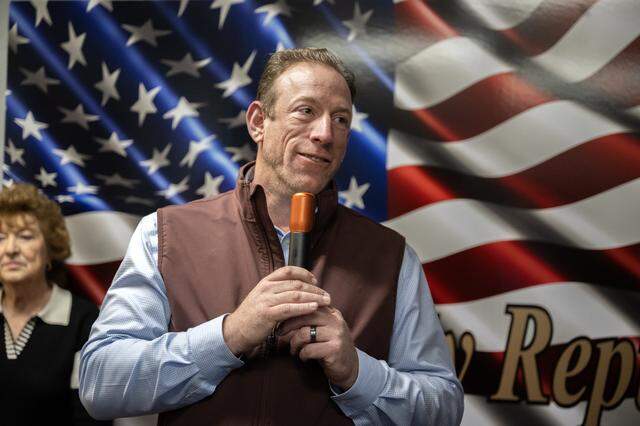 Assembly candidate Dom Belza speaks to a crowd of supporters at the Sutter County GOP headquarters in Yuba City on March 5. JOSÉ LUIS VILLEGAS jvillegas@sacbee.com
The Sacramento Bee
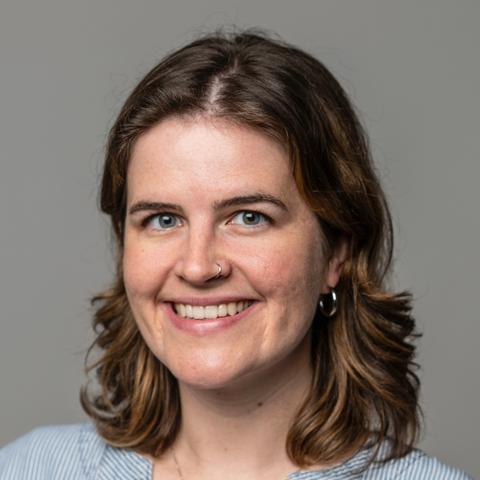
Kate Wolffe covers the California Legislature for The Sacramento Bee. Previously, she reported on health care for Capital Public Radio in Sacramento and daily news for KQED-FM in San Francisco. She is a graduate of UC Berkeley.