
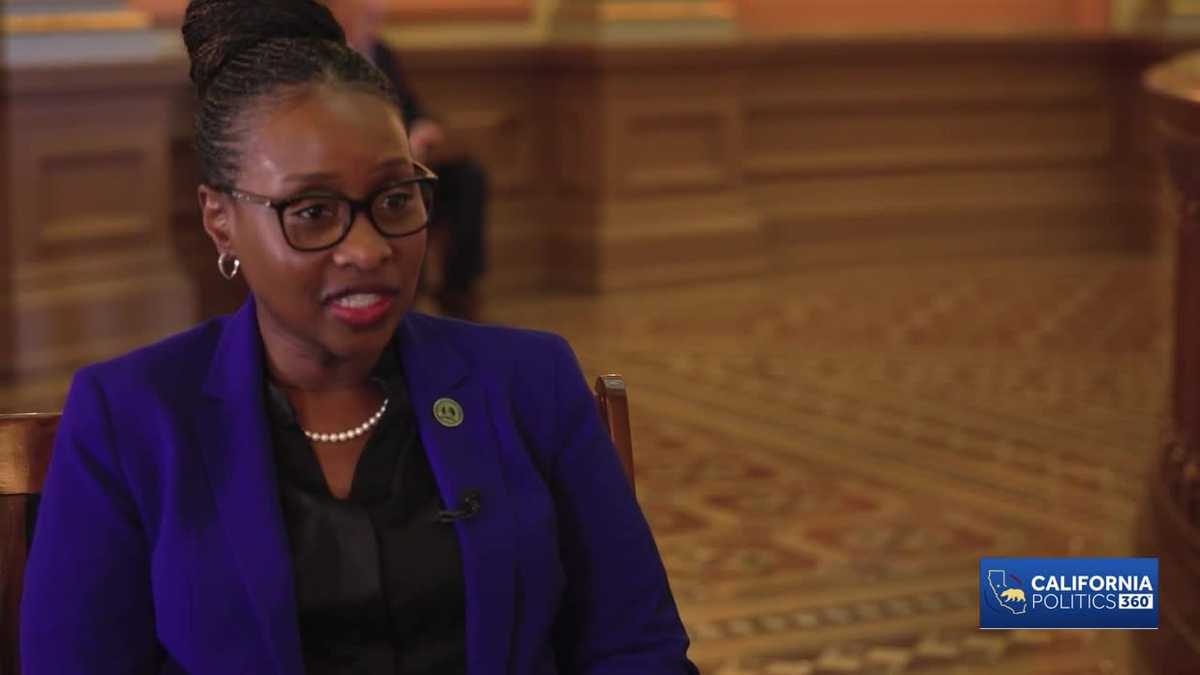
Assemblywoman Rhodesia Ransom vows to bring more oversight to 911 upgrades | California Politics 360
Some ransom, thank you so much for making time for us. Thank you. So you held this really long hearing this week with Calloent with, uh, the 911 advisory board, stakeholders. What is your overall takeaway from that oversight hearing on the state of the state’s 911 system? Well, my takeaway is that there’s *** lot of finger pointing happening and that we need more accountability and more oversight in order to actually realize, um, an effective 911 system that the state deserves. You are in your first term as *** member of the. Assembly, so *** lot of this predates your time, but do you have an understanding of why the legislature wasn’t more involved in keeping tabs on this project? I have no idea. Um, and looking at the timeline, there were *** lot of red flags going back at least to 2021. So why it took so long, you know, for everything to come to light is really beyond me. What is I mean, what is your biggest concern right now as it relates to the state’s 911 system? My biggest concern is we still don’t know the plan. Like we’ve seen the transition plan, so to speak, but if you listen to the hearing, the questions we had about budget, we still don’t know what the budget will be, and that’s because we really don’t know exactly how we’re moving forward. It sounds as if, you know, we feel that *** statewide approach is more appropriate. Um, but you have the vendors who of course have their own reasons that they feel it should stay *** regional approach, but we don’t even know what the plan will be, um, and so I think we really need more, more eyes on this project. Uh, more importantly, I really wanna see more of the Department of Technology involved. Um, California has *** history of kind of hiccups in their technology launches and so it’s. Lost on me doesn’t mean that it’s wrong, but it’s lost on me why the Department of Technology is mostly involved in the contracts and not in overseeing the full delivery of this project. Calloy, yes, you mentioned the budget. I mean, for months now, I mean since at least November, they’ve been wanting to scrap the regional system and the 4 companies that are involved. They want to do *** statewide system with one company. But is it acceptable to you that they’re not saying how much that’ll cost? No, that’s not acceptable. That’s another reason, another example of why we need more oversight on this project. Um, I hear my colleagues are saying we gotta stop this, we can’t do move forward with this project. And I say we have to move forward, but with oversight we need, we need to move forward with people in the room that have the expertise to tell us how much it’s gonna cost and how it’s gonna work. I mean if you look at what happened we had only dep deployed 5%. I mean only 5%, 23% at the end of the day that wasn’t ***, *** huge number before we started seeing failure. We can’t wait until we get to the end of this project, so we need more people in the room who understand exactly how the end users connect to the, the program, um, and how much it costs to implement these things so that we can actually know what we’re looking at. From the hearing there was one moment where Democratic Assembly member Steve Bennett asked Steve Yarrow with COES, um. Are we safe? And there was *** long pause, and there was not *** direct answer. Did that worry you? That did worry me, um, and I think we all know the answer that we could be safer if we get this next generation 911 system up and running. Uh, we had an oversight hearing in emergency management *** few weeks ago regarding active shooters. The sheriff from San Joaquin County reported on the recent mass shooting that there were problems with being able to locate people in cell phones at the location, so we know that we can be safer if we get this project up and running. The 911 advisory committee, some of the people, some of the first responders that are doing this work. Said yes, we need to take *** beat, but we also can’t delay this transition because of what you just laid out with some of the concerns. Do you worry? I mean, KOES is having so much turnover. The people involved in the project rollout at first are no longer there. KOES has *** new director that started this week. How long do you expect that to take to get them up to speed on all of this? What, what you’re describing is exactly why I feel like we need more techno technical expertise for this project. We should not be beholden to, you know, bureaucratic administrators, um, and that’s not *** disrespectful term, but that is the role that really has not *** lot to do with technical expertise required for this project. That is why I say we need to make sure that our advisory board is made up of people that have that expertise that can continue to keep this project going. If you listen closely to what the advisor said, they’re getting information and reports out after the fact. That’s not how advisers work, right? There’s also, you know, *** concern that the advisory board is chaired by *** member of COES that’s. I mean, we, we have to do better. We have to create *** better system if we really want better outcomes. I know there’s legislation to try to require in state law more oversight from Cloas as the chair of the Assembly Emergency Management Committee. What are you planning to do between now and the end of the year to, to. Clamp down on this. Oh, absolutely. So, uh, 11 thing we’re doing is gutting and amending *** bill because we see that right now we have to pivot in order to ensure that there are more legislative, um, priorities that are in this involved in this project in regards to reporting but also who’s at the table and we wanna be able to better have public engagement regarding this project the way this is happening right now there’s, you know, contracts that are written. We don’t even know, you know, the expertise of the vendors, uh, if you, if you paid attention to that hearing, that was one of my first questions is like, have you done projects this large before? Have you worked with, you know, 911 dispatch centers, and I get that we want new innovation, but moving forward this legislature is going to have to be involved at *** higher level in regards to accountability. We also need to understand we don’t know what we don’t know, so this is why you know people are calling for audits and people are calling for more reports and so together it’s gonna take all of us working together to understand how we fill in the gaps, how we are creating *** system that will serve California. Audits, more hearings, is that what we could see this year? 100%. So my team, including myself, uh. We, we met with COES. We’ve been in conversations with the auditor and trying to figure out what we can do to kind of run around the, the current audit process, and we do believe that this project may have met the, um, the mark where you don’t have to go through JLAC because it’s such *** big project, um, and there are indications that we have major waste, um, there’s no, you know, there’s no. Indications of fraud, but we do want to look at other conflicts. I mean, when you have the four vendors sitting there at the table advocating for themselves and, you know, you know, giving us details about information that they got from people in COES, for me as *** person who I might be new here but I’m not new to this, that gives me pause in regards to how we actually vet and oversee this project. Anything else you think I should know? You know, I think, uh, right now we all know this project is way too big to fail. It’s something that we cannot delay, but we need to do it very, um, intentionally with the right people at the table, and I think that’s what we’re working on right now. It’s gonna take the analyst’s office, the auditor’s office, the legis. Legislators, you know, the department of Technology, uh, we just need to make corrections into the, the overall set up of how this is working and this is just one part, this is one conversation of many, uh, because we have to work to regain the public’s trust and keep Californians safe. Senator Moransom, thank you so much for your time. Thank you, happy to be here. Yes, I appreciate it.
Assemblywoman Rhodesia Ransom vows to bring more oversight to 911 upgrades | California Politics 360

Updated: 8:25 AM PDT Mar 22, 2026
California’s Office of Emergency Services was in the hot seat at the state Capitol this week after taxpayers spent nearly half a billion dollars for upgrades to the 911 system that the office no longer wants to use. In an interview with California Politics 360, the leader of the Assembly’s Emergency Management Committee, Rhodesia Ransom, said the hearings proved there needs to be more transparency and oversight into the project. California is still using a land-line based system and emergency management officials have been working for years to transition it to one that relies on the internet. The state paid four companies and split the state into four regions as it unsuccessfully rolled out its Next Generation 911. Now, Cal OES officials say they want to implement a statewide system using one company. They won’t say how much it will cost. “That’s not acceptable,” Ransom said in the interview. “It’s another example of why we need more oversight on this project.” Ransom says the upgrades are needed and the project should move forward, but more experts and people need to be involved. She also noted that Department of Technology has not been involved in the transition, which is puzzling to her. In an oversight hearing Ransom’s committee held earlier this week, Steve Yarbrough, the Deputy Director of Public Safety Communications for Cal OES, struggled to directly answer when asked if Californians are safe. “That did worry me, and I think we all know the answer: That we could be safer if we get this Next Generation 911 system up and running,” Ransom said. She said in a separate oversight hearing recently, the Sheriff of San Joaquin County noted that during a mass shooting there in December, there were problems locating people through their cell phones.Ransom said Californians can expert more hearings and scrutiny moving forward. She said her office has been in conversations with the state auditor to see if an audit can begin in the project without having to go through the typical audit approval process through the legislature. “This is such a big project, there are indications there is major waste,” Ransom said. “There’s no indications of fraud but we do want to look at, are there conflicts? When we have the vendors advocating for themselves and giving us details about information they got from people in Cal OES, for me… that gives me pause.” KCRA 3 Political Director Ashley Zavala reports in-depth coverage of top California politics and policy issues. She is also the host of “California Politics 360.” Get informed each Sunday at 8:30 a.m. on KCRA 3.
California’s Office of Emergency Services was in the hot seat at the state Capitol this week after taxpayers spent nearly half a billion dollars for upgrades to the 911 system that the office no longer wants to use.
In an interview with California Politics 360, the leader of the Assembly’s Emergency Management Committee, Rhodesia Ransom, said the hearings proved there needs to be more transparency and oversight into the project.
California is still using a land-line based system and emergency management officials have been working for years to transition it to one that relies on the internet. The state paid four companies and split the state into four regions as it unsuccessfully rolled out its Next Generation 911. Now, Cal OES officials say they want to implement a statewide system using one company. They won’t say how much it will cost.
“That’s not acceptable,” Ransom said in the interview. “It’s another example of why we need more oversight on this project.”
Ransom says the upgrades are needed and the project should move forward, but more experts and people need to be involved. She also noted that Department of Technology has not been involved in the transition, which is puzzling to her.
In an oversight hearing Ransom’s committee held earlier this week, Steve Yarbrough, the Deputy Director of Public Safety Communications for Cal OES, struggled to directly answer when asked if Californians are safe.
“That did worry me, and I think we all know the answer: That we could be safer if we get this Next Generation 911 system up and running,” Ransom said.
She said in a separate oversight hearing recently, the Sheriff of San Joaquin County noted that during a mass shooting there in December, there were problems locating people through their cell phones.
Ransom said Californians can expert more hearings and scrutiny moving forward. She said her office has been in conversations with the state auditor to see if an audit can begin in the project without having to go through the typical audit approval process through the legislature.
“This is such a big project, there are indications there is major waste,” Ransom said. “There’s no indications of fraud but we do want to look at, are there conflicts? When we have the vendors advocating for themselves and giving us details about information they got from people in Cal OES, for me… that gives me pause.”
KCRA 3 Political Director Ashley Zavala reports in-depth coverage of top California politics and policy issues. She is also the host of “California Politics 360.” Get informed each Sunday at 8:30 a.m. on KCRA 3.