
After naming thin plastic bags the culprit for its clogged drainage systems in 2002, Bangladesh became the first country in the world to implement a ban on thin plastic bags.
In the years since, several countries followed suit after noticing plastic bags were the primary cause of starvation for marine animals, gear jams in trash collection factories and floods due to clogs in drainage pipes.
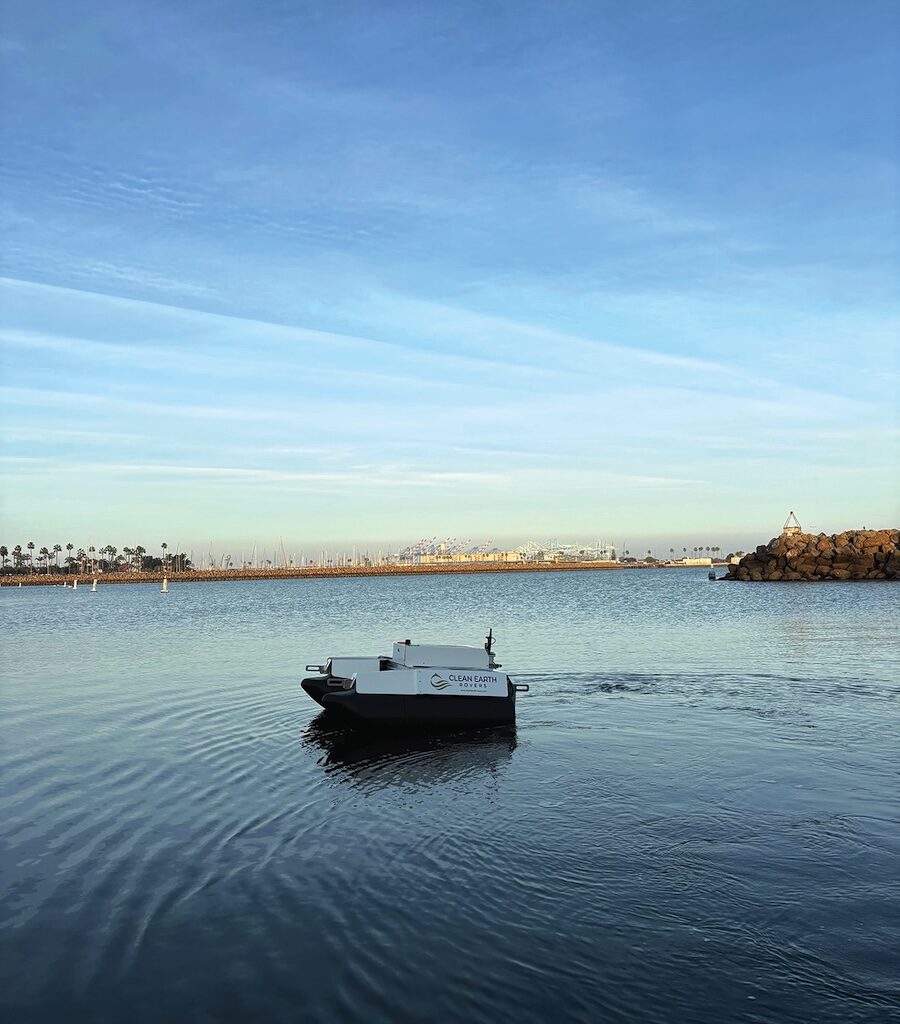
Michael Arens thinks we ought to know what kind of trash is causing pollution. His company, Clean Earth Rovers, collects hundreds of pounds of trash at the Port of Los Angeles to be sorted, counted and documented. Since the beginning of January, it has removed around 1 ton from the Port of Los Angeles – around 200 to 400 pounds a day. Arens has seen everything including potato chip bags, plastic water and soap bottles, and lip balm tubes.
“The challenge becomes coordinating with local legislation and some of the inland cities to make sure that this type of debris is getting discarded properly and that it’s not finding its way in the water,” Arens said. “Plastic bag bans came from this type of data collection.”
Huntington Beach-based Clean Earth Rovers, which makes what Arens calls “a Roomba for the ocean,” was awarded $75,000 from the National Oceanic and Atmospheric Administration’s Technology Development and Commercialization fund in early March. Prior to that, Clean Earth Rovers has cobbled together around $420,000 in financing from research and development grants, angel investors and small venture checks.
“Taking some money and backing has been extremely helpful for getting us off the ground, but really a lot of our growth has been fueled by revenue and bootstrapped. It’s kind of been a tough journey doing it that way, but I think it’s for the best,” Arens said. “I feel like Clean Earth Rovers is really a business where seeing is believing and showing that we can grow organically has been a really big success for our team.”
Clean Earth Rovers was a passion project for Arens’ that technically started in 2019 but was ideated well before that. In high school, he was fascinated by the issue of ocean plastics. In college, where he studied entrepreneurship and management, he went through a college pitch competition to evangelize his concept of ocean vacuums.
Years later, Clean Earth Rovers would deploy its unmanned surface vessels – the technical term for a boat without a crew – in Huntington Harbor, Newport Harbor, and now, Los Angeles.
“You don’t realize how much trash is out there until you start collecting it,” said Esmeralda Polanco, a Clean Earth Rover staff member who oversees the collection of garbage. “Removing all of this debris from the water reminds us about how our trash doesn’t just disappear when we throw it away.”
The company managed to remove 7.5 tons of trash in the span of a year in Huntington Beach. Clean Earth Rovers also collects data on the weather conditions, time-stamped photos of the marinas and tide charts to track when and where trash appears more frequently.
“We’re collecting, and then also just using that data and the results from this project to encourage the community to make smarter choices at home,” Arens said.