
The Abridged version:
Women are involved in operating 63% of farms in California, a higher share than in any other major agricultural state.
Across Northern California, they are running orchards, managing ranches and building diversified farms connected to local restaurants and markets.
From family lands to university labs, women are shaping the region’s agricultural future.
Across Northern California, women are increasingly at the helm of agriculture.
California is home to more than 45,000 female agricultural producers, representing nearly 38% of producers in the state, according to the California Department of Food and Agriculture. Women are involved in operating 63% of farms statewide, a higher share than in any other major agricultural state.
Over the past decade, the number of female farmers in California has grown 13%. They are signing the paperwork, hiring workers and determining how their farms survive another dry year. For some, that authority comes from returning to land their families have worked for decades. For others, it comes from formal training, nonprofit incubators or the disruption of a pandemic that forced a career pivot.
Their paths into farming differ, but the responsibility looks the same: deciding what gets planted and shaping the future of their farms.
Sign Up for the City of Treats Newsletter
Get the latest Sacramento food news from Benjy Egel in City of Treats — delivered every Tuesday.
A growing presence in agriculture
“Women are increasingly shaping decisions in agriculture,” said Anne Todgham, associate dean of Agricultural Sciences in UC Davis’ College of Agricultural and Environmental Sciences.
At the university, women’s enrollment in agricultural majors has remained consistent over the past decade. What has shifted, she said, is the scope of opportunity. Agriculture today intersects with sustainability, science and public policy, and job growth in the sector has expanded in recent years.
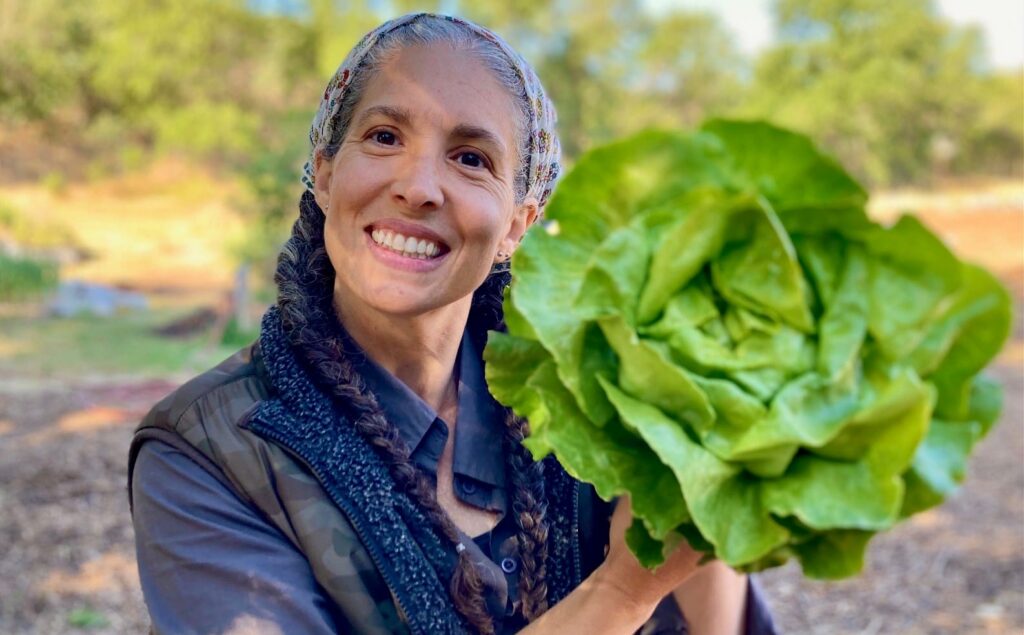 Audrey Pascone co-owns Red Gate Ranch in Red Bluff. (Courtesy Audrey Pascone)
Farming with family — and a best friend
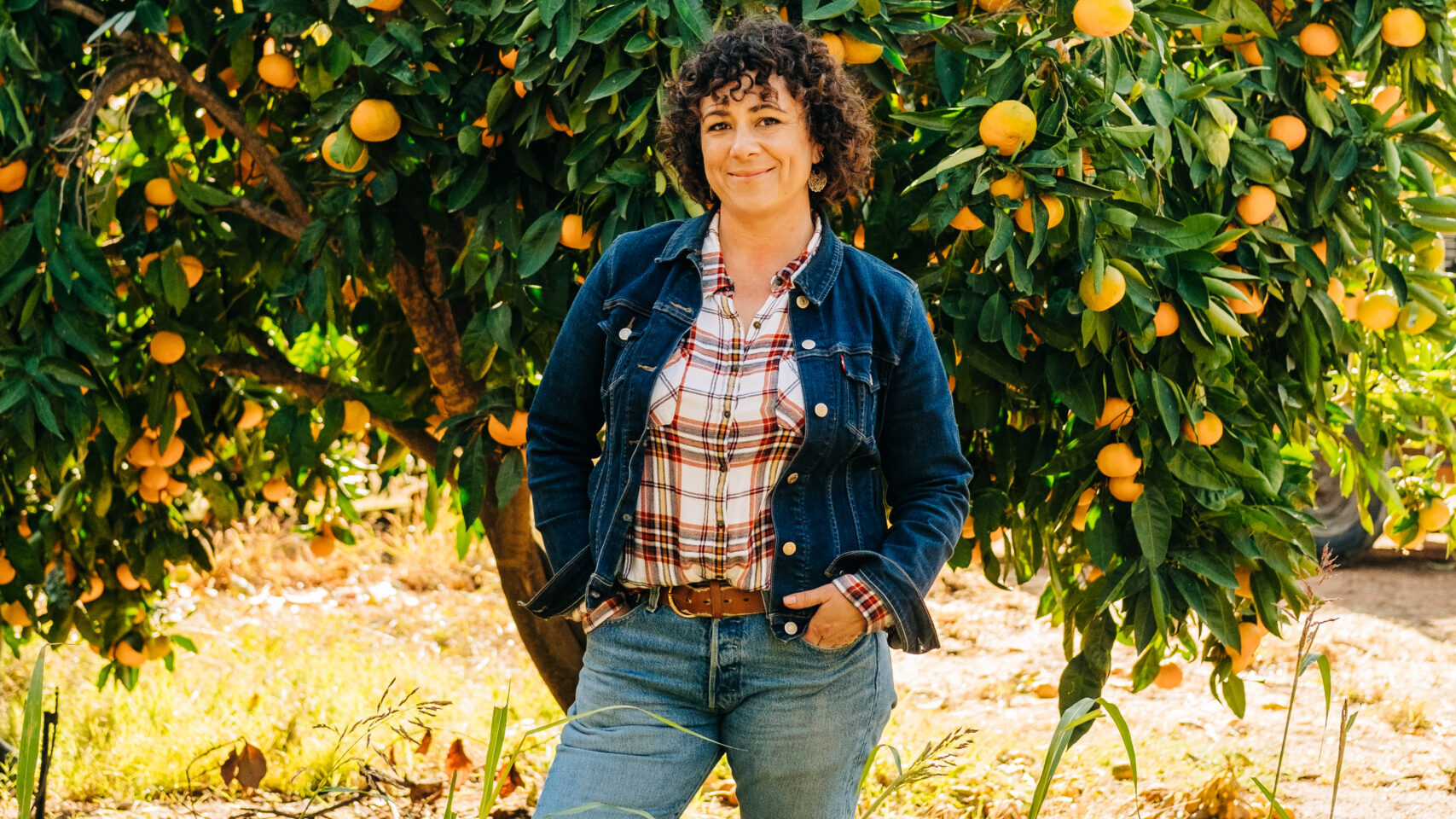
Camelia Enriquez took over her family’s Twin Peaks Orchards in Newcastle in 2020. A fourth-generation farmer, she converted the acreage to certified organic and regenerative production. As a result, Twin Peaks became the largest certified organic operation in Placer County and one of only seven designated Slow Food Farms in the country.
Her family has farmed in Newcastle for four generations, but her leadership has reshaped the operation. Since taking over, she has prioritized soil health, long-term regenerative practices and employee housing and living wages, decisions she sees as central to the farm’s future.
Asked about taking on leadership of the farm, Enriquez was direct. “I didn’t really give anyone a chance to tell me I couldn’t be the decision-maker,” she said. “We are no longer just the farmer’s wife or daughter. We bring knowledge, skill, attention to detail and determination.”
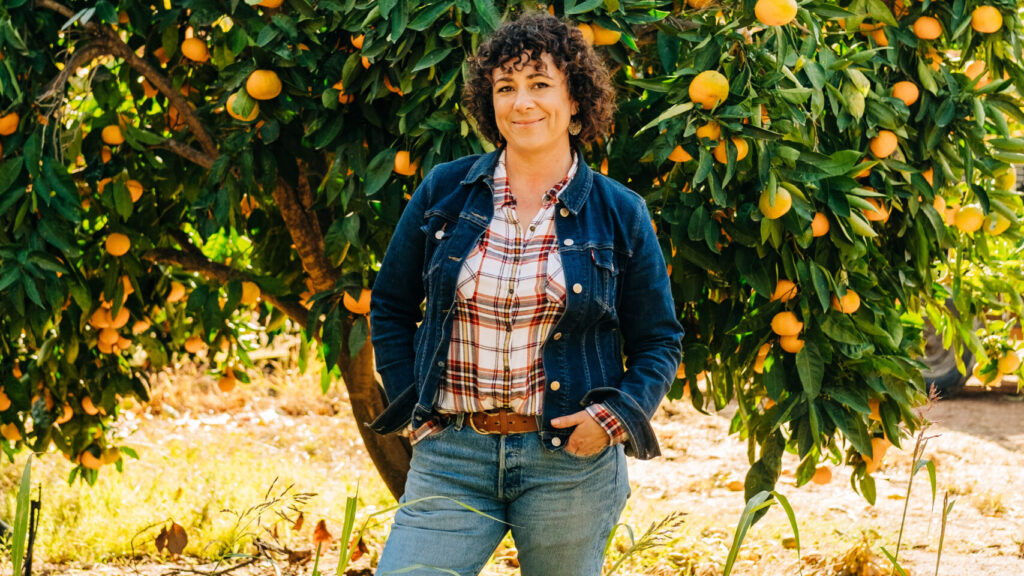 Camelia Enriquez took over Twin Peaks Orchard in Newcastle in 2020. (Courtesy Camelia Enriquez)
At Red Gate Ranch in Red Bluff, owners and best friends Audrey Pascone and Heather Austin operate 110 acres of pasture and livestock, along with a couple acres of certified organic vegetables. They sell at a weekly farmers market and run a 100-member CSA, a community-supported agriculture program where customers receive weekly farm boxes.
The ranch supplies pork year-round, grass-fed beef seasonally and vegetables through those channels. During peak summer harvest, their crew is in the fields by 5 a.m. to beat triple-digit heat while winter crops are already going into the ground.
“You’re acting in one season, but you’re planning for another season at all times,” Pascone said.
Austin oversees business operations and certification. Pascone manages the nursery and customer relationships. Together, they divide responsibility across livestock, produce and payroll.
The ranch is entering its ninth CSA season, with many members who have supported them from the beginning. They refer to those customers as their “farmily,” a shorthand for the relationships built through weekly boxes. Their carrots have become a standout crop. As Austin put it, “We have a carrot following now.”
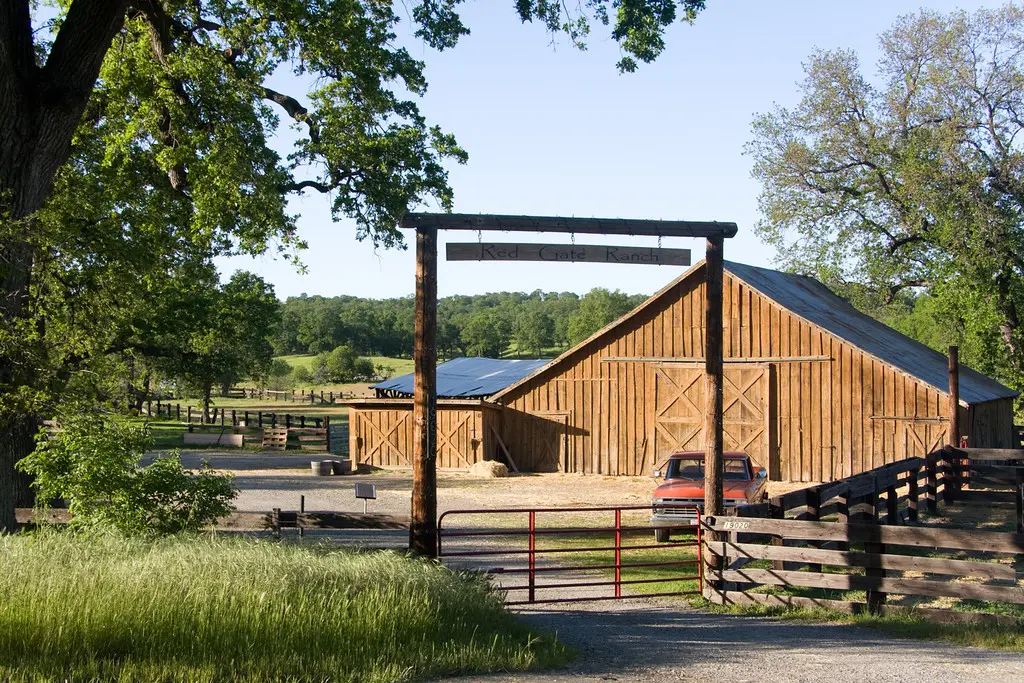 Red Gate Ranch in Red Bluff. (Courtesy Red Gate Ranch)
New paths into farming
Chelsea Bruce did not set out to become a farmer. A chef and business owner, she began growing food during the early months of the pandemic to supply her café, North Fork Chai Co., and reconnect with her family’s ranching history in Newcastle. What began as a small project expanded into Due North Ranch, a woman-owned operation producing specialty crops, flowers and heritage apples on family land her relatives had farmed for decades.
“When I first started farming, I didn’t necessarily see myself as the farmer or the primary decision-maker,” Bruce said. “Over time, that shifted.”
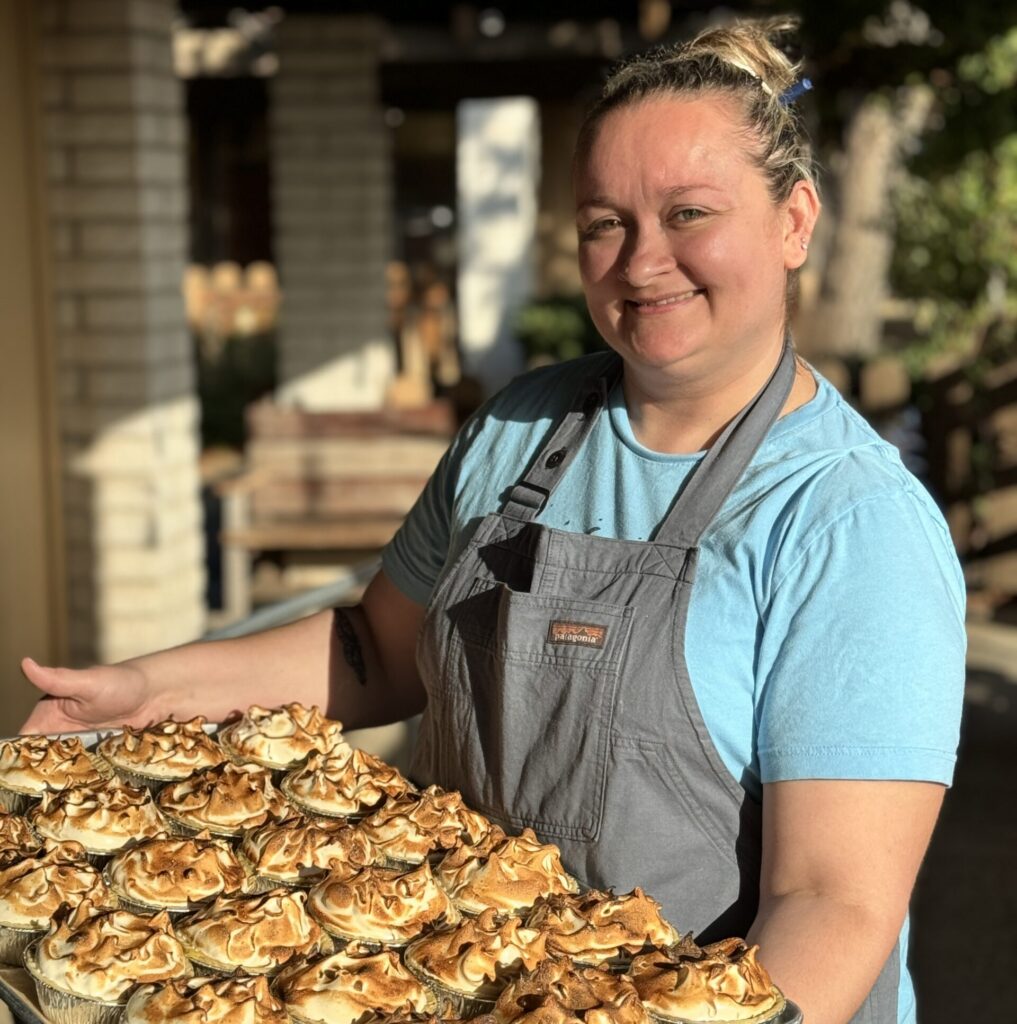 Chelsea Bruce owns North Fork Chai. (Courtesy Chelsea Bruce)
Bruce’s family were fruit growers in Newcastle from the 1920s through the 1980s, and that history shaped how she saw the land long before she assumed full responsibility for it. As the ranch grew, so did her role. She and her mother planted, sold and learned season by season, building a diversified model that connects directly to her café and allows her to oversee the process from planting to plate.
Cindy Gause did not grow up farming. A former environmental scientist, she enrolled in the Center for Land-Based Learning’s farmer training program when she and her husband became empty nesters. She began on a quarter-acre incubator plot in West Sacramento, growing specialty peppers and learning how to run a small farm with the support of shared tools and infrastructure.
The plan had been to buy land — 5 to 10 acres, with a budget of $700,000-$800,000, already a stretch. Then the pandemic hit, Bay Area buyers flooded the market with cash offers and prices jumped by $200,000. “We couldn’t compete,” Gause said. Every property they looked at came with water or soil issues they could not afford to fix.
“I was going to give up,” Gause said. A connection through the Master Gardeners led her to a nonprofit site in Elk Grove, where she secured a multiyear lease and committed fully to building Bella Vida Farm. She is now entering her ninth season.
Gause focuses on specialty peppers tailored to restaurant demand, along with quail eggs she delivers to Localis. Chefs have asked her to grow specific varieties, including hatch peppers for Mulvaney’s B&L.
Competing on scale was never the goal. “I wrote a business plan when I started, and I’ve followed it almost exactly,” she said. “That’s what I’m most proud of.”
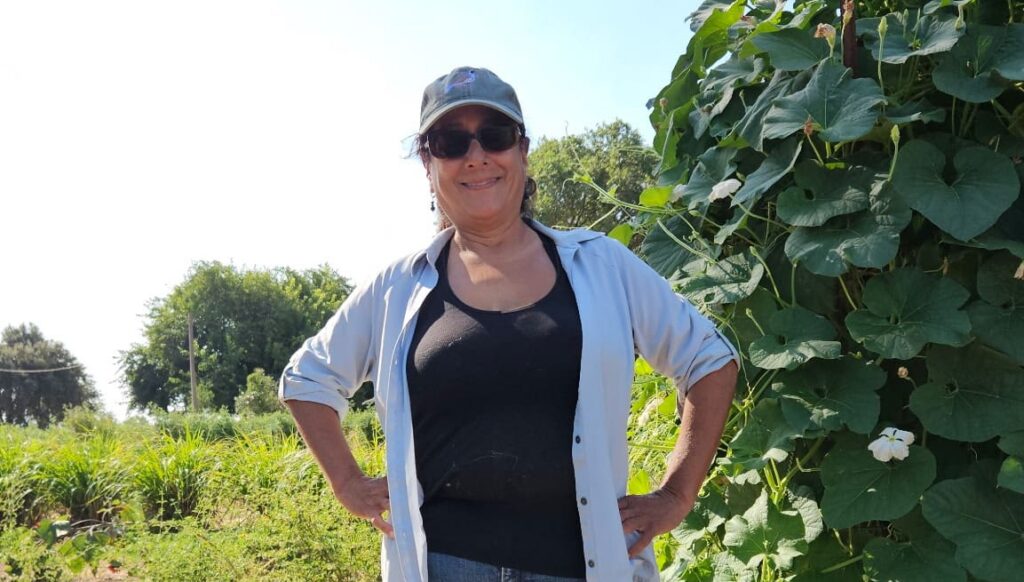 Cindy Gause of Bella Vida Farm. (Courtesy Cindy Gause)
A new generation enters the field
The next generation of agriculture is already taking shape at UC Davis. Clarissa Tsu, an undergraduate studying agricultural and environmental technology, traces her interest in agriculture to her grandfather, who immigrated from the Philippines and worked as an asparagus farmer in the San Joaquin Valley.
She grew up hearing about the physical strain of fieldwork. Now she is studying how technology can reduce that labor and improve working conditions.
“Finding ways to reduce the amount of hard labor is important to preserve the physical capabilities of people,” Tsu said.
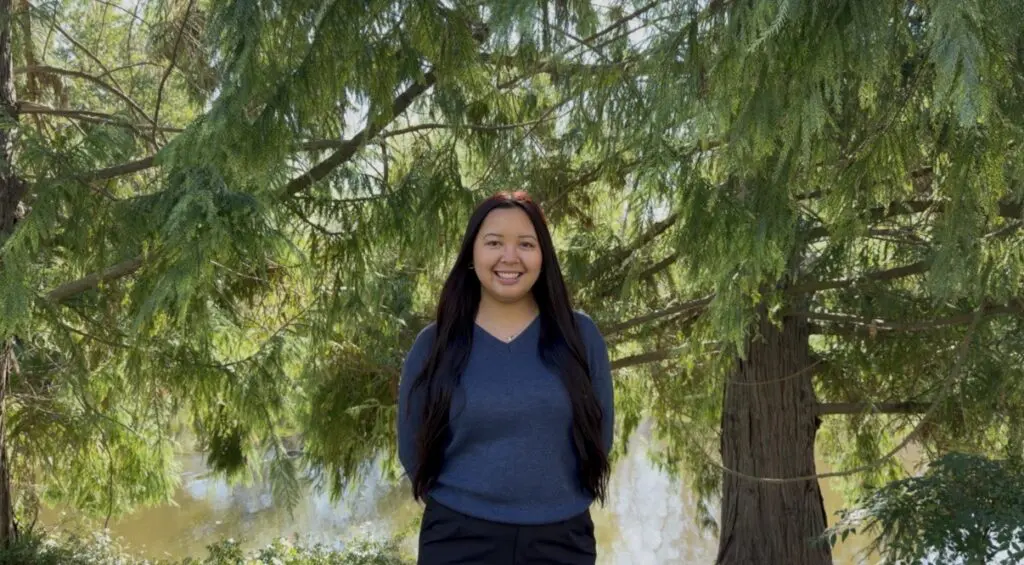 Clarissa Tsu is studying agricultural and environmental technology at UC Davis. (Courtesy of Clarissa Tsu)
After graduation, she plans to work in agricultural marketing, helping companies bring new tools and products to market. She is especially interested in technologies that help farmers improve yield and harvesting processes.
Women have held top agricultural roles regionally for years — from UC Davis deans to California’s secretary of agriculture. Asked what factors contribute to more women pursuing agricultural careers, associate dean and professor Todgham pointed to purpose.
“Our students engage in agricultural-related subdisciplines as they want to be part of real-world solutions in sustainable agriculture, food security and preserving biodiversity in working landscapes,” she said.
The women farming across Northern California today are part of that longer arc, and the next wave is already in the fields, the labs and the classrooms, ready to make it their own.
Related from PBS KVIE: Twin Peaks Orchards in Placer County
Keyla Vasconcellos is a Sacramento-based freelance journalist.