
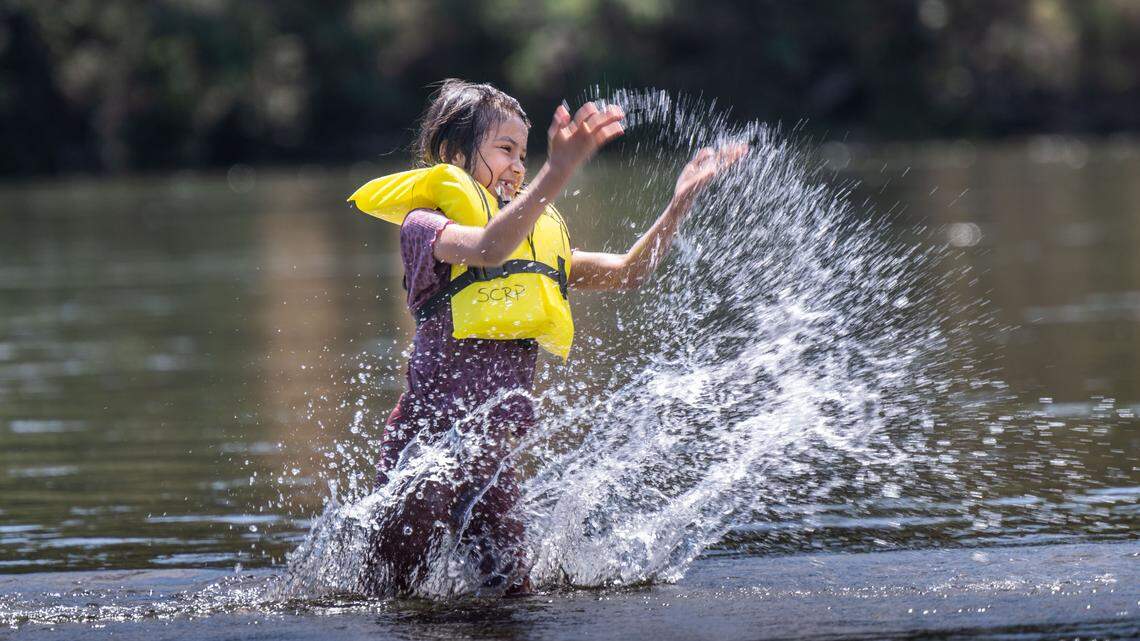
Though the heatwave appears to be easing up around Northern California, outdoor recreationists are experiencing the first few weekends of prime rafting and swimming weather.
However, experts urge caution when taking a dip in the still-dangerous rivers and other waterways in the Sacramento area.
High temperatures in the capital region are expected to drop after record-breaking heat in mid-March, according to National Weather Service forecasts. Still, temperatures in the mid- to high-80s are still considered “well above normal,” the weather service said.
Here’s what to know if you plan to cool off in one of the Sacramento region’s many streams, rivers or creeks.
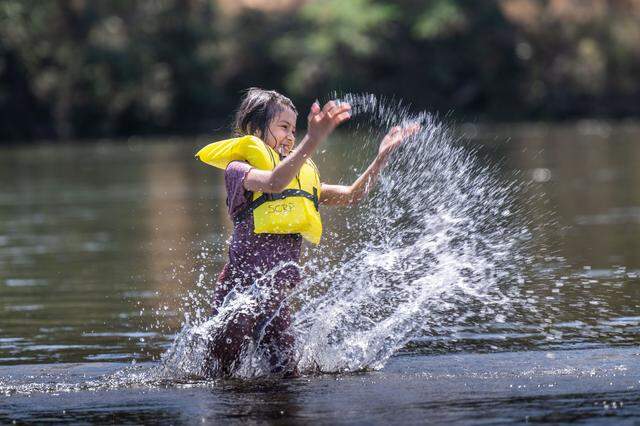 Tajala Jambdi, 7, of Sacramento splashes water while wearing a life jacket on the American River at River Bend Park in Carmichael on Thursday, June 27, 2024. The National Weather Service cautioned people to wear life jackets and be mindful of water temperatures in the Sacramento region’s waterways. Hector Amezcua hamezcua@sacbee.com Cold and fast waters endanger swimmers
In a social media post Friday, the National Weather Service Sacramento office said the region’s waterways are “running fast & cold” from Sierra Nevada snow melt.
“Even experienced swimmers can lose muscle control very quickly,” the weather service’s post read. “If you choose to enter the water, on a boat or otherwise, wear a life jacket, avoid alcohol, and keep a close eye on kids!”
The California Nevada River Forecast Center publishes daily temperature observations and forecasts for rivers across the region, which the weather service encouraged swimmers to check in advance.
Many of the area’s most popular waterways, including the Sacramento River, American River, Feather Yuba River, Cache Creek and Putah Creek, experienced record-high water temperatures last week. Some of the observed temperatures exceeded 85 degrees.
However, forecasts still show most areas will have water temperatures in the 70s or lower in the coming days, which poses a health risk, according to the National Weather Service.
Why is cold water dangerous?
The weather service said in its post that cold water can have adverse effects on critical body functions like breathing and muscle function. The California Governor’s Office of Emergency Services said on its website that waterways fed by snow melt can “induce cold shock and stun even the strongest swimmers.”
According to the weather service, water colder than 77 degrees Fahrenheit will begin to impact breathing. At 60–70 degrees, breathing becomes difficult to hold or control. Between 50-60 degrees Fahrenheit, once breath is lost it becomes impossible to regain and muscle control only lasts a few minutes, the weather service reported.
Sudden immersion in cold water can stimulate the “gasp reflex,” causing an involuntary inhalation of air or water and can start the drowning process immediately,” CalOES said on its website.
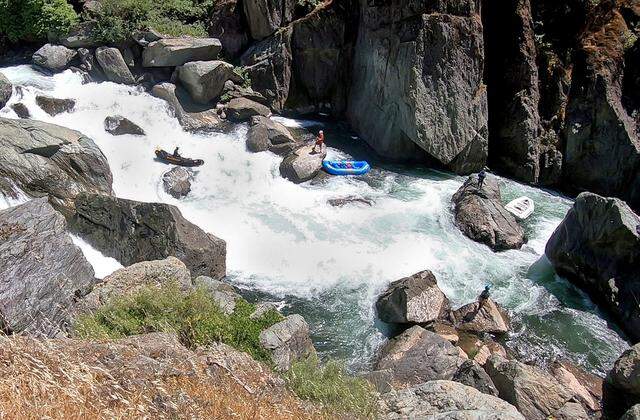 A guide with Sierra Whitewater maneuvers his raft on Ruck-A-Chucky Falls on the Middle Fork of the American River on May 24, 2024. The falls are considered too dangerous for a loaded raft, so passengers disembark and hike around the obstacle. Hector Amezcua hamezcua@sacbee.com How to stay safe near water
Here are some safety tips for those planning to spend time in and around water from the California Department of Water Resources, National Weather Service and Sacramento Fire Department:
Plan aheadCheck the status of the park you’re planning to visit before you leave your home for restrictions and guidelinesCheck river conditions on the Department of Water Resources’ website.Bring a proper-fitting life vest and shoes, as well as sun protection and water for hydration.Bring a life preserverKnow your GPS coordinates so you can provide your location in case of emergency.Tell someone where you are going and when you expect to be back, and let them know when you return safely.Know the waterStay out of cold, fast-running water.Never enter the water to rescue someone.Throw something that floats and call 9-1-1.Never swim alone and never go in the water after drinking alcohol.Know your limitsEven the strongest swimmers can become overwhelmed when faced with cold, swift water.Life jacketsLife jackets are strongly recommended when recreating in or near waterways.SuperviseKeep a close eye on family and friends if you plan to be around flowing water.Always watch children in and around water. Assign a designated “water watcher.”
Loading…
Related Stories from Sacramento Bee

The Sacramento Bee
Camila Pedrosa is a service journalism reporter at The Sacramento Bee. She previously worked as a summer reporting intern for The Bee and reported in Phoenix and Washington, D.C. She graduated from Arizona State University with a master’s degree in mass communication.