
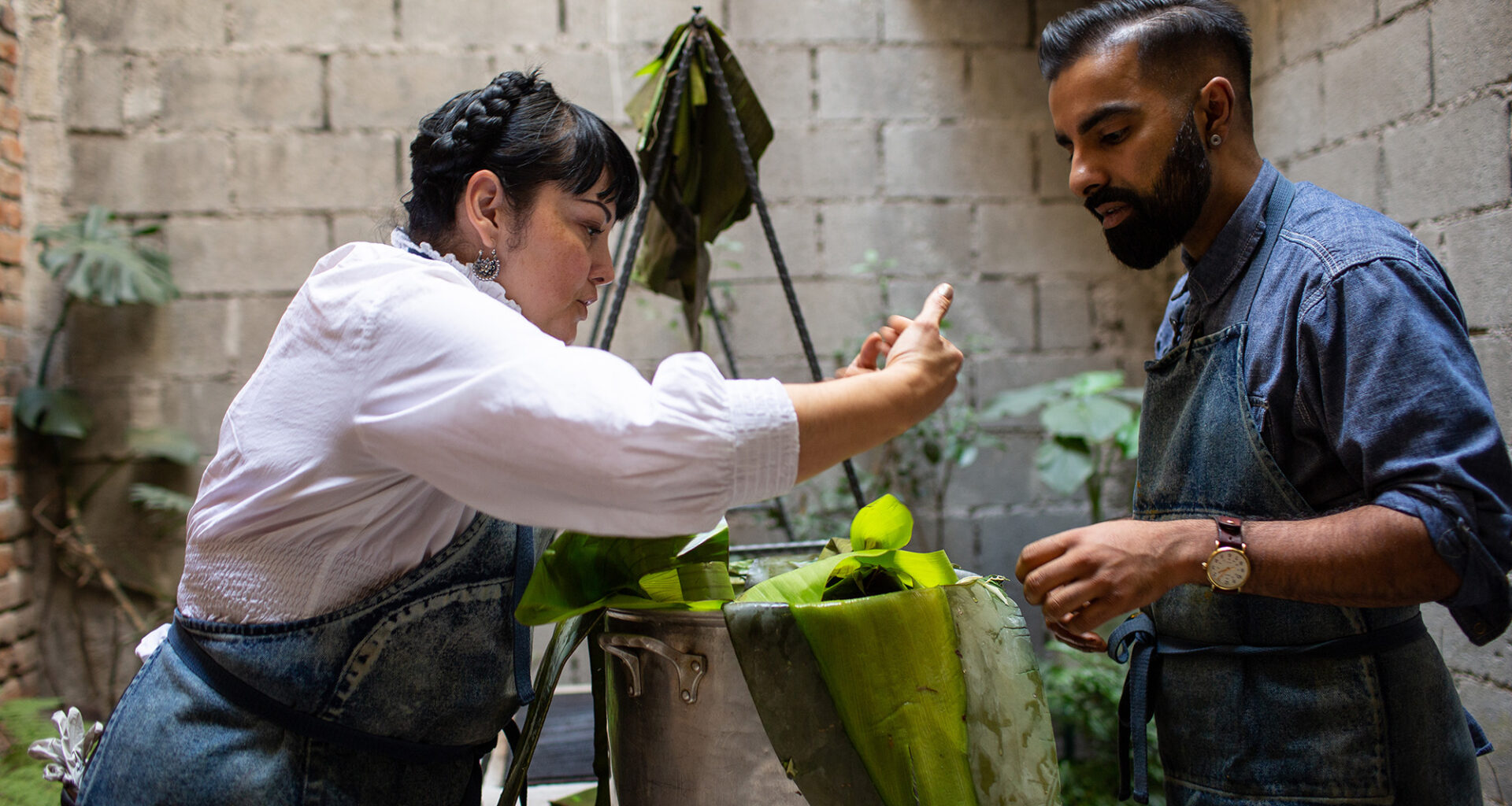
Oakland’s grassroots influences, along with Listman’s leftist upbringing in Mexico and Keval’s post-colonial literary acumen from his days at Sonoma State University, are unmistakably baked into Masala y Maiz’s philosophies of collectivism, equity and universal workers rights. A few times a year, the restaurant hosts an “Eat What You Want, Pay What You Can” night, inviting anyone — particularly locals combating the rising cost of living in a gentrified Mexico City — to enjoy a Michelin-starred meal, even if all they can afford to pay for it with is a piece of original artwork. The restaurant’s regular menus often feature large, bilingual phrases (“white supremacy is terrorism”; “que vive la lucha femenista”) based on current events.
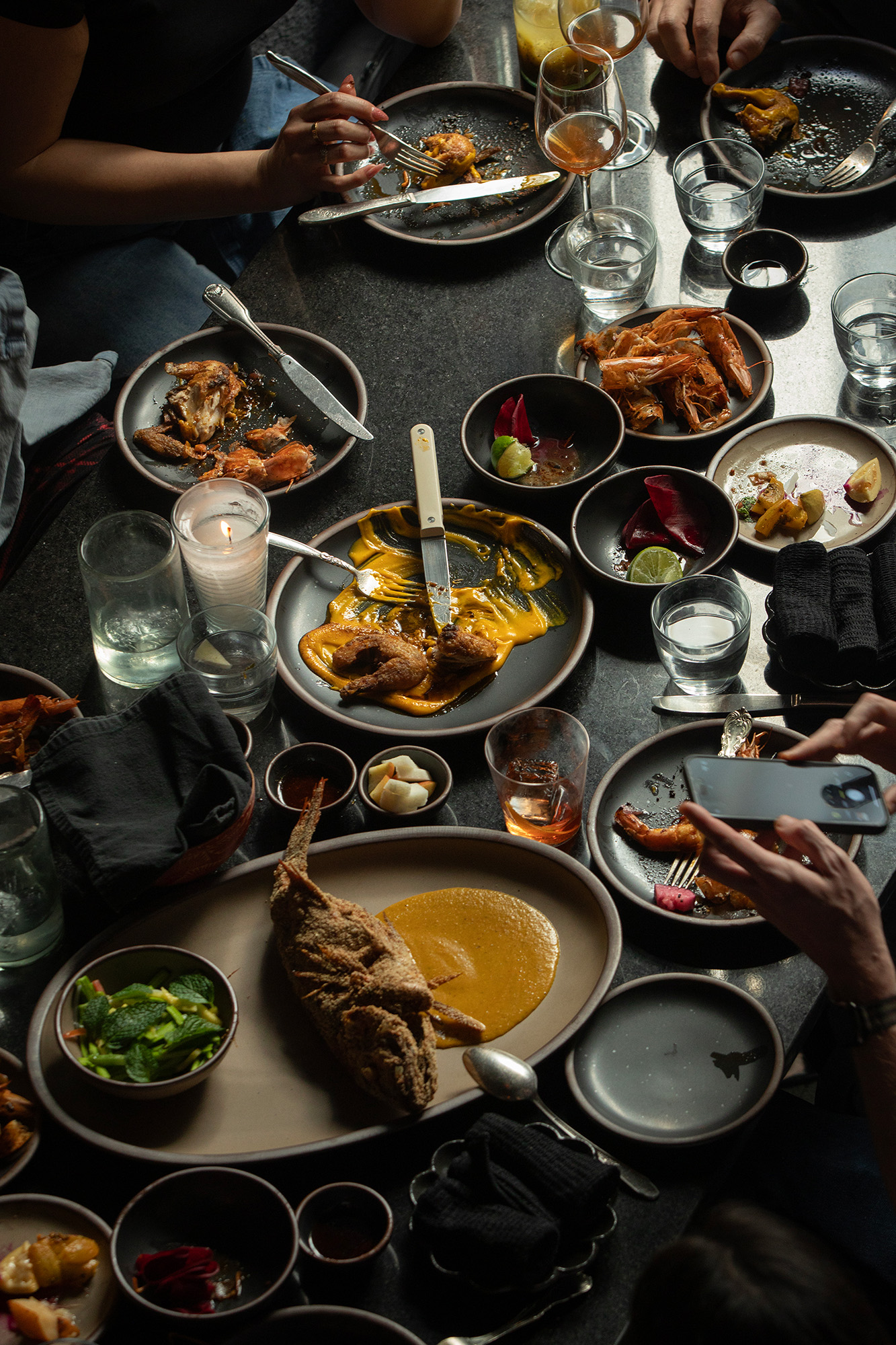 An impressive spread of dishes at Masa y Maiz. (Ana Lorenzana, courtesy of Masala y Maiz)
The messaging isn’t only for show. In 2018, the restaurant boldly challenged Mexico City’s government officials, citing corruption and bribery — and somehow came out unscathed. Then, in 2021, the couple rejected a nomination from The World’s 50 Best Restaurants, calling out the foundation’s culture of exploitation and sexism. On Instagram, Masala y Maiz expressed gratitude for the recognition but didn’t yield, sharing a graphic of their invitation with a simple declaration overlaid above it: “Gracias, no gracias.”
The restaurant has also proven to be far more transcendentally savory than any political statement could ever be on its own. That is to say, the food at Masala y Maiz reflects Oakland’s famously eclectic flavors, too, in its borderless mezcla of dishes: an edible tapestry of Mexican, Indian and East African ingredients. The paratha quesadilla, which uses Indian flatbread in place of traditional corn tortillas, is gooed together with a blend of Oaxacan and mountain cheeses, and served with a side of salsa machaar and herb salad. For the uttapam gordita, a thick South Indian dosa is topped with shredded barbacoa, butternut squash, asparagus and housemade salsa verde. And the esquites makai pakka is a Kenyan remix of Mexico’s beloved street corn dish — a stir of corn kernels, coconut milk, East African masala, in-house mayo and crumbled cotija cheese.
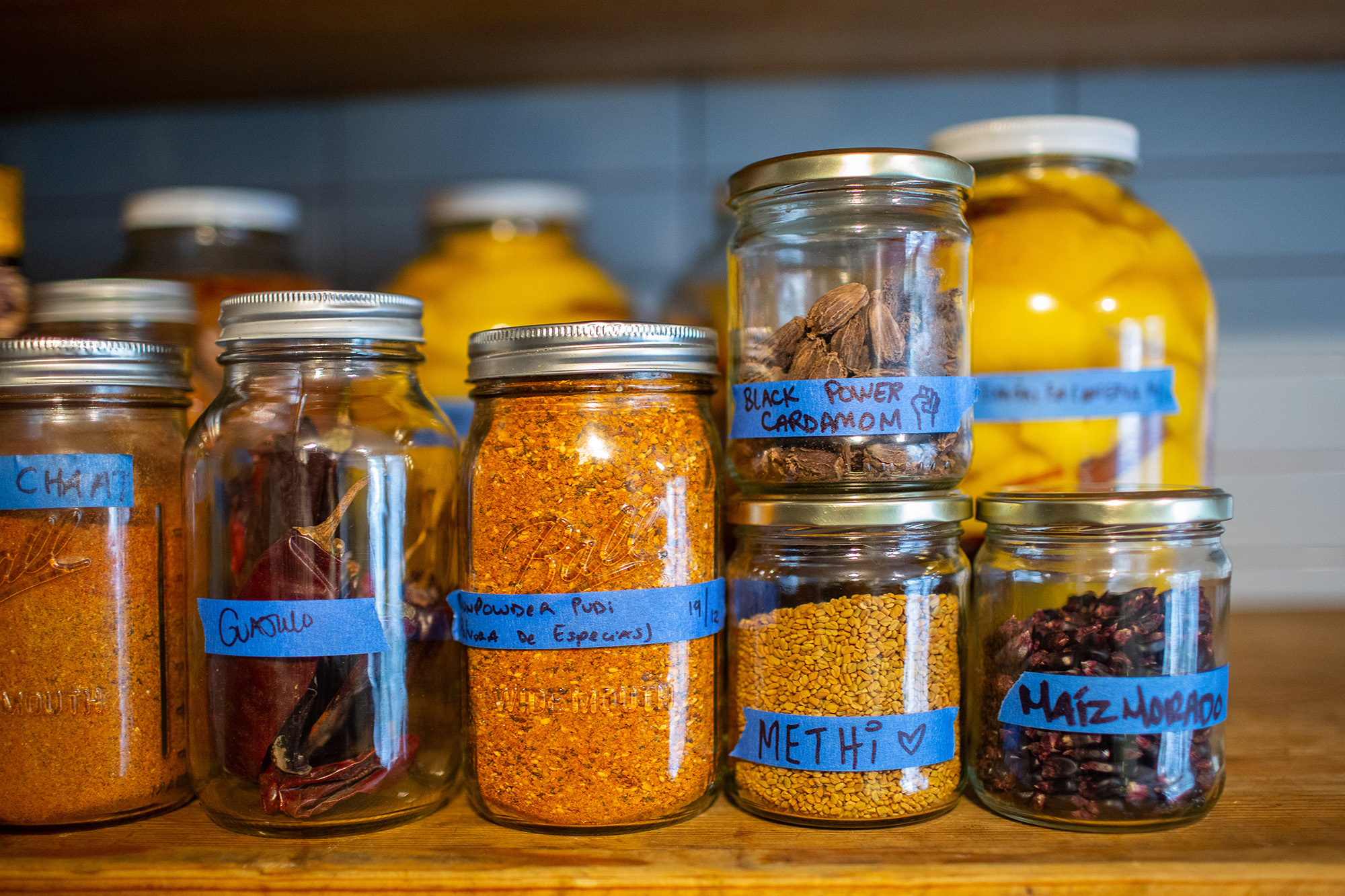 Masala y Maiz is a reflection of the commonalities that can be found across different parts the Global South. Here, a medley of Indian and East African spices sit beside Mexican ingredients like corn and guajillo peppers. (Sana Javeri Kadri, courtesy of Masala y Maiz)
Now, Oakland’s past is reuniting with the restaurant’s present. This month, the duo is hosting a series of guest chefs from all over the map in honor of International Women’s Month. The series concludes on March 25 with a collaborative dinner featuring the Bay Area’s own Reem Assil and Nite Yun, who both got their starts cooking in Oakland. Yun is the Cambodian American chef behind Lunette, a Khmer gem inside San Francisco’s Ferry Building; Assil is the Palestinian-Syrian culinary icon of Reem’s California fame. The Bay Area chefs will join Listman and Keval to create a one-night-only menu centered on their Cambodian, Palestinian, Indian and Mexican backgrounds.
But how, exactly, did this internationally renowned hot spot make it all the way down from the East Bay’s shores to the pedestrian-flooded Centro Historico of Mexico’s trending capital to begin with? As it turns out, it all originated as an Oakland love story.
‘Ghetto Gourmet’ and PKC — that’s Oakland, baby
Before landing in the Bay, Listman had already established herself in the Mexico City art scene. When she came to Oakland in the ’90s, she quickly felt aligned with the city’s unsugared realness, laissez-faire freedoms and artistic energy.
“The art scene in Mexico City was very avant garde, very international; it was exhilarating. I felt the same way about Oakland,” she says. “I fell in love with the Bay because of that similarity.”
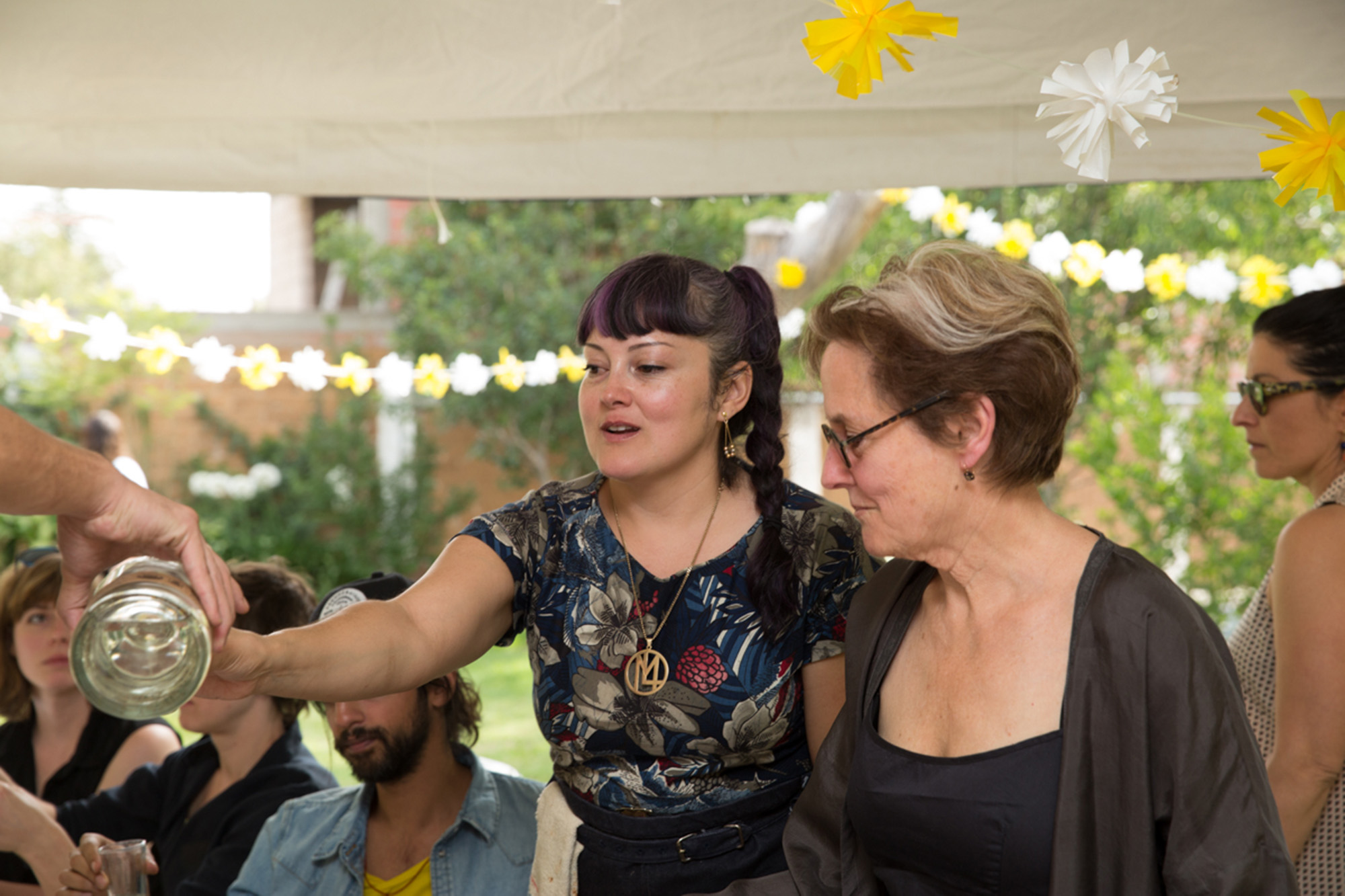 During her time in the Bay Area, Listman brought her expertise and insights as a Mexican-born artist and foodmaker, helping to introduce mezcal to the region when it was relatively unknown. Alice Waters (right), the founder of Berkeley’s Chez Panisse, attended one of her many events. (Courtesy of Norma Listman)
The Oakland of then was far from the Oakland it would later become. In the mid-to-late aughts, Listman was among the first in the Town to purvey artisanal mezcals, when the libation was more mystery than mainstream. She was invested in fashion, design and art. In 2007, she began working front of house in various Oakland restaurants, eventually finding her way into the kitchen. She independently experimented with food as “a medium to tell a larger story” with a project she titled The Salon Dinners. Listman recalls those times fondly, before tech billionaires and real estate conglomerates completely uprooted artists and storytellers in the region, leaving a profit-driven void in their wake.
“In Oakland, there was something called ‘Ghetto Gourmet,’” she says, describing an underground community of Oakland home chefs at the time, not to be confused with the Berkeley neighborhood nickname. “People turned their houses into restaurants and began cooking their own food, and it was a really cool time in the Bay to have those experiences and to be experimental. I started doing some of that,” she says. “Where I grew up in Mexico, it’s common that some homes and garages and family dining rooms become restaurants to serve pozole or some other dish that the family matriarch does well. [My dinners] felt like a blend of that, in terms of food, but it was shot down by the health department. It lasted about a year and a half, and it was so cool.”
For Listman, these kinds of secretive, word-of-mouth happenings gave Oakland a certain magic in that era: “Everything felt more hidden. Back in the day, nothing was exposed, but if you knocked on a door, it would open, and then another door would appear behind that, and you’d find another world inside.”
 From left: Keval, Sita Kuratomi Bhaumik and Jocelyn Jackson. The trio co-founded the People’s Kitchen Collective in 2007. (Courtesy of Saqib Keval)
During that same span, Keval was steadily building up PKC, a political food program he co-founded in 2007, along with Jocelyn Jackson and Sita Kuratomi Bhaumik, in San Francisco’s Bernal Heights neighborhood. Keval’s evolving vision for the group was inspired by his involvement in Bay Area restaurants and food nonprofits like Restaurant Opportunities Center of the Bay Area and West Oakland’s People’s Grocery, where he helped start the Growing Justice Institute, an urban agriculture project.
During Keval’s time at PKC, the group held large-scale public meals at Lil Bobby Hutton Park and at urban farms. Keval developed connections with Black Panther Party elders and collaborated with the likes of Emory Douglas, who created the fliers for the Panthers’ Free Breakfast Program. “It was formative for me as an activist to understand the Black and Brown and South Asian history in the Bay. That was vital,” Keval says of those years.
Soon, his path would serendipitously intertwine with Listman’s.
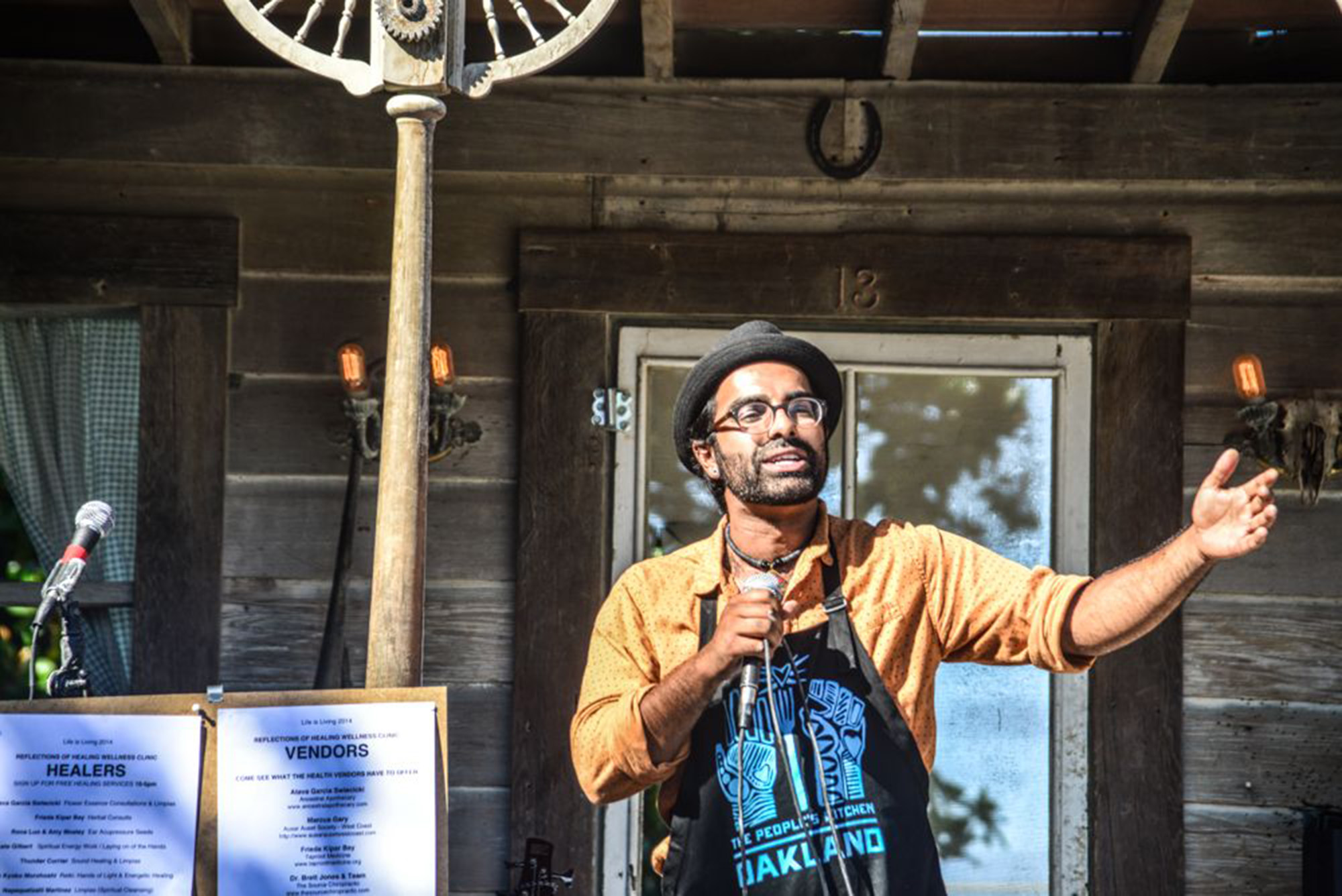 In the late aughts, Keval rallied communities in Oakland and beyond around issues of food justice. (Courtesy of Saqib Keval)
The road to Mexico City goes through Old Oakland
Maybe no neighborhood in Oakland has retained as much of the clandestine enchantment that Listman recalls from the aughts as Old Oakland. In particular, the historic downtown neighborhood — crammed into a quaint, relatively sleepy four-block nook bordered by Highway 880, Broadway and West Oakland — has long been an overlooked bastion of delicious eats.
In prior years, you’d find beloved gems like Miss Ollie’s, the Afro-Caribbean staple with out-the-door lines, where Keval once worked. Today, the neighborhood is home to chef Anthony Salguero’s Popoca, a Salvadoran American powerhouse slanging woodfired pupusas, and T’chaka, Oakland’s first and only Haitian joint (which, poetically, exists in the former Miss Ollie’s space). But arguably no other restaurant in Old Oakland has left more of an imprint than Cosecha. Until it shuttered in 2021, the Mexican eatery inside of Swan Market was one of the most influential restaurants in the Bay Area’s culinary landscape.
Coincidentally, Cosecha is also where Listman and Keval first met, around 2013. At that time, Listman was working with the restaurant to host mezcal tastings and community art events; Keval and PKC used Cosecha as a space to provide meals and build a shared foundation.
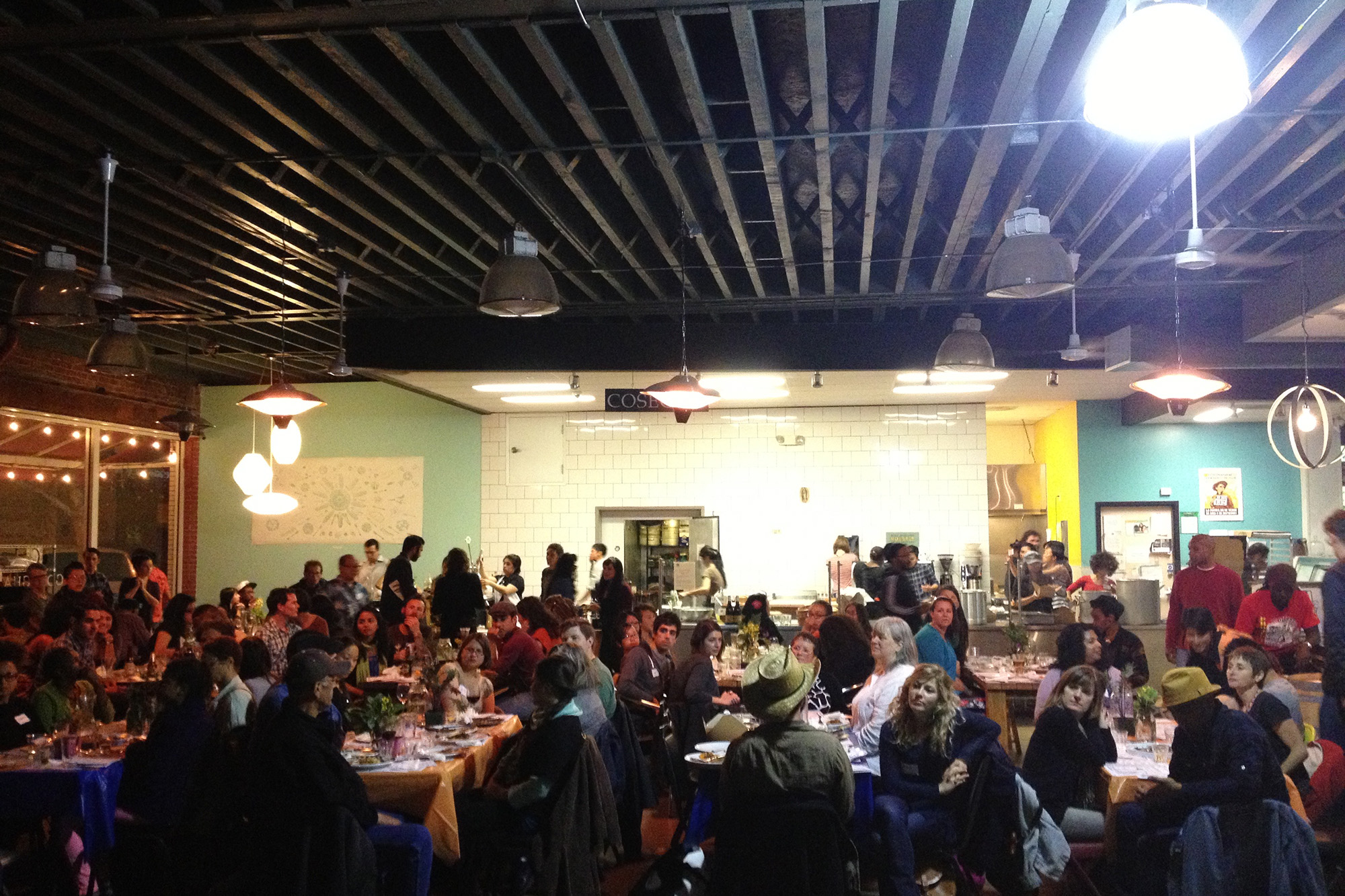 Old Oakland’s now-shuttered Cosecha was an instrumental space for Keval and Listman, who used it as a venue to build community and inspire change. For a time, the restaurant hosted many of the People’s Kitchen Collective’s pay-what-you-can meals. (Courtesy of Saqib Keval/People’s Kitchen Collective)
In terms of how they started dating? Listman tells it straight: “We never really engaged that much. We were busy in our own worlds.” That changed when the Museum of the African Diaspora in San Francisco began a new residency program and recruited both Listman and PKC to collaborate. Listman smiles: “We worked together on that event, and since then we’ve never stopped working together.”
Dominica Rice-Cisneros, Cosecha’s Mexican American chef-owner who currently runs Bombera in the Dimond District, knew the couple long before they were star chefs. Since hosting them in her own restaurant, Rice-Cisneros has gone on to eat at every version of Masala y Maiz (the restaurant has had different locations in Mexico City over the years).
“I consider Masala y Maiz to be a Bay Area restaurant, even though they’re in Mexico City. They are an Oakland restaurant, to be exact. True Oakland,” says Rice-Cisneros. “It’s definitely international and could do well everywhere, but first and foremost, it’s Oakland.”
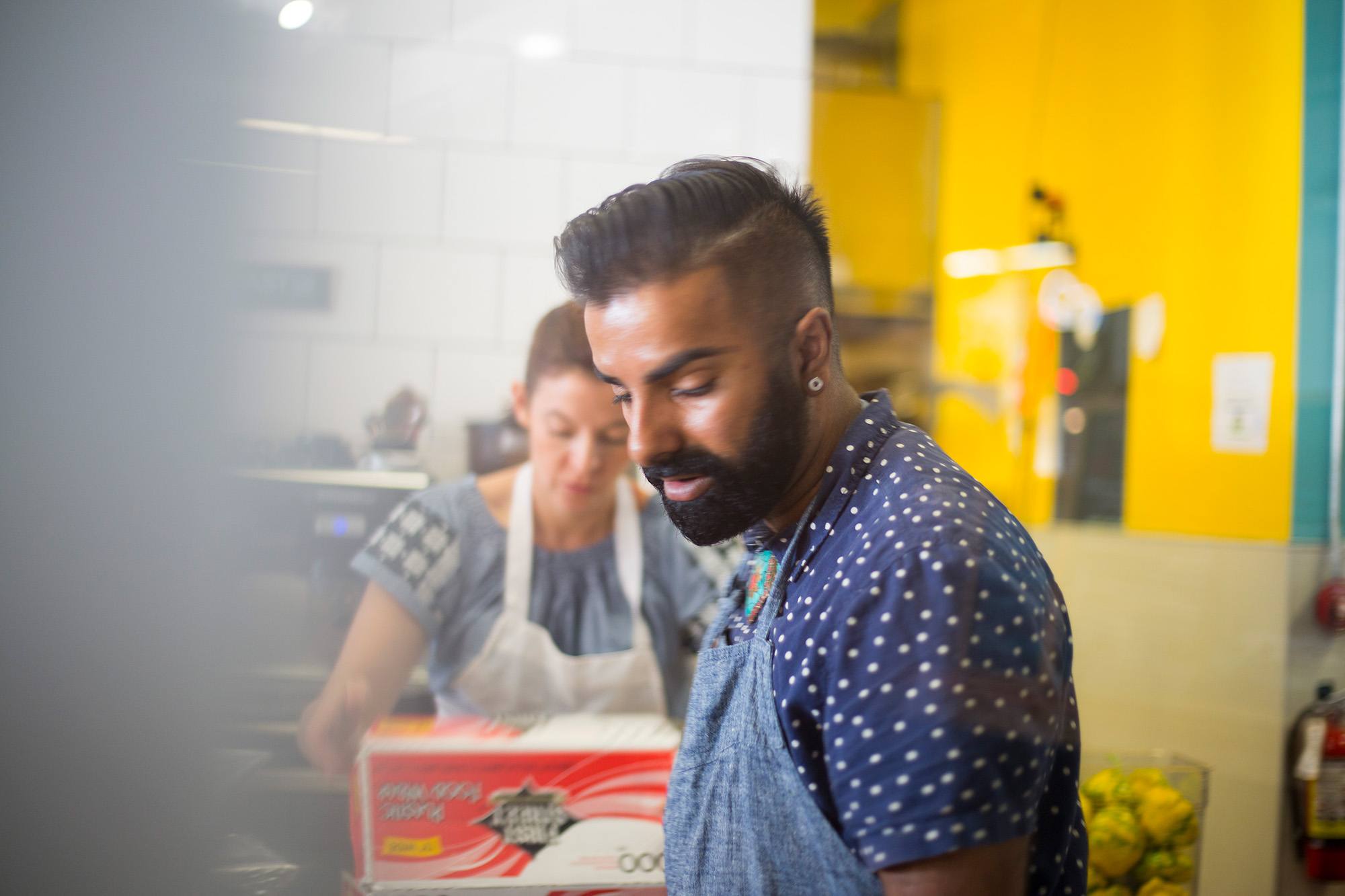 Keval drew inspiration from Bay Area restaurants like Cosecha, where he is pictured in this photo during his People’s Kitchen Collective years. Behind him, Cosecha chef Dominica Rice-Cisneros prepares a dish. (Courtesy of Saqib Keval)
This week, Rice-Cisneros will be flying out to attend the International Women’s Month dinner that Listman is hosting along with Assil and Yun. It doesn’t get more Bay Area — in Mexico City — than that.
While Rice-Cisneros doesn’t take any credit for uniting Listman and Keval, the couple is quick to point out Cosecha’s importance in their lives. “PKC exists because of Dominica. We exist [as a couple] because of PKC,” Keval says.
In 2017, Listman moved back to Mexico to research corn foodways. Unexpectedly, she was offered an on-the-spot chance to take over a dining space in the San Miguel Chapultepec neighborhood of Mexico City. She took the risk and invited Keval to join her. The result was Masala y Maiz: a combination of their families’ migratory lineages told through recipes. In that way, the restaurant is an expression of all of the parallels that Listman and Keval have found between the cuisines and cultures across Mexico, India, Kenya and the Global South at large.
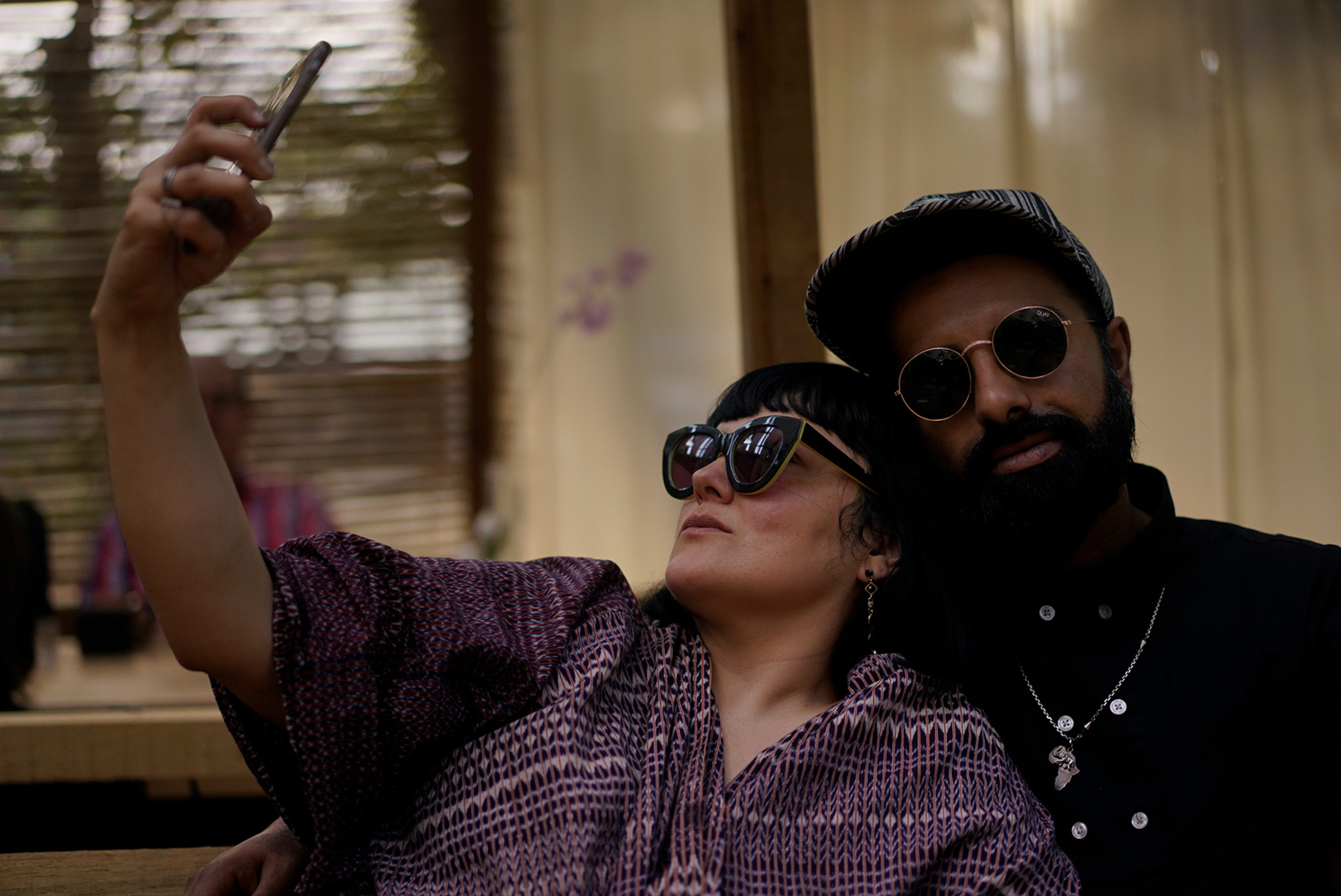 In 2017, Listman and Keval left the Bay Area, where they had met and began dating, with the shared vision of changing the restaurant industry together. (Courtesy of Saqib Keval)
The restaurant’s stature has only grown over the years as it moved into larger spaces and solidified itself as a culinary destination and activist force in Mexico City. But even as the couple was building out their restaurant, the Bay Area was always close to their hearts — and the Bay hadn’t forgotten about them, either. Listman notes that her former mentor, San Francisco chef Anthony Strong (of Pasta Supply Co.), supplied Masala y Maiz with its inaugural set of silverware. Eight years later, it’s still the crown jewel of the restaurant’s collection.