
Less than a week after shocking revelations upended the legacy of Cesar Chavez, San Jose has begun to firm up plans to remove his name and likeness from publicly-owned properties that honor the late labor leader.
These plans are laid out in a memo set to go before the city’s Rules and Open Government Committee Wednesday. Under the framework, the city would first create an inventory of facilities, amenities and public art with a connection to Chavez, and then gather community input to help guide any renaming decisions.
“This memorandum does not prejudge the outcome of any individual renaming decision,” the memo’s authors — which include Mayor Matt Mahan and Councilmembers Peter Ortiz, Anthony Tordillos, Domingo Candelas and Pamela Campos — wrote. “Initiating an inventory and public process is a measured step that allows San Jose to act thoughtfully, support survivors, and honor the broader legacy of farmworker rights.”
If approved, the memo will go before the full City Council for consideration at a later date.
Last week, a New York Times investigation revealed allegations that Chavez, the co-founder of the United Farm Workers who died in 1993, sexually abused young women and children, including fellow movement leader Dolores Huerta.
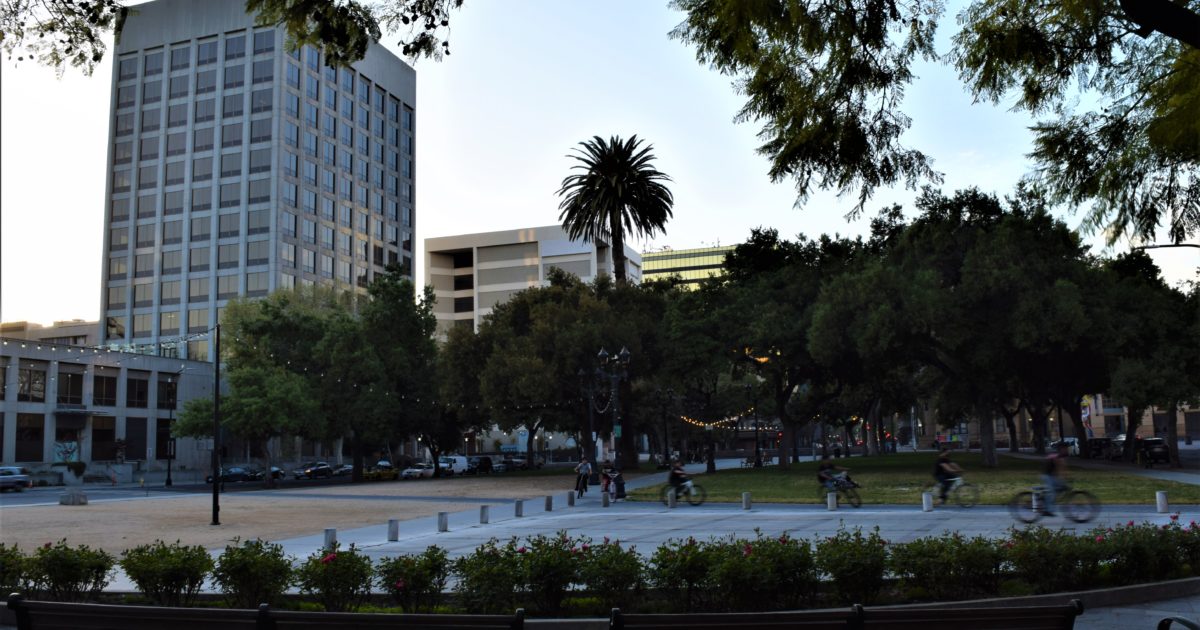
The allegations have sent shockwaves through San Jose, a city Chavez called home at various points in his life. He has long been celebrated in the city, including through the naming of Plaza de Cesar Chavez downtown and an East San Jose elementary school. There are also several Cesar Chavez Day celebrations, including an annual breakfast, march through East San Jose and downtown and a city-sponsored UFW flag raising at City Hall. Festivities for the March 31 holiday have been halted in light of the allegations.
In 2022, nonprofit Amigos de Guadalupe, with support from the city, purchased Chavez’s family home in East San Jose — a historic property now being transformed into a community space focused on education, preservation and housing for young adults.
As part of the review process laid out in the memo, city leaders intend to determine the sometimes complicated procedural hurdles that must be cleared in order to rename public assets. Typically, name changes require a review by a number of city agencies and elected bodies before going to the city council for final approval.
“San Jose has a responsibility to ensure that public spaces and civic honors reflect our community’s values and do not further traumatize survivors,” the memo reads. “Any future community engagement process should be designed in a trauma-informed manner that acknowledges potential harm and avoids retraumatization.”
Soon after news of the allegations against Chavez broke last week, many San Jose leaders moved quickly to condemn Chavez, pledging to reevaluate how the city honors the farmworkers’ movement in public spaces. The memo’s authors stipulate the community engagement process should prioritize the Latino and farmworker communities.
Jessica Paz-Cedillos, CEO of the School of Arts and Culture at Mexican Heritage Plaza and San José Spotlight columnist, applauded the plan laid out in the memo, calling it “the right first step.”
“The farmworkers movement was built by many — especially women and community leaders whose contributions have often gone unrecognized,” Paz-Cedillos told San José Spotlight. “This is an opportunity not to erase history, but to deepen it — to elevate the full story, honor those who carried the movement forward and ensure our public spaces reflect both our values and our collective legacy.”
The San Jose Rules and Open Government Committee meets Wednesday at 2 p.m.
This story will be updated.
Contact Keith Menconi at [email protected] or @KeithMenconi on X.