
Environmental activists and community leaders have urged the Sacramento County Board of Supervisors to move forward with a long-awaited climate action strategy. They warned that years of delays have weakened public trust as the region faces worsening climate threats.
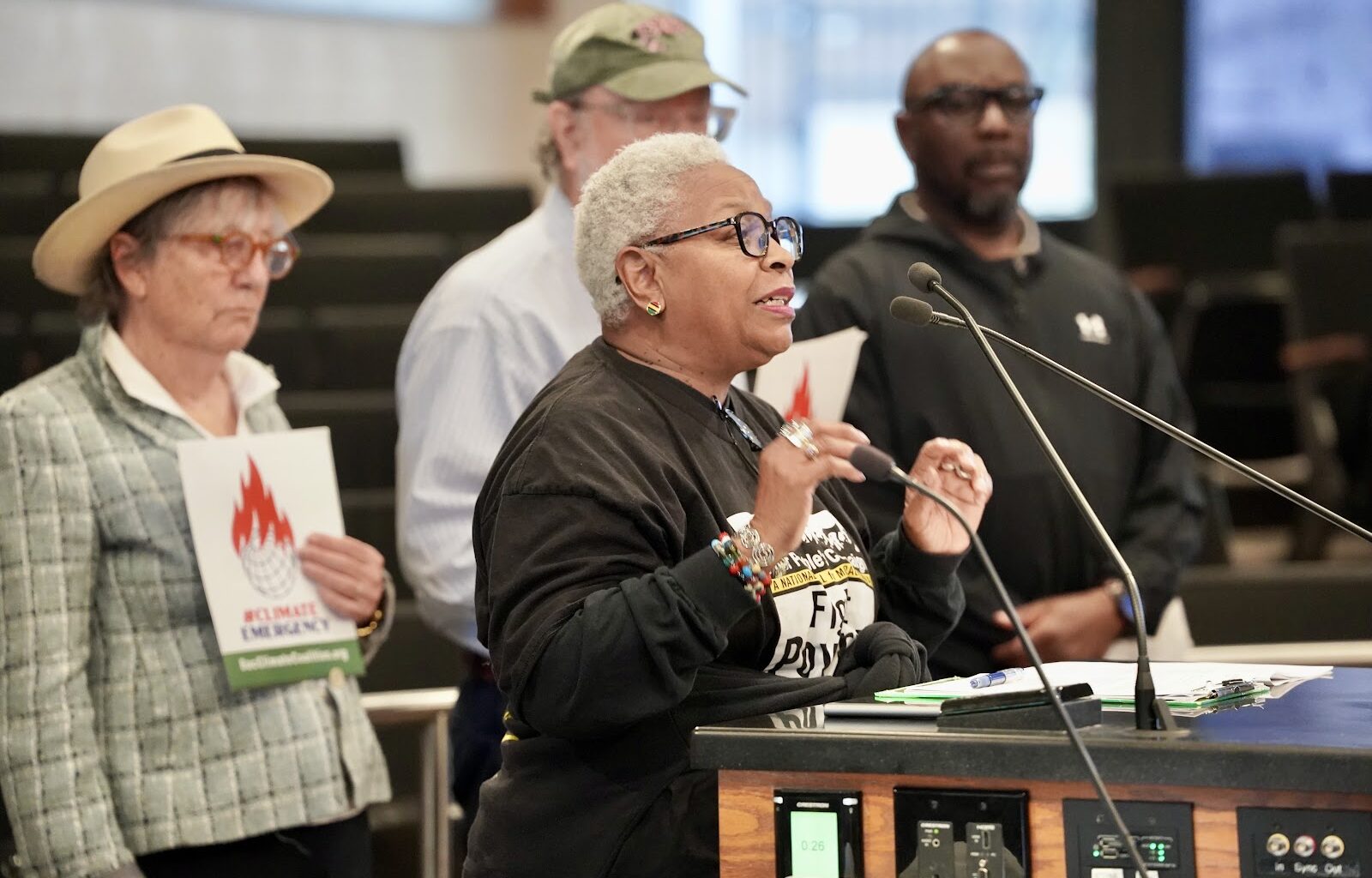
The discussion took place March 10 during a Board of Supervisors meeting. Members of the Climate Emergency Mobilization Task Force and representatives from more than 20 community organizations called on county leaders to fund and implement the task force’s recommendations.
The task force was created after the county declared a climate emergency in 2020. Although the task force completed its Climate Emergency Response Plan in 2024, the plan was not formally presented to supervisors until the March 10 meeting.
Chris Brown, coordinator of the Sacramento Climate Coalition and a board member of the Environmental Council of Sacramento, said the delay was partly due to COVID-19 and staffing changes, which slowed the task force’s operation until 2022.
“We came to meeting after meeting asking, ‘When are you going to present this?’” Brown said. “We did all this work and it never got presented.”
Brown said a formal presentation to the board is necessary before supervisors can consider adopting or funding the plan’s recommendations. He stressed that repeated delays make it harder for community groups to trust the process.
The Climate Emergency Response Plan outlines a wide range of strategies aimed at reducing emissions and strengthening climate resilience across the county. Key recommendations include accelerating energy efficiency and electrification in buildings, expanding access to solar panels and backup batteries at public facilities, and creating low-interest financing programs to help low-income communities adopt clean energy.
The plan also emphasizes nature-based solutions such as increasing urban tree canopy and developing composting systems to improve soil health and reduce carbon emissions. On the transportation side, it calls for expanding bike infrastructure, improving and modernizing public transit, potentially including fare-free programs for youth, and updating land use policies to encourage denser, transit-oriented development. Additionally, the plan proposes building out electric vehicle charging infrastructure to support a broader transition to clean transportation.
A county executive said the county is trying to strengthen its climate team. The official told supervisors that the county recently has added staff with expertise in climate planning and sustainability, including a new sustainability manager and a senior-level position to help advance climate initiatives.
Supervisor Rosario Rodriguez said while she supports climate action, many proposed solutions come with high costs that could affect working-class residents.
“When I look at things like energy-efficient waste management trucks, they are so much more expensive,” Rodriguez said. “And when we add requirements like solar on homes, it increases the cost of housing, making it harder for low- and moderate-income families to become homeowners.”
Supervisor Patrick Kennedy, who has long supported creating the task force, said addressing climate change will require difficult decisions and financial investments.
“If we’re really going to take climate seriously and not just treat it like a bumper sticker, it’s going to require some hard and heavy lifts,” Kennedy said. “It’s not going to be easy, and it’s not going to be inexpensive.”
He added that failing to act would ultimately cost more.
“When you look at the warming, the changing weather patterns and devastating floods happening across the world, it’s something we can’t afford to address,” he said.
Community advocates warned that continued delays could weaken trust between residents and local governments.
“We worked very hard on putting together the plan with staff, and it just sat there,” said Faye Wilson Kennedy, an organizer with the Sacramento Poor People’s Campaign, the Sacramento Area Black Caucus, and the Red, Black, and Green Environmental Justice Coalition. “If this happens again, it becomes a trust issue.”
Wilson Kennedy said the climate crisis already affects vulnerable residents, particularly people without access to adequate cooling during extreme heat.
“We are in a climate emergency,” she said. “People are having a hard time living in homes without air conditioning. We also want you to understand how it impacts our unhoused neighbors.”
Environmental groups emphasized that many of the task force’s proposals outline strategies to reduce greenhouse gas emissions and help the county adapt to climate-related impacts such as extreme heat, drought, and flooding.
“We live in a floodplain, and the science is clear that climate disasters will get worse,” said Katie McCammon, co-executive director of the climate justice organization 350 Sacramento. “Healthy soils, regenerative farming, and restoring native plants help strengthen the land and absorb floodwaters.”
McCammon said restoring ecosystems may also capture carbon dioxide and improve public health.
“Investing in ecological restoration is both environmentally effective and cost-efficient,” she said.
Public health experts also emphasized the risks posed by climate change to children.
“Climate change is a leading public health threat to current and future children,” said Dr. Harry Wang, a member of the county’s Maternal, Child and Adolescent Health Advisory Board. “Children are especially vulnerable because of their developing bodies and greater exposure to contaminants in air, food, and water.”
Retired environmental scientist Susan Solarz said the task force’s recommendations could bring significant benefits to disadvantaged communities by expanding tree canopy, improving public transit, and reducing air pollution.
“These recommendations would provide strong benefits for environmental justice communities,” Solarz said.
Advocates say they plan to continue pushing county leaders to move the plan forward. They argue that the costs of climate inaction will only grow over time.
Related