
Today’s newsletter is a bit different from what you may have come to expect from me. As important as it is to chronicle the serious and often heavy news that I typically focus on about immigration and the border, I believe it’s important to balance that with joy.
I heard about Tijuana’s Taco Museum soon after it opened almost two years ago, but it was only last week that I finally made it inside for the first time.
Situated in the hub of Tijuana tourism along Avenida Revolución, the museum celebrates all of the ingredients that come together to make tacos the food that so many people love. Gamsan Group, which also owns Telefónica Gastro Park, opened the museum in April 2024.
“They made the museum to give recognition to one of the typical dishes of Mexico which is the taco,” said Miguel Aguayo, general manager of the museum. “The taco in all of its different modalities that exist from Baja California to Yucatan Merida.”
Inside the Beloved Taco
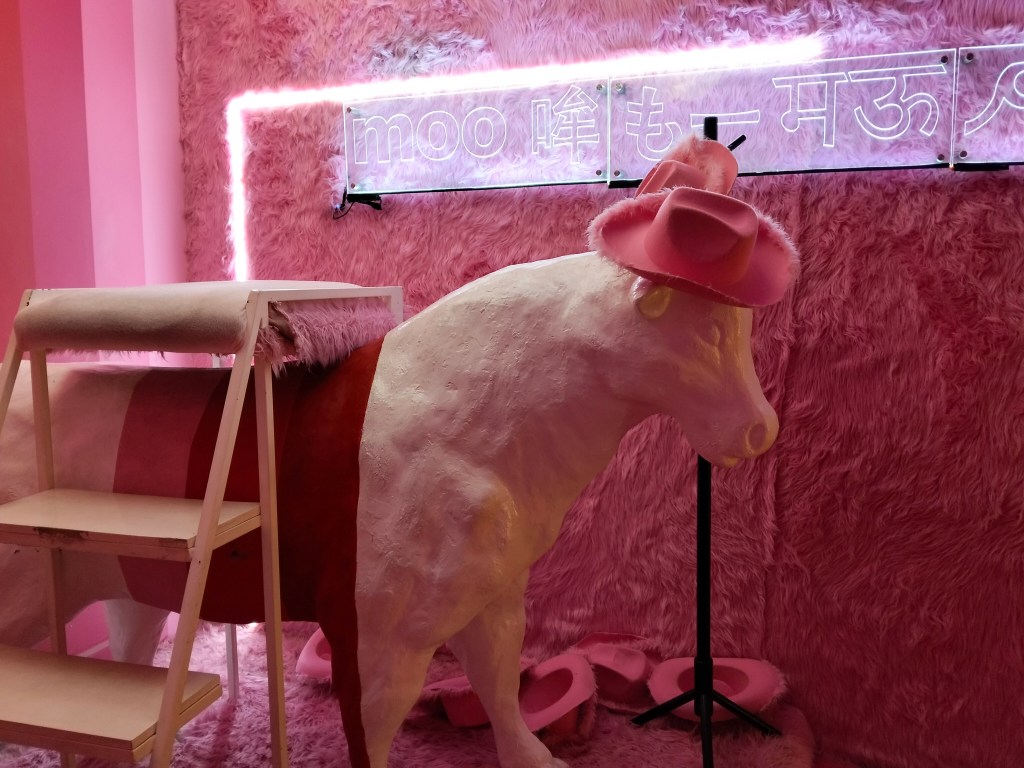 A fake cow inside a pink room at Tijuana’s Taco Museum. / Kate Morrissey
Among its series of interactive spaces designed for family fun, the museum boasts two rooms with ball pits and is a sock-only endeavor. (Pro tip: Wear a good pair of socks.)
The first room is dark with a video playing on the ceiling. As I sat on one of the floor pillows, looking up at the screen, I realized I was seeing the world from the perspective of a piece of charcoal inside a grill. In the video, a grandfather and granddaughter talked about preparing the charcoal to grill the meat.
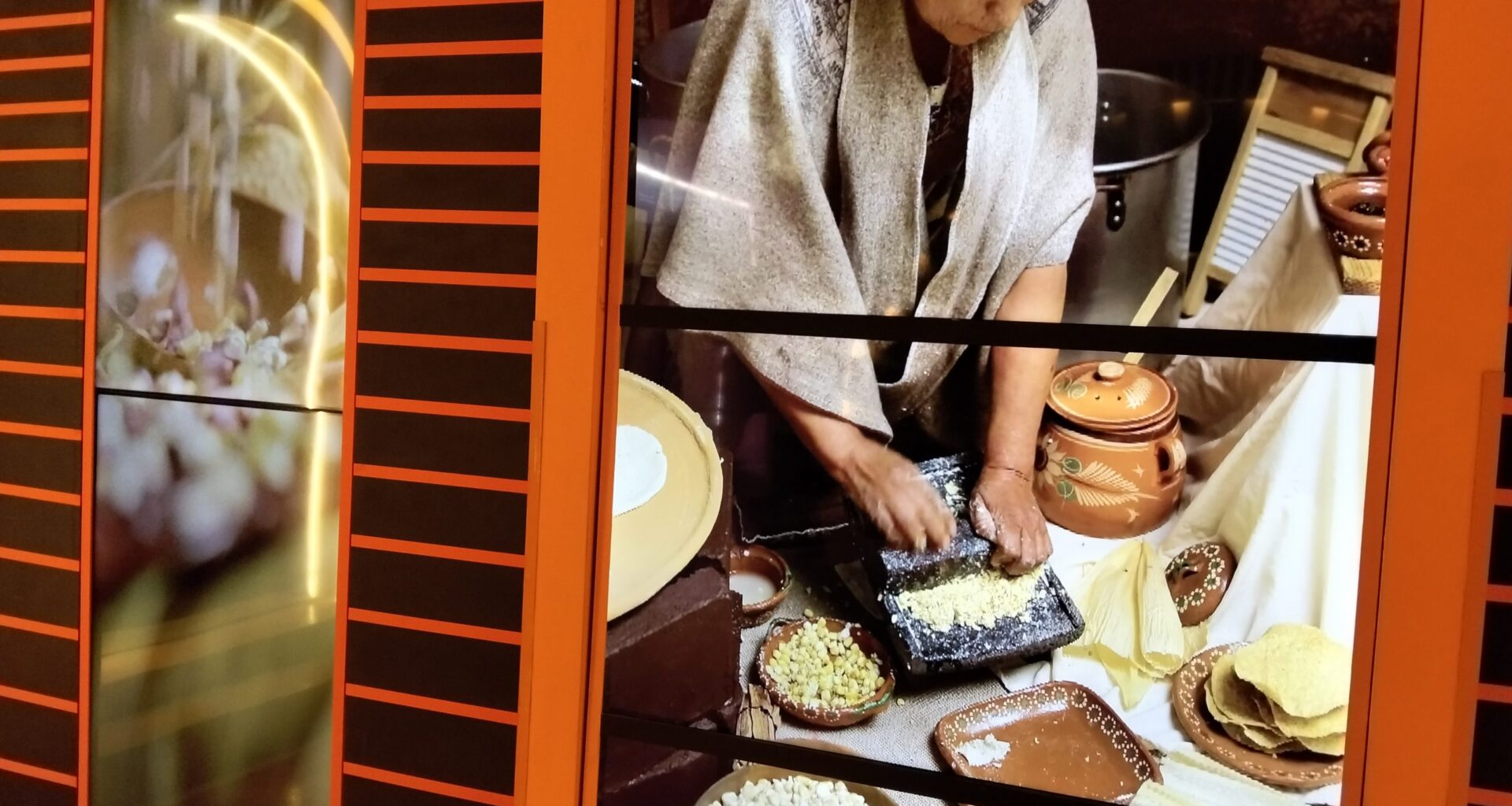
The second room, by contrast, was golden, in honor of corn tortillas. My guide Ian Valeriano led me to a tortilla press and handed me a masa ball to make my own tortilla. On the opposite wall, a video played showing a woman grinding corn into masa using a metate, a tool made of volcanic rock similar to a molcajete but flat instead of bowl-shaped.
Valeriano told me his ancestors taught that only ants used to eat corn, but one of the gods gave it to human beings to feed themselves.
“Maybe he didn’t give us powers of the gods, but he gave us a tool to transform the food of the ants to food for us,” Valeriano said.
In the next room is plush and pink with a life-size cow honoring taco meat. Valeriano said many people come to the museum just to get their selfies with Rosaura the cow.
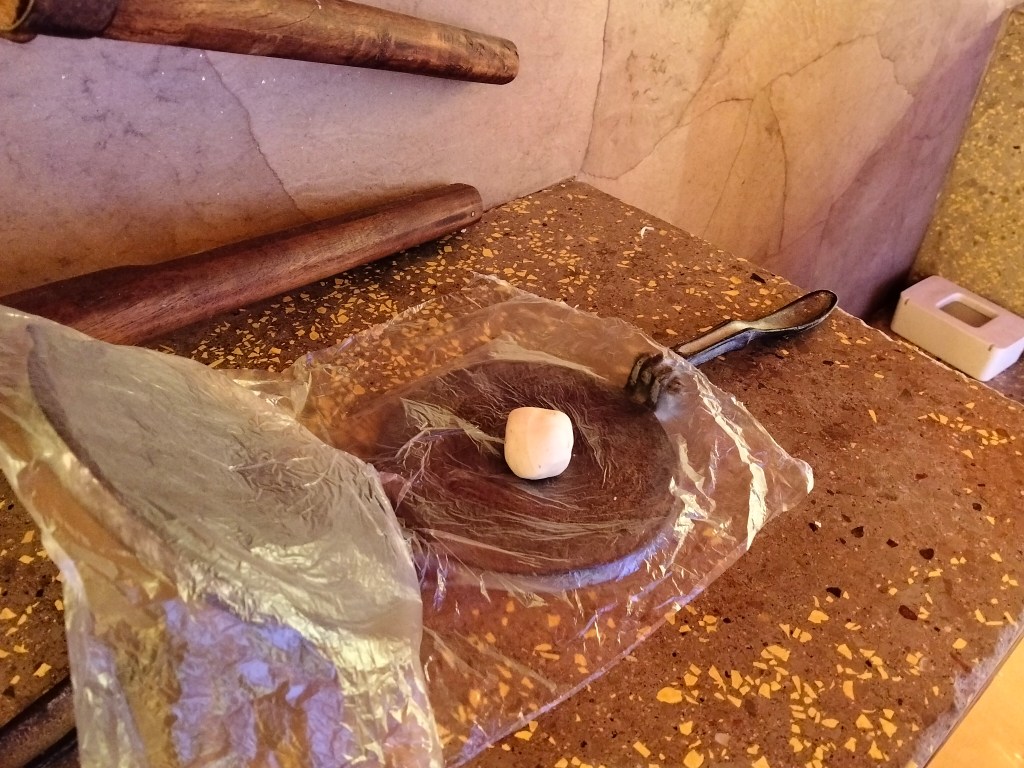 A masa ball at the Tijuana’s Taco Museum. / Kate Morrissey
Valeriano led me up a set of stairs past a large box of aluminum foil to the avocado room, a green room complete with fake grass, avocado-shaped, foam lounge chairs and a techno dance party emanating from the video screens on the walls. Amidst trippy kaleidoscoping avocados, a video told the story of people receiving the fruit as a gift from the gods.
As I moved through a curtain door to the next room, the music changed to salsa. The room was made of mirrors, with red, glowing balls hanging from the ceiling and reflecting through the mirrors.
Aguayo, the general manager, said the salsa room is his favorite.
The next room was white and had a shallow ball pit and spinning carousel of hanging, white balls representing onions. I waded into the ball pit briefly before continuing to the room dedicated to Tijuana’s taquerias.
Tijuana’s Taco History
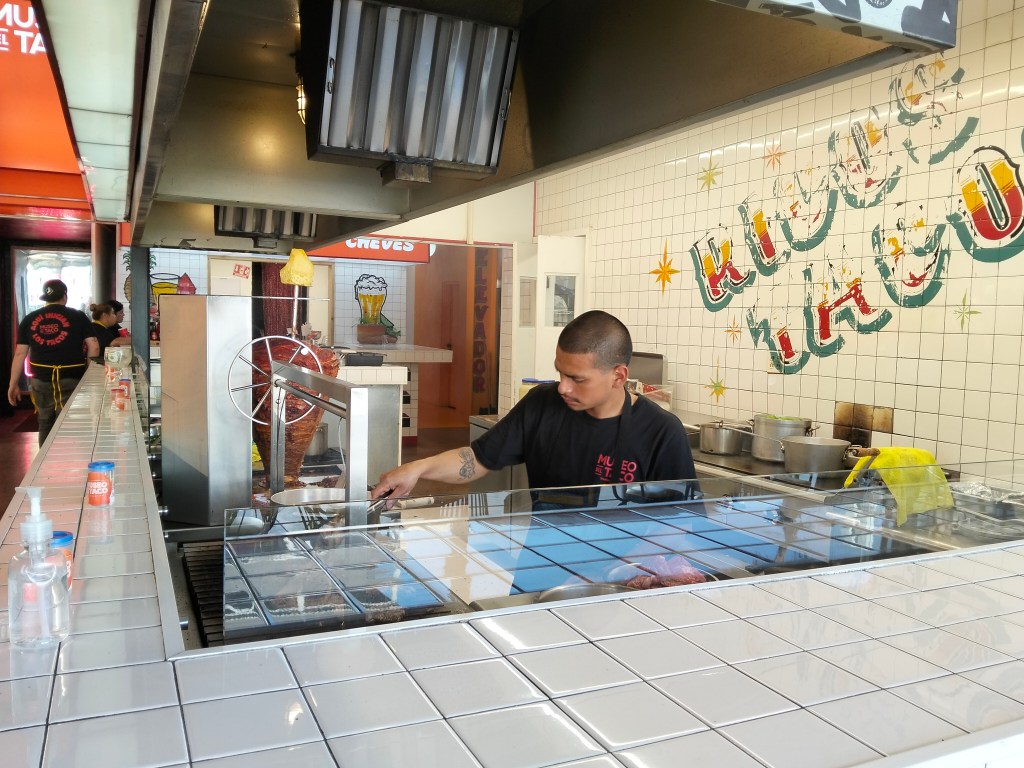 A taco shop at the entrance of Tijuana’s Taco Museum. / Kate Morrissey
Valeriano told me the display in the taqueria room changes frequently to highlight different shops around the city. When I was there, the room told the story of Tacos Aaron, which Juan José Romero Romero and Tila Cázares began in 1981 in the Soler de Tijuana neighborhood, which is along the border part way between downtown Tijuana and Playas.
The room featured a simulated taco truck. Valeriano handed me an apron and plastic machete-style knife and took my picture as I pretended to slice meat from a glowing trompo.
Leaving that room, Valeriano showed me where guests ranked the city’s top taquerias. In first place at the time of my visit was Poblanos, followed by El Franc, Pasadita del 20, Ahumaderas, El Gallito, El Rey, La Glorieta, El Yaqui, El Ruso, and Las 3 Salsas. Netflix featured Tacos El Franc in its show “Taco Chronicles.”
The room containing the rankings paid tribute to adobada-style tacos, complete with a disco ball in the shape of a trompo. Here, guests have to make a decision. Either they prefer tacos without salsa, and they leave through a door, or they choose con todo, with everything, and launch themselves down a slide into darkness. I, obviously, chose the slide.
I landed in the museum’s second ball pit, an orange room where a mother, father and child were playing in the balls when I arrived. As I moved away from the slide, the child climbed back up it to have a second run. After he slid back to his parents, he and his mother disappeared, laughing, into the orange balls.
The entrance to the museum is itself a taqueria, so I decided to eat a couple of tacos before I left. I ordered a carne asada taco and an adobada taco which came with a little piece of pineapple.
“As it should be,” Aguayo said of the adobada taco, which, along with lengua, is his favorite.
I am no food critic, but I can say that I was very satisfied with my meal.
The taqueria has a venue upstairs and a terrace that groups can rent for private parties.
Aguayo said he hopes to feature different tacos from around the country at the museum and taqueria, starting with the cochinita pibil taco, a pork taco from Yucatán.
Different preparations and different salsas go with different tacos, he said.
“What we try to do with the museum is give the story and honor the story of the taco in Mexico,” Aguayo said.
I plan to sometimes bring you newsletters similar to this one that share about a place or experience that you can visit south of the border. I am open to feedback on this — and suggestions! You can reach me on Instagram @katemorrisseyjournalist and on Bluesky @bgirledukate.
In Other News
Family members arrested: For KPBS, Gustavo Solis profiled a family whose father and son were detained by Immigration and Customs Enforcement.
Teacher protest: Teachers in Tijuana blocked southbound border traffic with a protest, Alexandra Mendoza reported for The San Diego Union-Tribune.
Dropped charges: For inewsource, Sofía Mejías Pascoe looked into cases in which federal officials claimed someone had assaulted them only for prosecutors to later drop the charges, including a woman arrested at a checkpoint whom a Border Patrol agent shot with a Taser. Video footage contradicted what agents had said in the case.
Elevated highway: Crews completed work on an elevated highway that connects downtown Tijuana with Playas, Mendoza reported for the Union-Tribune.
Load more posts
Something went wrong. Please refresh the page and/or try again.
Related Posts