
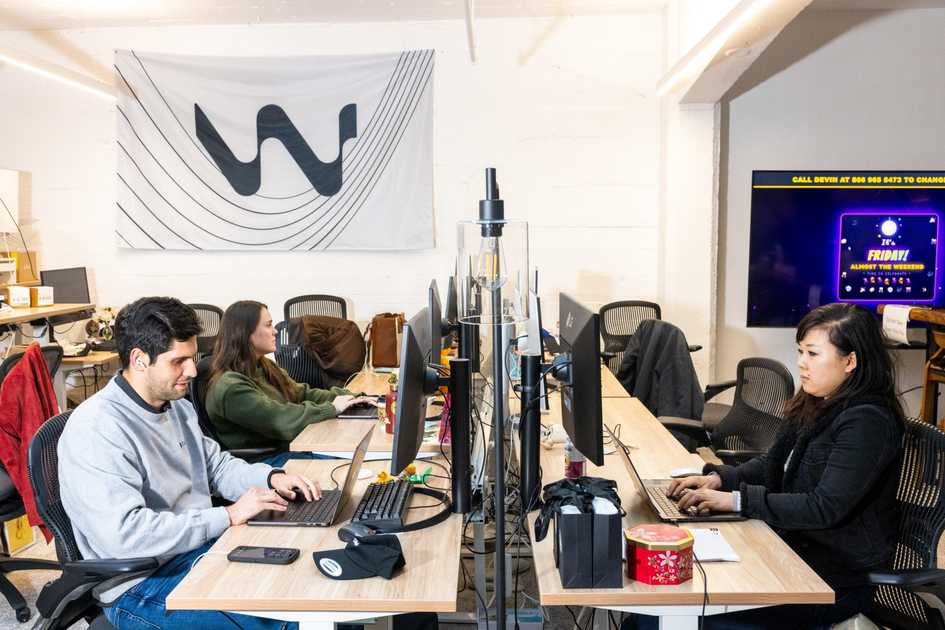
Cognition has traded an Atherton mansion for a headquarters in the South Park neighborhood. | Source: Morgan Ellis/The Standard
Walking into Cognition’s new San Francisco office, the first thing you notice are the otters.
The mascot is everywhere. Stuffed animals on desks, in framed prints of cartoon otters posing at the Hollywood sign and on Mount Fuji, on the check-in screen in the reception area. An otter even appears on a tub of creatine in the gym.
The otter’s name is Devin — a play on “dev,” for developer — and he is typically pictured coding on his laptop. Because, you know, otters are always working.
Cognition calls Devin the world’s first AI software engineer — an agent that can build software from start to finish without human involvement. The ubiquitous otter underscores the larger ambitions of the 2-year-old startup: Devin should be everywhere, all the time.
When Cognition launched Devin 1.0 in 2024, the coding agent was considered a step toward a long-held Silicon Valley dream: a machine that codes for you. But CEO Scott Wu does not believe the technology is ushering in the demise of his own species. “This would be a lot less fun for us to do if we thought that we were making ourselves irrelevant,” said Wu, 29, an elite programmer with three gold medals from the International Olympiad in informatics. “We’re working toward giving everyone their own buddy, Devin, who can go and build out their ideas for them into real software and products.”
Wu’s vision arrives amid a debate in Silicon Valley over the future of software engineering. Rank-and-file engineers feel as if they’re already living in an unsettling future, as tasks that once took them days (after years of training) can be completed in minutes by a machine. The unease has only grown as Amazon, Block, Atlassian, and other companies have slashed their workforces, saying AI is driving productivity gains. Some coders believe that most programming jobs will not exist in the near future and are planning their post-software lives.
Wu thinks they’re all wrong.
 CEO Scott Wu joins a long line of tech founders who did not finish college. He dropped out of Harvard after two years. | Source: Morgan Ellis/The Standard
He believes Cognition is on the frontier of a new era of software abundance — a world in which the barrier to building drops so low that far more software gets made. Rather than eliminate engineers, sophisticated coding tools allow them to focus on the best parts of the job, like creativity and problem solving, and spares them the grunt work of coding and debugging that traditionally consumed most of their time.
“What we’re getting to, and we see this ourselves already, is a world where you can do 10 times more of that first part,” Wu said. Humans, he said, will “always want to decide what to build, and I think we will still get to do that.”
He’s not the only one betting on this vision. Cognition last year closed a $400 million funding round (opens in new tab) led by Peter Thiel’s Founders Fund, valuing the company at more than $10 billion. It has grown from 40 employees last summer to more than 200 after acquiring Windsurf, another AI coding startup.
Devin has grown more capable as the foundation models it uses — a combination of major AI systems and Cognition’s own technology — have improved. But so has the competition. Cognition now finds itself a smaller player in an increasingly crowded race to dominate AI coding. There is Cursor, the nearly $30 billion startup often credited with ushering in the “vibe coding” era. There is Anthropic’s Claude Code, which exploded in popularity late last year. And there is OpenAI’s Codex, designed to take on software engineering tasks autonomously.
 Employees enjoy amenities at the new office including an in-house barista, a gym stocked with creatine, and an underground speakeasy with poker and video games.
Cognition has found its strongest footing with enterprise customers, including Goldman Sachs, Citi, and NASA, and says enterprise usage grew roughly 80-fold over the past year. The company declined to share revenue or say how many consumers use Devin. Cursor and Claude Code have both surpassed $2 billion in annualized revenue.
At its new South Park headquarters, Cognition operates at a frenetic pace. Employees are kept caffeinated by an in-house barista and are fed by private chefs. Many leave only to sleep, retreating to apartments in a building around the corner.
“These next three years are what we’re going to tell our grandkids about,” said Emily Cohen, an early Cognition investor from the venture fund Neo who left her job last summer to join the startup full time. “It feels obvious that there will be a ‘before’ and an ‘after’ this phase of technology.”
Teaching a machine to code
Cognition began as a very nerdy group project.
It was late 2023, and two advances in AI convinced Wu and two friends that they could teach AI how to code. One advance was AlphaGo, the DeepMind program that beat the world’s best Go player and showed that AI could master a difficult task through trial and error. The other was the transformer, the technology behind large language models, which makes it possible to train systems on vast amounts of text and code and respond in plain English.
Wu and his cofounders wanted to know whether those ideas could be fused together. Could a machine not just answer questions but take on tasks and complete them on its own?
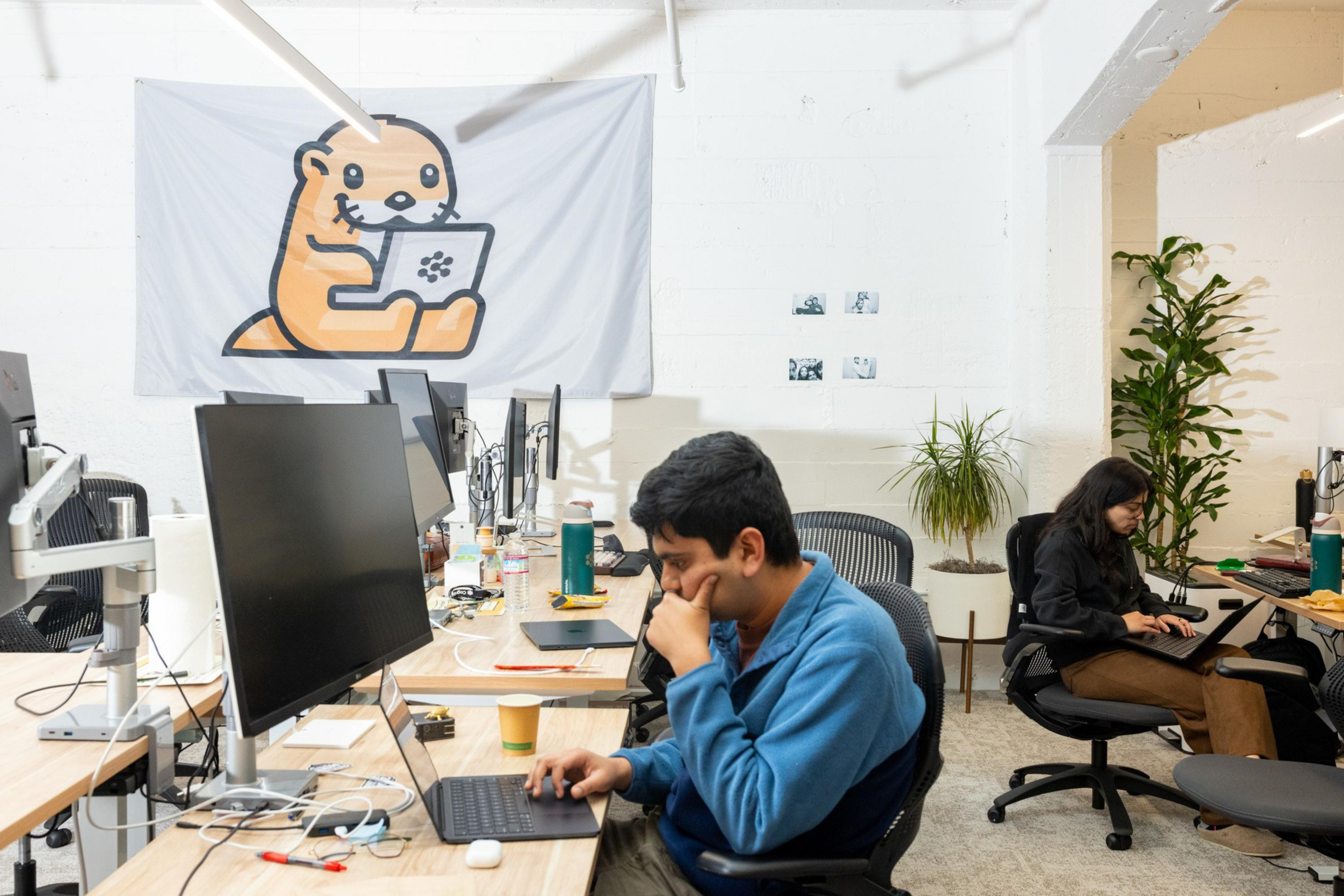 Wu has said Cognition operates with an “extreme performance culture,” where employees regularly work late into the night and through weekends.
One of the first promising signals came when Walden Yan, one of Cognition’s founders, had a flight rescheduled. He asked Devin to get him a refund. Devin found the airline’s website, went through the terms and conditions, and began chatting with a customer service bot.
“The funniest part was that at some point, Devin said something along the lines of, ‘This isn’t working, please connect me with a human right away,’” Wu said. Devin then chatted with a real person and got the refund.
It wasn’t a programming task, but it revealed the qualities Wu expected of the technology. Devin could browse the web on its own, click through a site, make a plan, carry it out, and, when the first approach failed, try another.
In March 2024, Cognition opened up Devin to early users. “With our advances in long-term reasoning and planning, Devin can plan and execute complex engineering tasks requiring thousands of decisions,” the company wrote in a blog post (opens in new tab).
Some early testers argued that Cognition had overstated Devin’s abilities, and even Wu says the company put out its product too soon. “Only a few of the use cases that we envisioned were really possible at the time,” he said last month (opens in new tab).
Still, the concept of an AI coding tool that could work independently sparked a mix of amazement and anxiety in Silicon Valley. Stripe cofounder Patrick Collison called Devin (opens in new tab) “very impressive in practice.” Other engineers joked nervously about whether the machine was coming for their jobs.
The mansion years are over
Step into Cognition’s new headquarters, and the first thing you do is take off your shoes. By the door sits a basket of logoed Allbirds slippers meant to be worn around the office.
The ritual is a holdover from Cognition’s previous home: a $10.5 million neoclassical mansion in Atherton. After launching Devin in 2024, the startup decamped to the wealthy suburb and threw itself into improving the product around the clock. The team turned the basement into an office with desks and monitors, moved into the home’s seven bedrooms, and brought in a private chef to cook all meals. For employees who didn’t live in the house, they converted the wine cellar into a nap room.
 Private chefs cook lunch and dinner for Cognition staff from a penthouse on the terrace.
 Allbirds x Cognition slippers.
 Chatbot startup Character.AI once occupied Cognition’s new office.
But the quaint times are over. Cognition has since opened offices in New York, Austin, and London. Its San Francisco headquarters is a 25,000-square-foot office in South Park.
Employees assemble at long tables in the atrium for what they call “family dinner.” A pair of private chefs cook out of a penthouse converted into an industrial kitchen on the terrace, serving dishes like century-egg congee and Korean short ribs.
The office also has a rooftop with city views, a fitness center (stocked with Devin-branded creatine), and an underground speakeasy outfitted with a Cognition-branded poker table and a “Super Smash Bros. Melee” setup. Balloons shaped like the numbers one and two hover over workspaces, marking Cognition’s first two birthdays.
While many AI startups are known for punishing 996 schedules (working from 9 a.m. to 9 p.m., six days a week), Cognition goes even further. Wu describes it as an “extreme performance culture” that has little room for work-life balance. After acquiring Windsurf last summer, he offered buyouts and nine months of severance to employees who were unwilling to sign up for the grind. Asked how many hours a day he typically works, Wu shot back: “How many hours a day do I not? Let me put it this way: It’s what most of us are thinking about in the shower.”
Moritz Stephan, an engineer who serves as Wu’s chief of staff, joined the company after stopping by one of its early Menlo Park offices and watching Devin build Conway’s Game of Life (opens in new tab) from scratch. Stephan, then a Stanford undergraduate, said he was immediately convinced to join. “This is actually a foundational technology that is changing the world and will transform how loads of work gets done,” he said.
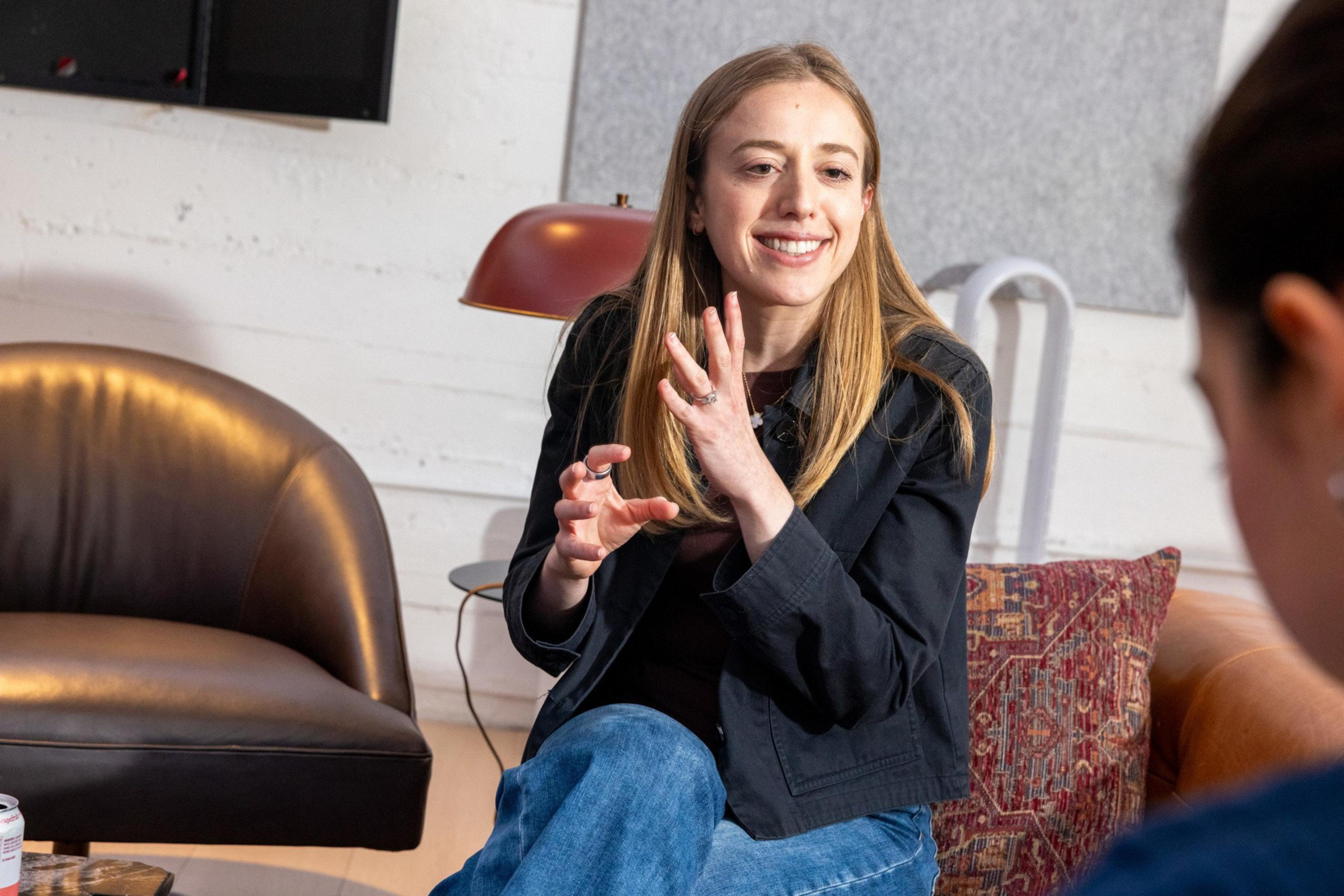 Emily Cohen, an early investor in Cognition, left her job in venture capital to join the startup last summer.
Adhyyan Sekhsaria, a founding engineer, said his team typically arrives before his team’s 11:30 a.m. daily all-hands meeting and often remains past midnight, weekends included. He noted that the team had worked until 3 a.m. the day before.
Still, Cognition cannot simply outwork its rivals. Cursor is known for a similarly grueling culture (its employees also do not wear shoes in the office), while OpenAI and Anthropic are also known to have grinding “war time” company cultures.
Wu believes Cognition’s biggest edge is Devin itself. The company is increasingly using the AI engineer to improve its own product, and employees — technical and nontechnical alike — are starting to see themselves as managers of Devins.
“We’re actually starting to see this vision of people becoming the architect and Devin doing the brick layer,” Cohen said. “We are seeing it come to life.”
For Wu, that shift does not signal the end of software engineers. Rather, he believes it will expand who gets to become one. A similar expansion happened during previous step changes in software development, from punch cards to compilers to higher-level programming languages. “The number of what we call programmers or software engineers has just gone up and up and up throughout that time,” he said.