
After the U.S. Supreme Court
ruled Feb. 20 that President Donald Trump illegally imposed
tariffs — taxes that the Treasury collects on imports from
trading partners — the path forward has many moving parts. We
checked in with business owners and industry experts in and
around Sacramento to understand how local businesses are
navigating this complex moment.
Rick Hayes owns
Raptor Blaster, a manufacturing firm located in South
Sacramento. “So many elements go into making a product and
selling it that can affect the price for the product as it
pertains to the tariffs,” Hayes says. “I use European and Chinese
machinery that equates into the price of the product, and if
those prices go up or down, then I am affected. I’m going to have
to adjust my margins according to inflation.”
Luis Fonte Halindo is the
owner and lead technician of Ace
Tech Professional home appliance repair service in
Sacramento, operated by a six-person team. “The past year and
this year have been the most difficult for me over the past six
years operating here,” he says, adding that a main challenge is
the weakening of consumer spending. Customers, commercial and
residential, are delaying their repairs and deferring
maintenance.
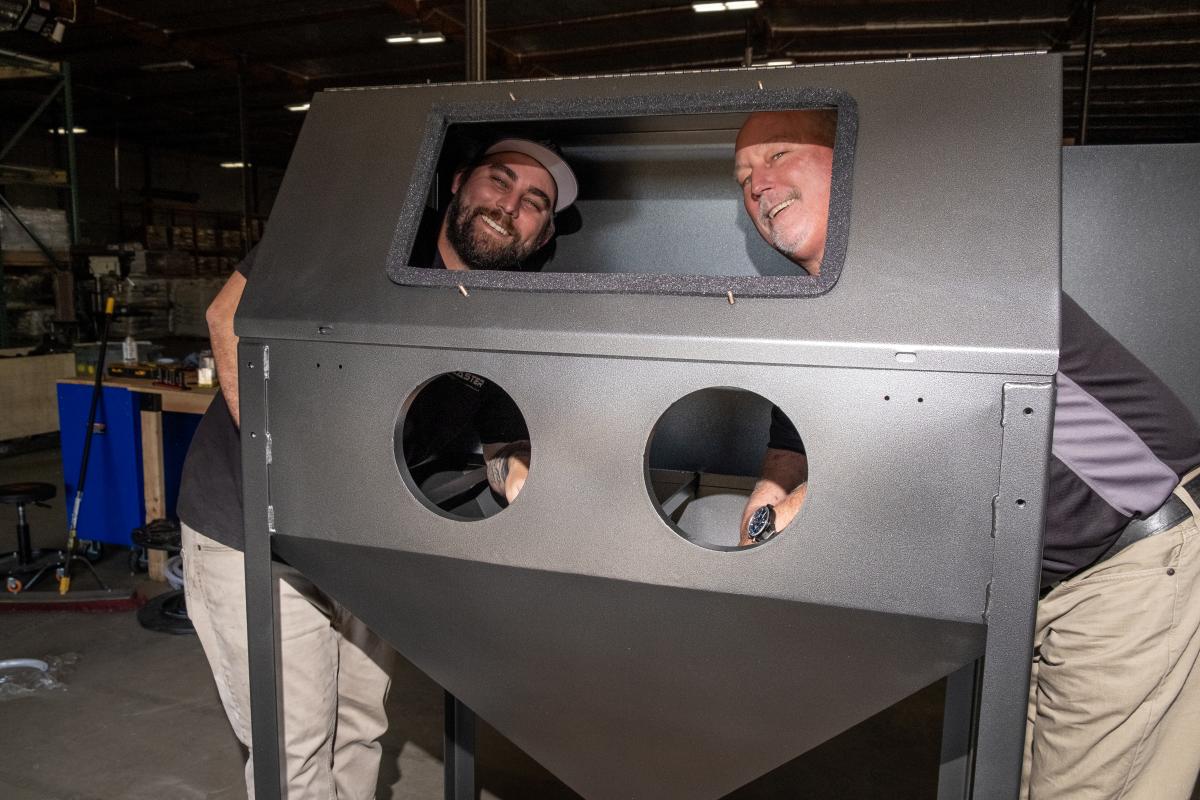
Rick Hayes (right), owner of Raptor Blaster, poses with his son
Brady in one of the machines his company manufactures in south
Sacramento. (Photo by Karlos Rene Ayala)
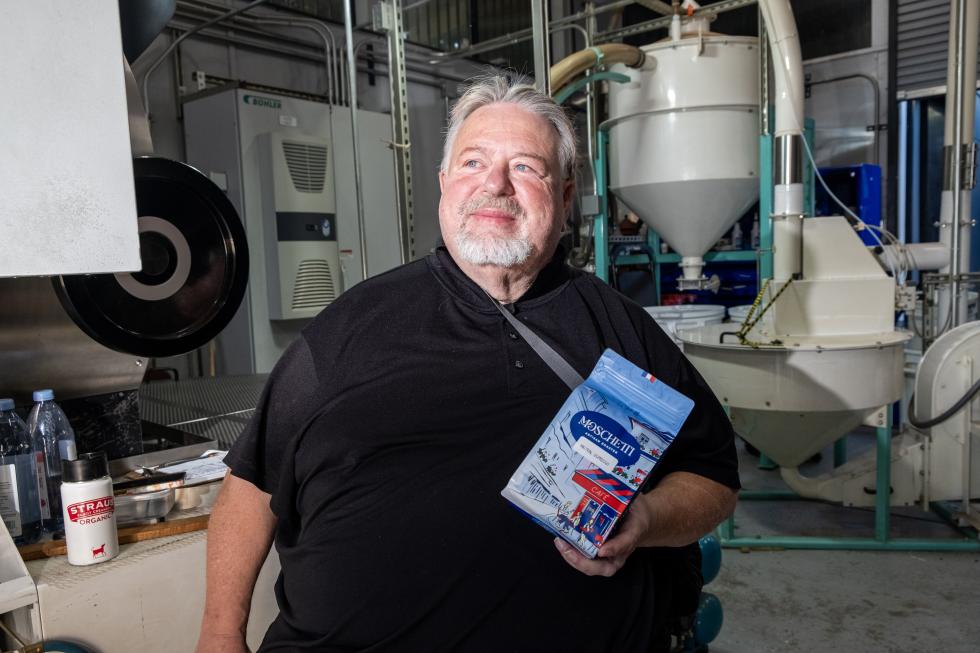
Fabrice Moschetti owns
Moschetti Artisan
Roaster, a
Vallejo-based firm that does business mainly with mom-and-pop
firms. As an importer of coffee grown abroad, he has ridden the
ups and downs of tariffs on this agricultural product. He’s
taking the long view on tariffs and his business adaptation
strategy.
Related: Trump’s
Tariffs Hurt Some Local Businesses, but Prompt Others to Shift
Gears
“The Supreme Court’s recent
decision on tariffs pleases me,” Moschetti says. “However, I’m
looking at five to six months for the market to reset.” He says
resetting supply chains for seasonal products such as coffee is a
fluid process, and market equilibrium can be fragile.
It is unclear if businesses
will receive refunds for the tariffs they have already paid; the
Supreme Court ruling did not address refunds. Meanwhile, the
president imposed a 10 percent global tariff on foreign products
entering the U.S. after the Supreme Court ruling.
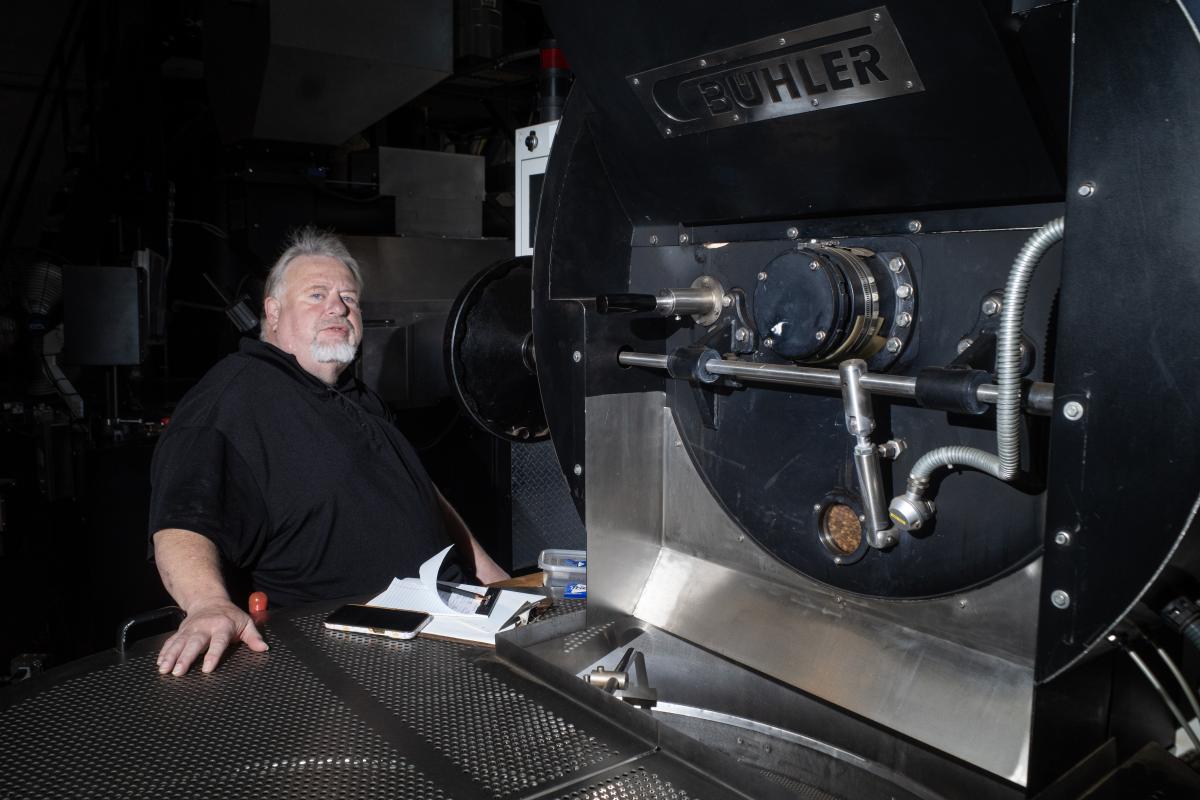
Fabrice Moschetti poses with one of his roasting machines in
Vallejo. (Photo by Karlos Rene Ayala)
Another relevant development
on the cost of doing business is energy prices. Gas and oil
prices spiked sharply after Iran struck Persian Gulf petroleum
facilities in retaliation for U.S.-Israel attacks. The price of a
barrel of oil was $70 at the beginning of this war. With
declining oil production in the Persian Gulf region, some
analysts are predicting the price of oil will reach $150 a
barrel.
In the meantime, Trump wants
the Federal Reserve Bank to cut interest rates to boost
home-buying before the midterm elections. However, the central
bank’s policy of reducing the cost of borrowed money in accord
with what the president’s monetary approach is uncertain at
best.
Robert Heidt is president of
the Sacramento Metro
Chamber. He
emphasizes the importance of business stability relative to
tariffs.
Related: Sacramento
Manufacturers and Distributors Weigh the Effects of
Tariffs
“The Supreme Court’s decision
provides important clarity,” Heidt says, “and that is welcome
news for businesses throughout the Capital Region. Over the past
year, many Sacramento-area employers — particularly those
connected to global supply chains in manufacturing, construction,
and retail — have faced rising costs, supply chain disruptions
and compressed planning timelines as tariff policy
shifted.”
Like Moschetti of the roasting
company, Heidt is concerned with the rate of change in the
marketplace after the Supreme Court ruling.
“What we consistently hear
from our members is the need for predictability,” Heidt says.
“Businesses can adapt, but stable and clearly defined trade
policy is what allows companies to invest with confidence,
support wage growth and keep costs down for families. We
encourage the administration to use this moment to reset tariff
policy in a way that strengthens economic growth and provides
long-term certainty for employers and consumers alike.”
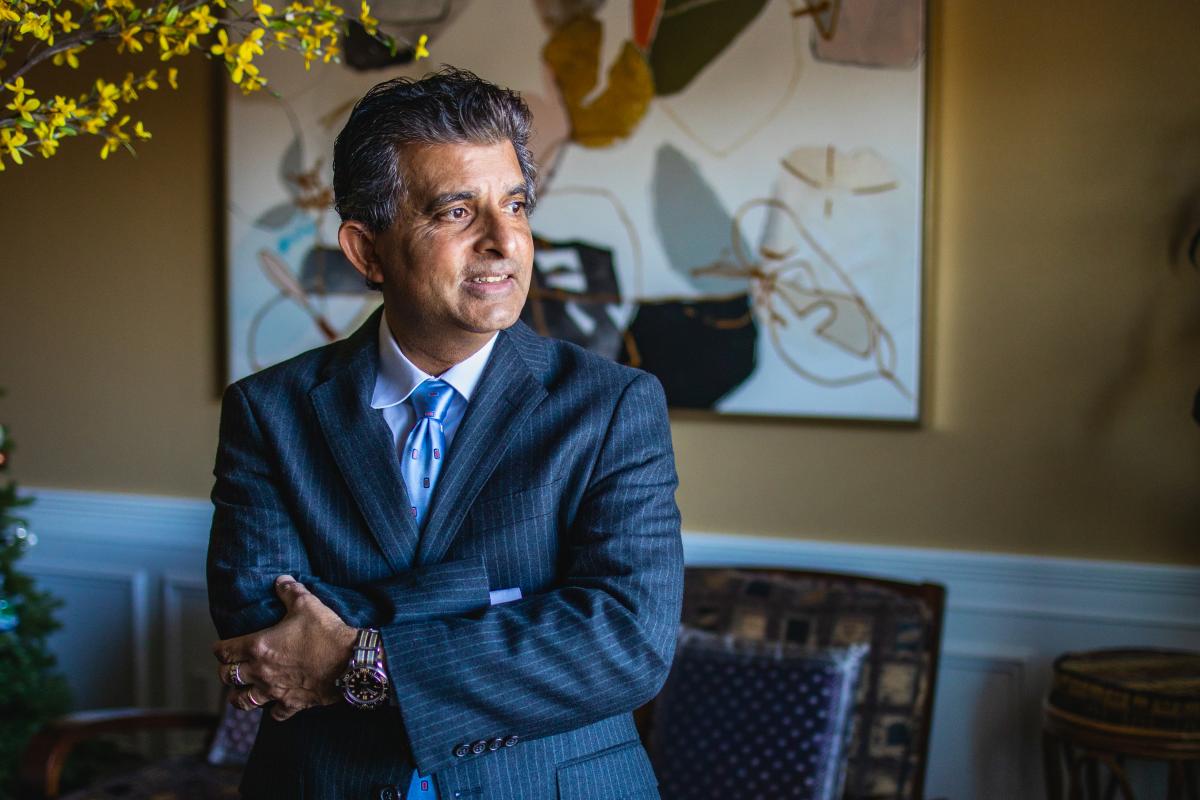
Sanjay Varshney, a professor of finance at Sacramento State
University, takes a glass-half-full approach for businesses in
the Capital Region following the Supreme Court ruling. (2023
photo by Wes Davis)
Sanjay Varshney is a professor
of finance at Sacramento State University. He takes a
glass-half-full approach for businesses in the Capital Region
following the Supreme Court ruling. “This is better news for
business today versus a year ago,” Varshney says. “The rollbacks
of the Trump tariffs are good, because they weren’t sustainable
and more of a negotiating tool.”
The Supreme Court ruling
reduces businesses’ exposure to volatility, especially those
exposed most to the tariffs. However, things are still in flux,
and businesses are now looking at an effective tariff rate of
perhaps 12 percent.
Related: Tariffs
Are Everywhere — But They’re Not the Whole Story
Some businesses can’t sustain
the higher costs of tariffs, while others can, according to
Varshney. For example, the leisure and hospitality industry has
low profit margins and will struggle. That comes on top of the
lingering effect of COVID-19 shutdowns, which throttled the
industry.
“There is going to be pain,”
Varshney says regarding business adaptation strategies.
“Industries face the pain from tariffs unevenly.”
–
Stay up to date on Sacramento region business: Follow
@comstocksmag on
Instagram!