
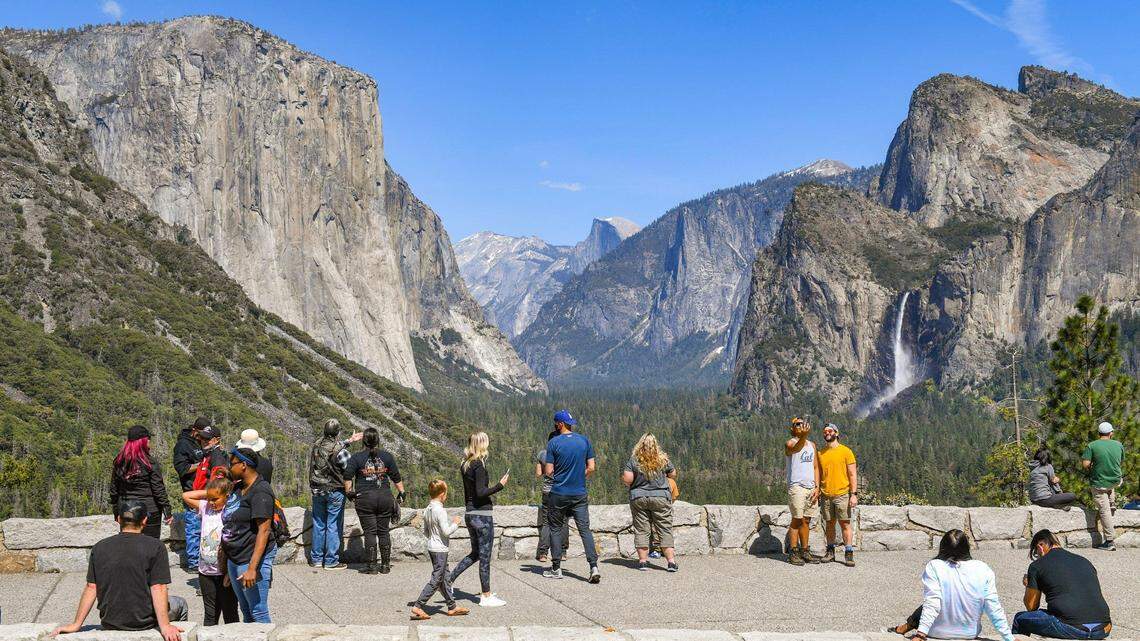
As the weather warms up across California and schools go on break, crowds are expected to descend on Yosemite National Park.
Visitors to the popular park nestled in California’s Sierra Nevada are seeking camping, climbing and hiking opportunities, as well as colorful wildflower blooms.
Yosemite saw about 2.9 million visits in the summer of 2025, up 7% from the previous year, The Fresno Bee previously reported.
More than 4.2 million people visited the park over the course of 2025, according to National Park Service data.
With no vehicle reservations required during the busy spring and summer seasons, National Park Service officials expect Yosemite to be more packed than ever.
Critics warn that will lead to overcrowding and longer wait times around the park.
Here’s what to know about navigating crowds this spring and summer in Yosemite National Park:
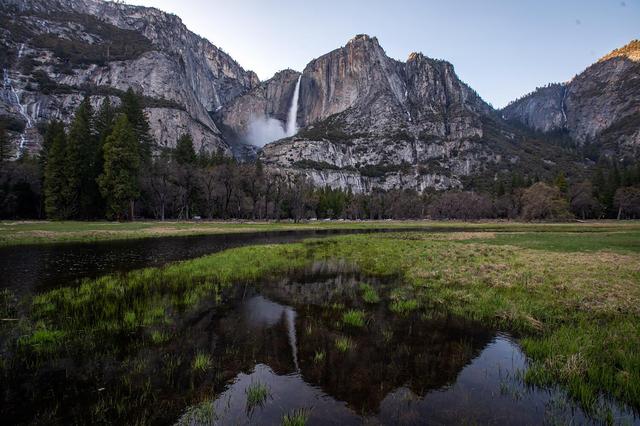 The waterfall is reflected in water in the meadow in the Yosemite Valley as the snowpact melts on April 26, 2023, in Yosemite National Park. Francine Orr Los Angeles Times/TNS How has access to Yosemite National Park changed?
In February, the National Park Service announced plans to “expand public access” at Arches, Glacier, Rocky and Yosemite national parks in the summer while “maintaining safe and responsible management” during peak visitation times.
The park service said it was taking a “tailored approach” to “reflect each park’s unique infrastructure, visitation demand and coordination with state and local partners.”
In the case of Yosemite, that means not requiring advance reservations in 2026, including during peak summer months.
Instead, the National Park Service said, Yosemite will rely on “real-time traffic management measures,” including diverting traffic when parking areas reach capacity and deploying additional seasonal staff to manage high-use areas.
“Our national parks belong to the American people, and our priority is keeping them open and accessible,” Kevin Lilly, the U.S. Department of the Interior’s acting assistant secretary for fish, wildlife and parks, said in a Feb. 18 news release. “We’re expanding access where conditions allow and using targeted tools only where necessary to protect visitor safety, maintain emergency access and preserve these extraordinary places for future generations.”
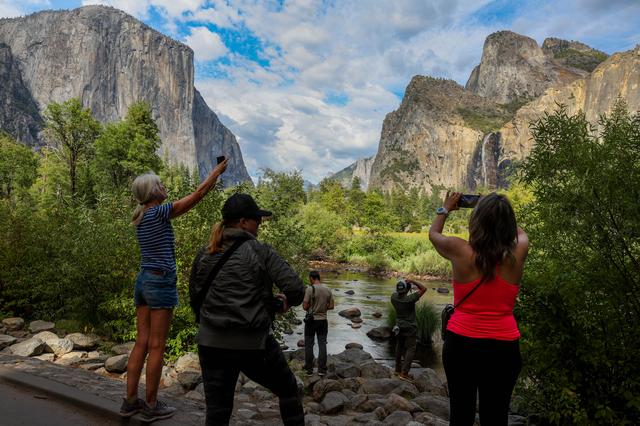 Visitors contemplate and take photos of El Capitan, left, and Yosemite Valley in Yosemite, Calif., on Thursday, July 24, 2025. Ray Chavez TNS Will new rules lead to bigger crowds in Yosemite?
The lack of a vehicle reservation system could lead to larger numbers of visitors, more spontaneous visits and “higher peak-day crowding,” according to Friends of Yosemite Search and Rescue, a nonprofit organization dedicated to supporting the park’s elite search-and-rescue team.
Before Yosemite National Park introduced a reservation system in 2020, the park was experiencing “multi-hour entrance lines,” with gridlocked roads and parking lots filling up entirely by mid-morning, Friends of Yosemite Search and Rescue said in the newsletter.
“The reservation system reduced those peak-day spikes,” the group said, noting that “removing it is expected to reverse that pattern.”
“Reservations acted as a behavioral filter: visitors had to plan weeks ahead,” Friends of Yosemite Search and Rescue said in its February newsletter.
Without that barrier, the group predicted, Yosemite could see an increase in day trips with regional day use rising as well.
“Peak weekends and holidays will likely return to ‘capacity saturation’ conditions especially in Yosemite Valley, Glacier Point corridor and Mariposa Grove,” the group said, with total visitation increasing “noticeably during peak weather windows and weekends,” the group said.
Yosemite has already seen some impacts, with crowds gathering at El Capitan in February for the famed “firefall.”
Overcrowding made for a “messy” Valentine’s Day and President’s Day holiday weekend in the park, SFGATE reported.
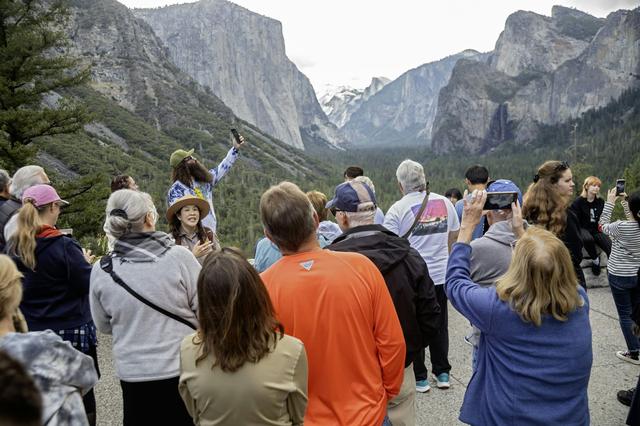 Crowds often form at popular places in U.S. national parks, like the entrance to Yosemite Valley in California. Jim West Universal Images Group via Getty Images How will National Park Service manage crowds?
Federal officials said Yosemite and other parks will “closely monitor visitation, traffic flow and congestion throughout the season.”
Park officials will be prepared to implement additional measures as needed, including “increased seasonal staffing” and “enhanced parking management,” the Feb. 18 release said.
Yosemite officials will broaden their use of several operational strategies to cope with crowds, The Bee previously reported, including:
Real-time traffic monitoringActive parking management in Yosemite ValleyAdditional staffing at key intersections and decision pointsImproved visitor information through road condition alerts, congestion warnings and trip-planning toolsExpanded guidance encouraging weekday visitation
Park officials also said they’ll promote recreational opportunities outside Yosemite Valley, such as Tuolumne Meadows and Wawona, Hetch Hetchy.
“Our goal is to help every visitor have a safe and enjoyable trip,” Yosemite National Park Superintendent Ray McPadden said in a statement. “Targeted management gives us the flexibility to address the busiest days while preserving open access on days the park is operating well within capacity.”
Friends of Yosemite Search and Rescue fears that won’t be enough.
“The park has plans to redirect visitors to lesser-used areas, but overall Yosemite Valley itself has a fixed vehicle capacity,” the group said. “Crowds will concentrate heavily in iconic zones while peripheral areas will widely remain underused.”
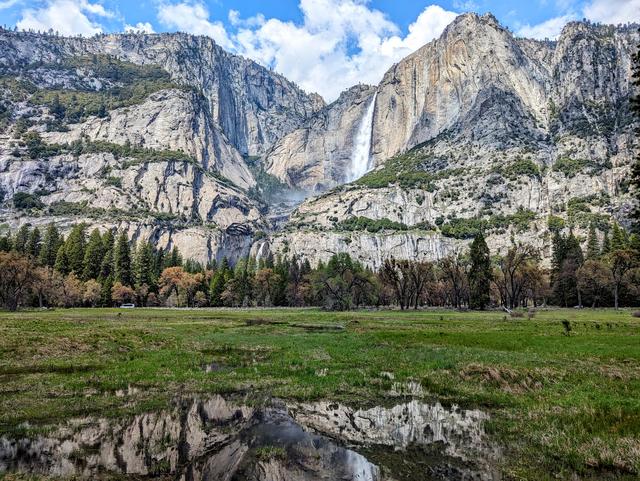 Yosemite Falls, and its reflection in a puddle of water in the meadow below, is seen on April 23, 2024, at Yosemite National Park. Paul Rogers Bay Area News Group/TNS Are there safety risks?
Friends of Yosemite Search and Rescue said, larger crowds could also place a “greater strain” on safety and search-and-rescue personnel.
“More spontaneous visitation historically correlates with ill-prepared visitors” as well as roadside emergencies and incidents involving heat, dehydration and navigation, the group said.
“Managing crowd safety may become more difficult” amid reductions in staff, the group said.
In 2025, the Trump administration fired roughly 1,000 National Park Service works and temporarily freezed several seasonal positions, leaving many parks understaffed as the summer travel season got underway, The Sacramento Bee previously reported.
The National Park Service said the parks “are working to strengthen seasonal staffing and operational readiness to support strong visitation in 2026,” including in Yosemite.
Overall, Friends of Yosemite Search and Rescue expects the lack of a reservation system to “increase access but reduce predictability.”
“The park becomes easier to enter — but harder to experience comfortably,” the group said.
Loading…
Related Stories from Fresno Bee

McClatchy DC
Brooke (they/them) covers Fresno and California news as the Fresno Bee’s service journalism reporter. They previously covered wildlife and national parks out west for the national real-time team at McClatchy News. Originally from Florida, they studied journalism at the University of Florida and previously covered LGBTQ+ news for the South Florida Sun Sentinel, their hometown newspaper. When they’re not writing stories, they enjoy hanging out with their cats, riding horses or spending time outdoors.