
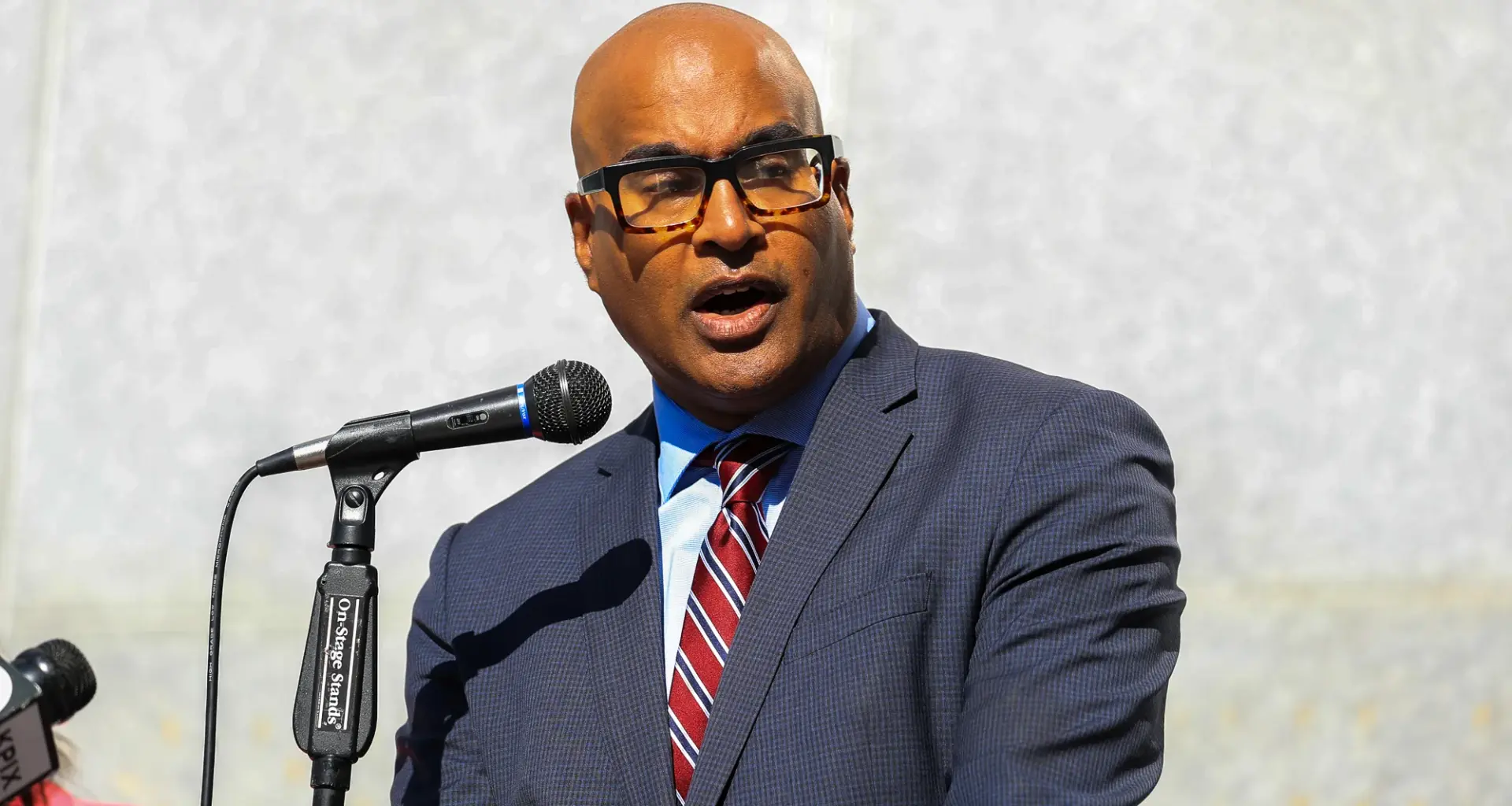
SF Public Defender Mano Raju; pc: David Greenwald
By Pamela Metzger, Lori James, and Lisa M. Wayne
If you are arrested, facing jail time, and cannot afford a lawyer, you have a constitutional right to counsel for your defense. March 18, 2026, marked the 63rd anniversary of the Supreme Court’s unanimous decision in Gideon v. Wainwright. Gideon established this right to counsel, promising that no one would face prosecution and potential incarceration alone.
Yet last week, a judge held San Francisco Public Defender Mano Raju in contempt for demanding that his office’s clients receive an effective defense. After a substantial increase in local prosecutions, Mr. Raju’s attorneys had too many cases to provide competent and diligent representation for an increasing number of new clients. So Mr. Raju sought to slow appointments to the office.
A San Francisco judge disagreed with Mr. Raju’s assessment of his office’s capacity and ordered his office to accept more cases. When Mr. Raju continued to refuse, the judge held him in contempt.
The judge’s ruling ignores the people most directly impacted by excessive public defense caseloads—people accused of crimes, their families, and their communities, including crime victims. Our adversarial system reaches fair, just, and accurate outcomes only if each side is represented by a zealous and effective advocate.
Justice requires that defense counsel have time to review the government’s evidence, investigate the case, research the law, litigate motions, and help their clients make informed, thoughtful decisions.
The judge’s ruling also flouts ABA guidelines and conflicts with recent state Supreme Court decisions in such diverse places as Iowa and Wyoming. The National Association for Public Defense, the National Association of Criminal Defense Lawyers, and the Deason Criminal Justice Reform Center call on San Francisco to reverse its assault on public defense and protect the right to counsel.
Mr. Raju’s actions were not just reasonable; they were required. For decades, the American Bar Association has made clear that public defense providers have a duty to limit caseloads. In 2006, the ABA issued Formal Ethics Opinion 06-441, which states, “If a lawyer believes that her workload is such that she is unable to meet basic ethical obligations required of her in the representation of a client, she must not continue the representation of that client or, if representation has not yet begun, she must decline the representation.”
Over the years, lawyers, judges, and state ethics officers have reaffirmed this principle again and again. Recently, the ABA’s Ten Principles of a Public Defense Delivery System (2023) reasserted: “Workloads should never be so large as to interfere with the rendering of quality representation or lead to the breach of ethical obligations.”
Mr. Raju is not alone. Across California, and indeed across the country, excessive workloads have forced public defenders to reduce or decline new appointments to comply with their ethical and constitutional obligations. Just last month, a judge in Oregon reaffirmed that public defense providers must be able to reduce appointments to control their caseloads. The judge also held that the Constitution prohibits retaliation against public defenders who have honored their ethical duties by limiting their caseloads.
A recent Deason Center report on California public defense workloads and staffing documented excessive caseloads and how they damage the criminal legal system. Public defenders routinely reported that they lacked the time to communicate with their clients, review video evidence, locate witnesses, visit crime scenes, file appropriate motions, or even try cases. One lawyer summarized the situation: “I worry that due to the crushing workloads, things are slipping through the cracks . . . And clients suffer.”
Despite their best intentions, overburdened defense lawyers make mistakes. They miss mental health or substance use issues that might warrant diversion into treatment programs. They overlook exonerating evidence or winning legal arguments. Their clients sit in jail for months. Many ultimately accept a guilty plea just to go home—even if they are innocent.
Hardworking public defenders know when their caseloads are excessive. They understand the complexity of their cases and the circumstances and capabilities of their staff. The Constitution and legal ethics rules require these public defenders to act to address their overload. When they do, absent evidence of fraud or malfeasance, a public defender’s judgment that refusal is necessary is entitled to deference.
The Gideon Court understood that “[t]he assistance of counsel . . . stands as a constant admonition that, if the constitutional safeguards it provides be lost, justice will not ‘still be done.’” When a public defender’s caseload prevents them from providing prompt and effective representation, their client might as well not have a lawyer at all.
Mr. Raju has demanded that San Francisco honor Gideon’s promise and provide every person facing prosecution with robust constitutional representation. He deserves our support, not judicial contempt.
Pamela Metzger, Executive Director, Deason Criminal Justice Reform Center
Lori James, Executive Director, National Association for Public Defense
Lisa M. Wayne, Executive Director, National Association of Criminal Defense Lawyers
Disclosure: Malia Brink, who serves as Policy Director at the Deason Criminal Justice Reform Center, submitted a declaration on behalf of the San Francisco public defender in In re San Francisco Public Defender’s Refusal to Accept Appointment per Case Order.
Categories: Breaking News Opinion San Francisco Court Watch Tags: Caseload Crisis Criminal Justice Reform Gideon v. Wainwright Public Defense Right to Counsel San Francisco