

“The evidence will show Cemex Corporation permitted its workers to harass my client because of his disability and race … and did nothing to protect him,” Pointer said in his opening statement. “You are going to hear evidence right here on this witness stand that Mr. Sample’s coworkers called him the N-word, monkey, retarded and other despicable names.”
Pointer told jurors that Sample was born with a disability affecting one ear, leaving him hard to understand at times, and that he walked with a limp. Despite that, Pointer said, Sample took tremendous pride in his work — a pride that was eroded as harassment intensified.
“His mother asked what was going on,” Pointer said. “You will learn that he told his mom that what was once his dream job had turned into a nightmare.”
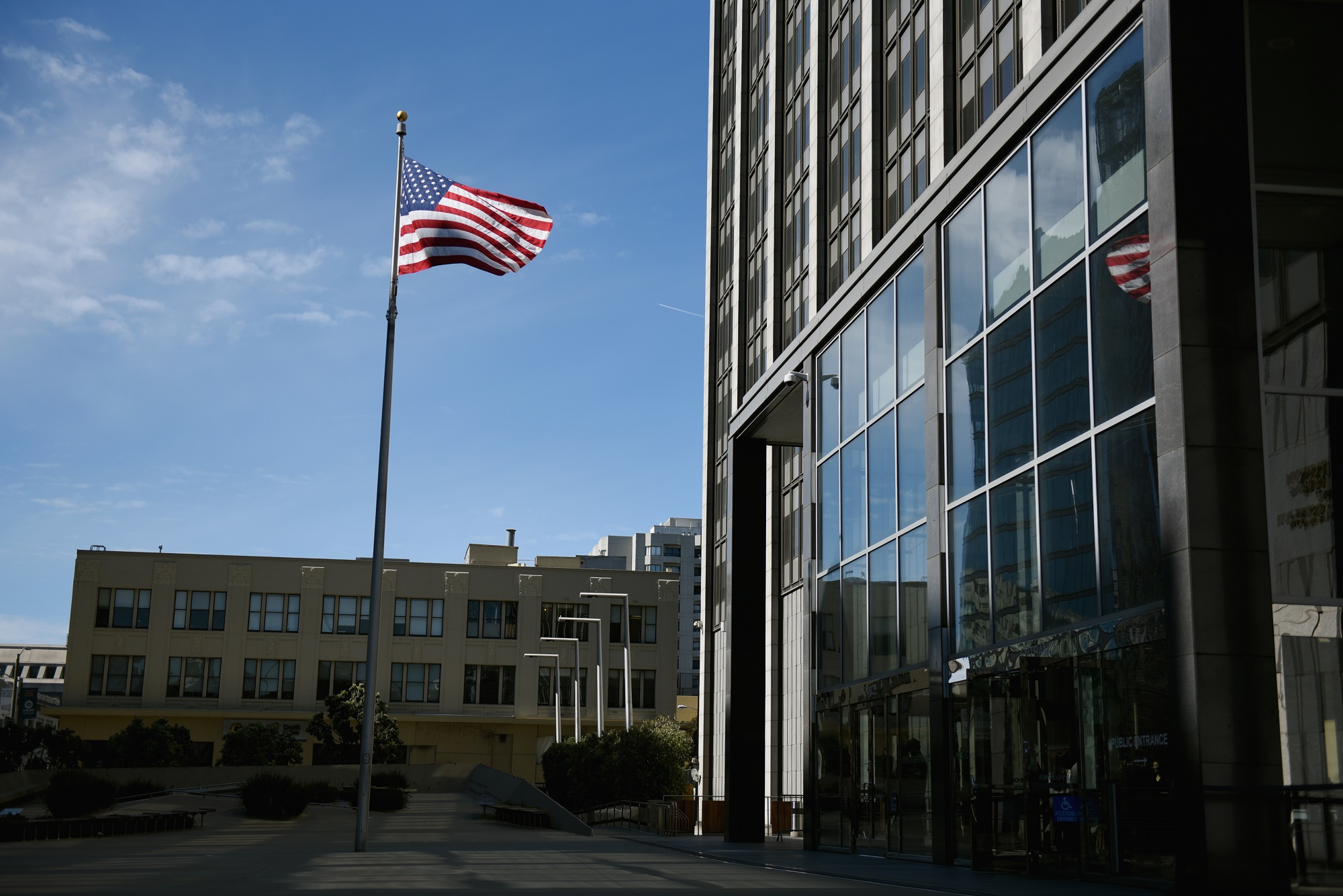 The Phillip Burton Federal Building and United States Courthouse in San Francisco, on March 6, 2018. (Lauren Hanussak/KQED)
Pointer also told jurors that Sample filed his first lawsuit in January 2023 without an attorney — and that even after he did, Cemex’s human resources department never interviewed him or opened an investigation.
Cemex’s attorney, Dorothy Liu, disputed the allegations in her own opening statement, arguing that the company’s full record tells a different story.
“At no time did Mr. Sample or anyone on his behalf report racial slurs … being used in the workplace,” Liu said, adding that there are three ways employees can formally report such conduct at Cemex and that Sample used none to raise complaints of slurs or derogatory language. “We had no idea before he filed this lawsuit.”
Liu walked jurors through a timeline she said shows the conflict at the center of the case stemmed from workplace safety disputes and personality clashes — not racial or disability-based discrimination. She said Cemex granted Sample multiple leaves of absence that were not required to provide, and added that when coworkers raised concerns, it was over safety issues, not harassment.