
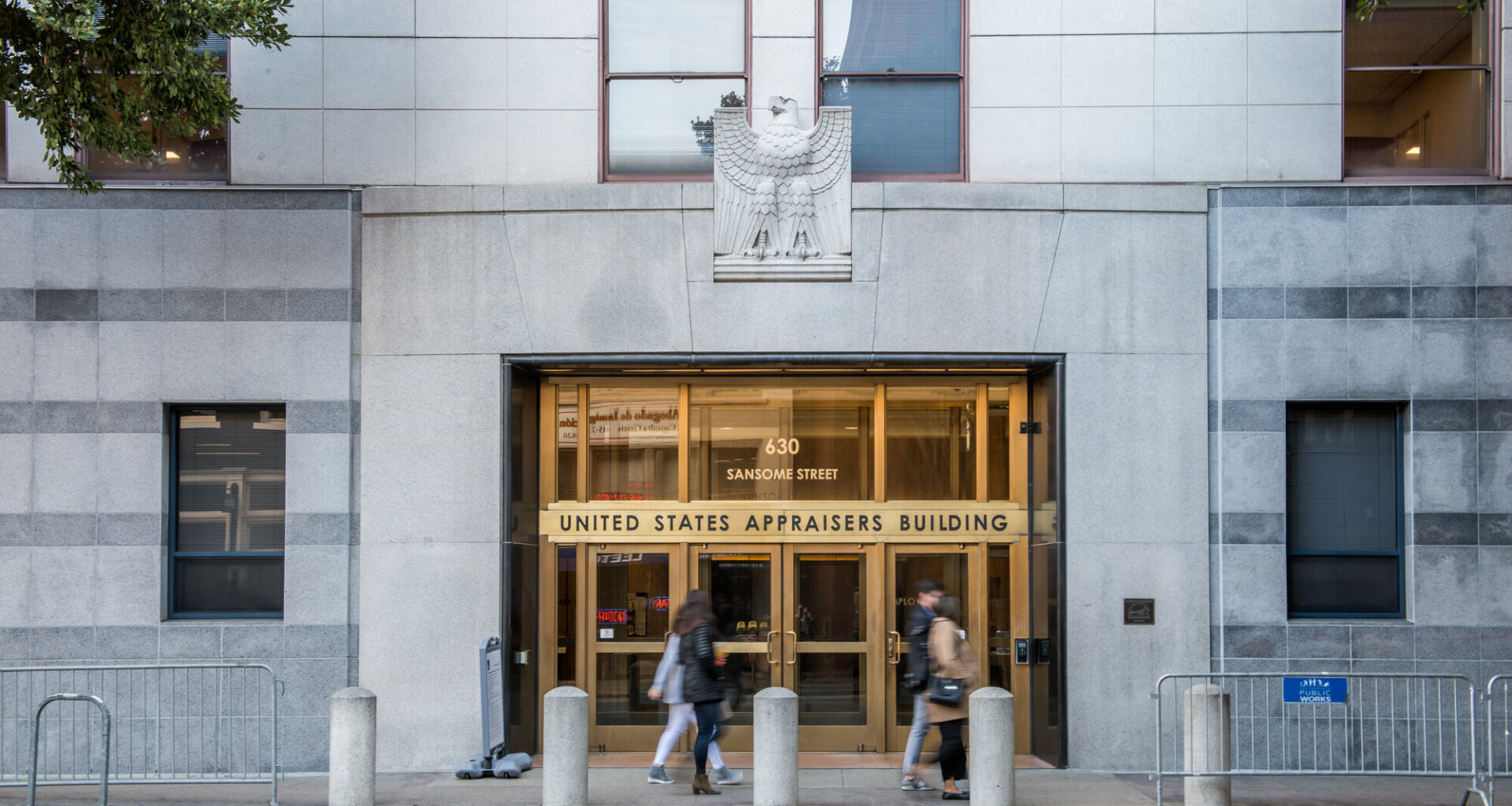
“It’s a challenging position that people are in now, especially those who have a really strong asylum claim and just didn’t understand what time their hearing was or where their hearing was and missed it,” Atkinson said.
Since President Donald Trump’s inauguration, heavy restrictions on asylum have coincided with the hollowing out of San Francisco’s main immigration court at 100 Montgomery St., the largest in Northern California, and where the majority of Bay Area cases are heard.
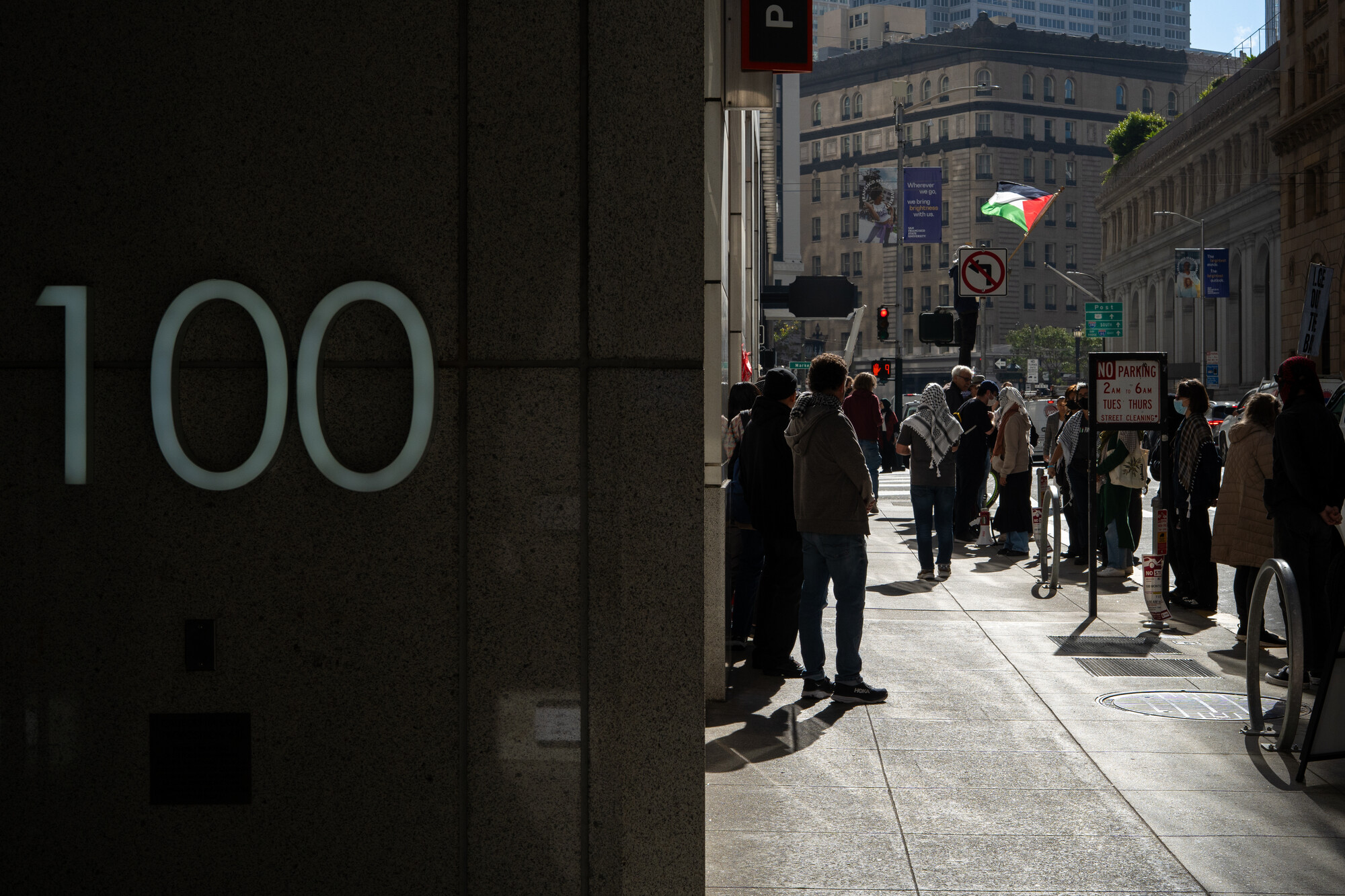 People gather outside 100 Montgomery St. during a rally calling for the release of journalist Sami Hamdi on Oct. 31, 2025, in San Francisco, California. (Gustavo Hernandez/KQED)
The court, which is slated for closure by the end of the year, has seen its bench whittled down from 21 judges at the beginning of 2025 to two, after 12 were fired and others retired, asked for a transfer or were reappointed, according to Mission Local.
San Francisco has also been utilizing a judge remotely from San Diego, Atkinson said.
The court currently has a backlog of 120,000 cases. At the same time, many people have stopped showing up for court-ordered appointments, likely out of fear of arrest and deportation.
Advocates’ alarms went off last week after observers noticed judges who normally serve in the immigration court in Concord were scheduled for hearings in San Francisco. Instead of a typical schedule of one morning and one afternoon hearing, the hearings were back-to-back, with large numbers of immigrants, between 20 and 30, ordered to appear at the same time, Atkinson said.