
From personal experience in candidate debates, I can tell you that they can be totally manipulated by the organizers to favor a candidate, a party, or an outcome.
Is that what just happened at USC?
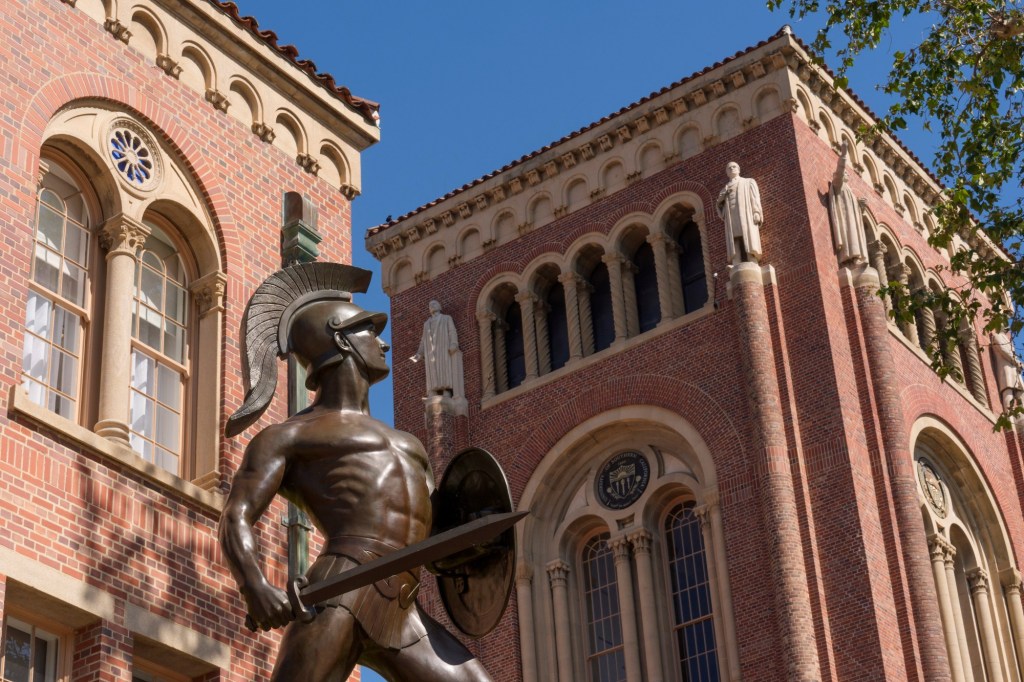
On Monday night, University of Southern California president Beong-Soo Kim announced the cancellation of the gubernatorial debate set to take place less than 24 hours later. The decision came soon after Democratic legislative leaders in Sacramento sent a nasty letter demanding that USC open the debate to “all leading candidates.”
If the school refused, the lawmakers warned, they would urge voters to “boycott” the event.
It’s hard enough to get voters in California to pay attention to elections at all. Calling for a boycott of the debate would just improve the ratings.
It’s possible to infer from the “boycott” warning that some power players in Sacramento would rather the voters not hear certain voices, at least not directly. Without televised debates, voters typically are limited to hearing selective quotes from candidates, often framed for the most negative connotation possible. That’s what political consultants do for a living.
Who are these power players and which voices would they be seeking to mute?
They could be labor unions, strongly influential in Sacramento, preferring that voters not hear too much from a Democrat backed by Silicon Valley billionaires, San Jose Mayor Matt Mahan, and from two Republicans who are leading in the polls, Steve Hilton and Chad Bianco.
And that gets to the issue of how the rules controlling a debate can be manipulated. If there are six candidates on the stage, they all get more time to answer questions than if there are ten candidates on the stage.
Maybe you remember the debates in the 2016 Republican presidential primary. There were so many candidates that organizers split them into two separate debates. Longshot candidate Donald J. Trump went up in the polls after every debate performance, and you know the rest of the story.
Narrowing the list of candidates invited to participate in a debate can be a completely legitimate exercise when there are so many candidates running for office in California’s “voter nominated” top-two primary system. But the exact methodology chosen for the selection process is ultimately subjective.
In the case of the USC debate, the chosen methodology was based on polling, fundraising and an added factor of how long a candidate had been in the race. This elevated Mahan, who raised a lot of money after a late entry into the campaign, above four similarly low-polling candidates.
It didn’t escape anybody’s notice that Mahan is white and the excluded candidates were not. Left off the stage were Superintendent of Public Instruction Tony Thurmond, former California Attorney General Xavier Becerra, former State Controller Betty Yee, and former Los Angeles Mayor Antonio Villaraigosa.
It’s likely that the only relevant color is green. Fundraising is important to USC, a private university that not too long ago was embroiled in a bribes-for-scholarships scandal that exposed a side door of “VIP” admissions tied to wealth and influence.
Two local politicians in Los Angeles were beneficiaries of the VIP side door. Los Angeles Mayor Karen Bass got a freebie scholarship from the USC School of Social Work for a master’s degree when she just happened to be a newly-elected Member of Congress. And Mark Ridley-Thomas, then an L.A. County Supervisor, arranged a scholarship and a part-time professorship at USC for his son while money moved from his campaign account through USC to his son’s nonprofit organization.
No charges were ever filed related to the Bass scholarship, but Ridley-Thomas was convicted on federal charges of bribery and fraud, though he has appealed his conviction and may well win. The dean of the USC School of Social Work, who approved both scholarships, pleaded guilty to one count of bribery in the Ridley-Thomas case.
It just so happens that Matt Mahan is supported by Rick Caruso, a major USC donor and former trustee. Was that a factor in choosing the selection criteria?
USC could have allowed all ten candidates on the stage, and that would have avoided the controversy, but perhaps displeased potential donors backing Mahan.
The school chose to silence the debate.
An interesting outcome.
Write Susan@SusanShelley.com and follow her on X @Susan_Shelley