
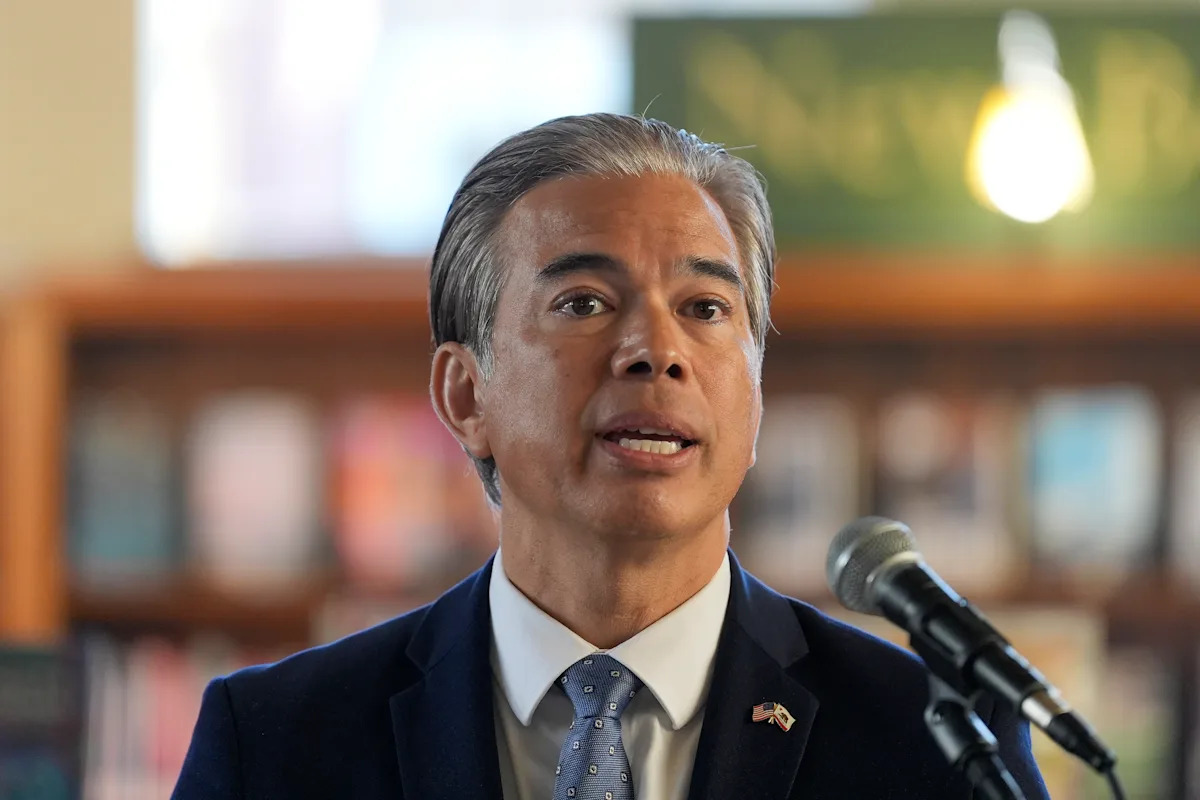
SAN FRANCISCO — California Attorney General Rob Bonta equated social media giants like Meta, Snap and TikTok to the tobacco industry in public remarks Tuesday, accusing the companies of prioritizing profit over safety by marketing addictive products to kids.
Bonta’s comments, delivered during a panel discussion at the Common Sense Summit in San Francisco, were his most explicit to date comparing social media to the addictive power of tobacco.
“They have internal studies where they acknowledge the mental health harms to kids,” Bonta said during a panel moderated by Puck reporter Dylan Byers. “It’s the hypocrisy, it’s the contrast, it’s the knowing that it’s harmful but claiming that it’s not that I think very much has a lot of similarities with tobacco companies.”
New Mexico Attorney General Raúl Torrez, who appeared with Bonta on the panel, said he agreed with the comparison.
“This is a known, addictive product that has been intentionally designed and marketed to children,” Torrez added.
The verbal jabs from two states’ top prosecutors were notable additions to a growing chorus of criticism from politicians and kids’ safety advocates seeking to draw parallels between Silicon Valley and Big Tobacco. Last year, state lawmakers in California, Colorado, Minnesota and New York passed laws that require social media platforms to display health warning labels, inspired by government-mandated warnings for cigarette packs.
Tech industry groups have sued to block the laws from taking effect, arguing they trample on First Amendment speech rights. In Colorado, the industry trade group NetChoice, which counts Meta, TikTok and Snap among its members, secured an early win last year when a federal judge issued a preliminary injunction against the state’s warning label law.
But some judges have been more skeptical of the industry. In oral arguments last year over a California law that would require parental consent for kids to view personalized content feeds, such as TikTok’s “For You” page, Ninth Circuit Court of Appeals Judge Ryan D. Nelson said social media “might be actually worse than a carcinogen” and told NetChoice lawyers that they “sound like the tobacco companies.”
The question of whether tech companies should be held responsible for the harm minors allegedly suffered due to social media addiction is also the subject of a years-long legal battle that California and dozens of other states have waged alongside parents through a series of lawsuits against big tech companies.
A verdict in one of those lawsuits could come this week. The case, which went to trial in a Los Angeles court last month, accuses Meta and YouTube of knowingly designing addictive products that exacerbated a young woman’s depression.
Jurors in the case are deliberating this week. If the companies are found liable in either case, they will be on the hook to pay damages and could be forced to redesign their platforms.
Meta has already been found liable in another kids’ safety case led by Torrez in New Mexico. On Tuesday, jurors for the trial in that case ruled that Meta had knowingly harmed kids’ mental health and covered up risks of child sexual abuse on its plaforms, following a sting operation led by New Mexico investigators.
Meta and YouTube have rebuffed allegations made in the LA and New Mexico trials. Meta representatives argue that internal documents presented by the plaintiffs were “cherry-picked” and taken out of context, while lawyers for YouTube have insisted the video-sharing platform shouldn’t be seen in the same light as traditional social media like Instagram or Facebook.
Still, Torrez said he thinks the verdict against Meta in his lawsuit could create “a blueprint for how the product can be made safer across the country and around the world.”
He also hoped his case against Meta would spur Congress to pass proposed kids’ online safety protections that have languished for years amid political infighting and opposition from tech industry lobbyists.
“It should add to the public’s awareness, and to the public’s expectation that Congress finally step up and do something,” Torrez told POLITICO after the panel.