


Democratic gubernatorial candidates, from left, Tony Thurmond, California superintendent of public instruction; Matt Mahan, mayor of San Jose; Ian Calderon, former majority leader of the California Assembly, and Xavier Becerra, former secretary of U.S. Health and Human Services, answer questions during a gubernatorial forum on Wednesday, Feb. 18, 2026, at the Crest Theatre in Sacramento.
JOSÉ LUIS VILLEGAS
jvillegas@sacbee.com
Candidates in the crowded 2026 governor’s race have been debating a wide range of issues facing California: homelessness, environmental concerns and the state’s high cost of living.
For one group of voters, there’s a niche issue that’s top of mind: Will their next boss support telework?
Roughly 40% of California state workers are eligible to work remotely, and many have been doing so since 2020. In 2024, Gov. Gavin Newsom directed state workers to begin working from government office two days a week. He attempted to increase that requirement to four days a week last year but delayed that deadline until July 2026 after negotiations with state workers’ unions.
For the thousands of state workers who are eligible to telework, the issue is an important one when determining who will earn their vote.
“As a worker, it’s my priority,” said Susan Olsen, who works for the California Commission on Teacher Credentialing. She said much of her day is spent in virtual meetings with school districts, higher education institutions and other groups across the state.
Given the other things going on, Olsen said that telework is not “my number-one priority as far as the things that I care about happening in the state of California.” But the issue of how the next governor views telework is something that she and colleagues discuss frequently, Olsen said.
Alongside many other state workers, Olsen said she felt Newsom had not listened to his employees on the topic of telework. The governor has maintained that in-person work is necessary for state workers’ collaboration and mentorship.
Candidates shared their perspective on telework in August, but the race has changed quite a bit since then. With the field set, The Sacramento Bee asked the 10 candidates who filed paperwork for the primary gubernatorial ballot whether they supported Newsom’s return-to-office order, or whether they would set a different policy.
Candidates’ answers and past comments on the issue are listed in order of their standing according to a recent UC Berkeley poll, which has the two Republican candidates leading the pack.
Steve Hilton (R)
Hilton, a former Fox News host and commentator, said the debate over whether state employees should be working remotely is “the wrong question.”
“We need a drastic reduction in the state government workforce,” Hilton said. “That’s far higher a priority than fiddling around about where people work.”
Hilton has proposed cutting back on areas of state government that he sees as bloated though what he called Cal DOGE, a Golden State duplicate of Elon Musk’s Department of Government Efficiency that attempted to cut federal spending.
On the issue of telework, Hilton said he hasn’t heard enough to make up his mind.
“There are arguments on both sides, and as the chief executive, I wouldn’t weigh in on this without having heard the arguments directly from the people involved,” he said.
Chad Bianco (R)
Bianco, the Riverside County sheriff, has a clear stance: “State workers should be back in the office. Period.”
He previously said that first responders, including law enforcement, firefighters and front-line workers, have been working in person since the pandemic and those who primarily work from an office shouldn’t be exempt from that requirement.
Despite roughly half of California state employees have been working remotely part-time, Bianco said it was not possible to serve the public while working from home.
“It’s time for all government workers to return to the office,” Bianco wrote in a statement. “You can’t serve the public from home.”
Eric Swalwell (D)
Swalwell’s campaign did not respond to a request for comment, but the U.S. representative has been a proponent of allowing federal lawmakers to do more of their work remotely.
In 2020, Swalwell introduced a resolution that would enable House members to participate in committee hearings without needing to be in the room and vote on suspension bills remotely.
“Modern technology belongs in Congress and my resolution would allow Members to not only spend more time with their constituents and their families, but would prove useful for a number of situations, including the public health crisis in which we currently find ourselves,” Swalwell said in a news release during the first few months of the COVID-19 pandemic.
Katie Porter (D)
Porter is a former U.S. representative from Orange County. She said at an SEIU Local 100 forum that she respects the collective bargaining process.
Porter said at the forum she would continue the current telework policies out of respect for what unions had bargained for. Last year, unions and the Newsom administration agreed to delay the governor’s return-to-office order in exchange for helping reduce the state’s compensation costs.
Porter said a flexible approach would be best to represent the variety of jobs that workplaces offer.
Tom Steyer (D)
Steyer, a billionaire environmental activist and former presidential candidate, does not appear to have publicly commented on telework policies. His campaign did not respond to requests for comment.
Xavier Becerra (D)
Becerra, who served as the U.S. Health and Human Services secretary and California’s attorney general, said telework is an important element of the 21st century workplace.
“What should drive state policy on Return to Office is the goal of ensuring the highest performance, productivity and resilience of our state workers,” Becerra said in a statement. “And we must strive to retain the talent and experience of the people who make our state government work, rather than allow them to be poached by other employers after they have acquired valuable skills, training and experience through public service.”
He said he would honor all provisions in state workers’ collective bargaining agreements, but he also noted it was important to take into consideration the interest of the communities that surround the workplaces of state employees.
Antonio Villaraigosa (D)
A former mayor of Los Angeles, Villaraigosa expressed support for having state employees work in person as a way to ensure the government is accountable to the public.
“Californians are paying for their government, and they deserve one that is responsive, effective, and focused on delivering results,” Villaraigosa said in a statement. “In many cases, that means people working together in person so agencies can collaborate, solve problems faster, and serve the public the way it should be served.”
Villaraigosa said that in certain circumstances, telework can have a role in state government, “but it cannot come at the expense of performance or accountability.”
Matt Mahan (D)
As the San Jose mayor, Mahan incorporated an in-person work requirement as part of his downtown economic revitalization plan. As governor, he said his priorities for state employees’ work arrangements should focus on efficiency, workforce productivity and affordability.
“Mayor Mahan prefers an evidenced-based approach to telework decisions that reflects the unique and sometimes inter-related needs of individual departments and communities over a one size fits all approach,” his campaign said in a statement.
Mahan’s campaign noted that California’s budget has grown significantly, yet state government hasn’t delivered better outcomes. He said that workers are being priced out of housing near their jobs and commuters are struggling with high fuel costs.
“The data suggests that some jobs are best and most efficiently performed in person, while others may deliver better fiscal and community outcomes by being done remotely or as hybrid arrangements,” his campaign said.
Betty Yee (D)
A former California controller, Yee said she does not support Newsom’s current return-to-office plan that will require state employees to work from government offices four days a week.
When she served as controller, Yee developed a practice that enabled her division chiefs to choose a telework policy that was most effective for their employees. Her approach was not a “one size fits all policy,” which enabled more remote work opportunities. Those conditions helped the controller’s office, under her leadership, develop a payroll portal for all state employees that eliminated the use of timesheets.
“This culture of innovation provides more responsive service delivery to Californians and accountability,” Yee’s campaign said in a statement.
Tony Thurmond (D)
After the governor issued his return-to-office order last year, Thurmond said the Department of Education would follow the Newsom administration’s lead and require workers in offices four days a week. As California’s superintendent of public instruction, Thurmond and his department were not subject to Newsom’s executive order.
After significant pushback from his employees and SEIU Local 1000, which represents many of those workers, Thurmond decided to maintain the current policy, which allows employees to work remotely three days a week. In a statement, Thurmond said he was proud to work with the union on the issue.
“Telework is very beneficial for both the workers who don’t have to endure long commutes and for the State of California as a tool for staff recruitment and retention,” he said in a statement.
Thurmond also noted that he was still considering supporting legislation that would allow state departments to set their own telework policies.
Related Stories from Sacramento Bee
The Sacramento Bee
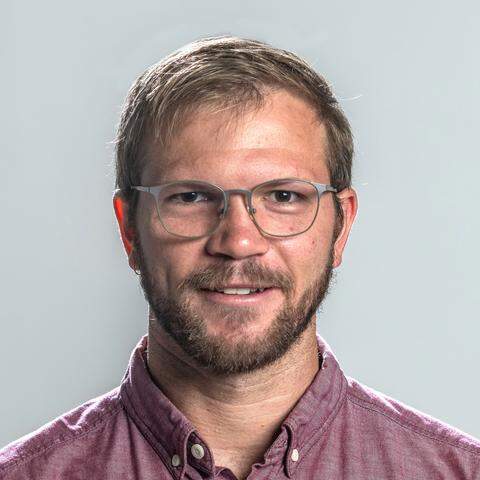
William Melhado is the State Worker reporter for The Sacramento Bee’s Capitol Bureau. Previously, he reported from Texas and New Mexico. Before that, he taught high school chemistry in New York and Tanzania.