
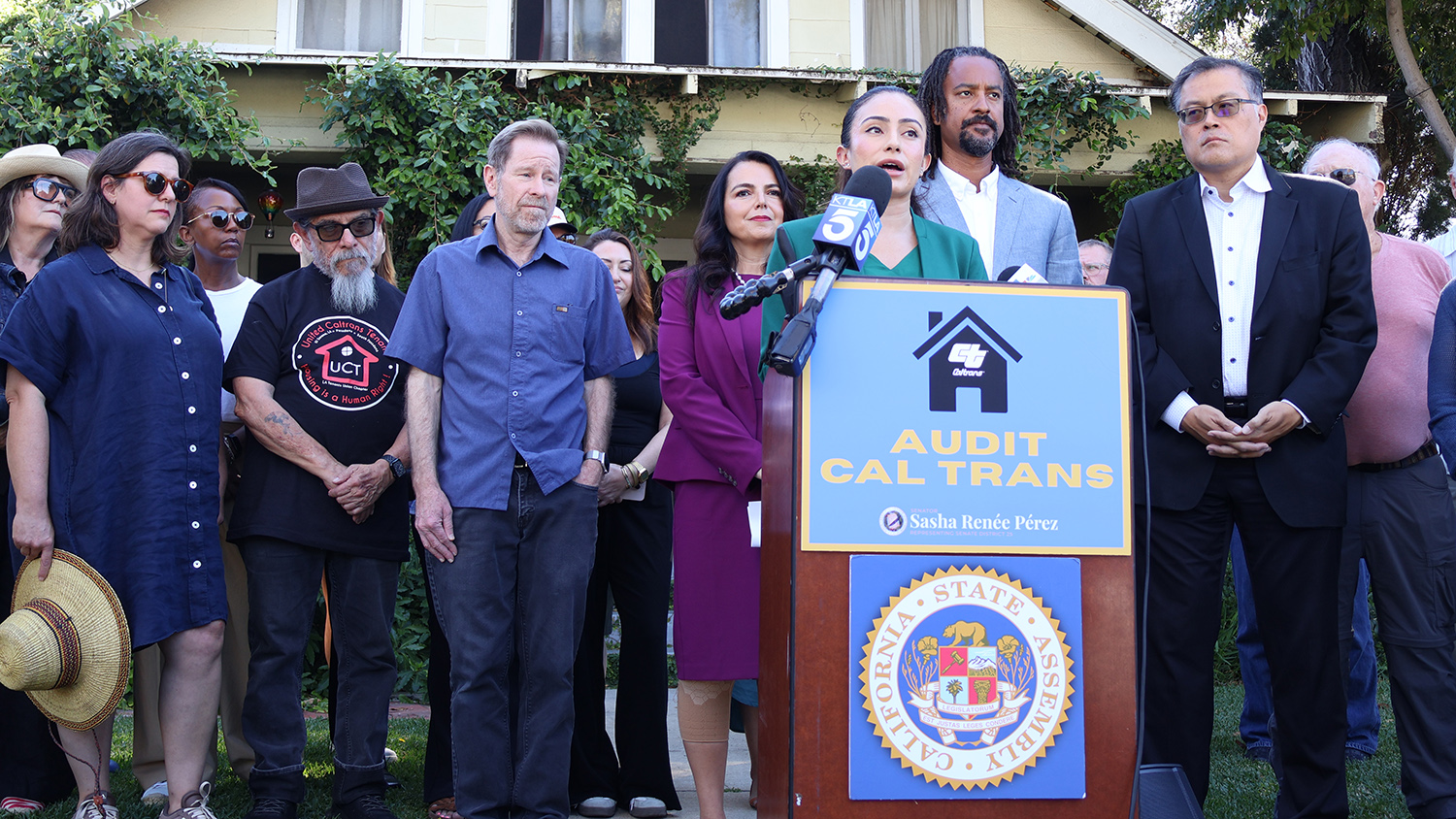
 PHOTO: Office of Sen. Perez | Sen. Sasha Perez at the podium in South Pasadena announcing the audit legislation before the trip to Sacramento. The action by the Joint Legislative Audit Committee follows a coordinated push led by Pérez, who, alongside Assemblymember Mike Fong and local leaders, publicly called for the audit just days earlier after hearing extensive complaints from residents across the 710 corridor.
SACRAMENTO / SOUTH PASADENA, Calif. EARLY BREAKING NEWS — In a major turning point for the long-running 710 Freeway Fight, California lawmakers on Tuesday approved a formal state audit of Caltrans’ handling and sale of hundreds of state-owned homes—an effort spearheaded by State Sen. Sasha Renée Pérez that now engages years of tenant complaints and local concerns into a full legislative investigation. (Full report of the vote to follow as detailed information becomes available)
South Pasadena Mayor Sheila Rossi was present to testify in Sacramento as the measure advanced, marking a significant escalation from public pressure to official state oversight of the program.
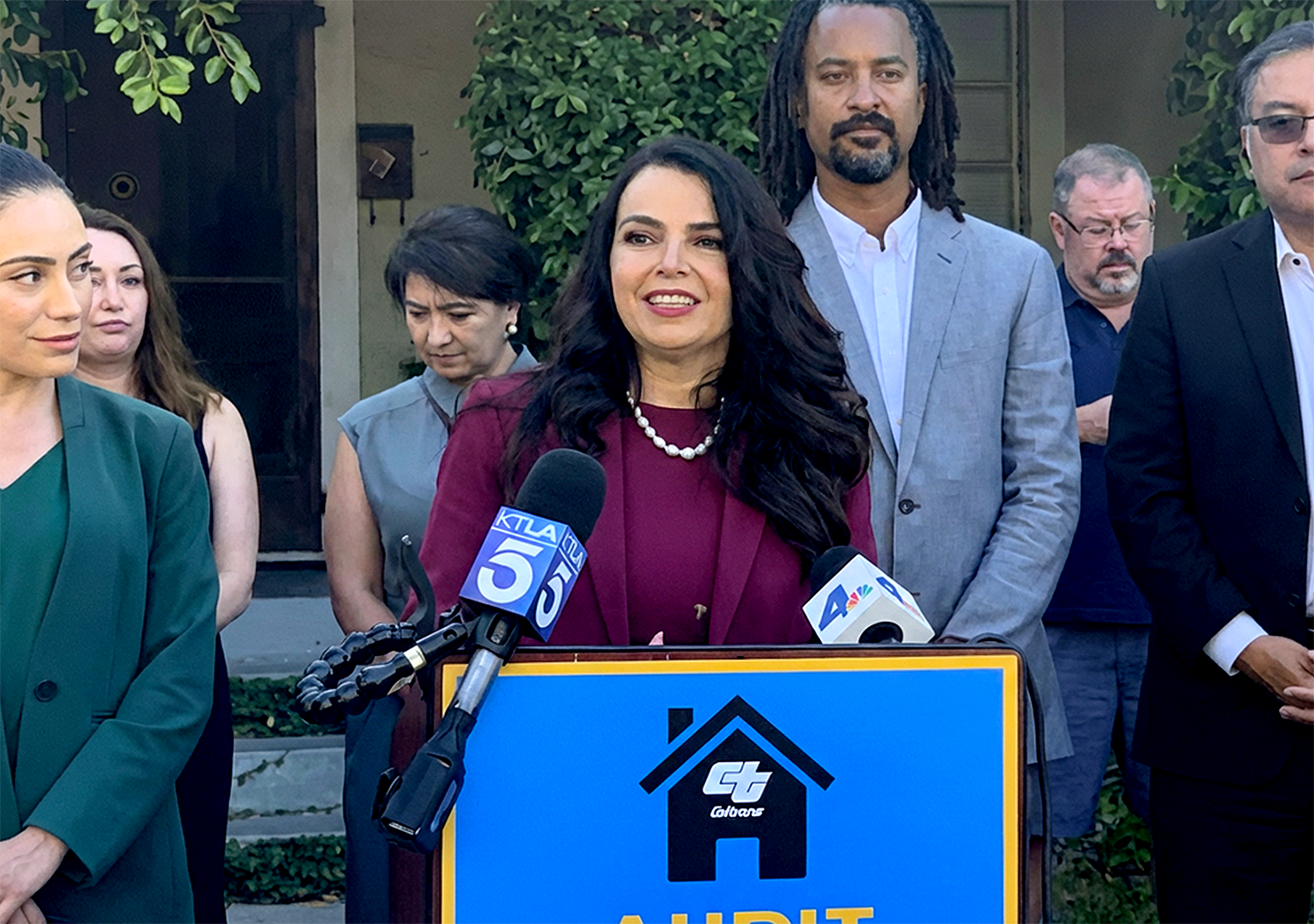 South Pasadena Mayor Sheila Rossi at the press conference in South Pasadena with State Senator Sasha Renée Pérez announcing the audit legislation days before the trip to Sacramento to testify Caltrans owned homes along the former 710 corridor were intended to be sold to tenants under an Affordable Sales Program but residents across Pasadena South Pasadena and El Sereno say shifting rules unclear pricing and years of delays have left many unable to purchasewhile concerns over maintenance safety and vacancies persist
The action by the Joint Legislative Audit Committee follows a coordinated push led by Pérez, who, alongside Assemblymember Mike Fong and local leaders, publicly called for the audit just days earlier after hearing extensive complaints from residents across the 710 corridor.
A Program Under Scrutiny
The audit centers on Caltrans’ Affordable Sales Program, which was intended to transition hundreds of homes—originally acquired for the now-abandoned 710 Freeway extension—back into community ownership as affordable housing.
Instead, tenants across Pasadena, South Pasadena, and El Sereno describe a system marked by unclear pricing, prolonged delays, and inconsistent communication.
In some cases, residents report being unable to purchase homes they have occupied for decades due to how affordability calculations were applied. Others describe a process that has stretched on for years without resolution.
Beyond the sales process, concerns have also been raised about deferred maintenance, unsafe living conditions, and long-term vacancies—issues that Pérez said have been repeatedly brought to her office by constituents describing mold, pest infestations, and structural hazards.

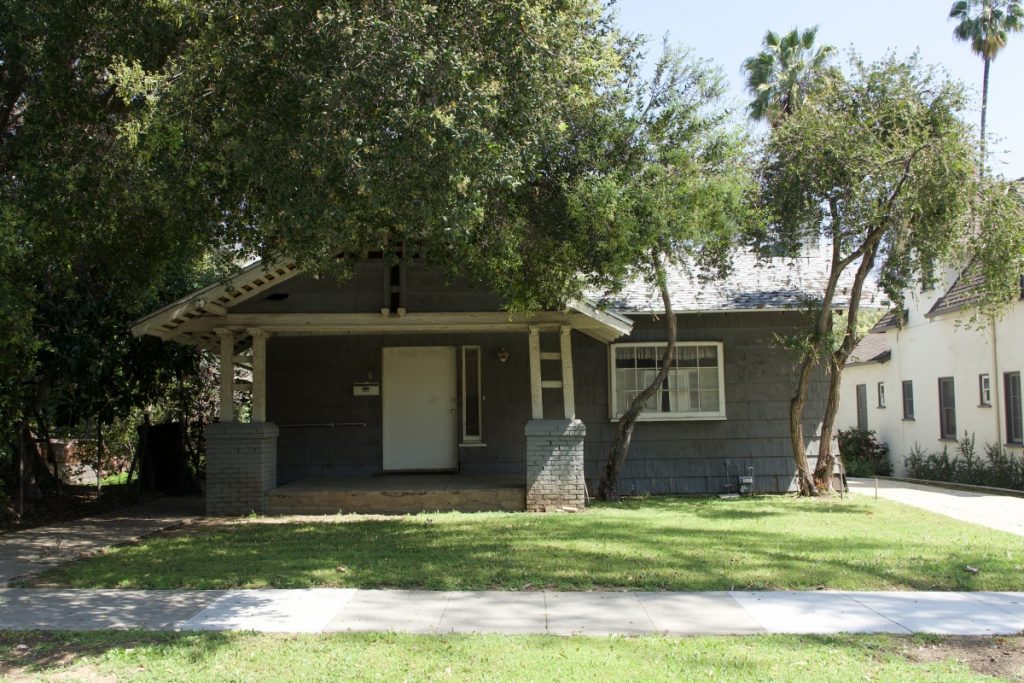 PHOTO Esteban Lopez | SouthPasadenancom News
A Very Long Time Coming
While the audit was approved within days of Pérez’s formal call for action, the underlying issues stretch back decades.
A 2012 state audit previously identified significant management problems within Caltrans’ handling of these same properties, including financial losses and oversight failures. More than a decade later, many of those concerns remain unresolved.
The homes themselves were acquired beginning in the 1950s for a freeway project that was ultimately defeated in 2019 after decades of fierce community opposition. In the years since, the challenge has shifted from stopping the freeway to determining what happens next—and who benefits from that outcome.
Over the past year, pressure has intensified as tenants and local officials have pushed for clarity, transparency, and a workable path to ownership.
From Local Pressure to State Action
That pressure reached a tipping point last week, when Pérez—joined by Fong, South Pasadena Mayor Rossi, and steakholder community members—stood in South Pasadena to formally call for an independent audit, citing systemic failures in maintenance, transparency, and failed program execution.
Within days, the CalTrans audit action moved to Sacramento and was approved Tuesday March 24, 2026 —bringing a decades-long, corridor-wide property management breakdown impacting hundreds of households—marked by tenant complaints, nonsense evictions, and prolonged serious maintenance failures—into a full state-level investigation with real oversight and accountability.
The audit is expected to examine:
• How property values and affordability are being calculated
• Whether tenants are being treated consistently and in accordance with state law
• The extent of deferred maintenance and vacancy across the portfolio
• Whether Caltrans should continue overseeing residential housing
Why This Moment Matters
For many along the now defeated 710 freeway corridor, the timeline tells the story. From Pérez’s public call for an audit to its approval, the process took days.
From the rise in organized tenant and local government pressure, it took roughly a year. But from the first documented findings of mismanagement, it has been decades.
Previous CalTrans tenant tells the South Pasadenan: “I’ve lived the CalTrans nightmare. More than 20 years ago, I was forced out of a Caltrans home by a corrupt CalTrans property manager. I asked for maintenance on the two old gas furnaces that the Gas Company had ‘red-tagged’ – they didn’t do the work and I sent a letter to the district 7 office, then 14 days later got an eviction notice literally staple-gunned to the front door. The LA Sheriffs showed up 3 days later and forced me and my young family out onto the front lawn. We were totally blindsided and very traumatized. I’ve watched the same kinds of things happen to family after family ever since. Many homes left to deteriorate, people stuck in limbo, no clear answers, no accountability. This isn’t just policy— it’s corruption; it’s people’s lives. Seeing this audit finally move forward seems like there could be some justice and it’s long overdue. It’s the first time it feels like elected officials with authority are actually going to look at what’s been happening here for decades.” (NOTE: Local resident’s name omitted upon request due to fear of retaliation form CalTrans)
Keep Watch for Next Steps
The audit will now proceed under the authority of the California State Auditor, with findings expected in the months ahead.
For tenants, the outcome could determine whether a clear and consistent path to homeownership finally emerges.
For lawmakers, it represents an opportunity to assess not only how the program is functioning—but why earlier warnings failed to produce lasting change.
And for South Pasadena, a city shaped for generations by the 710 freeway fight, the question now is whether this next phase—driven in large part by Pérez’s tenacity—will finally deliver on the promises that followed the freeway’s end: Getting the homes back into the communities.
What the Audit Will Do
With the audit now formally approved, the California State Auditor will conduct an independent, top-to-bottom review of how Caltrans has managed, maintained, and attempted to sell homes along the 710 corridor.
While the full report will take months to complete, the scope already outlines a clear set of priorities:
1. Examine How Home Prices Are Being Calculated
The audit will review whether Caltrans is properly applying affordability formulas as required under state law—particularly how tenant income is used in determining purchase prices.
A key question:
Are pricing methods being applied consistently—and in a way that actually allows tenants to buy?
2. Review Tenant Treatment and Eligibility Decisions
Auditors will evaluate how tenants have been treated throughout the sales process, including:
Whether long-term residents were fairly considered for purchase
How and why tenants may have been disqualified
Whether delays or administrative barriers were avoidable
This portion goes directly to the core complaints raised across the corridor.
3. Investigate Property Conditions and Maintenance
The audit will assess the condition of Caltrans-owned homes and whether the agency:
Properly maintained occupied properties
Addressed health and safety concerns in a timely manner
Allowed preventable deterioration over time
Reports of mold, pests, and structural issues are expected to be part of this review.
4. Analyze Vacancies and Missed Housing Opportunities
Auditors will examine why properties have remained vacant—sometimes for extended periods—despite an ongoing regional housing shortage.
The review will look at whether those vacancies reflect:
Administrative delays
Strategic decisions
Or systemic breakdowns in the program
5. Evaluate Financial Oversight and State Losses
The audit will revisit long-standing concerns about financial management, including:
Lost rental income
Costs of deferred maintenance
Whether the program has been managed in a fiscally responsible way
A prior state audit found millions in losses tied to similar issues—raising the question of whether those problems were ever corrected.
6. Determine Whether Caltrans Should Be Managing Housing at All
Beyond individual failures, the audit will address a broader structural issue:
Should a transportation agency be responsible for managing residential housing?
Lawmakers and tenants alike have questioned whether oversight should instead shift to a housing-focused agency.
What This Means for Residents
This audit is not just a review—it is a formal mechanism with the authority to:
Demand records
Verify compliance with state law
Identify systemic failures
Issue findings and recommendations that can drive policy change
For residents across South Pasadena, Pasadena, and surrounding communities, it represents something that has been missing for years:
Independent oversight with real authority.
Why It Matters Now
For the first time, the questions that tenants and local officials have been asking—about pricing, fairness, maintenance, and accountability—are no longer just local concerns.
They are now part of a state-mandated investigation.
And when the findings are released, they will not just describe what happened—they will help determine what happens next.