
From the moment you pop out of your home or office or drive through the city in a car, you’re being watched.
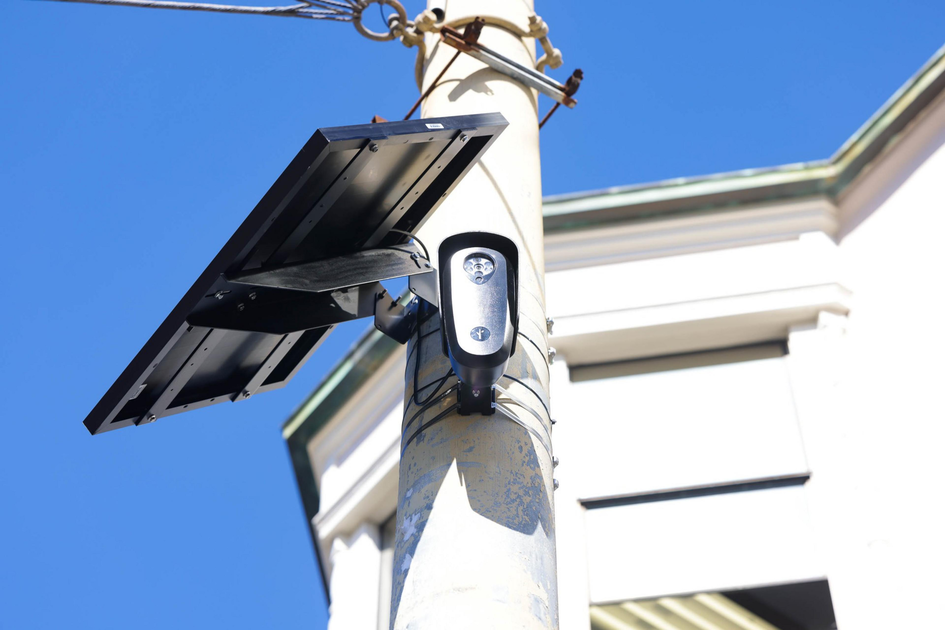
A controversial surveillance network of more than 400 cameras has been steadily spreading across San Francisco. Atlanta-based Flock Safety supplies the hardware to the San Francisco Police Department and California Highway Patrol, among other law enforcement agencies. The automated license plate readers use AI image analysis and infrared cameras to record and track license plates and pedestrians.
The company touts the tools’ ability to identify traffic infractions and other crimes, but concerns about civil liberties have led to escalating backlash from activists and local governments.
You might know these devices exist, but how often are they tracking you?
The Standard has created a map that shows how many Flock cameras you will encounter when traveling in the Bay Area. To our knowledge, this is the first publicly available effort to help an average person understand how prevalent this surveillance network is along a chosen route.
We created the tool using a crowd-sourced project called (opens in new tab)Deflock (opens in new tab), which relies on users nationwide recording the locations of cameras. The map shows how these devices have blanketed much of San Francisco.
We narrowed the dataset to Flock cameras in and around the Bay Area and added Apple Maps routing so you can see how they may track your travel. Note: The data may be incomplete or outdated — cameras could be missing, mislocated, moved, or removed.
Map a route between two addresses to view nearby Flock cameras. The map highlights those along your path and hides the rest. Tap “clear” to start over.
Playing around with the map garners some interesting results. Flock’s cameras appear mostly on the eastern side of the city, with SoMa and the Mission having a greater density than any other neighborhood. Otherwise, Flock cameras can predictably be found along the city’s major thoroughfares as well as at many freeway on and off ramps. Driving along San Francisco’s side streets or in neighborhoods on the western side of the city will offer less exposure to surveillance.
For example, a route from the SFPD’s Real Time Investigation Center at 315 Montgomery St. — where officers monitor and analyze surveillance from Flock cameras — to Mayor Daniel Lurie’s City Hall office at 1 Dr. Carlton B. Goodlett Place passes zero cameras.
On the other hand, going from Dolores Park to the Ferry Building means you’ll hit 12. A route from Golden Gate Park to Chase Center has 39.
Flock cameras are just one segment of a larger surveillance infrastructure that has blanketed the city, including police drones, private Ring doorbell cameras, and footage captured by autonomous vehicles.
Flock did not respond to a request for comment.
According to the company’s website, Flock produces an ALPR and an AI-powered surveillance camera that have the capability to track vehicles and pedestrians, respectively. These systems differ from SFMTA’s red light cameras, which utilize still photography to record a single instance where a driver has violated the law at a red light.
Despite Flock’s claims that its tools help solve crimes faster, (opens in new tab)experts contend (opens in new tab)that these claims are not easily proved. Crime rates across the country have broadly declined since the pandemic.
Additionally, there’s been a local backlash against the technology due to abuse.
In February, the Mountain View City Council ended the use of Flock cameras after an internal audit found the system had been accessed by federal agencies, in violation of city policy. A privacy nonprofit has filed suit against the city of Oakland, accusing the police department of illegally sharing data with federal agents.
Meanwhile, the San Francisco Police Department let cops in other states illegally search city surveillance data on behalf of Immigration and Customs Enforcement, and an SFPD officer is being investigated for using Flock cameras to get a photo of his wife’s stolen car and post it on social media. The devices have also been targeted by vandalism (opens in new tab) and destruction.
Flock has also come under scrutiny for deficiencies in their cybersecurity. 404 Media (opens in new tab) reported in December of last year that Flock left at least 60 cameras across the country accessible to the open internet, allowing anyone with the right know-how to access the cameras’ live streams and download footage up to 30 days old.
Their cameras are easy to fool as well. A person may simply remove their license plate, swap theirs out for a stolen plate, or otherwise obscure it, rendering the surveillance platform as nothing better than a regular traffic camera.
Flock frames its cameras as crime-fighting tools. In practice, they track everyone who passes, turning daily movement into data accessible by anyone who can log in to the right server.
The result is a system that can reconstruct where you are, where you’ve been, and where you’re going — without you ever being the wiser.