
In 2000, a little-known (to many Americans, at least) Taiwanese chain opened in the San Gabriel Valley east of downtown Los Angeles. The strip mall restaurant was small, sunny and humble, but word spread fast. Soon, the place was swarmed with local fans, and by 2008 — the year the late food critic and Pulitzer Prize-winner Jonathan Gold declared it “the greatest dumpling show on Earth” — there was no turning back. Din Tai Fung had arrived, bringing with it a new wave of modern Chinese and Taiwanese eager for a toehold in America.

To this day, many successful international restaurant brands from both Asia and Europe choose greater Los Angeles as their gateway into the American market. Instead of debuting in, say, New York City or Chicago, many brands see LA’s vast, diverse, and educated dining community as their ideal starting point to gauge whether their concepts will appeal to the U.S. palate.
The Din Tai Fung effect doesn’t appear to be slowing down anytime soon.
Article continues below this ad
The outdoor seating area at Chagee’s location in the Westfield Century City in Los Angeles.
Courtesy of Chagee
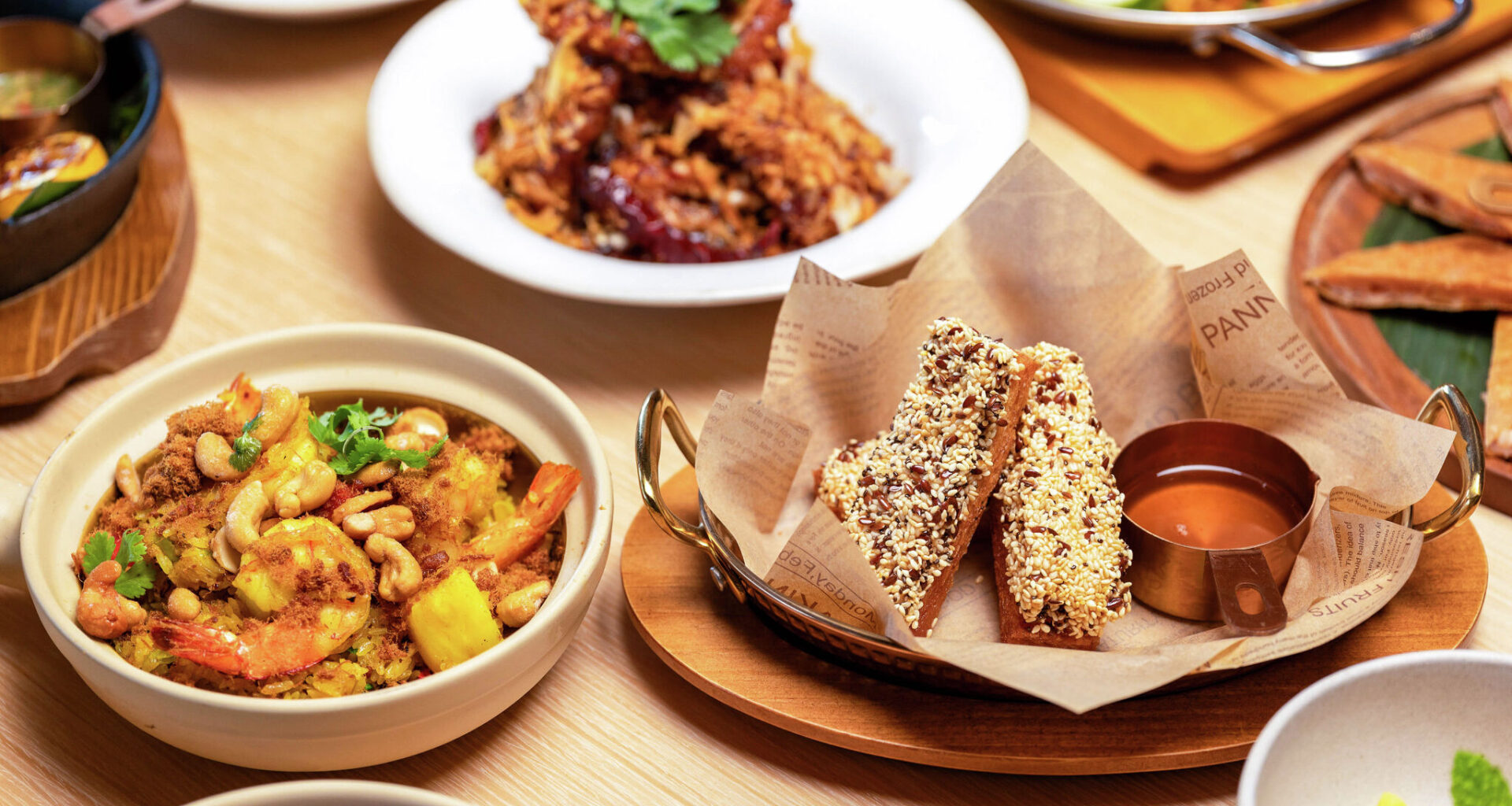
Take Taiwanese restaurant group TTFB. The company has 150 locations of its concepts in Asia, but chose LA, and specifically the newly christened dining hotspot Westfield Century City, for the first U.S. outpost of its 31-year-old restaurant chain Very Thai, which opened in January. Although LA has a rich Thai food community, TTFB CEO and Chairman Charles Hsu sees that as one of the main reasons his restaurant — which serves the likes of shrimp mooncakes and red massaman curry prime ribs — will be a fit in its new 5,000-square-foot home.
“Los Angeles is one of the few cities in the U.S. where Thai food is truly part of everyday life. The city has an incredibly sophisticated Thai dining culture, and diners here understand the range and depth of the cuisine,” Hsu tells SFGATE via email. “For us, it felt important that our first U.S. market already had that appreciation.”
Make SFGATE a preferred source so your search results prioritize writing by actual people, not AI.
Add Preferred Source
He adds: “There’s also a personal connection. I spent part of my childhood in Los Angeles, so I’ve long been familiar with the city’s food culture and its openness to global dining concepts. That combination made LA feel like the natural place to introduce Very Thai to the U.S.”
Article continues below this ad
The dining room at Very Thai in the Westfield Century City in Los Angeles.
CARVINGBLOCK Studios
Although the core menu is the same as Very Thai’s Asian locations, Hsu says the brand made some tweaks for the LA market.
“We leaned into the city’s access to exceptional produce and the way people like to dine here, meals that move fluidly from lighter dishes and salads into curries, seafood, and wok-fired specialties that are meant to be shared across the table,” Hsu says. “We also developed a cocktail program that reflects Thai flavors while connecting to the cocktail culture of Los Angeles, so the experience feels rooted both in Thailand and in the city we’re opening in.”
Of course, it’s easy to see why Los Angeles is a coveted destination for international brands, especially when it comes to sheer size. There are 10 million people in LA County across 88 cities and 4,084 square miles of land, and those 10 million people are an ethnically diverse bunch, including 1.5 million Asians and 4.8 million people of Hispanic/Latino descent. With a median household income of $90,000 as of 2024, it’s also a relatively well-off region with a dining-obsessed public.
Article continues below this ad
“Master chef” pad Thai at Very Thai in Los Angeles, Calif.
CARVINGBLOCK Studios
On the operational side, LA also offers a lower cost of entry than, say, denser cities like New York City or San Francisco. Outside of the high-ticket areas, small (often strip-mall or mall) spaces are a less-expensive lifeline for restaurateurs looking to make it. Access to stellar ingredients is key, too, given Southern California’s year-round supply of great produce and the dual Los Angeles-Long Beach ports, which are collectively the largest port system in North America.
Very Thai is one of many international brands choosing Westfield Century City as its U.S. starting point. Other debuts include Sichuan specialist Meizhou Dongpo from China, which opened in late 2013, and Korean doughnut concept Cafe Knotted. Last year, Spanish chef Dani Garcia partnered with SBE Entertainment Group to open his elegant Spanish restaurant Casa Dani at the mall.
Another big U.S. launch was the first location of Chagee, one of China’s most popular tea houses, which opened at Westfield Century City last spring.
Article continues below this ad
“Los Angeles sits at the intersection of culture, commerce and innovation. We’re under the shadow of the Hollywood sign,” Emily Chang, Chagee’s chief commercial officer, tells SFGATE. “LA is not just where Hollywood meets tech, it’s where East meets West.”
The interior of Chagee’s outpost in Ontario, Calif.
Courtesy of Chagee
In the past year, Chagee has used its beachhead in Century City to launch outposts in Torrance, Long Beach and Ontario, among others. Another opening at the splashy Americana at Brand in Glendale is set for this week.
“We cannot wait to continue expanding,” Chang says. “We’re trying to land in the right places. There’s a joy in becoming part of the communities we serve.”
Article continues below this ad
Of course, Los Angeles County being as big as it is, there are plenty of places other than the mall for brands to make their stateside mark: Japan’s Sushi Zanmai, whose chef Kiyoshi Kimura is known as the “tuna king,” opened in Koreatown last August. Wallace, the fast food fried chicken brand dubbed “China’s KFC,” opened a standalone location deep in the suburbs of Walnut in eastern LA County last fall, angling toward the area’s heavily Chinese and Taiwanese population.
Chinese boba megachain Mixue took a different tack, debuting smack-dab in the middle of Hollywood, on the Walk of Fame in January. According to the Los Angeles Times, “Mixue spokesperson Xu Ping said in a written statement in Chinese that the company chose Hollywood as its first U.S. location because the ‘movie capital of the world’ attracts both international tourists and local consumers year-round.”
The bar at Los Mochis in London.
Courtesy of Los Mochis
The international debuts show no sign of slowing down. London-based celebrity hotspot Los Mochis, known for fusing Japanese and Mexican flavors and its tough-to-book omakase experience, plans to open in Beverly Hills, specifically in the Aman group’s upscale One Beverly Hills development, in 2027. CEO and founder Markus Thesleff is confident about bringing the concept to LA, which is already known for outstanding Mexican and Japanese restaurants.
Article continues below this ad
“We’re the only Japanese-Mexican omakase anywhere,” Thesleff says. “We were given a bunch of opportunities [to open in the U.S.], but we chose One Beverly Hills for a number of reasons. I love the vision of the project. It’s super ambitious.”
He adds: “We’re going to bring a very different perspective, combining foods that haven’t really been done in that way. We don’t want to feel like an import from London. We want to feel like a restaurant from LA, for the people of LA.”