
Organizations, states, schools and governmental bodies have called for the immediate removal of Cesar Chavez’s name from various locations across the country. These calls for action follow a damning article and major investigation published by the New York Times.
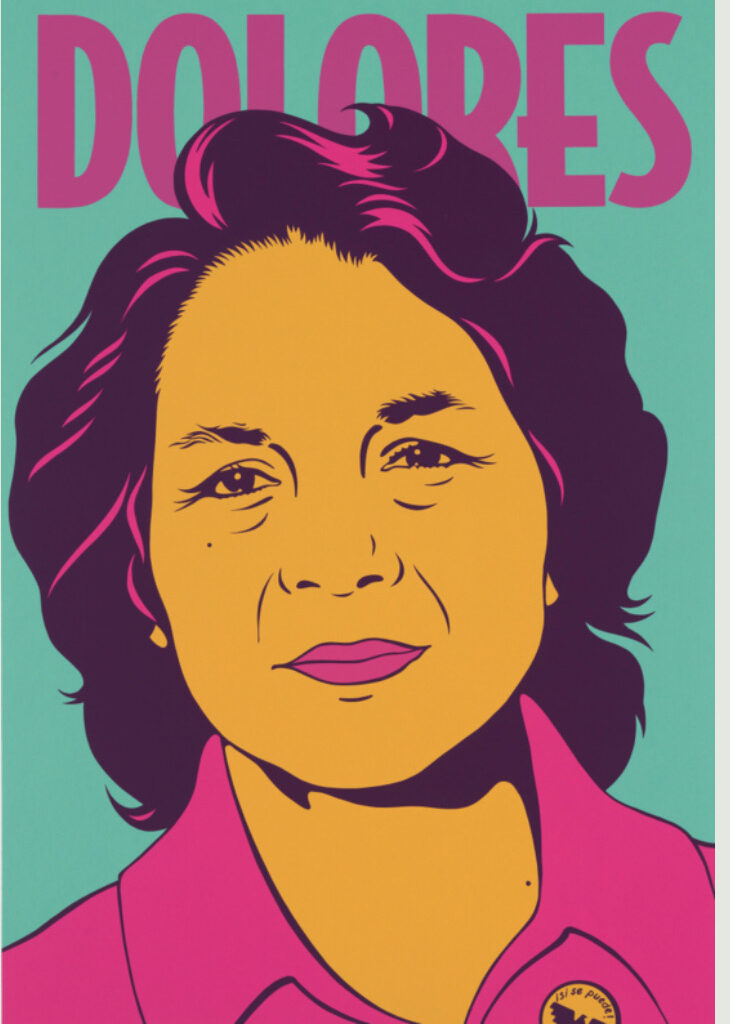
The investigation found that Chavez, a farm workers’ rights champion, had abused and raped women, some of them minors, in the United Farm Workers (UFW) movement during the height of the boycotts, strikes, and marches. This included Dolores Huerta, who bore two children as a result of the abuse.
“Huerta’s silence must be understood as a common outcome of surviving sexual assault,” Jose Anguiano, the chair of the Cal State LA Department of Chicana(o) and Latina(o) Studies (CLS) department said. “This is a trauma response. Huerta has also acknowledged she feared hurting the campaign for farmworker rights.”
Chavez was long respected as the champion of the farm workers’ labor movement, and a co-founder of the UFW. Chavez was among many, including Huerta and thousands of others, who led several protests, boycotts and marches throughout the Central Valley and across California in the late 60s and early to mid 70s.
These actions of protest and resistance by the movement as a whole eventually led to the California Agricultural Labor Relations Act of 1975, which codified farm workers’ rights and union representation.
With these allegations now at the forefront of the conversation, some have begun to point out how little Chavez actually did in founding the original organization that led to the UFW and movement overall. Many say his involvement and work was overblown. People also called out his vehemently anti-illegal immigrant past.
Chavez called undocumented immigrants “wetbacks” in a 1974 interview and said they’d often work the fields during ongoing UFW strikes and “strikebreak.” He also said these people “coming in” would take the jobs of those that resided in California legally. Wetbacks is derogatory term for someone who crosses the Rio Grande (the river splitting the U.S. and Mexico) illegally.
Cal State LA is a Hispanic Serving Institution, with approximately 75% of the student body identifying as Hispanic, and is home to the oldest CLS program in the nation, which opened in the fall of 1968.
In a statement from the CLS department on their Instagram, they expressed their sadness about how women in the movement have had to hide their “pain and trauma” for so long, “often alone.”
“We are once again reminded of the toll on women’s bodies when social movements are not grounded in liberation for all,” the Instagram post said. “We must continue building and pushing for a movimiento that does not harm women, queer people, children, and other marginalized people. Like Dolores taught us, Si se Puede! [Yes you Can!]”
At the school, there are no specific buildings or other locations named after Chavez or works of art in his honor on campus, Cal State LA Spokesperson Erik Hollins said in a statement.
Chavez had long been revered as a California icon and champion of the labor movement in the state, having spent decades advocating for workers’ rights. But for many, including at Cal State LA, these allegations change how the movement is viewed and potentially taught.
“I don’t anticipate any curriculum changes or course material changes,” Anguiano said. “What will undoubtedly change is how we talk about the UFW’s history and the legacy of Cesar E. Chavez. Moving forward, any discussion about the union organizing efforts of Chavez will also have to talk about violence against women carried out in social justice spaces.”
Further condemnation and reckoning came from the Cal State LA chapter of the California Faculty Association, who showed their unwavering support for survivors of sexual violence, and directly calling out the very systems that force women to stay silent for decades.
On the Cal State LA University upcoming events calendar, the name “Cesar Chavez Day” was removed, it now just says that the school is closed in observance of a state holiday.
While the school will still close for what was formerly known as Cesar Chavez Day on March 31, a recent change by California lawmakers following the allegations of sexual violence by Chavez would change the name of the holiday to Farmworkers Day.
A bill to make this change officially passed the California Assembly in a bi-partisan 68-0 vote on March 23. A vote by the State Senate is expected in the next few days, before the bill eventually reaches California Gov. Gavin Newsom’s desk. Unlike many state bills, this piece of legislation, once signed by Newsom, immediately would be codified into law.
Locally, the city of Los Angeles made a similar proclamation less than three days after the allegations came to light. The changes were announced at a press conference attended by Mayor Karen Bass and several LA City Councilmembers. One of those councilmembers, Ysabel Jurado, represents Council District 14, which encapsulates Cal State LA within its district boundaries.
Jurado, whose parents came from the Philippines as undocumented immigrants, gained her political identity through learning about Filipino and Mexican solidarity in the Delano Strikes of 1965 through 1970. Jurado was sworn into office by Huerta when she first took her council seat in early 2025.
“Let this be a reminder to all leaders of the responsibility we bear to hold ourselves to the highest standards, and that we all of the mujeres here are going to continue to uphold that and hold people accountable,” Jurado said at the press conference.
But, for the council and Jurado, it goes beyond a single person and transverses events that shaped California labor history.
“We know that one person does not make a movement,” Jurado said. “That movement must go beyond its leaders, and by recognizing Farmworkers Day.”
Many people, following the release of the New York Times story, questioned online why Chavez was being erased so quickly, while many in the Epstein files still remain as major figures of political power, one even being the current president of the U.S., Anguiano offered reasoning as to why society quickly turned on Chavez, but has failed to address others who face similar accusations.
“That demonstrates the power difference that exists between working-class men of color and white, rich, powerful men who control many of the levers of government,” Anguiano said.
In 2023, the CSU Board of Trustees posthumously awarded Chavez a “doctor of humane letters” degree from California State University Bakersfield (CSUB) at their commencement ceremony. It is unclear if the awarded degree will be revoked, or how that process will work.
The Cesar Chavez Foundation, which is affiliated with CSUB, no longer references the honorary degree on their website, and instead published a statement referencing the accusations revealed in the New York Times investigation.
“Although these revelations change how we remember Cesar Chavez as a person, it does not change our commitment to social justice and community empowerment,” the foundation said on their website.
Two decades before Chavez’s honors at CSUB, Huerta was awarded the same honorary degree from California State University Northridge in 2002.
The California State University Board of Trustees chooses up to two people annually to nominate for an honorary doctorate degree. The first honorary degree was given to President John F. Kennedy in June 1963 from San Diego State University.
However, now that the allegations have come to light, the CSU made a statement saying that they were “deeply troubled” and they are “carefully reviewing this information and considering appropriate courses of action.”
“As a significant historical figure, his legacy is honored in various ways across CSU universities, including through statues, murals and building names,” the statement said. “At the same time, the CSU is firmly committed to fostering university environments centered on respect, integrity and the safety and dignity of all members of our campus communities.”
Cal State LA did not make a separate statement in regards to the allegations, and would join on with what the CSU said, Hollins added.
No events had been planned by the CLS to celebrate Chavez in the near future, but Anguiano said that only applied to their department. It was unclear if other university wide events were planned and canceled following the allegations.
However, multiple universities in the Cal State system have taken their own immediate steps, including at Fresno State, where a statue of Chavez, that had been on campus since 1996, was promptly removed.
Other CSUs, like San Francisco State, are in the process of exploring measures to rename their Student Union building, which was named after Chavez in 1994. The school is also developing a course of action to address a mural that depicts Chavez and the UFW logo, which is painted on the Student Union building.
“Changing street signs and other namesakes will only be the first step in our movements to create co-liberation for all,” the statewide CFA said in a statement. “No movement is one person; it will take all of us to stay united and create a safer world for the generations that will come after us.”
Chavez had also been to Cal State LA several times in the 1970s, where his appearances would “draw thousands,” according to a February 1978 University Times story discussing the effectiveness of the UFW boycotts.
The boycotts led by the UFW in the 1970s targeted non-UFW table grapes, wine and lettuce from companies that had signed labor deals with the Teamsters, a separate union. During the boycotts, Cal State LA’s Foundation, which handled food service on campus at the time, “adopted a policy of buying only UFW-stamped lettuce products,” the same UT story said.
“One lesson of these revelations is that movements for social justice or labor rights should not be based on a few charismatic leaders,” Anguiano said. “Social movements are only effective when many people work together towards a common goal so the focus should be on collective action. In this same spirit, I hope the state of California considers changing the Cesar E. Chavez holiday to Farmworker Dignity Day.”
At Cal State LA students have access to several resources if they are the victim or a survivor of sexual violence, dating violence or domestic violence.
These resources include:
Counseling and Medical Services:
Counseling and Psychological Services
Low-cost Medical Services: Student Health Center
24/7 Hotlines:
Los Angeles County Domestic Violence Hotline: 800-978-3600
National Sexual Assault Hotline: 800-656-4673
Reporting issues on-campus:
Title IX: Cal State LA Resources
Law Enforcement (911) or University Public Safety
Peace Over Violence Anonymous On Campus Advocate
Multimedia Reporter Alessandro Flores contributed to this report.