
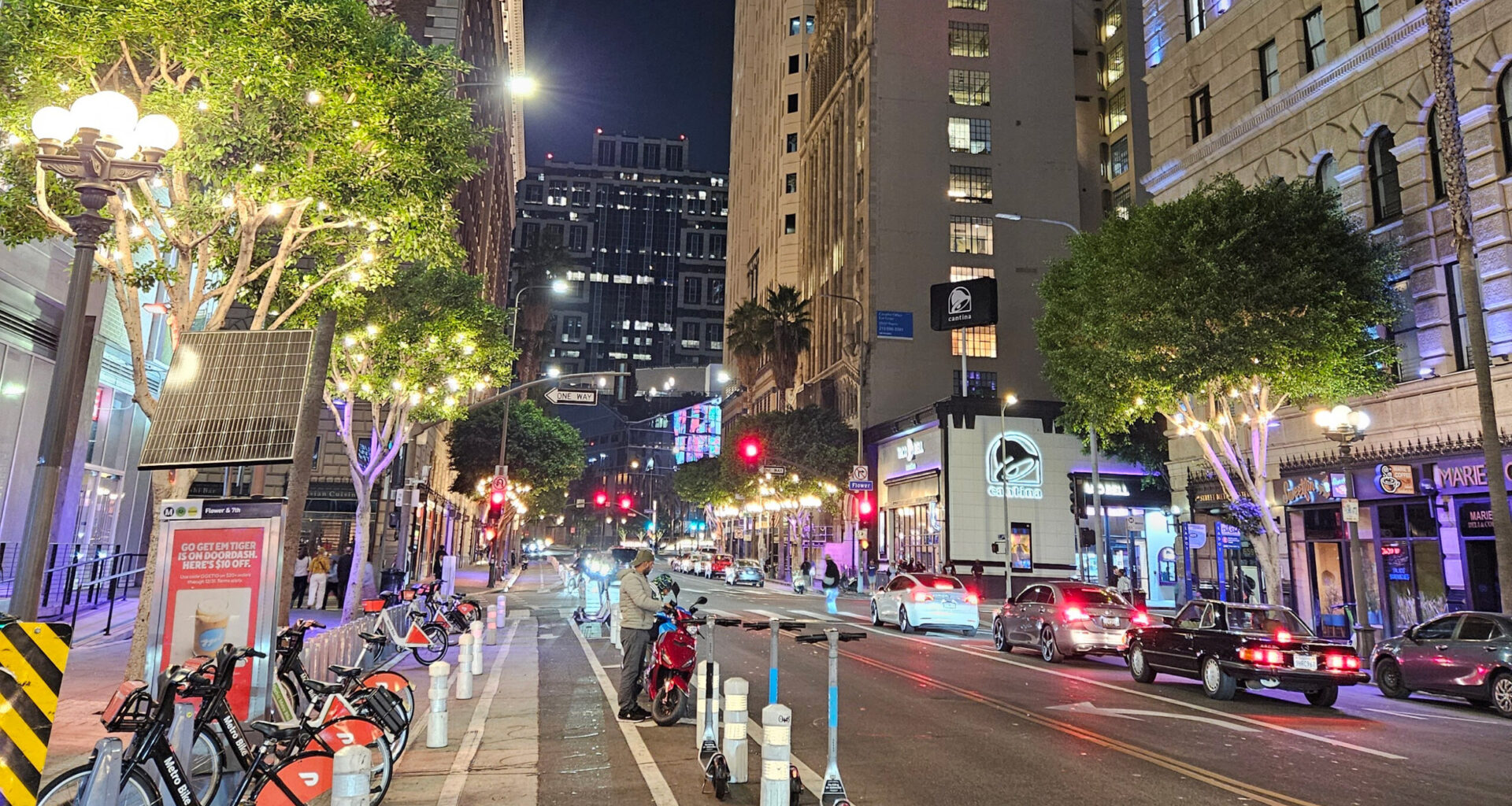
Mayor Karen Bass pushes infrastructure reset as public safety concerns grow across the city
Los Angeles is about to get a little brighter. This week, Karen Bass is expected to roll out a plan to repair roughly 60,000 broken streetlights across the city, tackling a long-standing issue that has shaped everything from neighborhood safety to quality of life.
For years, outages have piled up faster than crews could fix them. At times, Los Angeles has carried one of the largest backlogs of broken streetlights in the country.
Entire stretches of residential streets and major corridors have gone dark, leaving residents and local officials to warn of safety risks and point to the outages as a sign of strained city services.
The new plan aims to aggressively cut into that backlog. While details are still emerging, the city is expected to expand repair crews, upgrade tracking systems and better coordinate across departments.
The goal is not just to fix lights faster, but to stop outages from dragging on for months.
A Basic Fix With Bigger Implications
On paper, streetlight repairs sound like routine maintenance. In reality, they sit at the center of public safety in Los Angeles.
City officials and community groups have long linked poor lighting to higher risks of traffic accidents and crime, particularly in neighborhoods that already feel underserved.
In recent years, residents have made those concerns more visible through apps like MyLA311, where they regularly report outages that can take weeks or longer to resolve.
Scroll to continue reading
Bass has made visible improvements to city services a key priority, framing them as essential to rebuilding public trust. That effort spans everything from addressing homelessness to improving basic infrastructure. Fixing streetlights fits directly into that strategy, delivering a block-by-block change residents can actually see.
There is also a financial incentive. Deferred maintenance drives up costs over time, and unresolved outages put added strain on the system. A large-scale repair push now could help stabilize those costs later.
Making this is less about launching something new and more about catching up.
But in a city where even small fixes can ripple outward, turning the lights back on still carries weight.