
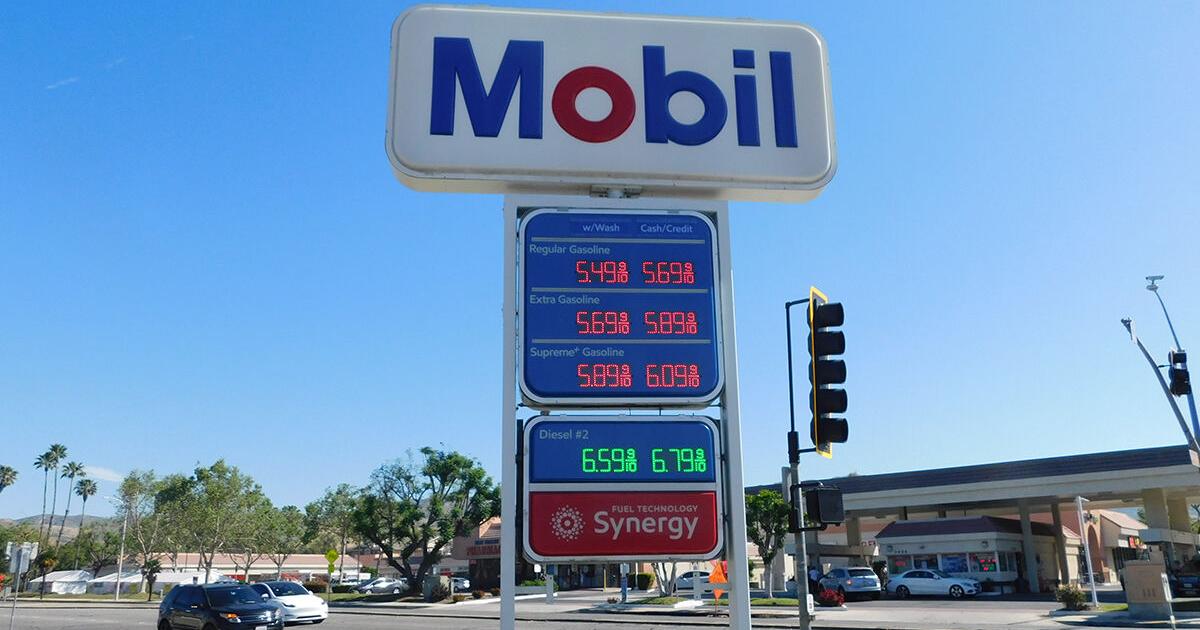
(The Center Square) – The average U.S. gallon of gas neared $4 on Wednesday as California closed in on $6, with prices fueled by the uncertainty around the U.S.-Israel conflict with Iran.
With no clear end in sight for the Iran conflict that has killed nearly 3,000 people across the Middle East, oil and gas prices have remained high across the globe, but slowed since the first weeks of the conflict. In the U.S., some states are exploring pauses on fuel taxes to relieve consumers.
“I would caution against saying things are stabilizing because prices are reacting to a dynamic and complicated international situation,” AAA Auto Club Group spokesperson Skyler McKinley in Colorado told The Center Square on Wednesday. “Prices have stabilized at an expensive level, and so we’re seeing that oil flow across the system. And we’re seeing it priced in at the gasoline level.”
The U.S. national average for a gallon of regular gas was $3.98 Wednesday, up from $3.84 last week, according to AAA. The all-time high was $5.01 set back in the summer of 2022 shortly after the Russia-Ukraine war began and as the COVID-19 pandemic was ending.
In the Southwest, California saw an average price of $5.83, up from last week’s $5.56. Coastal counties such as Los Angeles, San Diego and San Luis Obispo saw averages above $5.90 a gallon. San Francisco County saw a $6 a gallon average on Wednesday, and some northern and eastern counties saw $6 or more for the average trip to the pumps.
Arizona reached $4.62, up from last week’s $4.40. The state’s most populous county and home to Phoenix, Maricopa, had the most expensive gas at $4.92 a gallon.
Colorado remained below the national average at $3.91, up from $3.83. In Nevada, the average gallon creeped toward $5 at $4.83 from last week’s $4.62. Clark County, home to Las Vegas, saw an average of $4.88 a gallon.
“At $4 per gallon, behavior starts to change. Motorists don’t cancel their vacation, but they might combine errands. They might eat out less,” said McKinley. “$4 is the line in the sand where many motorists are like, ‘Oh, I’ve got to change my behavior – to use less fuel or to use it more efficiently.’ ”
McKinley added that he did not expect fuel demand to decrease.
In Arizona, legislators are considering a pause on gas fuel taxes to fight the rising prices. Republicans proposed House Bill 2400, the Gas Tax Holiday Bill, but neither legislative chamber has voted on the issue, which is unlikely to be popular among Democrats.
The Gas Tax Holiday Bill would suspend the state’s 18 cent per gallon fuel tax from May 1 to Sept. 30. The tax generated over $817 million for the state’s Highway User Revenue Fund and was the biggest contributor to the fund that pays for the state’s highways, roads and other major infrastructure.
The Arizona bill would follow similar measures under consideration in at least three other states, according to Market Watch.
“There’s some stuff you can do around the margins. And when we have gas tax conversations, that’s what we’re talking about – but changing those doesn’t actually change the trend lines and the pressures [on fuel prices],” said McKinley. “A gas tax is a simple fix to provide some measure of relief to some people, but it does so at the consequence of whatever you would use those dollars for.”
Currently Georgia is the only state that has enacted a gas tax holiday in response to the Iran conflict-influenced gas price hike. Republican Gov. Brian Kemp signed the measure last Friday, suspending the state’s fuel taxes for 60 days.
The gas tax holiday proposed by Arizona Republicans follows a series of similar proposals in recent years, but none have been successfully passed into law in the state.
While the Arizona Republican party holds slim majorities in both the state House and Senate, Democratic Gov. Katie Hobbs has not signaled support for a fuel tax holiday. In an email response to The Center Square, the Governor’s Office said it doesn’t comment on pending legislation.