
The Fresno City Council on Thursday will consider amending city law to allow any enforcement officer to enter some areas of private properties without a warrant — a proposal officials say is meant to close a loophole that’s allowed landlords to avoid penalties for violating housing standards.
If the proposal is approved, enforcement officers would not need a warrant to access areas of properties considered “public,” such as front porches or driveways, said City Attorney Andrew Janz. He said officers will still seek warrants as required by the Fourth Amendment to the U.S. Constitution, which protects people against unreasonable searches and seizures.
“The Fourth Amendment doesn’t require us to get a warrant to go to someone’s front door,” Janz told The Fresno Bee on Wednesday.
He said the proposal stems from a Fresno County judge’s ruling in January that code enforcement officials inspecting a rental property violated the city’s own laws when they entered the property without consent or a warrant, and while it was closed to the public. Though the city had received complaints about the property and found serious violations — including evidence of an insect infestation — the judge ordered the city to overturn fines against the owners for problems that were not corrected on time.
Janz said the city teaches its code enforcement officers that, under the Fourth Amendment, they are allowed to access any part of a property that a mail carrier can. But “in the judge’s view,” he added, the city’s code requires officers to have a warrant “if you step even in a public place, like their front porch.”
“We’re rewriting the Municipal Code in a way that complies with the Fourth Amendment but doesn’t allow substandard property owners to use this loophole in the court to beat a citation or not fix what they’re supposed to fix,” Janz said.
The proposal would amend various parts of the city’s code. It would strike from the law language that says inspections should be done “where entry onto the premises is necessary with the consent of the owner, agent, or occupant.” The law would still say officers need a warrant if a property owner doesn’t consent to an inspection, but new language would clarify that applies “in circumstances where consent is legally necessary.”
The Fourth Amendment requirements for warrants “are not going to change,” said City Council President Nelson Esparza.
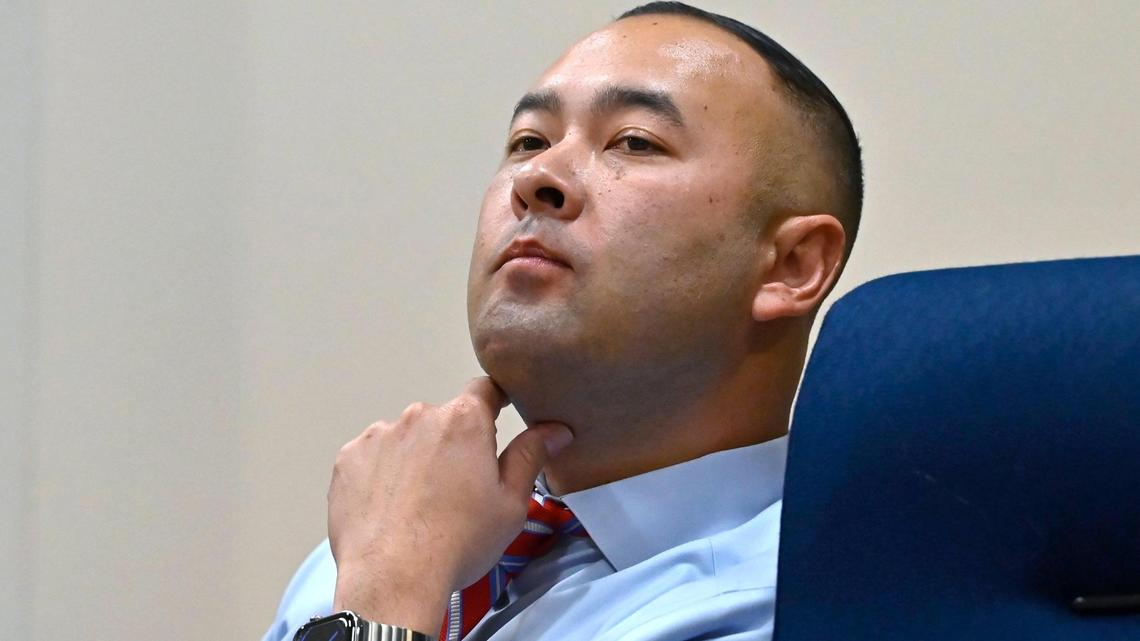
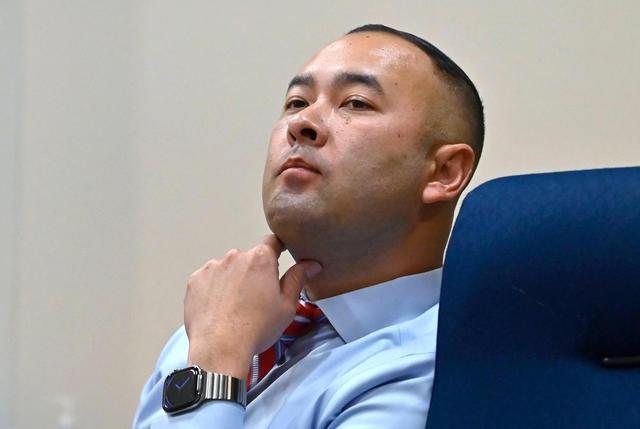 Fresno City Attorney Andrew Janz speaks about the recent subpoena of two journalists in an interview Monday, April 14, 2025 in Fresno. ERIC PAUL ZAMORA ezamora@fresnobee.com Proposal stems from case of substandard housing south Tower District
Court records show the city began receiving complaints in 2023 about unpermitted wiring, insects and a sinking kitchen floor in a house on 635 N. Roosevelt Ave. The property was owned by two companies, BDHOV LP and LEHOV LP, according to court documents.
After the complaints, a city code enforcement officer began visiting the Tower district property with the owners’ consent and issued a notice of violation including 12 alleged violations, court records show.
In April and May 2024, according to court records filed by the owners, the officer accessed the property through an open backyard gate and kitchen door without contacting the owners. He then cited the owners for issues found during the April visit that were still unfixed, that filing says.
An appeals panel in November of that year found the inspections violated the city’s Municipal Code. Fresno County Judge Maria Diaz agreed this past January and ordered the city to drop its May 2024 citation against the property owners entirely.
Related Stories from Fresno Bee
The Fresno Bee
Erik is a graduate of the Missouri School of Journalism, where he helped launch an effort to better meet the news needs of Spanish-speaking immigrants. Before that, he served as editor-in-chief of his community college student newspaper, Riverside City College Viewpoints, where he covered the impacts of the Salton Sea’s decline on its adjacent farm worker communities in the Southern California desert. Erik’s work is supported through the California Local News Fellowship program.