
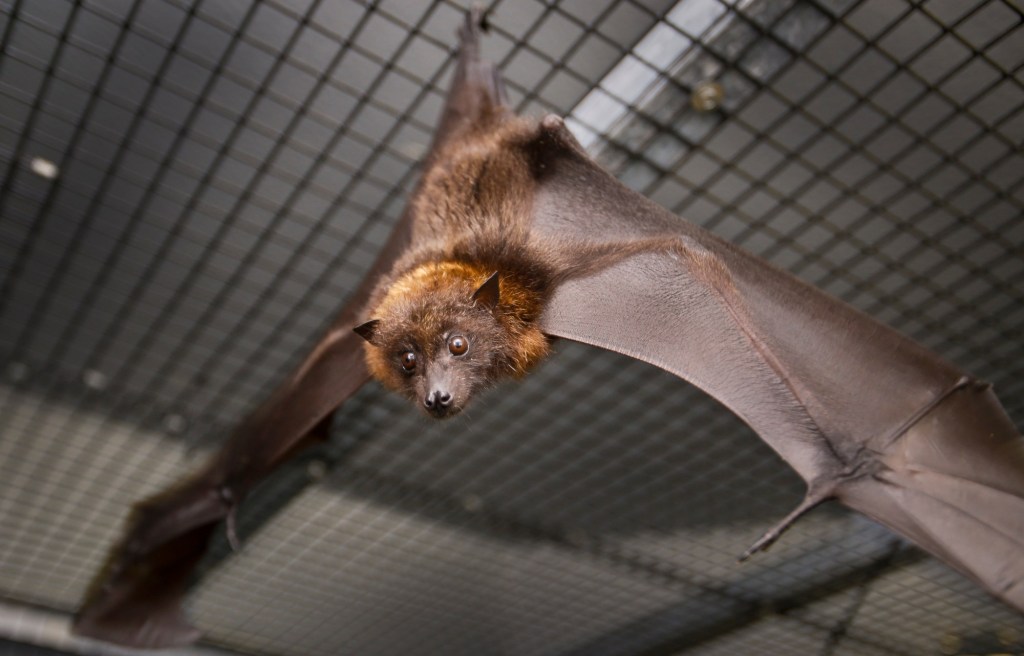
San Diego County public health officials on Wednesday were looking for people who may have come in contact with two bats found at separate locations in Escondido last week who later tested positive for rabies.
The first bat was found on Saturday around 4 p.m. in a grassy area near the White Oak Villas condo complex in Escondido. The animal was retrieved by the San Diego Humane Society.
The second wild bat was found at the San Diego Zoo Safari Park on Sunday, just after 10 a.m. That one was not a bat who lives in a park habitat, a county statement read. Park visitors who had no physical contact with the bat are not at risk for rabies. The bat was found on a rock wall outside of the Okavango Restaurant and safely collected by a trained staff member.
“Human rabies is almost always fatal without prompt post-exposure vaccination and treatment,” said Dr. Sayone Thihalilopavan, county public health officer. “Rabies can be transmitted through a bat bite or when bat saliva comes into contact with a cut, scrape, or the eyes, nose or mouth. Bats play an important role in our local ecosystem, so it is essential for the public to remember not to touch bats or handle wildlife. Keeping a safe distance protects both you and the animals.”
These two latest bats with confirmed rabies are the fourth and fifth rabid bats the county has detected this year.
The County Public Health Laboratory confirmed the infection in the bats. Those who may have interacted with or had direct contact with a bat in those areas were urged to contact County Public Health Services as soon as possible at 619-692-8499.
Those who do come in direct contact with a bat are urged to wash the affected area thoroughly with soap and water and get medical advice immediately.
Rabies is a preventable viral disease that is most often transmitted through the bite of a rabid animal. Because of prevention efforts, human rabies is rare. The last human rabies case in San Diego County was in 2001 in a person who was bitten by a dog in the Philippines, according to the county statement.
Symptoms of rabies in people can take weeks to months to develop after exposure. Once symptoms develop, rabies is almost always fatal. However, prompt post-exposure treatment following exposure to the virus will prevent the disease, health officials said.