
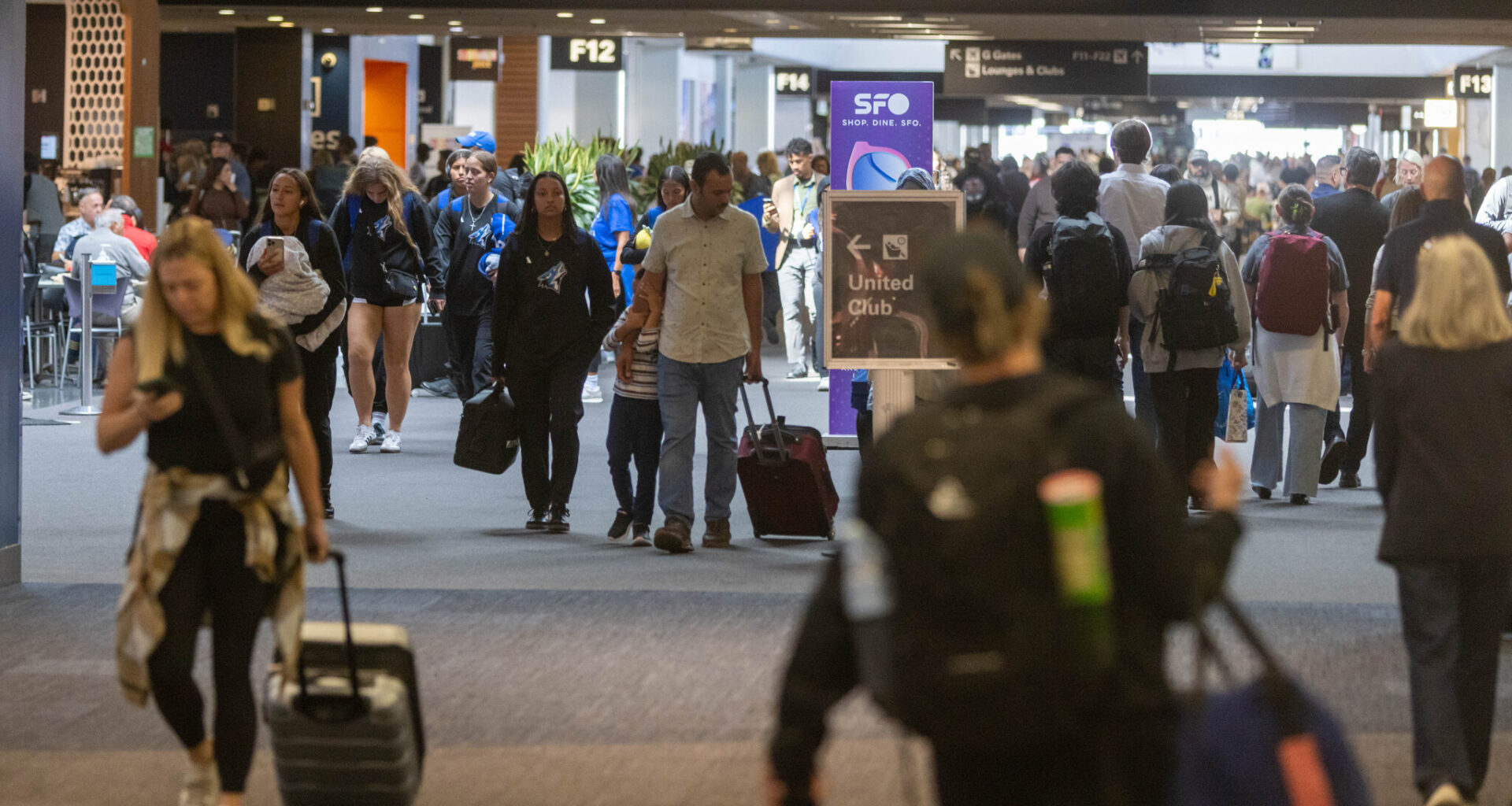
A mutated strain of the COVID-19 virus, first detected in the U.S. in a traveler to SFO, is increasingly appearing across the country.
A March 19 report from the U.S. Centers for Disease Control and Prevention detailed the rise of the COVID-19 BA.3.2 variant. This mutated version of the COVID-19 virus contains genetic changes on a key protein that can help it hide from immune cells, even in vaccinated individuals.
“BA.3.2 mutations in the spike protein have the potential to reduce protection from a previous infection or vaccination,” CDC researchers said in the Morbidity and Mortality Weekly Report. “Continued genomic surveillance is needed to track SARS-CoV-2 evolution and determine its potential effect on public health.”
The strain has been found in 23 countries so far and was first detected in the U.S. when a traveler from the Netherlands tested positive at SFO in June 2025, as part of the CDC’s Traveler-Based Genomic Surveillance program. As of Feb. 11, the viral variant has now been detected in five individuals and in 25 states via wastewater, including California and specifically in SFO wastewater.
Dr. William Schaffner, an infectious disease expert at Vanderbilt University Medical Center, told SFGATE this variant is “substantially different” from previous strains of the COVID-19 virus. However, he said it’s unclear if more people will get sick, pointing out this variant doesn’t seem to infect lung cells as easily in lab settings.
“We will have to watch this very carefully in the real world, because if this is a variant that develops the capacity to spread, it likely will influence what it is that we put into the vaccine,” he explained.
Schaffner said the report highlights the importance of public health surveillance to identify and respond to potential disease risks to prevent major outbreaks.
“We have to have a global horizon,” he said. “What’s over there can be over here in 24 hours,” he said.
Currently, wastewater data shows relatively low levels of the COVID-19 virus in the Bay Area, but Dr. Monica Gandhi, an infectious disease expert at UC San Francisco, said the region could see a “spring surge.” She said she’s seen more patients at San Francisco General testing positive during routine screening.
“This particular virus circulates so much and changes so much and so far has not yet settled into a winter virus,” she told SFGATE.
Gandhi emphasized that even if the mutated variant takes off this spring, COVID-19 vaccines will still help guard against severe symptoms.
“What it means by immune escape mutations is that the antibodies that you got from your vaccine may not work that well,” she said. “But T cells, B cells, what you get from your vaccine to protect you against severe disease should still work.”
Gandhi said those at high risk for severe COVID-19 symptoms, such as older adults, should consider a booster shot.