
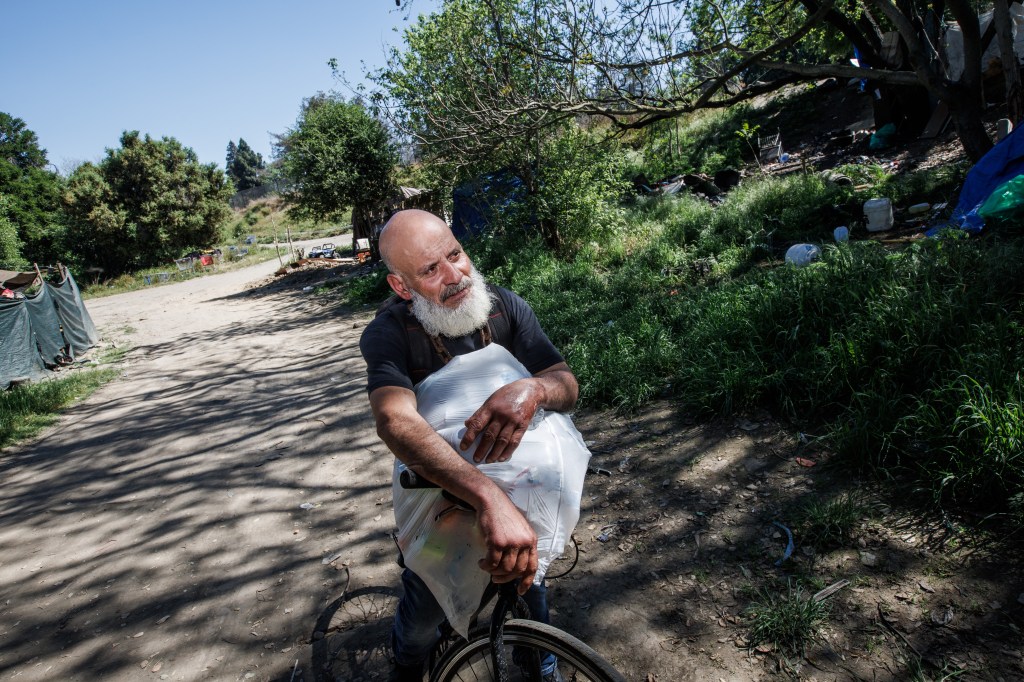
Just south of downtown San Jose, about 100 people live on the banks of Coyote Creek, where footpaths and improvised bridges connect a community of tents and wooden shacks — the city’s last sprawling homeless encampment. Shaded by the forest canopy, locals chop firewood, bag recyclables or tinker with bicycles and electric scooters.
That daily rhythm will soon end.
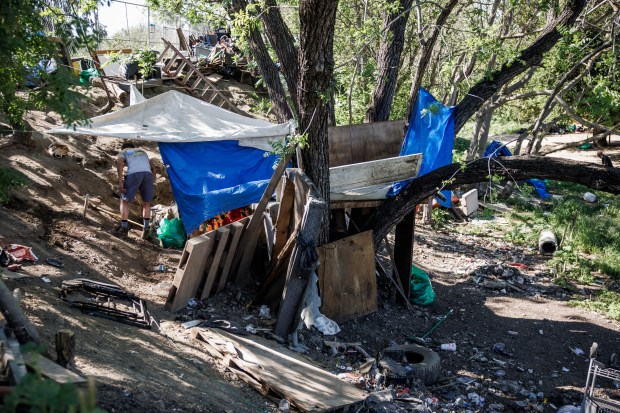 A part of “The Jungle” homeless encampment is seen on March 18, 2026, in San Jose, Calif. (Dai Sugano/Bay Area News Group)
The city plans to clear the Jungle, as the camp has long been called, on April 15, marking a milestone in a citywide push spearheaded by Mayor Matt Mahan to clear encampments and move their residents into an expanded network of emergency shelters.
RELATED: San Jose’s Jungle encampment: A timeline
However, the sweep will dismantle a longstanding community with a distinct culture, residents said. Many are ambivalent about what comes next.
“I feel like s—,” said camp local Martin Rodriguez, “but I feel even worse here.”
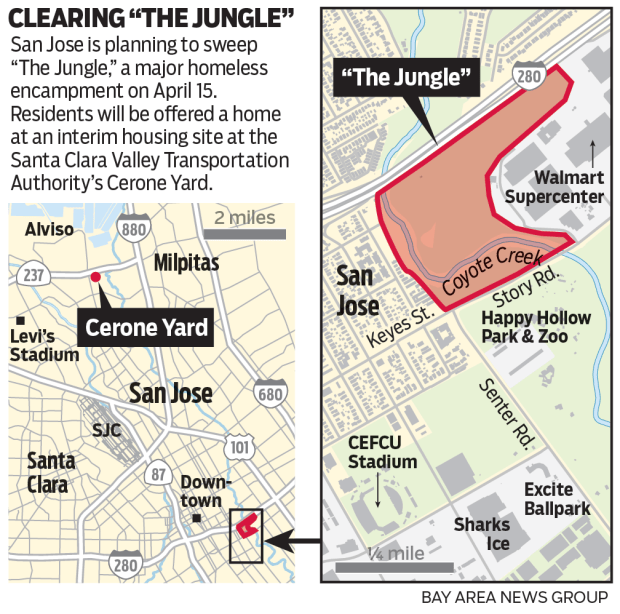 Rodriguez and many others are expected to move to San Jose’s newest tiny home village, located near the border with Milpitas at a Valley Transportation Authority lot. City officials have prioritized residents of the Jungle, which is also known as Coyote Meadows, for that site and broadly offered them slots.
Rodriguez, 62, expects to trade his life in the Jungle for a 120-square-foot tiny home. A happy-go-lucky former auto mechanic with a thick white beard, he has two homes in the Jungle: a wood-and-tarp enclosure near the river and a tent perched on the embankment of Story Road beneath the camps of his neighbors.
Those who decline the city’s offer of emergency shelter will likely scatter to parks, sidewalks and other areas, risking further sweeps and the possibility of citation or arrest. City workers plan to enforce a no-camping zone along the swath of Coyote Creek.
Either way, life will look different than in the Jungle.
The moment is déjà vu for San Jose, 12 years after city leaders cleared the camp in a major operation. Unhoused people eventually returned, drawn by its central location, the privacy of the meadows and the prospect of mutual protection.
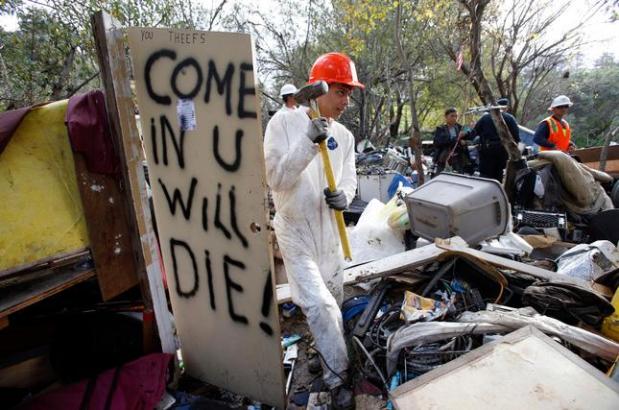 Demolition crews tear down The Jungle homeless camp along Story Road in San Jose, Calif., after the city closed it Thursday, Dec. 4, 2014. (Karl Mondon/Bay Area News Group)
Years of use as a makeshift neighborhood have degraded the forest and contributed to pollution in Coyote Creek, which drains into San Francisco Bay, city leaders say. After clearing the site — the last major encampment left standing in the city — officials intend to restore the environment.
In the camp, locals work as day laborers or panhandle on nearby Story Road. Dogs run freely in the green meadows and forests, where the smell of cooking fires lingers in the air and cottonwood seeds blanket dirt roads crisscrossing the site.
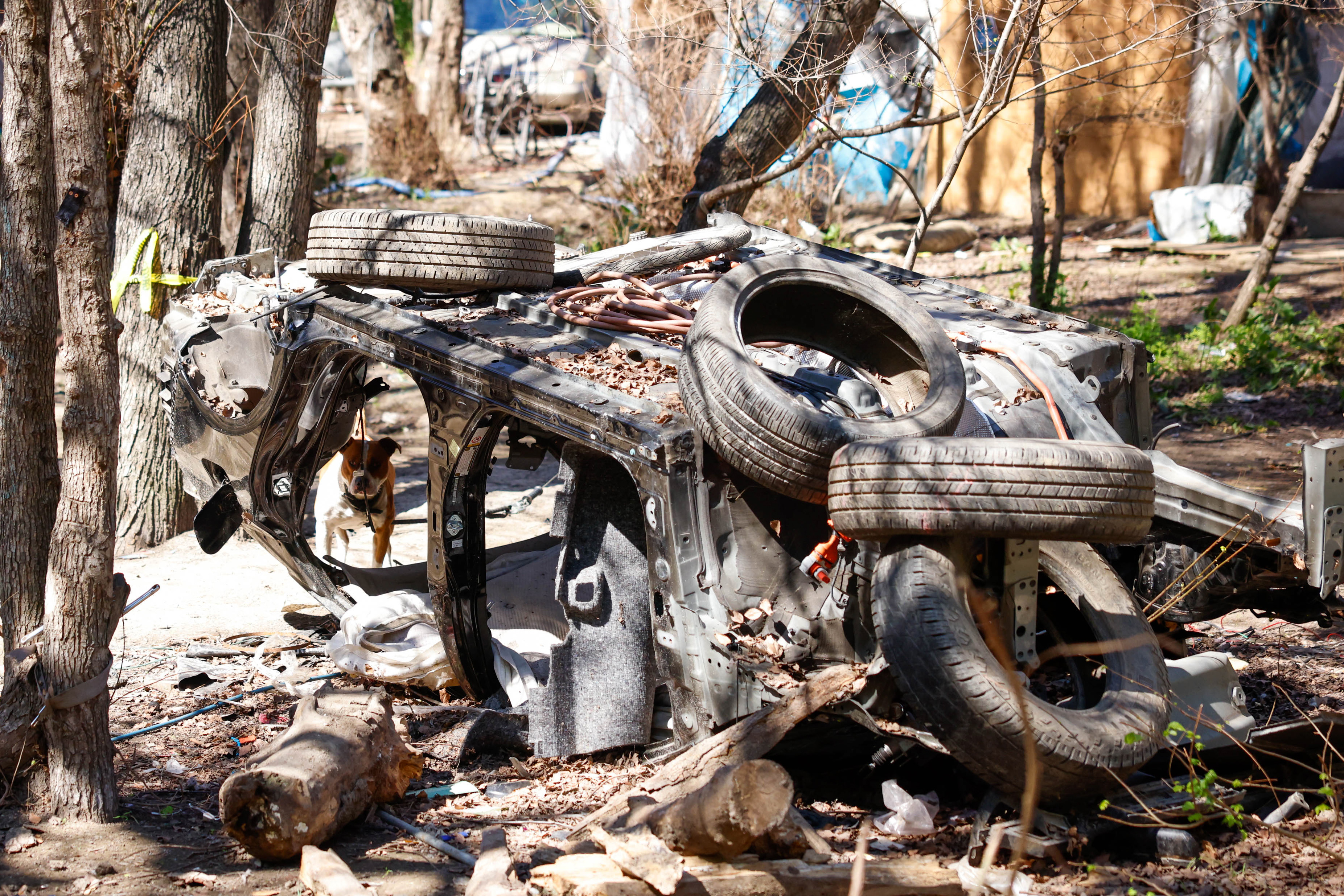
A dog peaks past a burnt down car at the Jungle in San Jose Calif., on Saturday, March 14, 2026. (Shae Hammond/Bay Area News Group)
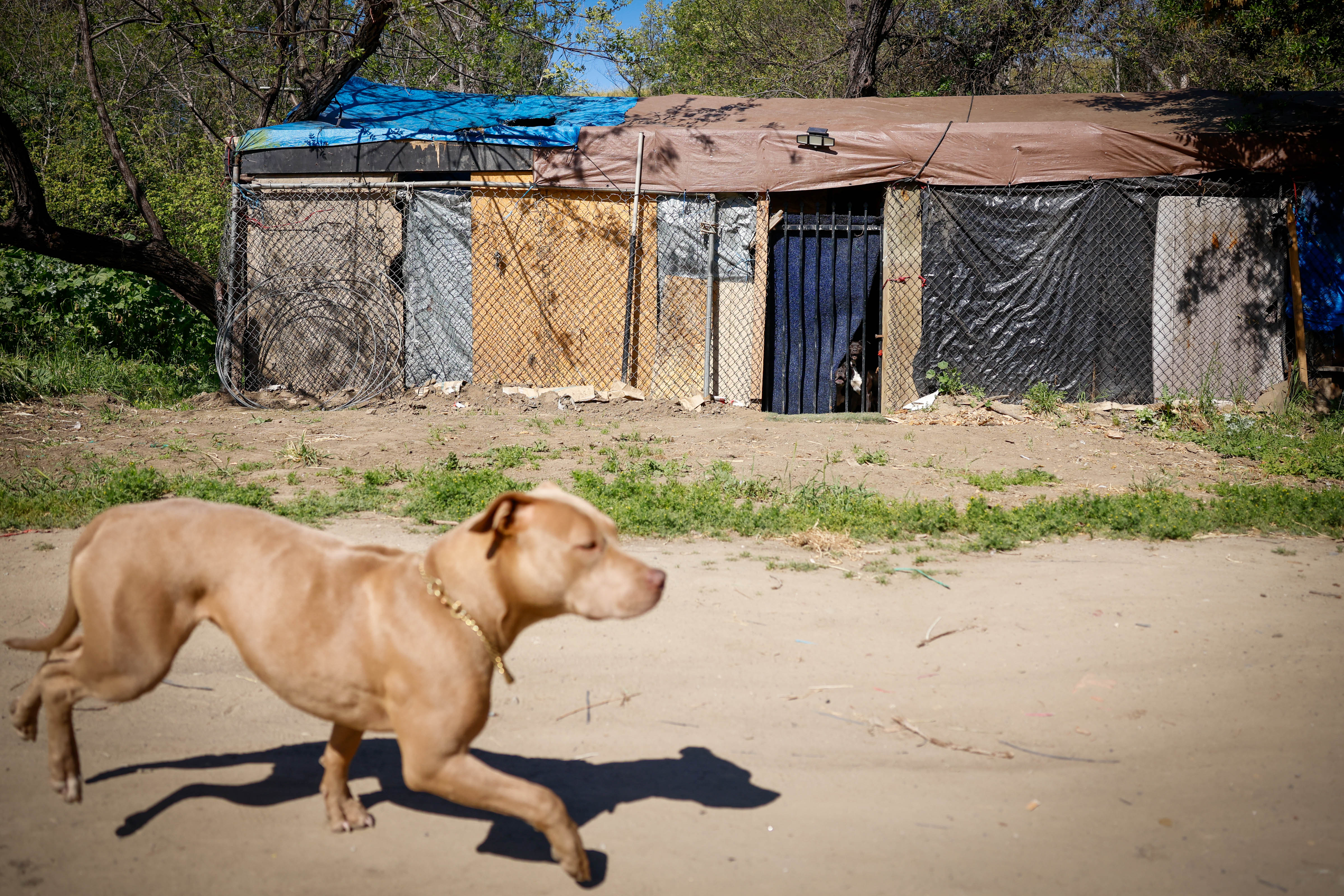
A dog runs by a shelter in the Jungle in San Jose Calif., on Saturday, March 14, 2026. (Shae Hammond/Bay Area News Group)
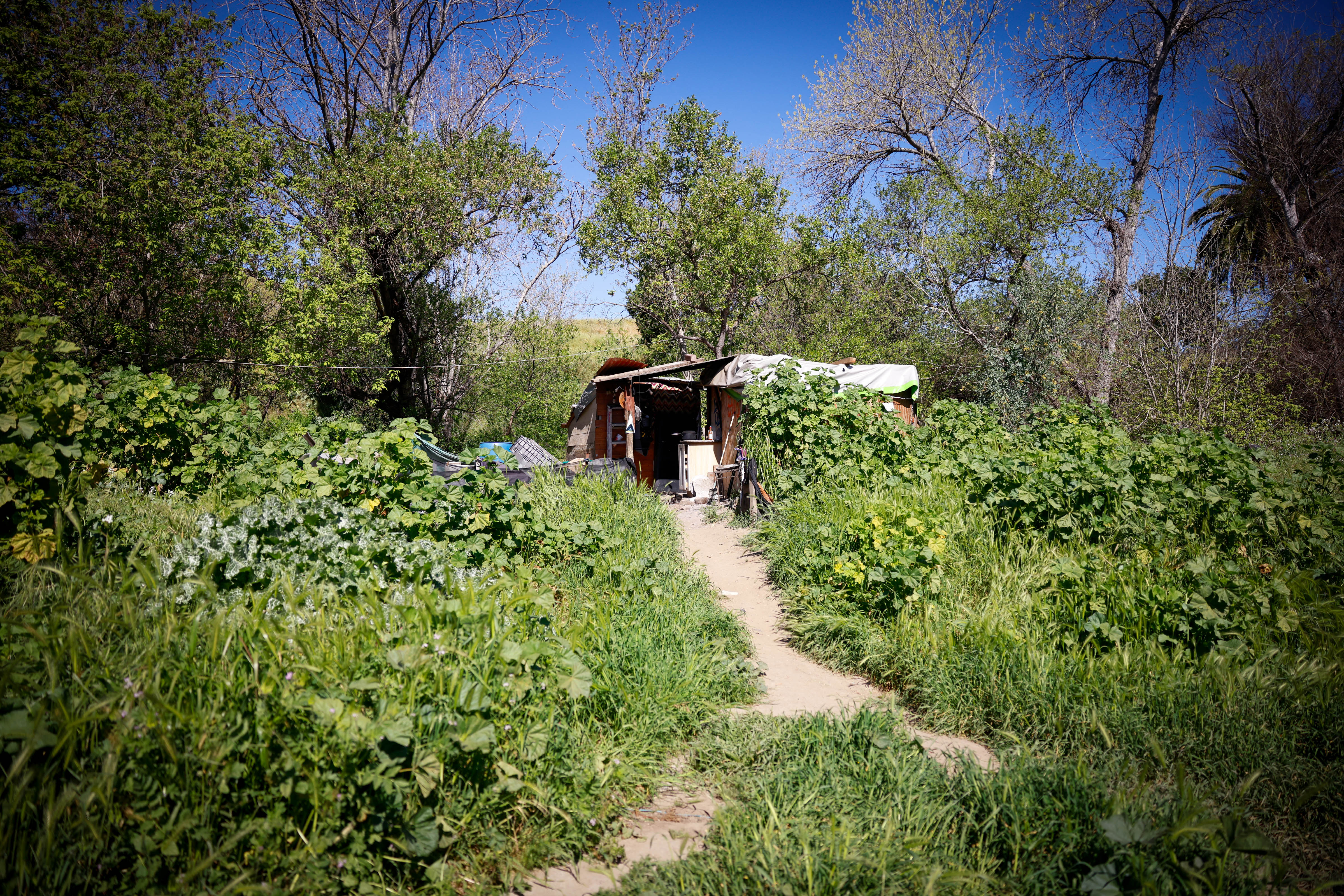
A shelter is nestled in the grass at the Jungle in San Jose Calif., on Saturday, March 14, 2026. (Shae Hammond/Bay Area News Group)
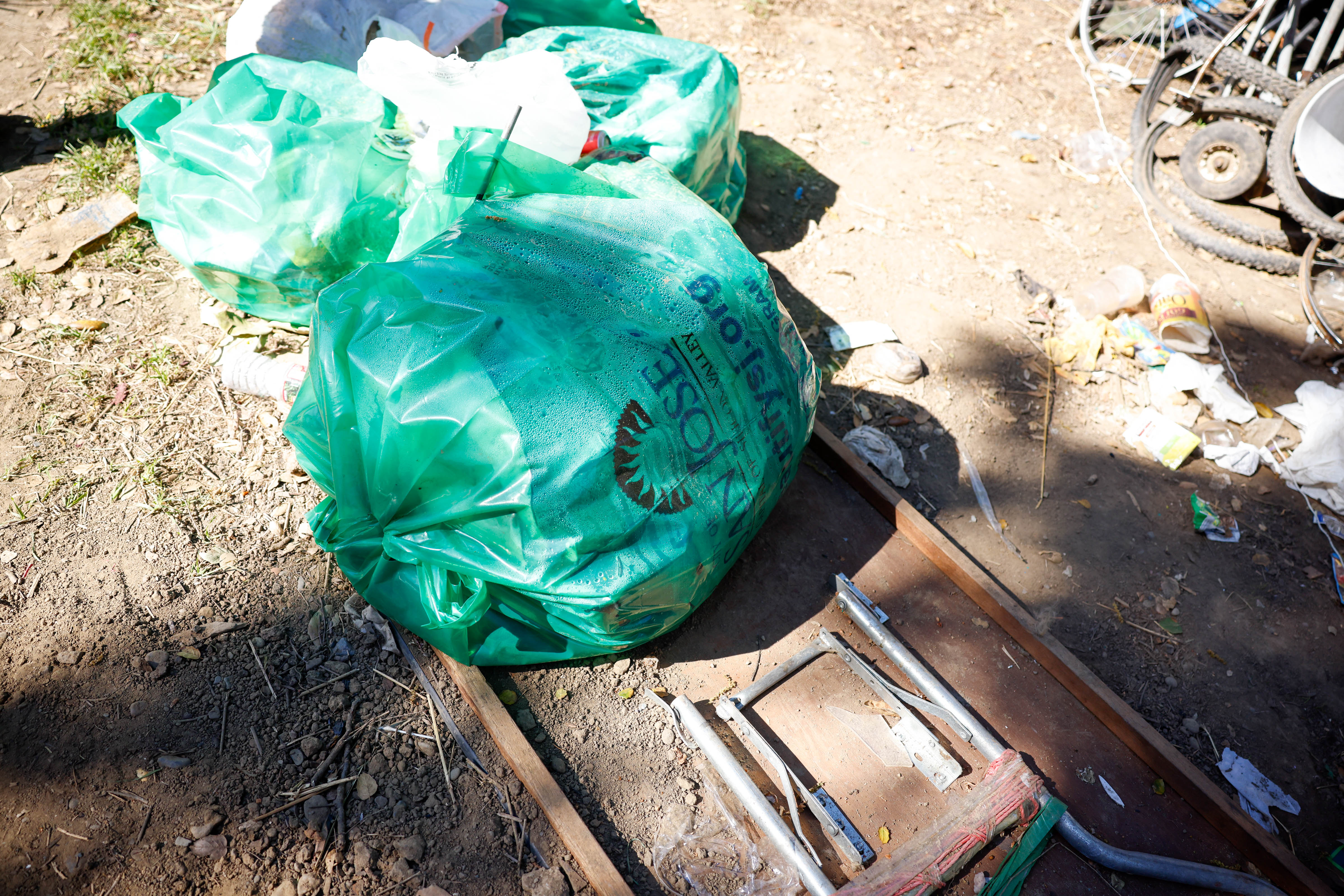
Trash bags provided from the city are filled with trash at the Jungle in San Jose Calif., on Saturday, March 14, 2026. (Shae Hammond/Bay Area News Group)
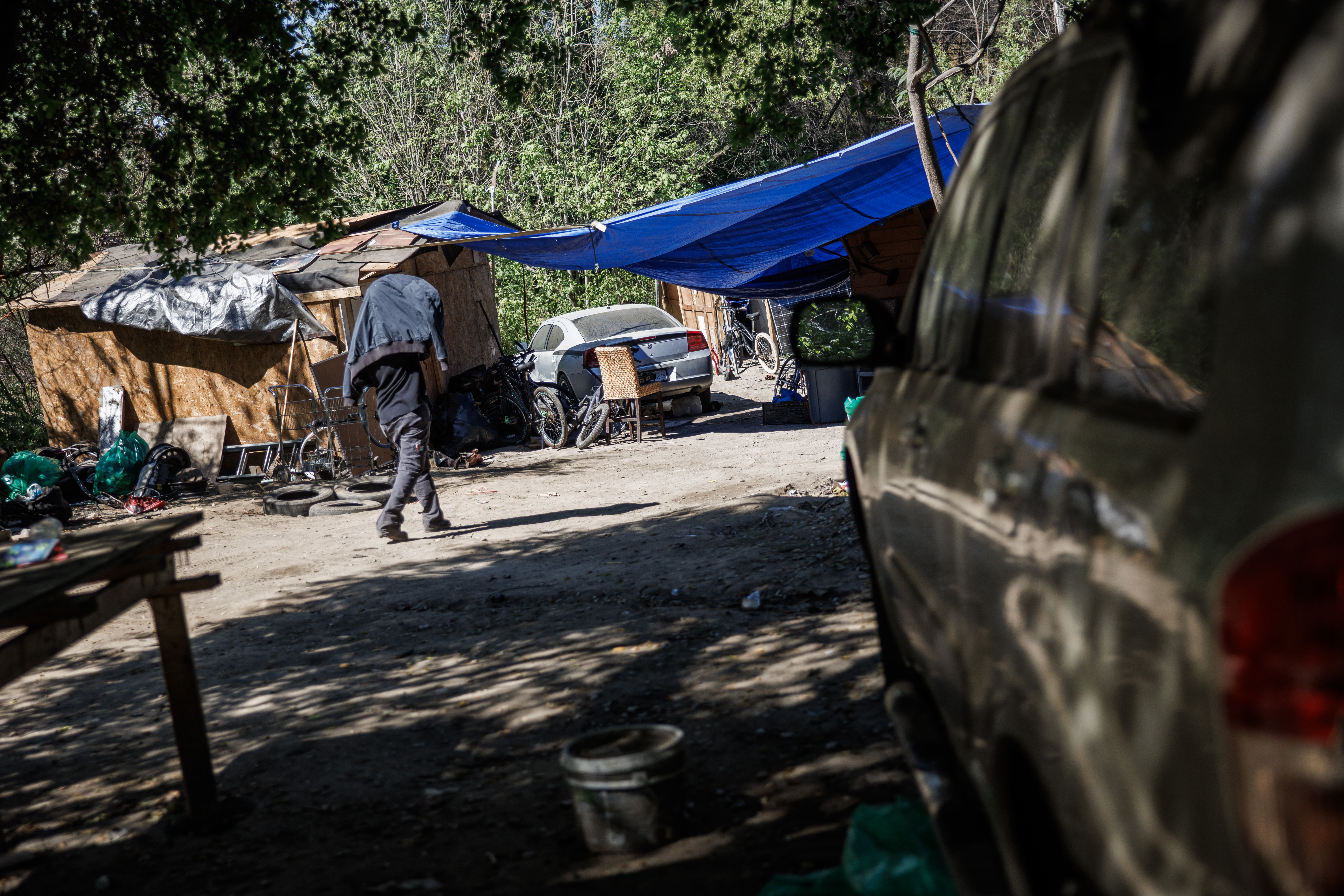
A man walks to a makeshift structure at “The Jungle” homeless encampment on March 18, 2026, in San Jose, Calif. (Dai Sugano/Bay Area News Group)
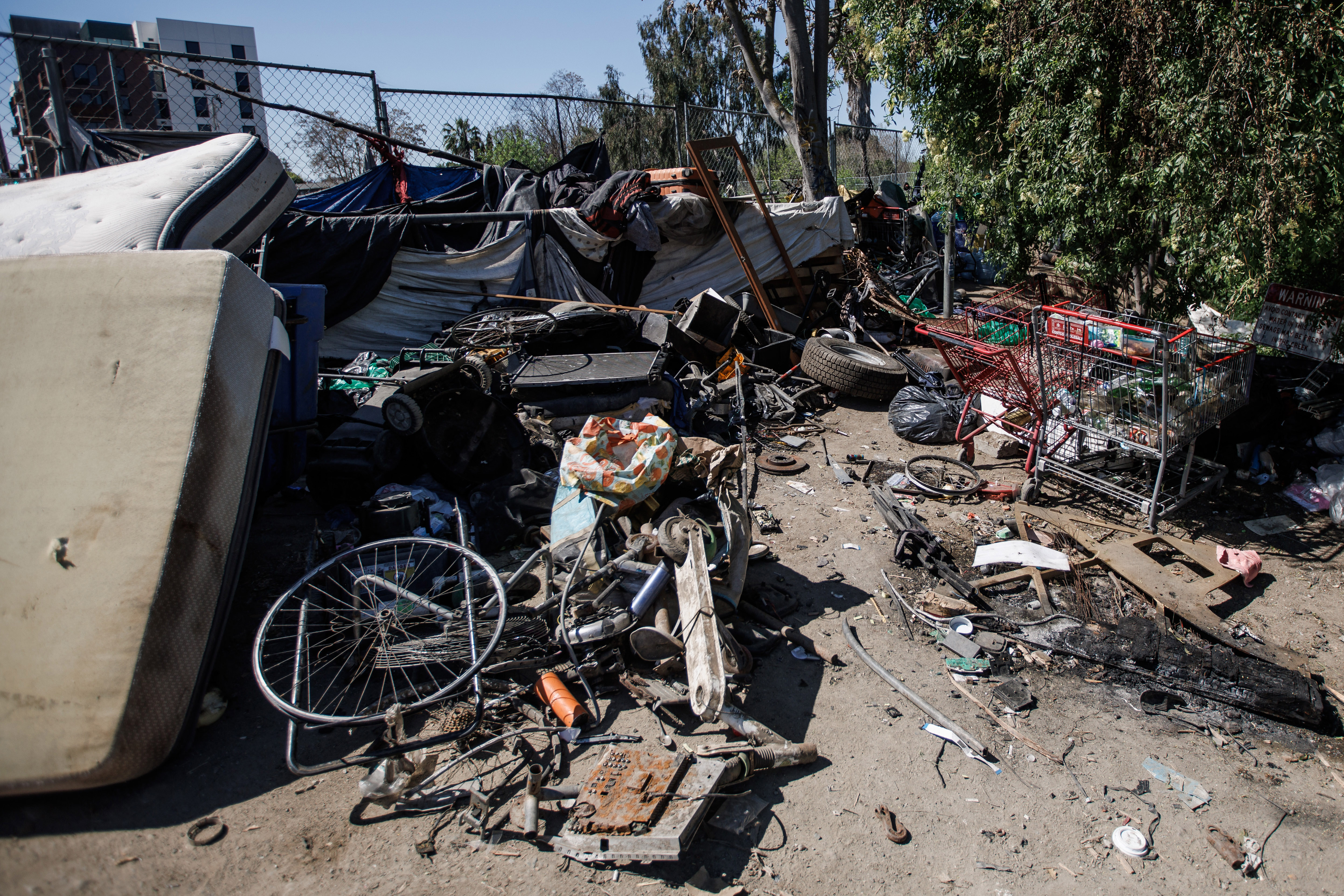
Trash is piled up at an entrance to “The Jungle” homeless encampment on March 18, 2026, in San Jose, Calif. (Dai Sugano/Bay Area News Group)
Show Caption
1 of 6
A dog peaks past a burnt down car at the Jungle in San Jose Calif., on Saturday, March 14, 2026. (Shae Hammond/Bay Area News Group)
As an unseasonable heatwave descended last week, auto mechanic Gustavo Gonzalez, 44, sat on a couch at his lot beneath an oak tree.
Since he moved to the Jungle two years ago, Gonzalez has built a three-room wooden home with discarded materials, where he’s lived “like a king,” he said in Spanish.
His lot has electricity, a shack for storage, a living room with a TV and a sound system that blasts Spanish-language ballads through the encampment — or Usher, depending on the mood. His door and flooring keep out rats, which are an issue in the meadows, he said.
He described the camp as a community. Recently, when Gonzalez maimed three fingers in a firework accident and spent weeks in the hospital, his neighbors house-sat and guarded his belongings. Now, a friend shops for him at a nearby Walmart.
“There isn’t conflict,” he said in Spanish. “Everyone here is friendly.”
Gonzalez said he’s made peace with losing most of his possessions when city workers descend April 15, and he expects to store what he can’t part with in an RV. He accepted a shelter in the tiny home village — a transition he summed up with a shrug.
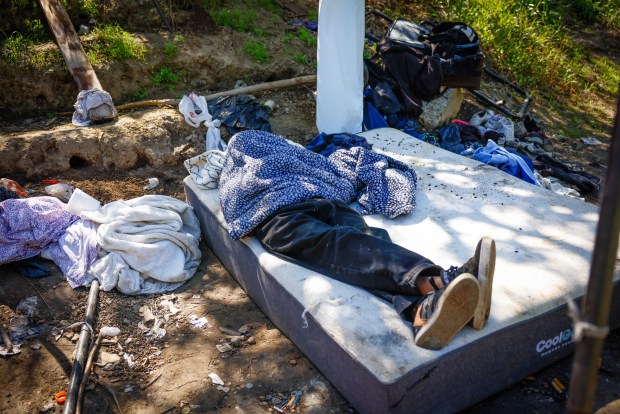 A person sleeps on an open mattress at the Jungle in San Jose Calif., on Saturday, March 14, 2026. (Shae Hammond/Bay Area News Group)
Several residents told this news organization that the Jungle is relatively safe and peaceful. But Rodriguez, the bearded resident who also plans to move to the tiny home lot, said he’s endured brutality in the camp.
Three years ago, he was almost beaten to death by a man wielding a stick, but he said his faith in God protected him. When his home got too muddy this rainy season, he pitched a tent farther up the bank. Then his phone was stolen.
“When I get out of this place, I’m going to think it was a nightmare,” Rodriguez said.
Many outsiders visit the Jungle with offerings of food, clothing and other necessities. After software engineer Mouli Raghunath was laid off by Meta four years ago, he devoted his life to feeding unhoused people in his search for “some purpose and meaning,” he said.
Last week, Raghunath distributed brown bags of food and water as the temperature climbed. He said he often brings his own children to the camp.
“They need to know what the world is like,” he said. “I want them to understand that there are people who live in these conditions.”
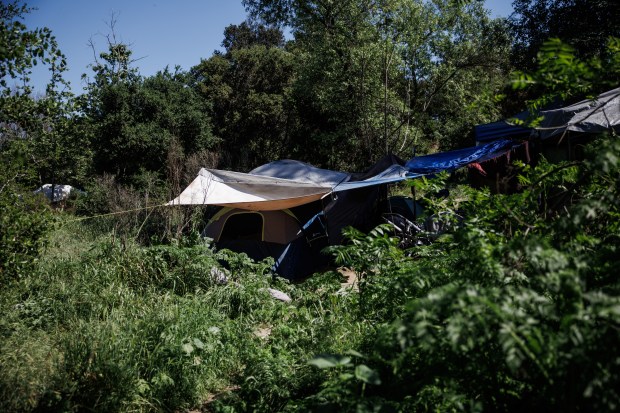 Tents are seen in “The Jungle” homeless encampment on March 18, 2026, in San Jose, Calif. (Dai Sugano/Bay Area News Group)
The encampment has also taken an environmental toll. City officials say clearing the Jungle is part of their campaign against homelessness, but they also cite its impact on the surrounding ecosystem.
Though about 100 people live there, and outsiders visit often, the city does not provide bathrooms for locals. Nor does anyone else, Sarah Fields, a spokesperson for the San Jose Housing Department, wrote in an email.
For years, unhoused people have cut trees for firewood, and the heart of the camp once provided habitat for more birds, said Deb Kramer, who leads the nonprofit Keep Coyote Creek Beautiful.
The river itself is an important waterway in Silicon Valley, but its water quality is very poor, Kramer said. Illegal dumping and a dam upriver also pollute it. Historically, Coyote Creek was habitat for salmon, lamprey and other native fish. Kramer said volunteers were thrilled when they recently spotted a single salmon just upriver from the camp.
And, when it comes to the human cost, even some of Mahan’s critics say the time has come to close the chapter of the Jungle.
“It’s been a refuge because it’s out of sight, out of mind,” said Todd Langton, who leads the homelessness services nonprofit Agape Silicon Valley. “Now, we don’t want these unhoused people to be out of sight, out of mind.”
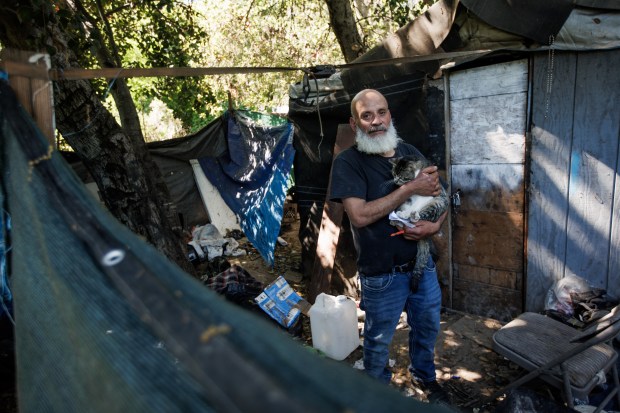 Martin Rodriguez, a long time resident of “The Jungle,” with his cat, in front of his makeshift structure in the homeless encampment on March 18, 2026, in San Jose, Calif. (Dai Sugano/Bay Area News Group)
Langton is among the advocates who criticize Mahan’s decision to divert millions of dollars from permanent housing toward emergency shelters like tiny home villages. He said he will be watching to see whether officials deliver on their promise of better conditions for camp residents.
Fields, of the San Jose Housing Department, said Jungle residents may begin moving to the tiny home lot as soon as next week.
Jasmin B., who declined to share her last name, had already packed her belongings in gray tubs sitting neatly next to a swath of refuse on the riverbank.
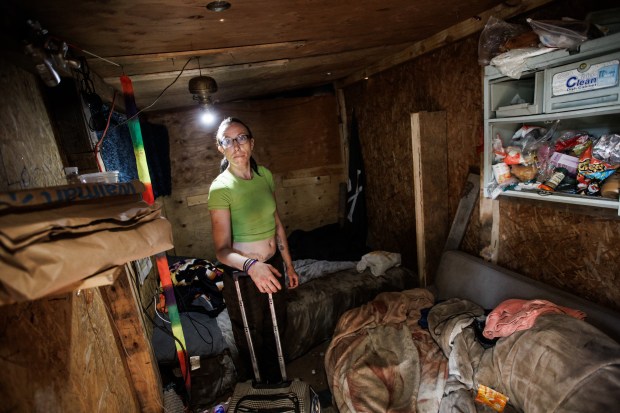 Jasmin B., a resident of “The Jungle,” inside the makeshift structure where she lives at the homeless encampment March 18, 2026, in San Jose, Calif. (Dai Sugano/Bay Area News Group)
Jasmin said she’s spent 20 years unhoused across San Jose, and experience has taught her to pack immediately when she hears word of a sweep. She’s ready to leave the Jungle.
But she’s skeptical of the tiny home village, which she expects to be a temporary stopover. When she visited friends at similar shelters, they felt like a “FEMA camp,” she said.
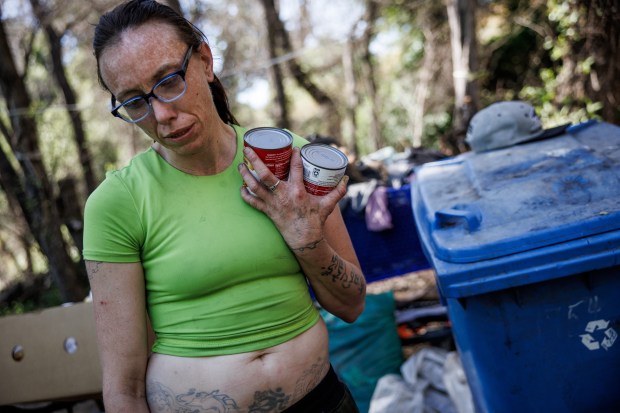 Jasmin B., a resident of “The Jungle,” holds cans of pork and beans as she talks about living in the homeless encampment on March 18, 2026, in San Jose, Calif. (Dai Sugano/Bay Area News Group)
With the sweep looming, she took stock of her shelter at the creek — an uninsulated plywood box with a couch, a bed and no door.
“This,” she said, “is a tiny home.”