
Every profession and hobby has its own private jargon, and Disney fans are no exception. Here are 19 words and phrases that only the most dedicated Disneyphiles can fully decode.
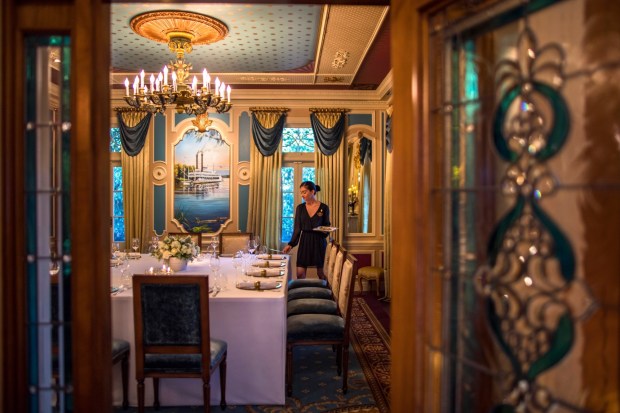 21 Royal provides up to 12 guests an fine-dining experience in a 2,200-square-foot private residence at 21 Royal Street in New Orleans Square, upstairs from the classic Pirates of the Caribbean attraction. (Photo courtesy of Disneyland Resort)
21 Royal: The location of a lavish private apartment for Walt and Lillian Disney that was still under construction when he died. Located above the Pirates of the Caribbean ride in New Orleans Square, 21 Royal Street was used variously over the years as an exhibit and gallery space and since 2017 has been the location of an extravagant private dining experience. At “21 Royal,” a special menu is created for each dinner party, which reportedly costs $18,000 for as many as 12 guests at a time. They dine with gold-plated dinnerware and fine crystal amid Empire-style antiques, in the so-called Royal Suite that also includes two furnished but unused bedrooms. 21royaldisneyland.com
Backstage: At Disney theme parks, this refers to the restricted, behind-the-scenes places where customers aren’t allowed to go. Disney considers its theme parks to be a giant “show” for visitors and the entire park is on-stage, except the areas behind fences and gates where employees gather, such as break rooms, offices, dressing rooms, costume and other workshops, computer banks, maintenance areas, laundry, storage and the like. Costumed characters, for example, are only allowed to remove their costume pieces backstage. Trucks deliver products backstage. On rare occasions such as specialized tours, customers may be allowed backstage.
Cast members: What Disney calls all its theme park employees, in recognition of the fact that every member of the staff is part of the theme park “show.” Cast members wear costumes, not uniforms.
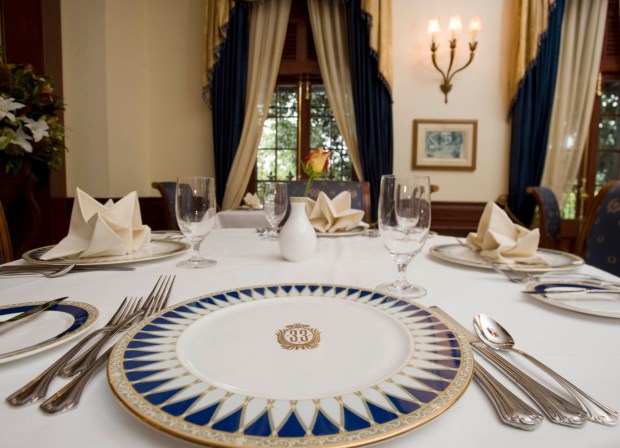 A table setting in Disneyland’s pricey private Club 33, as shown in 2012 before the club was remodeled. (File photo by Joshua Sudock, Orange County Register/SCNG)
Club 33: An expensive and exclusive private club at Disneyland, located above New Orleans Square behind a door that only says “33.” The number indicates that the address is 33 Royal Street. It offers a cocktail lounge and dining room to members and other VIPs. There’s also a Club 33 at Tokyo Disneyland. disneyland.disney.go.com/guest-services/club-33/
D23: This is the name of the fan club of the Walt Disney Company, and also the name of the annual convention of Disney heads, held alternatingly in Anaheim and Orlando. This massive event typically sells out. The D23 fan club has a free level and also a paid level, which includes a magazine and special event invitations. “D” stands for Disney, and 23 refers to 1923, the year that the company was founded by Walt Disney. d23.com
DisneyBounding: To create an outfit that references a Disneyland character or ride, but in ordinary clothes. Disney doesn’t allow guests to wear costumes in the park — except for special events — avoid confusion with cast members, so DisneyBounding suggests a costume, without breaking the rules. The term was reportedly coined by blogger Leslie Kay in 2011. disneybound.co
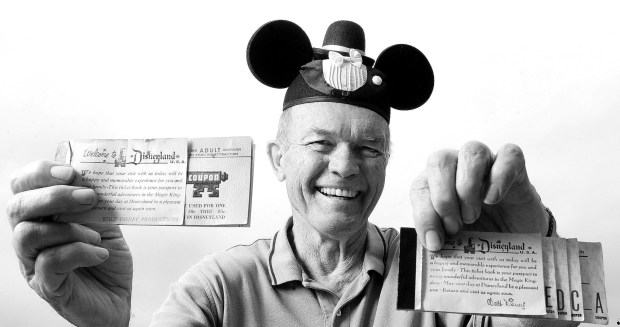 Paul Cuthbert, who participated in Disneyland’s opening day parade as an Eagle Scout, displays old ride ticket books from 1955. (Mindy Schauer, Orange County Register)
E-ticket: This expression has entered the wider American lexicon. It refers to the most exciting rides at Disneyland, which at one time were sold in a coupon book of A-through-E tickets. That practice was discarded in 1982, but the expression is still slang for a thrilling experience.
Hidden Mickeys: During the 1980s, Disney Imagineers (designers) starting adding subtle outlines of Mickey Mouse and his ears at various locations in Disney parks, just to amuse themselves. Before long, visitors caught on and started trying to find these “hidden Mickeys” with their iconic concentric circles. It became such a hobby that there are even books on the subject. hiddenmickeyguy.com
Imagineers: The term that Disney uses for the employees who create its worldwide theme park and cruise ship experiences, such as designers, architects, engineers, artists and technician. They work for Walt Disney Imagineering, which is based in Glendale. They generally work in secret, away from the public eye, to maintain the illusion that the theme parks are magical.
Park Hopper: A type of ticket for the Disneyland Resort that allows travel back and forth between Disneyland park and Disney California Adventure, which are across from each other. disneyland.disney.go.com/guest-services/park-hopper/
Passhole: The slang term for a Disneyland annual passholder who is entitled and rude to park employees and others.
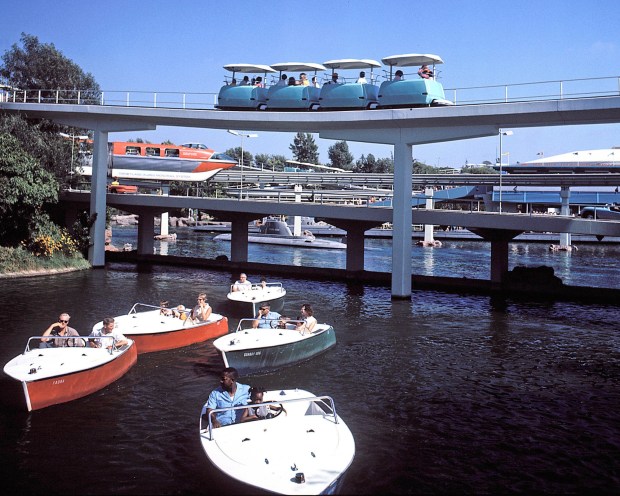 The PeopleMover, top, traverses over the Motor Boat Cruise and the Disneyland-Alweg Monorail in this historic photo. (Photo courtesy of the Disneyland Resort)
PeopleMover: Older Disneyland fans fondly remember the PeopleMover, which opened in 1967 and was closed down in 1995. Visitors riding it got an inside glimpse of several Tomorrowland rides. The overhead tracks for the PeopleMover can still be seen in Tomorrowland. The technology was later used in 1981 to build the WEDway PeopleMover, now known as the Subway, at Houston’s George Bush Intercontinental Airport, which was the only such device ever built for a non-Disney entity.
Pixie dust: Used to describe a small random act of kindness that a cast member or another guest does to make someone happy. For example, replacing a child’s dropped ice cream cone or lost balloon, hiding small treats where others can find them. It can also refer to a fine spray of glitter that is sprinkled on guests.
Plaid: A “plaid” is an employee who works as a VIP tour guide. Generally they are considered a top employee. They wear plaid vests to identify them. disneyland.disney.go.com/events-tours/vip-tours/
Rope Drop: An expression that refers to the moment at Disneyland when the park officially opens to the public, and actual ropes that restrain visitors from entering the various lands are removed, allowing them entry. This area is located near the intersection of several lands, near the Sleeping Beauty Castle. Visitors are allowed entry onto Main Street before the park officially opens, which gives them a head start at being first in line at the most popular rides. ropedropguide.com
Tragic Kingdom. A joking monicker that some used for Disneyland, a play on the “Magic Kingdom” expression frequently applied to the theme park. The ska band No Doubt, whose members grew up in Anaheim, named their breakthrough 1995 album “Tragic Kingdom.” It sold 16 million copies.
Treasured Guest: What Disneyland employees sarcastically call a difficult, disruptive or unreasonable visitor to each other, i.e. a pain in the rear, while remaining within the required bounds of polite speech.
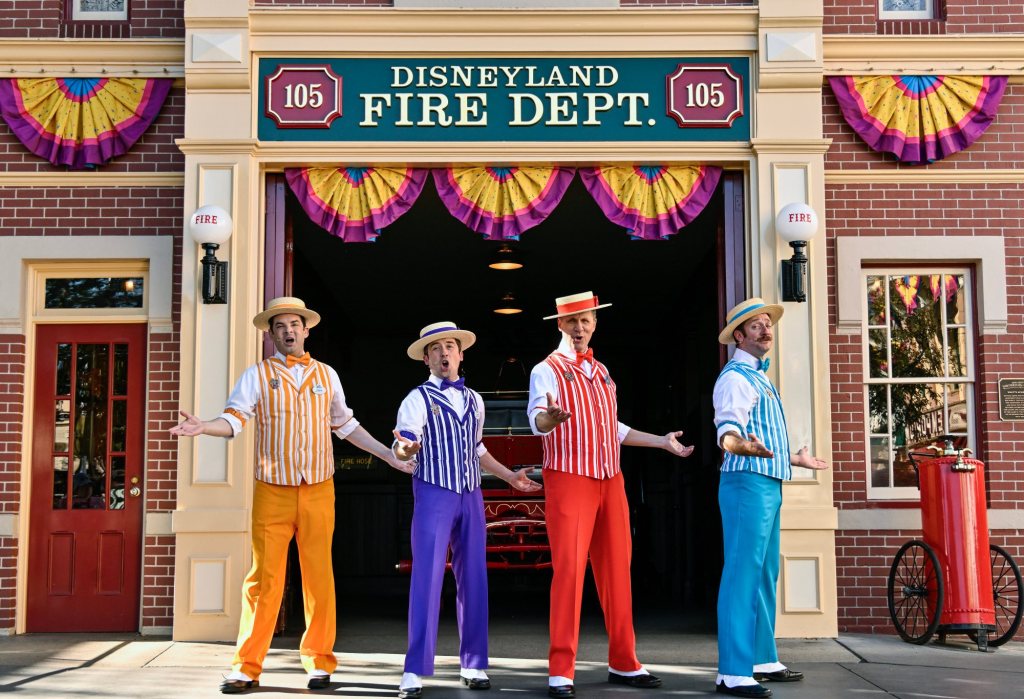
Walt’s Apartment: Insiders know to look up and see Walt Disney’s Victorian-themed private apartment that he kept above the firehouse on Main Street. He rested there while Disneyland was under construction, and later it became a getaway for his family. Some original items from the apartment are now at the Walt Disney Family Museum in San Francisco. At this writing, some items were on display at the Opera House in Disneyland as part of a special exhibit. Tribute site: waltsapartment.com
White Powder Alert/HEPA Cleanup: It’s against Disney rules to scatter human ashes in theme parks, but people still do it, especially in the Haunted Mansion. Sadly for the bereaved, as soon as an employee notices the ashes, they send out a white powder or HEPA alert, and someone comes to vacuum them up. So the loved one ends up inside a vacuum cleaner and thrown out. Probably not the ending they wanted. mickeyvisit.com/disney-cast-member-codes/