
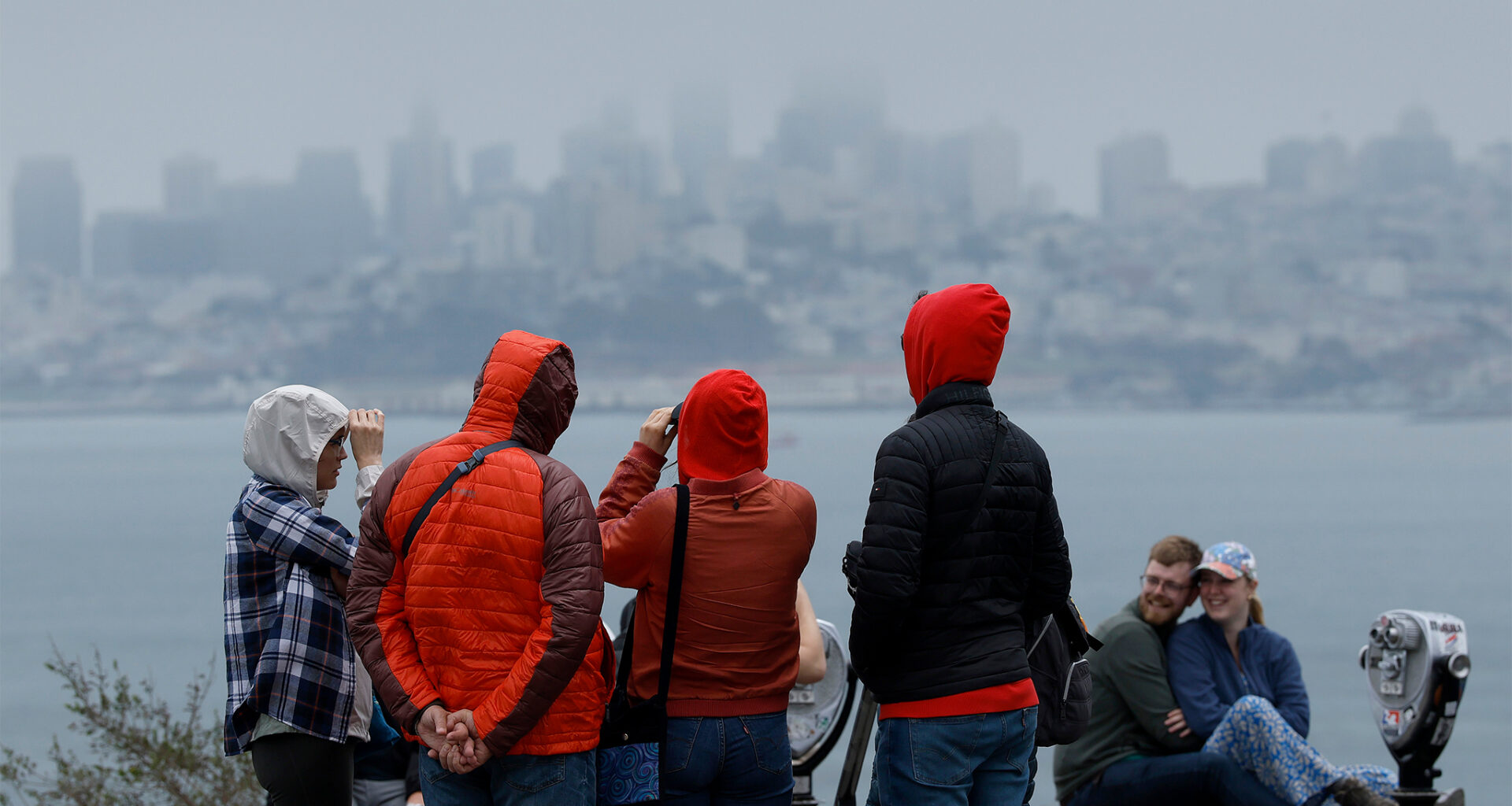
After weeks of record-breaking heat and dry weather, the Bay Area should finally see a return of precipitation next week thanks to changing weather patterns.
No measurable rain has fallen in the Bay Area since early March due to a ridge of intense high pressure that pushed out any system capable of bringing serious precipitation. As that high pressure moves east, a low-pressure system is on its way to California.
“We are expecting by early next week a troughing to be approaching the region that’s a lower pressure,” Roger Gass, a meteorologist at the National Weather Service’s San Francisco office, told SFGATE. “That’s what’s going to bring a deeper moisture tap into the region.”
The wet weather is expected to arrive Monday evening with showers off and on through Wednesday. Gass said the North Bay and coastal ranges will see the largest amount of precipitation at about 1.5 inches of rain. In San Francisco, about 0.5 inch of rain is expected to fall. And San Jose can expect about a quarter of an inch.
“It’s definitely a relief from the very, very dry and very hot March that we’ve had,” Gass said. The wet weather should arrive just as the rainy season comes to a close in the state. San Francisco gets about 1 inch of rainfall in April on average.
The shifting weather pattern means snow could finally return to the Sierra Nevada, where the snowpack has dwindled thanks to record-breaking heat and anemic overall snowfall this winter. Multiple ski resorts have already closed or announced plans to close early due to the low snow levels.
Gigi Giralte, a meteorologist at the weather service’s Reno office, said a few inches of snow could fall in the Tahoe Basin through next Tuesday evening, with higher elevations in Mono County getting up to 6 inches. A second storm is expected to arrive later next week, bringing cooler air from Canada that may bring much more snow to the region. Giralte said it’s currently too early to know how much snow will fall during that storm.
“With knowing the snow levels and knowing that that second system will likely be colder, we could be seeing some snow, potentially down to Lake levels in Tahoe, depending on the trajectory,” she said.