
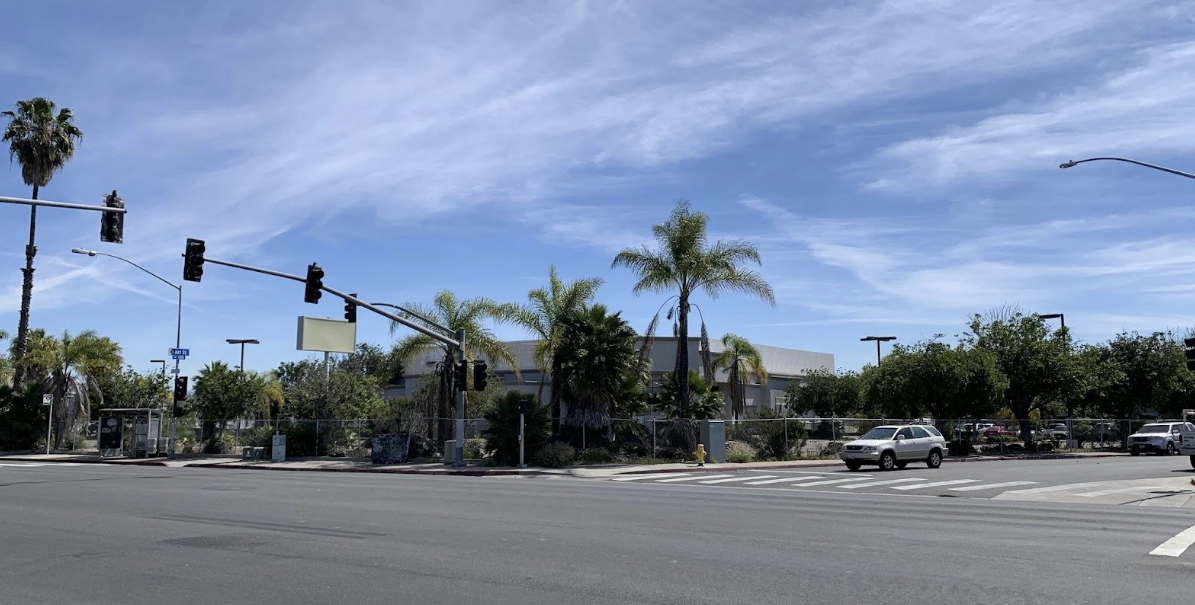
A proposed In-N-Out at 6405 El Cajon Blvd in Rolando, a mile from the SDSU campus, now no longer requires public testimony for approval after city planners determined that appropriate technical revisions to the site design had been met.
When a development needs an exception or flexibility from zoning standards or could impact the surrounding area, it may require a discretionary permit. These permits require a public hearing where community members can offer testimony and input. Initially, In-N-Out applied for one.
After filing the permit on March 1, 2024, In-N-Out met with the Eastern Area Community Planning Committee.
The EACPC is a community planning group recognized by the city of San Diego that provides advisory recommendations on projects in its area. During the informational meeting on Nov. 12, 2024, board members raised concerns about traffic and the community impact of the project.
Lynn Edwards, who was chair of the EACPC at the time, said In-N-Out would meet with the EACPC at a later date so the committee could submit a recommendation to the city. However, In-N-Out didn’t return, and a recommendation was not made.
On Nov. 5, 2025, the City Planning Department determined that, due to technical revisions, the project would no longer require a discretionary permit.
With the revisions completed, the development is no longer dependent on discretionary review
and is now in the ministerial review phase. In this part of the build process, developers apply for permits and are approved by city staff so long as they meet zoning, development code and regulation standards.
When asked for comment on the revisions that moved the project from discretionary review to ministerial, Patti Peña, marketing communications specialist for In-N-Out, wrote in an email that the In-N-Out team had no information to offer.
Richard Berg, senior public information officer for the City of San Diego, said it is uncommon for projects to transition from discretionary to ministerial status.
“However, projects are often revised during the review process to meet applicable development standards, which can eliminate the need for one or more discretionary permits,” Berg wrote in an email. “National companies, such as In-N-Out Burger, frequently use standardized building designs, and local jurisdictional requirements may necessitate project adjustments to achieve compliance.”
As a result of these technical changes, Rolando residents and the greater community do not have a formal opportunity to support or oppose the project in a public forum. Some Rolando residents, like Jessica Manning, feel that an In-N-Out isn’t exactly what’s needed for the community.
“I believe there is something better that could go there,” Manning said. “[Something] healthy for this community, beautiful, inviting. Something that lifts us all up, invites us to stay, revisit and get to know one another. If there is nothing I can do about it at this point, and it has to be fast food, then In-N-Out isn’t the worst fast food.”
Other Rolando residents, like Roberto Perez, are optimistic about In-N-Out filling the space, but are aware of the impact it may have on the area.
“We’ve all seen how crazy traffic is impacted at their Massachusetts [Avenue] location,” Perez said. “But when they presented in 2024 at our monthly community meeting, they acknowledged that concern and the plans for their drive-through and parking lot seemed to address it. That being said, Pendleton Elementary is nearby, and there is already quite a bit of foot traffic around the Art Street and El Cajon Boulevard intersection, so time will tell.”
Despite some neighbors’ concerns about traffic and community impact, the development is complying with the city code and will proceed as planned.