
“It’s actually critical that if you want technologies which can replace what we have,” Lackner said, “whether this is air capture or something else, that you get affordable.”
Solar panels, he said, used to cost hundreds of times more than they do today and only started meaningfully contributing to renewable energy supplies once their cost came down.
“Fundamentally, this was a business decision,” said Damian Fagan, CEO of Almanac. His company saves 15% on the per-pound cost of CO2. That adds up pretty quickly, Fagan said, in the range of tens of thousands of dollars a year. The additional sustainability is great, he said, and fits in with the company’s goals of locally sourcing ingredients. But his primary interest was avoiding future disruptions in supply. For that, he would even be willing to pay more per pound.
Almanac shut down operations for two days last fall when shipments of CO2 didn’t arrive from their suppliers. They couldn’t can beer, so they couldn’t sell it. Their brewing schedule backed up. To catch up, they had to add a third shift and staff worked till midnight. The CO2 industry infrastructure – part of the heavily regulated oil and gas industry – is aging and degrading, so Fagan expects reliability will only get worse.
“The writing’s on the wall: the infrastructure that produces CO2, particularly here in California, is fading quickly,” he said. “And CO2 is literally intrinsic to the brewing process — it’s like electricity or water. If you don’t have them, we are just dead in the water. We can’t operate without it.”
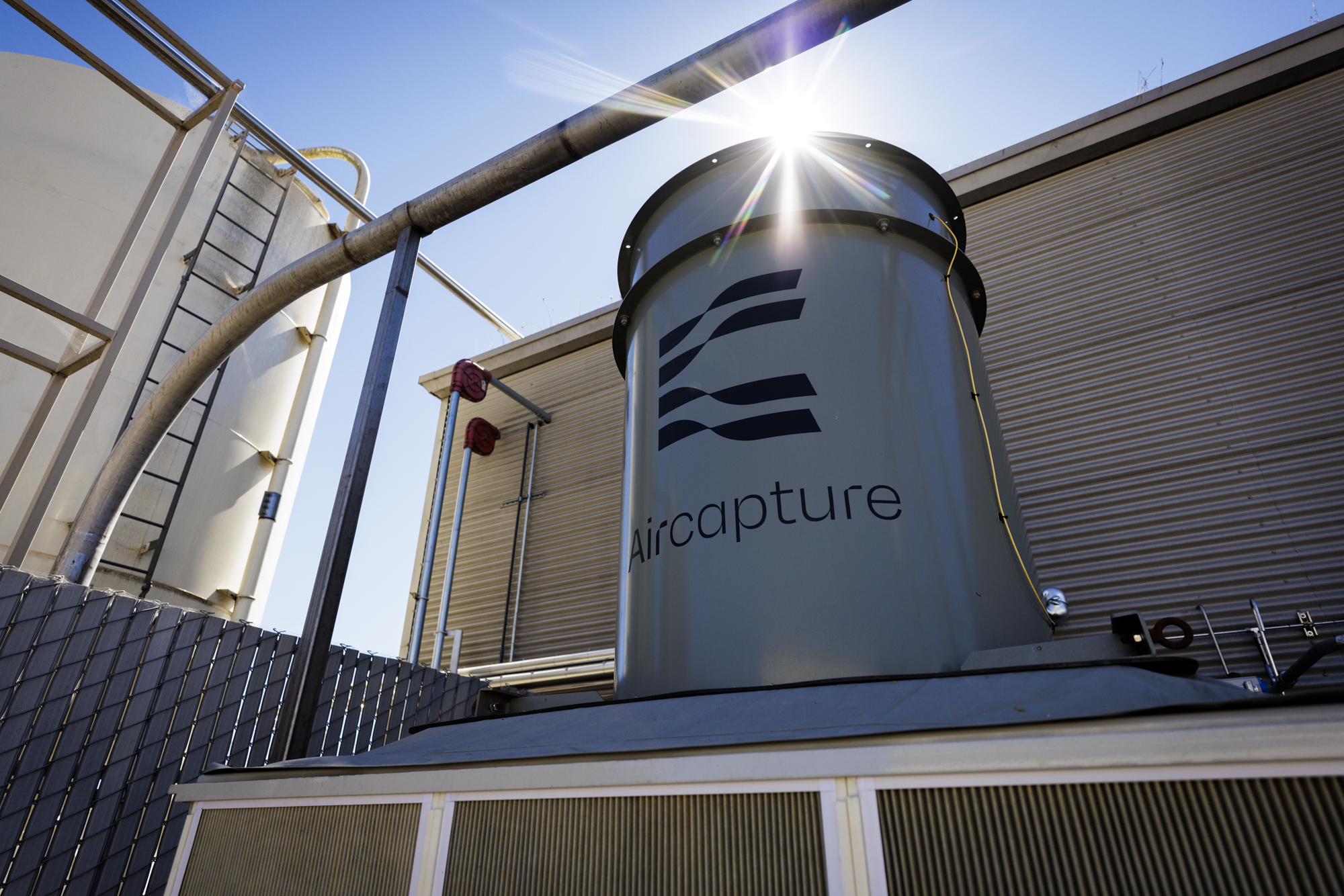 The Aircapture system at Almanac Adventureland and Brewery in Alameda on March 20, 2026. (Martin do Nascimento/KQED)
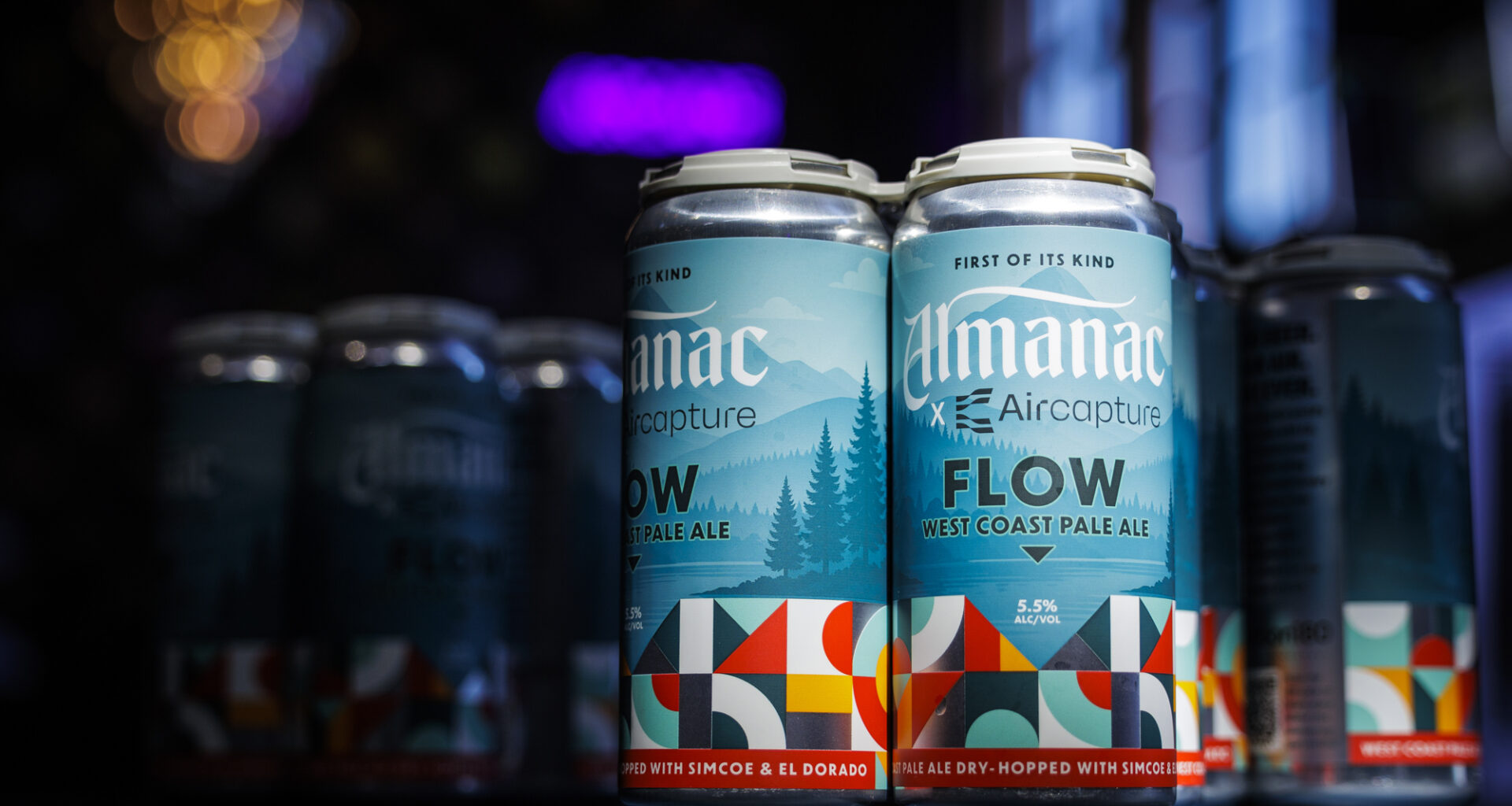
Almanac promotes its use of the Aircapture technology through branding on its “Flow” beer, a light and bright West Coast Pale Ale. Eventually, they plan to use it in all their beers and to power their lines that push the beer to the 30 taps in the taproom.
While carbonation improves the aroma and taste of the beer, customers won’t notice a difference between the industrially-provided CO2 and the locally-sourced CO2 from the parking lot. There’s no effect on taste, and Aircapture said the purity from their technology significantly exceeds industry standards.
The direct air capture machine sits in the brewery’s parking lot. A large fan sucks air through a pipe. A ceramic substrate grabs onto the carbon dioxide in the air.
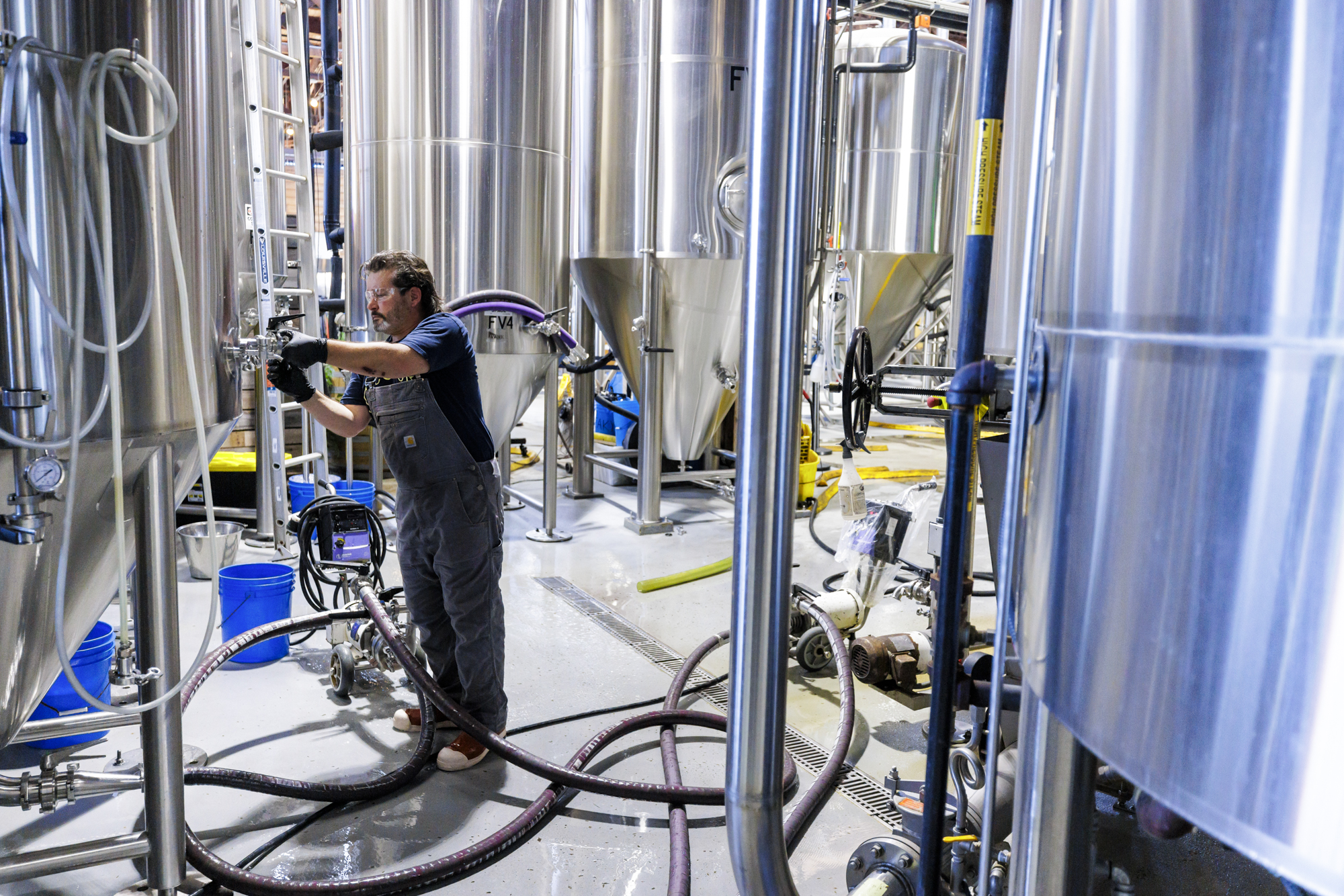 Brenden Dobel prepares fermenter tanks for brewing beer at Almanac Adventureland and Brewery in Alameda on March 20, 2026. (Martin do Nascimento/KQED)
The CO2 is then released via a blast of steam and piped into the brewery and a trailer with Aircapture’s equipment. The CO2 is cooled down, concentrated, turned into liquid, purified and sent to tanks.
Almanac pays for the carbon dioxide it uses, but not directly for the equipment. The machine is designed to last 20 years. If Almanac expands and needs more CO2, it can add additional units.
This year, the brewery expects to use around 120,000 pounds to brew 15 thousand barrels of beer — and that number is rising.
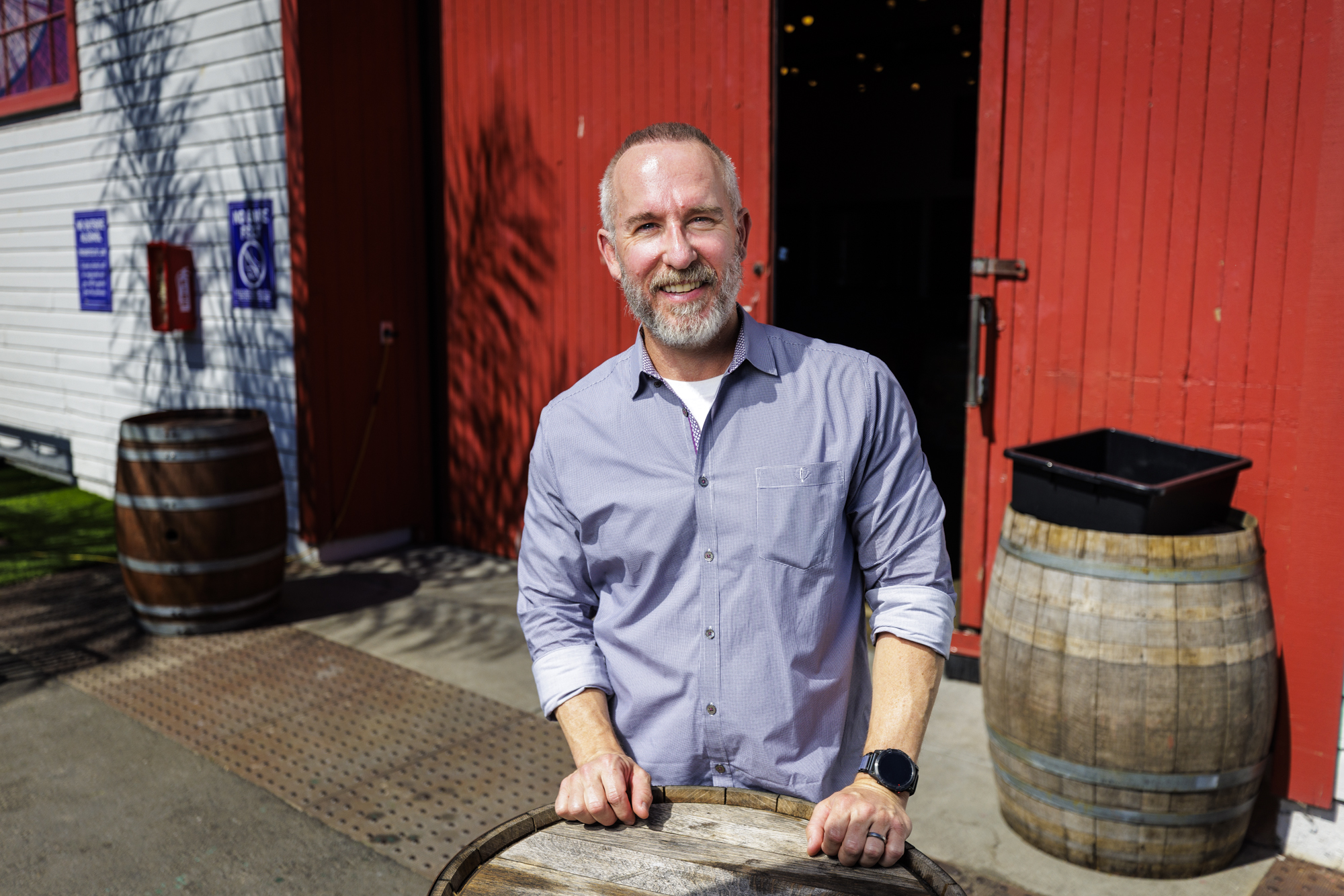 Damian Fagan, CEO at Almanac Beer Co., at Almanac Adventureland and Brewery in Alameda on March 20, 2026. (Martin do Nascimento/KQED)
“Our usage is only going up,” Fagan said.
Almanac is, to the best of Aircapture’s knowledge, the first brewery to use direct air capture technology to carbonate its beer. But it almost certainly won’t be the last.
The company’s next project is with Anheuser-Busch InBev, the world’s largest brewer, installing the technology at a brewery in the Canary Islands later this year.