
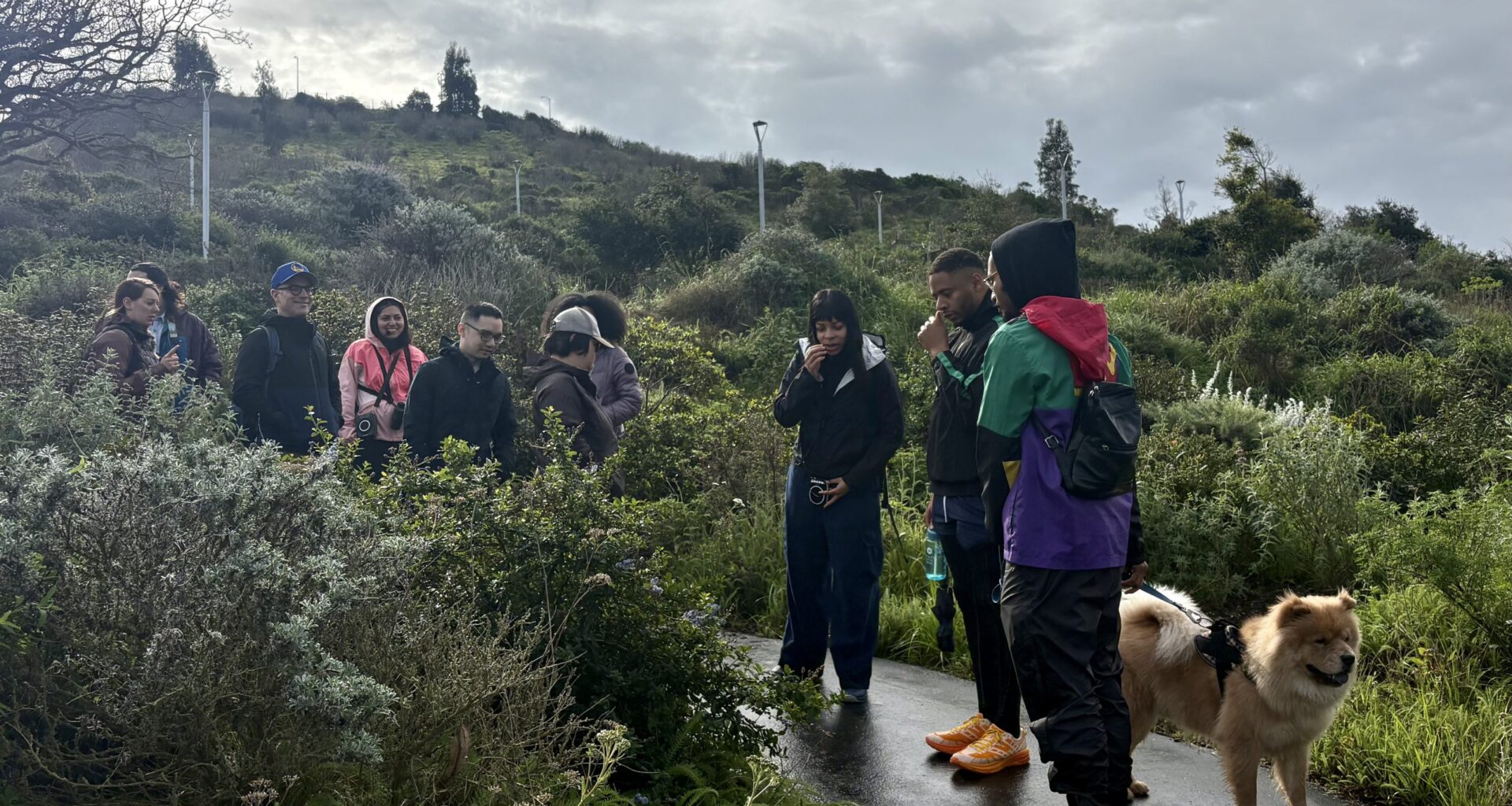
At the Treasure Island ferry terminal one February morning, about a dozen people outfitted in athleisure stood under an awning and watched as the rain coated the landscape. Kaile Tinoco, an island resident for two years, waited alongside friend Amanda Madden as inquisitive minds arrived to explore biodiversity in an unexpected context. Tinoco, who has a background in wildlife biology, came with a looming question on her mind: How does nature form in a completely man-made place?
Treasure Island may have been constructed less than 100 years ago, but wildlife has begun claiming its edges. Shorebirds nest along its edges, harbor seals surface within binocular distance and native plants cling to the slopes of nearby Yerba Buena Island.
As the islands undergo a decades-long redevelopment that will eventually convert large portions of the land into parks and restored habitat, residents like Tinoco are beginning to see the place less as an artificial platform in the bay and more as a landscape where nature is quietly taking hold. Her walks tap into a growing curiosity among neighbors and visitors who want to understand — and reconnect with — the wildlife that has appeared in an unlikely setting.
 Kaile Tinoco’s zoology background gave her an appreciation of the diverse critters that find their way to Treasure Island. “They’re probably wondering how we got here, and yet we’re both thriving on it,” she said. Credit: Cami Dominguez / San Francisco Public Press
“The reason why I label this as a free community-led walk is that everyone comes with their own set of knowledge, whether their experiences of life, experiences of sciences, the experience of living here,” Tinoco said before the trek began. “Please share any of your curiosities. If you see anything, if you know anything, this is just for the community. I’m not the knowledge-holder here, we all are.”
The walks launched late last year. There is not yet a regular schedule, but they are likely to continue. This last one drew nature enthusiasts from across the Bay Area, traveling from as far away as San José, but word is spreading. Someone from Canada joined in November.
Tinoco’s zoology degree enriched the walk with recognition of diverse bird species visiting the island, including pelicans and cormorants, while Madden’s environmental science background rounded it out with enriching tidbits about the emergence of plant communities.
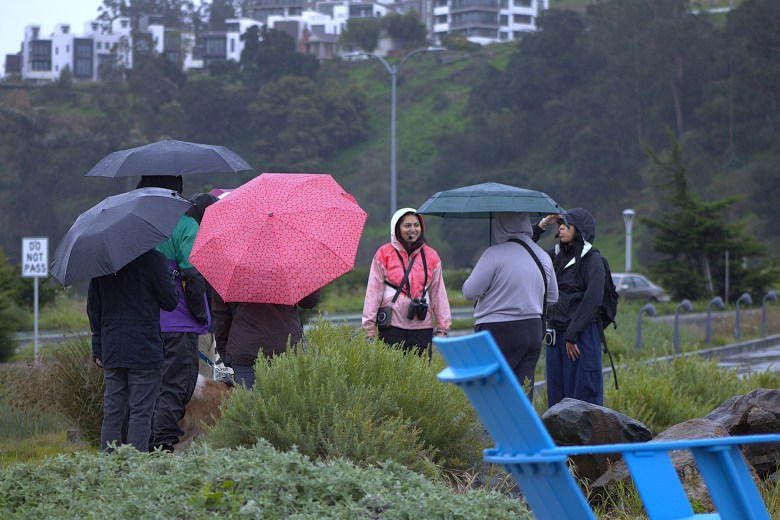
The group battled inclement weather to learn about bayside ecology. Credit: Cami Dominguez / San Francisco Public Press
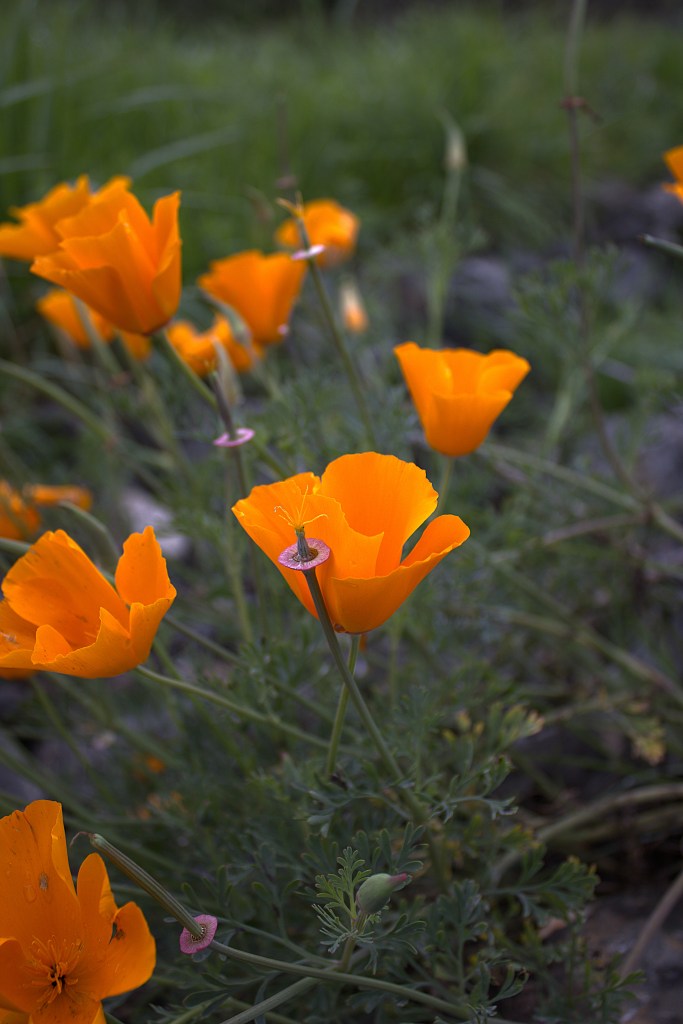 The iconic California poppy in late-winter bloom. Credit: Courtesy of Anthony Beck
Participants made their way in the rain toward adjacent Yerba Buena Island on a half-paved trail. Overlooking the San Francisco skyline, Tinoco and Madden had mics and mini-speakers attached to their hips as they narrated. Tinoco and Madden emphasized that they wanted to make the walk a space where people in the group could share their knowledge and feel empowered to learn.
Amid the abundance of scientific knowledge was an element of play. In an effort to keep everyone active, Madden set a rule: If you see a California poppy, announce it by projecting “what’s poppin!”
To Tinoco, the history of Yerba Buena often gets overshadowed by Treasure Island. The 150-acre landmass is one of San Francisco Bay’s largest fully natural islands, alongside Angel and Brooks islands. Tinoco highlighted the indigenous history of Yerba Buena, which was first inhabited by the Ohlone people, and read a land acknowledgment.
Originally, San Francisco and Yerba Buena Island were both referred to by the Spanish as Yerba Buena, meaning “good herb” because of the aroma of the native plants. Even though there is no longer a significant Ohlone presence, some in the community have started to cultivate California native plants on both landmasses.
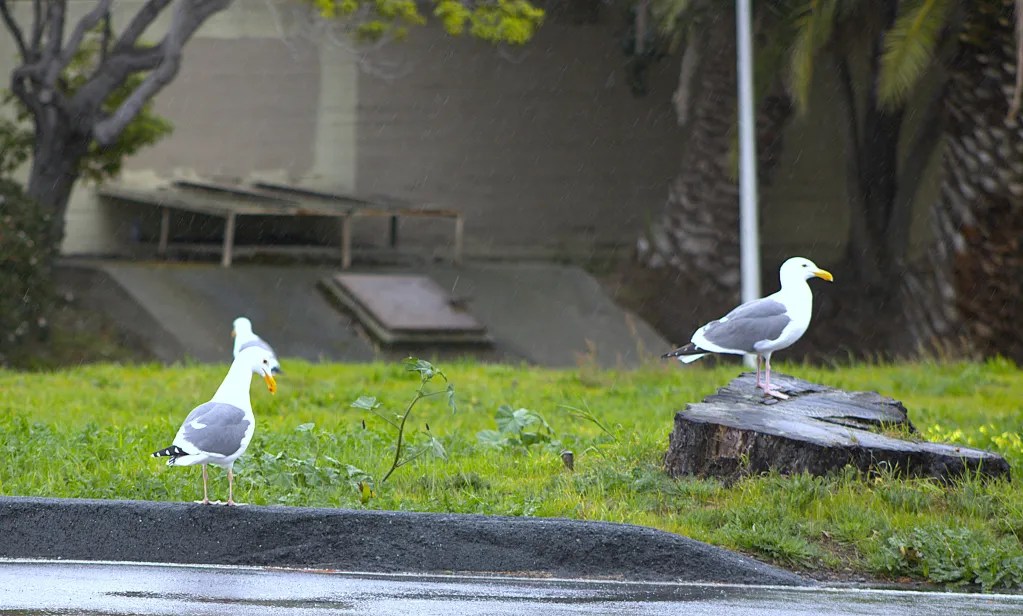
The tour persisted through the gentle rain and pushed up the hill. Tinoco first noted the sound of seagulls and said she has identified about 12 species there, including western gulls and the California gull. Not long after, two seals popped their heads out of the water near the waterfront. Last time, they were able to spot a dolphin, Tinoco said.
Reaching Yerba Buena, Madden complemented Tinoco’s wildlife knowledge with information about plants lining the seashore. She encouraged participants to rub the leaves to identify scents. Notes of eucalyptus and sage lingered as they made their way along a hillside trail.
Coastal sage, in particular, was plentiful. It is a diverse family of plants that has a distinct smell with hints of rosemary and lavender. Madden challenged the trekkers to observe the stems to identify them.
“They look different, they smell different, but they all work together as a community in order to help each other to survive,” she said. “If we took one of these out, it would shift the whole makeup of the space.”
Frequently Tinoco and Madden emphasized the complex connections of all the life surrounding them — the relationships among bugs, plants and mammals are all crucial to environmental balance.
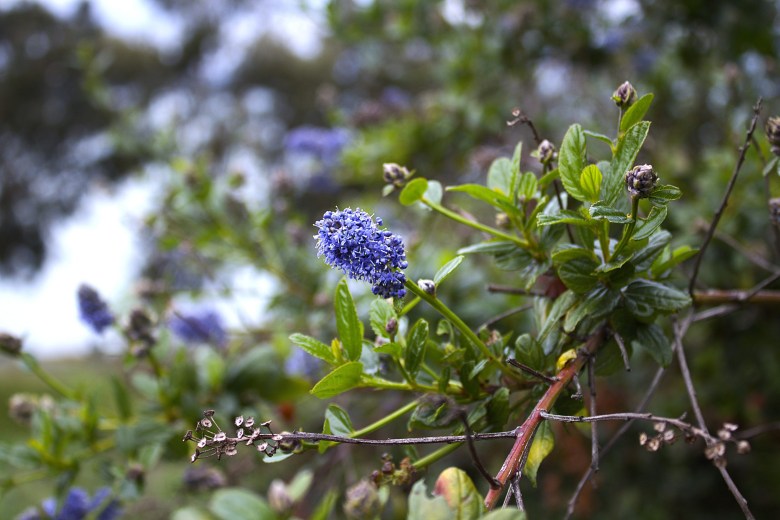 California lilac Credit: Courtesy of Anthony Beck
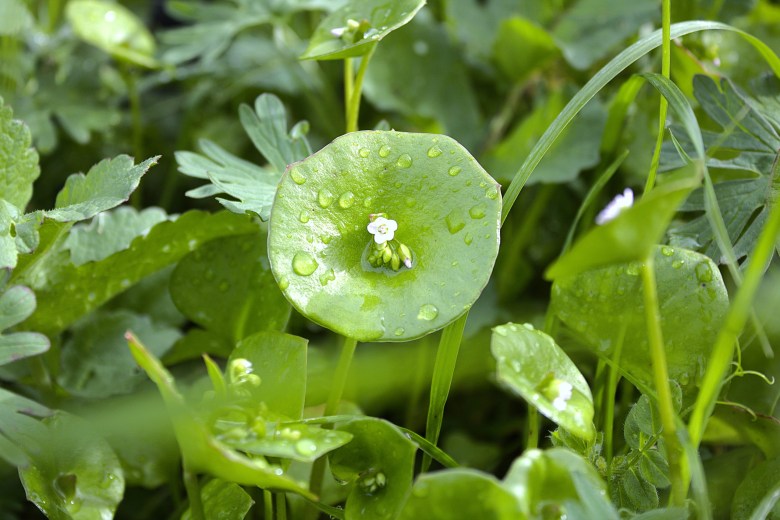 Miner’s lettuce Credit: Courtesy of Anthony Beck
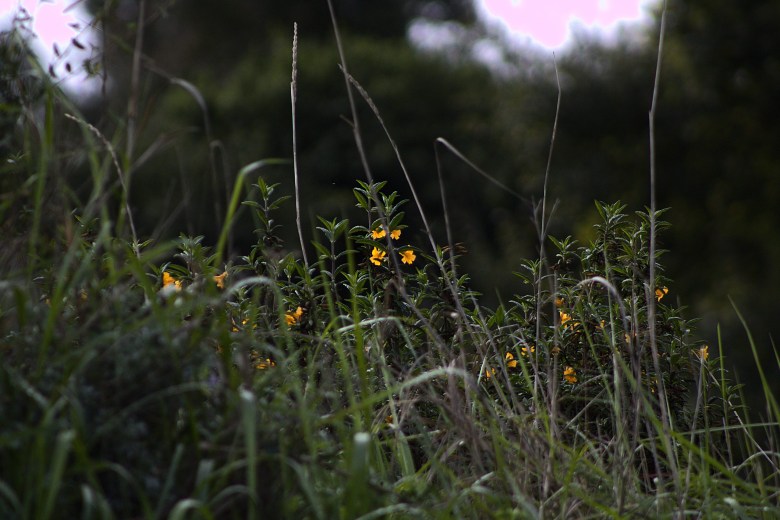 Sticky monkey flower Credit: Courtesy of Anthony Beck
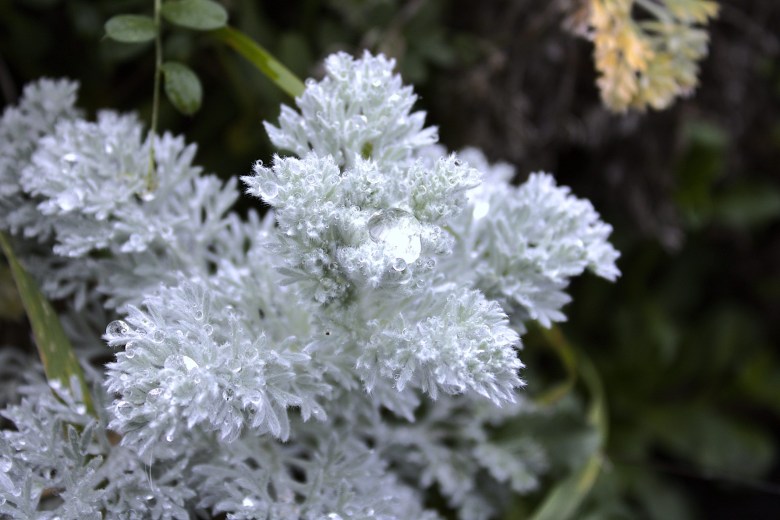 Artemisia (aka silver mound) Credit: Courtesy of Anthony Beck
“The really cool thing about the Bay Area and the California coast is that we are classified as a species hot spot,” said Madden, referring to the more than 7,000 native plant species making up the California Floristic Province. “This is one of the most diverse places — Bay Area pride! — in the world.”
Although many animal species abound, including shorebirds, pelicans, gulls, sparrows and bluebirds, as well as insects like bees and butterflies, mammals remain relatively uncommon. One mystery Tinoco raised was how skunks, raccoons and opossums made their way there. Skunks in particular have befuddled Treasure Island staffers, who discussed the problem of the species at a community meeting in February.
“It’s a reminder of resilience and adaptation,” Tinoco said.
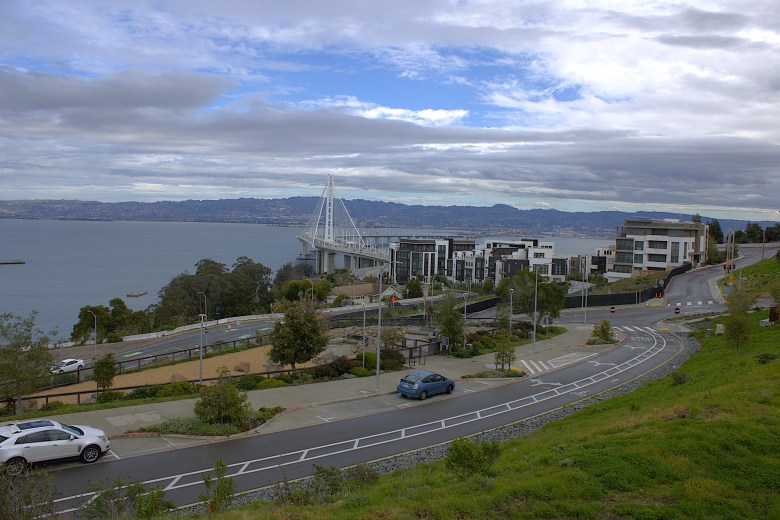 Development has accelerated on Treasure Island as well as Yerba Buena Island, which enjoys spectacular vistas. Credit: Courtesy of Anthony Beck
Treasure Island is a massive development zone, with ongoing construction of thousands of new units of housing, plus shopping, transportation and other amenities, rolling out over more than a decade. In the master plan, an area on the north end of the 400-acre island is reserved for a 98-acre park called The Wilds. It abuts an area designed as an adaptable wetland meant to support the ecology of San Francisco Bay. The project, according to Treasure Island Authority Development documents, focuses on biodiversity and “recalls the once-predominant Bay Area shoreline ecosystems of dune swales and moist grassland.” Plans for The Wilds would come in the fourth and final development stage, which the San Francisco Planning Department projects for between 2034 and 2041.
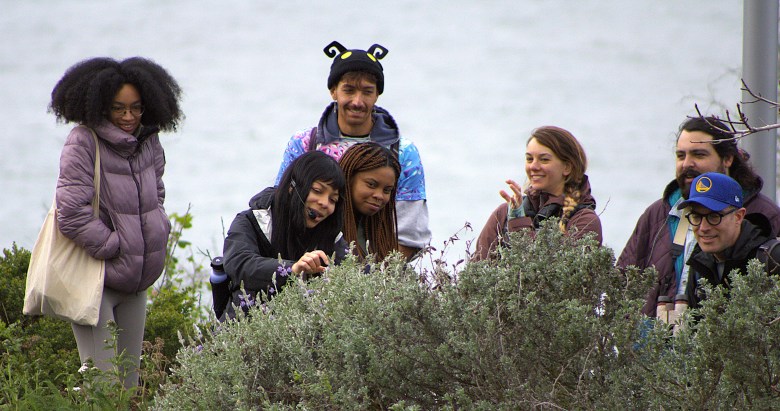 The two recent nature walks hosted by Tinoco have received more than a dozen participants each. Credit: Courtesy of Anthony Beck
The work would entail active seeding and gardening of native foliage, adding to the pioneer species commonly found on the island, including yarrow, lupin, sticky monkey flower and various coastline plants.
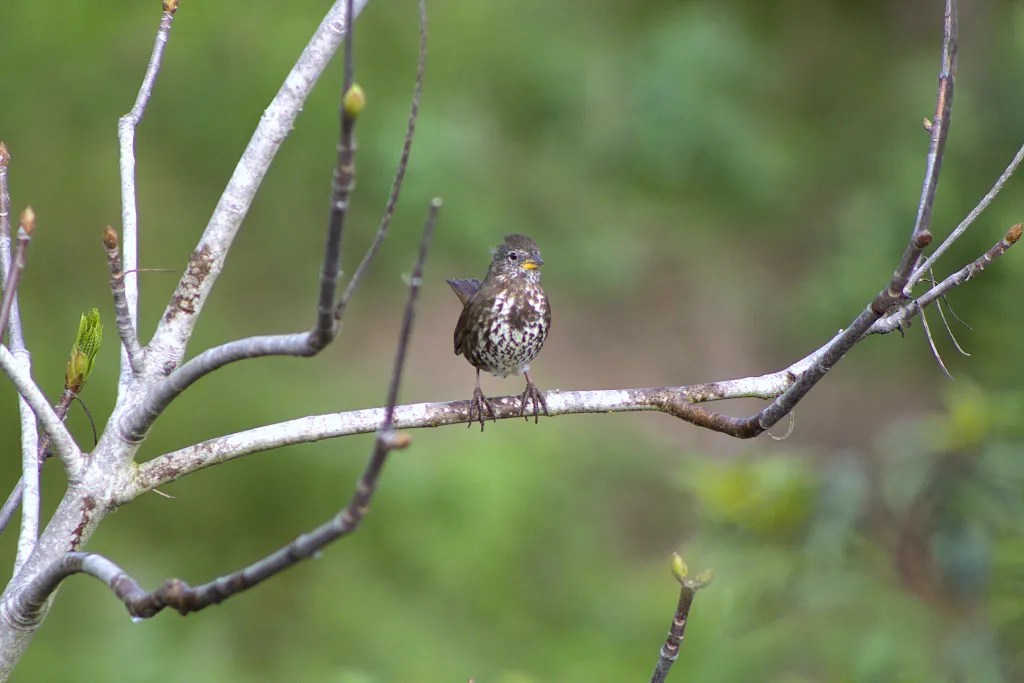
On the walk, birds, including the black phoebe and flicker, were loud and prominent. At one point, Tinoco asked participants to close their eyes, channel their senses and try to count how many birds they could hear.
Later, they spotted a hummingbird hanging out on a tree branch. Tinoco launched into a personal reflection.
“I hear a story, especially in Hispanic culture, they’re known as little warriors,” she said. “So whenever they show up, it’s a good reminder that you are also a little warrior when you go about your day. They’re just good reminders that we work really hard. Sometimes you need to take a little break and enjoy the view and remind yourself that you’re a little warrior inside and you’re gonna get through.”
The approximately two-mile walk, which followed a trail from Treasure Island to the top of Yerba Buena, ended at Panorama Park, offering stunning views of San Francisco Bay. The park is home to the Point of Infinity by Japanese artist Hiroshi Sugimoto, made possible by California’s requirement that developers dedicate a small percentage of their construction costs to public art or pay fees to city funds.
As the rain cleared to reveal the surrounding landscape, Tinoco asked the group to huddle around in order to end the walk with gratitude and mindfulness. This practice facilitates a connection with nature, which Tinoco considers the key to caring about the local environment.
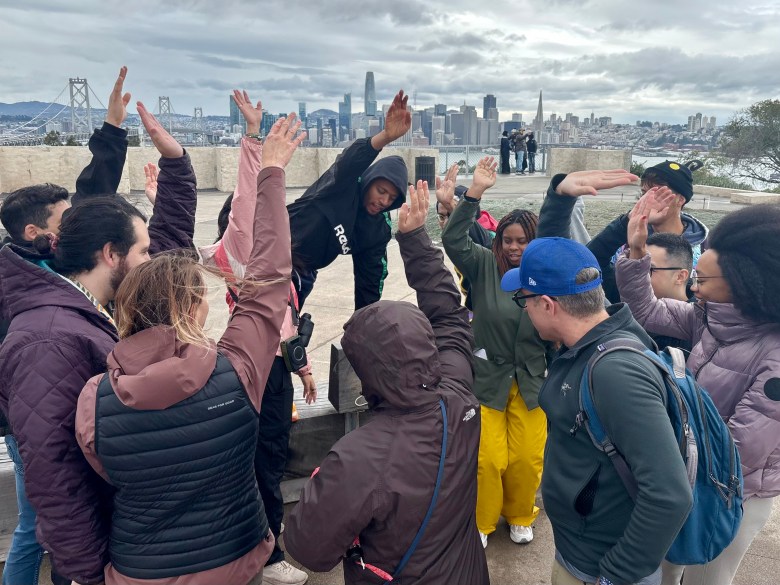 The weather may have been poor, but spirits remained high, as organizers stressed that exploring the local environment can build community. Credit: Cami Dominguez / San Francisco Public Press
“We’re wondering how they got here,” Tinoco said of the creatures in their midst. “They’re probably wondering how we got here, and yet we’re both thriving on it. It’s a good reminder of any species you see, especially in the wildlife, that you’re both coexisting. You are neighbors, and you are sharing this land.”
In the huddle, the group of strangers reached into the center of the circle and cheered, before dispersing to the bottom of the hill.
Related