
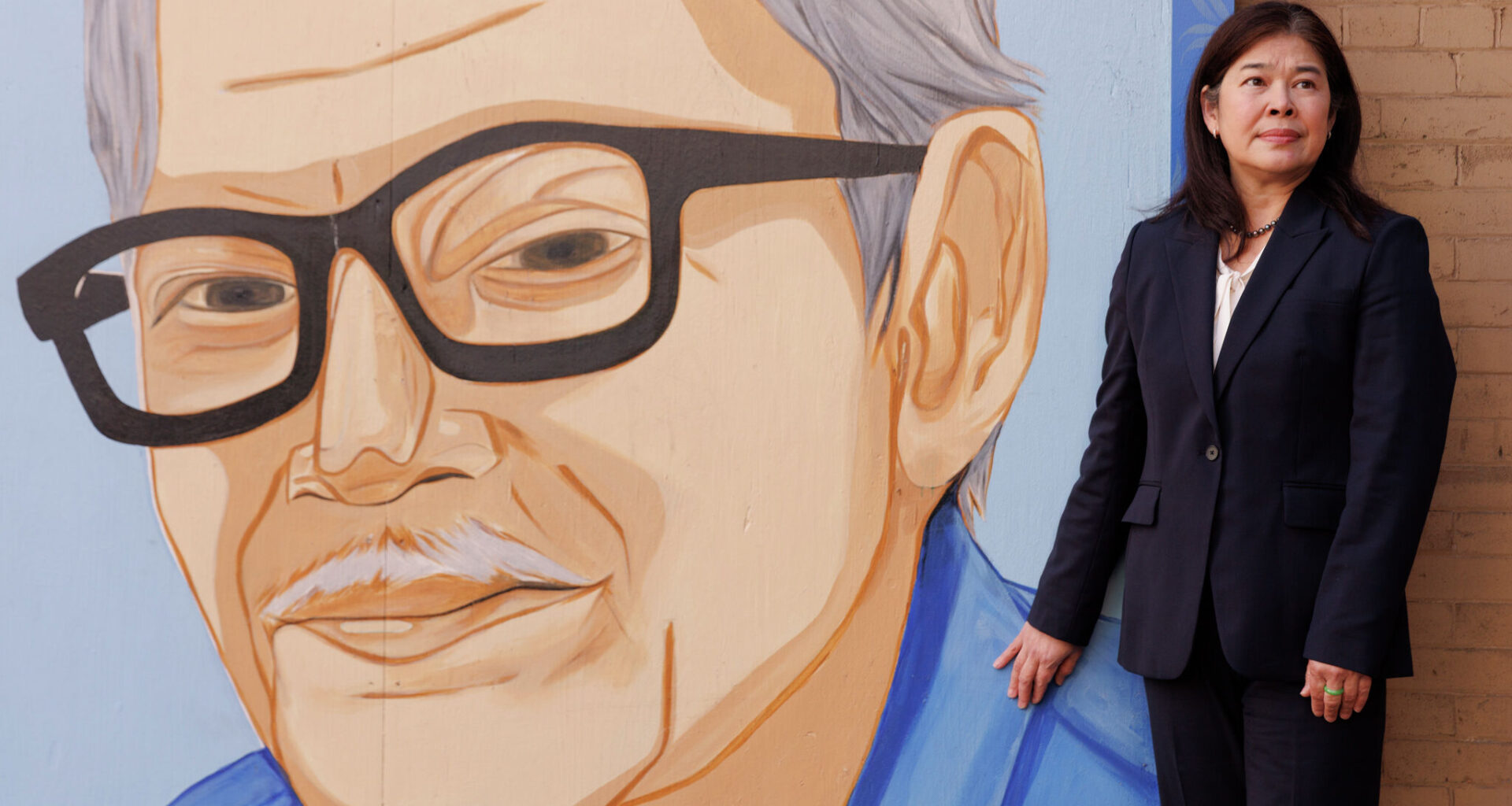
“Today’s sentence is deeply disappointing,” said Monthanus Ratanapakdee, Vicha’s daughter, shown in a file photo from January.
Santiago Mejia/S.F. Chronicle
A San Francisco judge ordered the man who fatally assaulted an 84-year-old Thai grandfather in 2021, sparking widespread fears for the safety of older people as well as galvanizing the Stop Asian Hate movement, to be released on probation.
Judge Linda Colfax sentenced Antoine Watson, 25, to an eight-year sentence. He’s already served about five years of the term in county jail and the remainder will be suspended if he adheres to the terms of probation. That means Watson could return to his mother’s Hayward home as early as Thursday.
The sentencing follows a trial that concluded in January in which a jury convicted Watson, who was 19 at the time of the attack, of involuntary manslaughter and assault and acquitted him of murder of Vicha Ratanapakdee.
Article continues below this ad
“I think both Mr. Watson and public safety would be served were Mr. Watson on probation rather than parole,” Colfax said.
The judge said that she thought imprisonment would likely have a “poor impact” on Watson, that he’s expressed remorse, that the jury found that Watson was not a danger to society and that he’d be better rehabilitated through probation. “My goal is to do everything within my very limited powers to protect our community from any future violent acts by Mr. Watson,” she added.
San Francisco Chronicle Logo
Make us a Preferred Source to get more of our news when you search.
Add Preferred Source
Ratanapakdee died two days after he was assaulted on Jan. 28, 2021 while taking a morning walk in his neighborhood. A viral video captured on a neighbor’s surveillance camera of the incident spurred outrage and widespread activism at a time when violence against Asian Americans had increased due to COVID-19-related racism.
During the month-long trial, Watson’s public defenders argued that he did not intend to kill Ratanapakdee but that it was “an impulsive act during an emotional storm.” They also said Watson did not know Ratanapakdee was old or Asian.
Article continues below this ad
The prosecution argued that Watson should have known that tackling Ratanapakdee at full-speed was dangerous.
Both the San Francisco District Attorney’s Office and the Ratanapakdee family had asked for the maximum sentence of 9 years to be imposed and served in state prison.
“The thing that would benefit him the most is being held responsible and taking accountability for his actions, as until now, he’s never had to do that,” prosecutor Sean Connolly said in court before the sentence was rendered.
Anita Nabha, Watson’s public defender, said she believed the sentence was appropriate and based on “evidence-based, science-backed” understanding that incarceration does not promote public safety or rehabilitation. She said the court would have close supervision of Watson, with his next appearance scheduled for three weeks, to ensure he’s complying with probation terms, including weekly therapy sessions with a licensed clinical social worker.
“We have a criminal justice system that if it were to be premised on vengeance and mob justice would get us nowhere,” she said. She also said Watson was a young man with “a lot of potential” and had “absolute confidence” that he’d be able to comply with probation terms and “make amends.”
Article continues below this ad
Colfax said that the alternative to probation was Watson serving about two years in state prison before being released on parole. She said the parole system was “stretched thin” and would give the court less supervision over Watson than probation. She said that probation, being administered by the county of San Francisco, would give him access to mental health programming and other services that would allow him to better reintegrate into society.
Ratanapakdee’s family and community members expressed outrage about Watson’s release.
“Today’s sentence is deeply disappointing,” said Monthanus Ratanapakdee, Vicha’s daughter. “An 84-year-old man was killed in a cruel, unprovoked attack, and our family will live with this loss every day. This is not about revenge. It is about accountability. When the consequences do not match the harm, it sends the wrong message about protecting our seniors and public safety.”
Her husband, Eric Lawson, had also delivered a victim impact statement in court Thursday, asking the judge to give the family “more time to come to terms about our feelings of safety.”
“Grandpa was the calm person in the house that kept everyone stable,” Lawson said. “Losing him was unimaginable. Our sense of safety is definitely gone.”
Article continues below this ad
The judge also ordered Watson to stay away from a 20 square block area in the Anza Vista neighborhood where the Ratanapakdees live.
Frances Tai, 65, a San Francisco resident who volunteers with a Chinatown public safety patrol group, said that she’d already come into the courtroom disappointed by the jury’s acquittal of Watson for murder.
“If you tackle a person to their death, for me, it’s murder, it’s 25 years to life,” Tai said. “Our justice system has no sense of justice.”
Watson apologized to the Ratanapakdee family in court before being sentenced Thursday.
“I think about my actions every day,” he said. “I am very sorry for my actions. I wish I could take them back… Mr Ratanapakdee had every right to take a peaceful morning walk. I learned later that Mr. Ratanapakdee was a grandfather and his grandsons were waiting for him to come home and take them to school. I can’t imagine the hurt I caused to his grandkids.”
Article continues below this ad
His mother, Angela Watson, also apologized to the Rantanapakdee family in court, stating that “words cannot change what happened, but we will continue to pray for forgiveness. We wholeheartedly feel horrible that your family will always carry pain and suffering that my son has caused.”
At the same time, Antoine Watson called the idea that he committed a hate crime or targeted an elderly person a “false narrative.”
“Being locked up more will not help me become a better person. Prison is a dehumanizing and traumatizing environment that will not be rehabilitative,” Watson said. “I know my actions ruined lives. I want to make up for it by becoming a better person.”
Monthanus Ratanapakdee, for her part, said she thought the sentence was light. Addressing a crowd of about a dozen supporters outside the courtroom after the sentencing hearing, she reiterated her commitment to public safety activism, especially for older community members, stating, “We are going to continue to fight for justice.”