
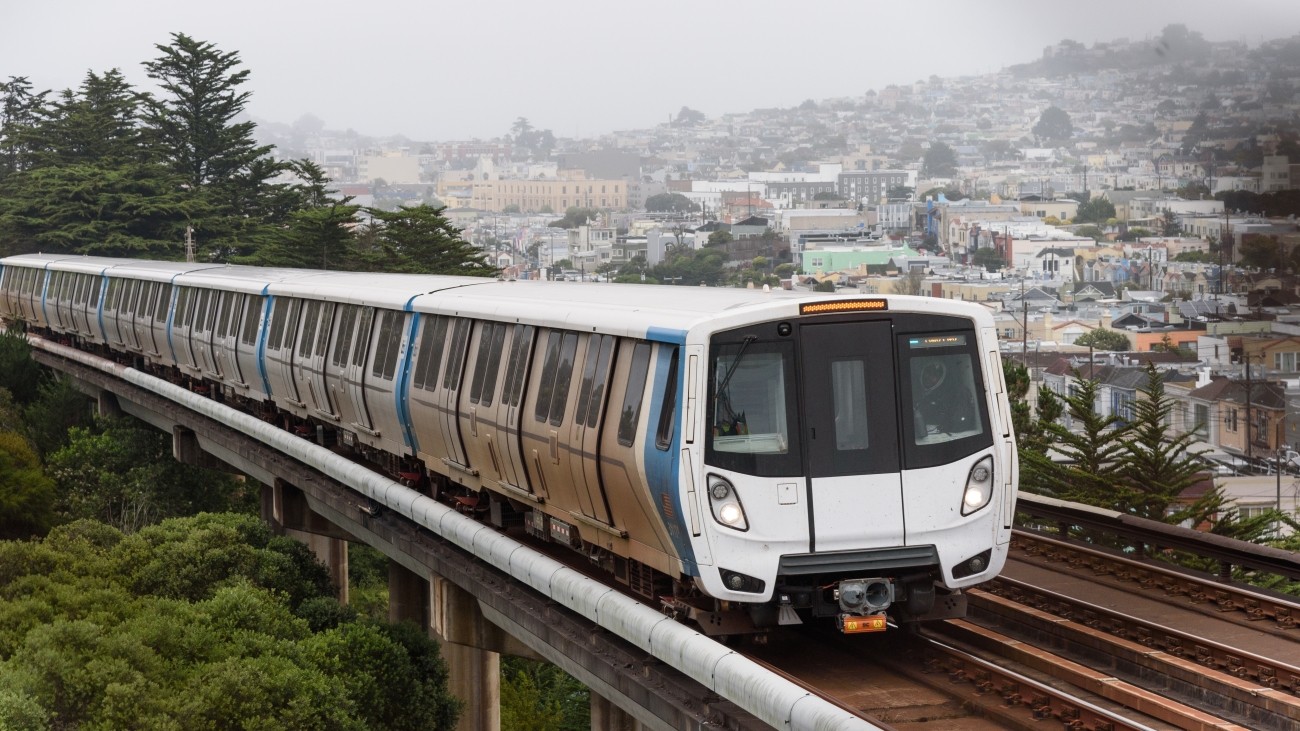
BART had the highest ridership in one day since the pandemic, with 225,832 trips on Feb. 5. More from BART’s latest “Ridership Snapshot” released Wednesday, which looks at year-over-year trends:
February ridership highlights:
• Total trips: 4.5 million (+13% year-over-year)
• Average weekday ridership: 191,099 (+11% year-over-year)
• Average Saturday: 129,183 (+27% year-over-year)
• Average Sunday: 77,296 (+15% year-over-year)
Saturdays saw particularly impressive growth, reflecting increased demand for events, entertainment, and weekend travel across the region.
Muni is also showing ridership gains. A new report from SPUR finds that “Muni has consistently performed well, meeting or exceeding the average performance of similarly sized peer agencies across the county on a range of business metrics.” Caltrain too is boasting about improved ridership. The system carried 7,854,311 in February, up 46.8 percent since 2025.
“We know that public transit is essential to the Bay Area, and it’s great to see evidence supporting that riders are back and our agencies are going above and beyond to meet their needs,” said the San Francisco Transit Riders’ Dylan Fabris.
Unfortunately, all this progress could be blown away if new funding streams can’t be found to keep the agencies going. SFMTA, BART, Caltrain, and AC Transit together are facing a projected combined deficit of $800 million in fiscal year 2026/27. Also from SPUR’s report on Muni:
The San Francisco Municipal Transportation Agency (SFMTA) faces a troubling financial outlook, with projections indicating an annual operating deficit that could rise from $307 million in fiscal year 2026–2027 to as much as $434 million by 2030. If left unaddressed, such deficits could lead to significant reductions in Muni transit services, including the elimination of some routes and reduced frequencies on remaining routes. To counteract this trend, the agency is relying on the successful passage of two ballot initiatives in November 2026: a five-county regional sales tax and a parcel tax specifically for Muni operations.
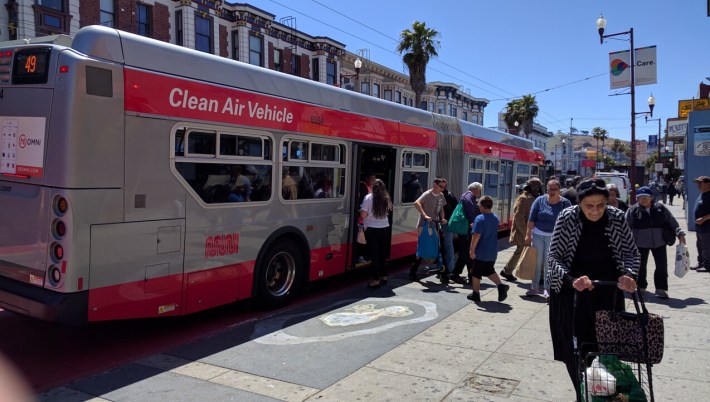 Image: Streetsblog.
Fabris said the proposed route reductions would be “catastrophic.”
The Muni measure, if passed in November, would raise some $160 million annually for operations. The regional measure would raise $1 billion annually, for agencies across San Francisco, Contra Costa, Santa Clara, San Mateo, and Alameda Counties. Both must pass to keep Bay Area transit operating.
“We need sustainable long-term funding to preserve that progress and make transit even better for more people in the Bay Area,” added Fabris.
Activists are redoubling signature-gathering efforts to get those two initiatives qualified and on the ballot.
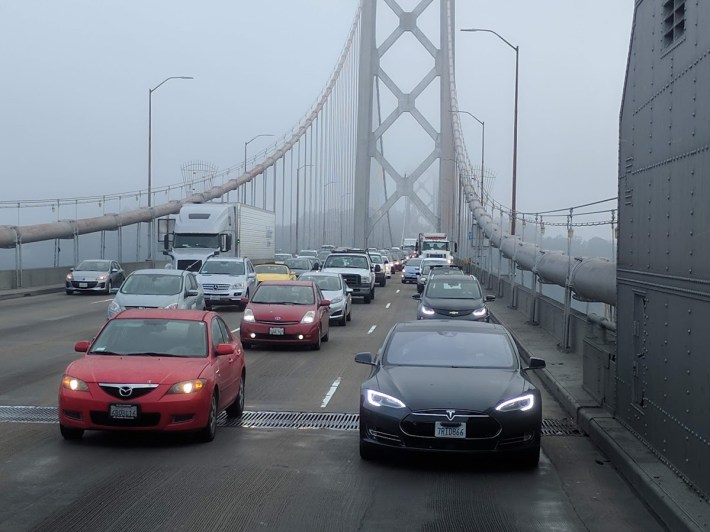 Even people who don’t use transit will suffer if funding isn’t found. Photo: Streetsblog/Rudick
They have until early June to get the almost 200,000 required signatures across the five counties to qualify the Connect Bay Area Act (SB 63). The parallel Muni measure requires about 10,000 signatures and the deadline is early July to get on San Francisco’s ballot. However, advocates are shooting to get the signatures to qualify both measures by mid-May. Cyrus Hall, transit advocate and campaign manager for the measures, declined to say how close they are, but confirmed that the signature-gathering is “going well.”
To volunteer and get involved, check out this calendar. And join Saturday’s “No Kings” demonstrations to gather signatures.