
ConnectedSF, a conservative civic group founded by Marie Hurabiell, who is running for Congress as a right-wing candidate, just put out an email supporting the repeal of Prop. I, which raised taxes on high-end real-estate sales to fund affordable housing.
That’s not a surprise: Mayor Daniel Lurie, who ConnectedSF supported, wants to repeal the tax, arguing that it will help encourage the construction of more market-rate housing.
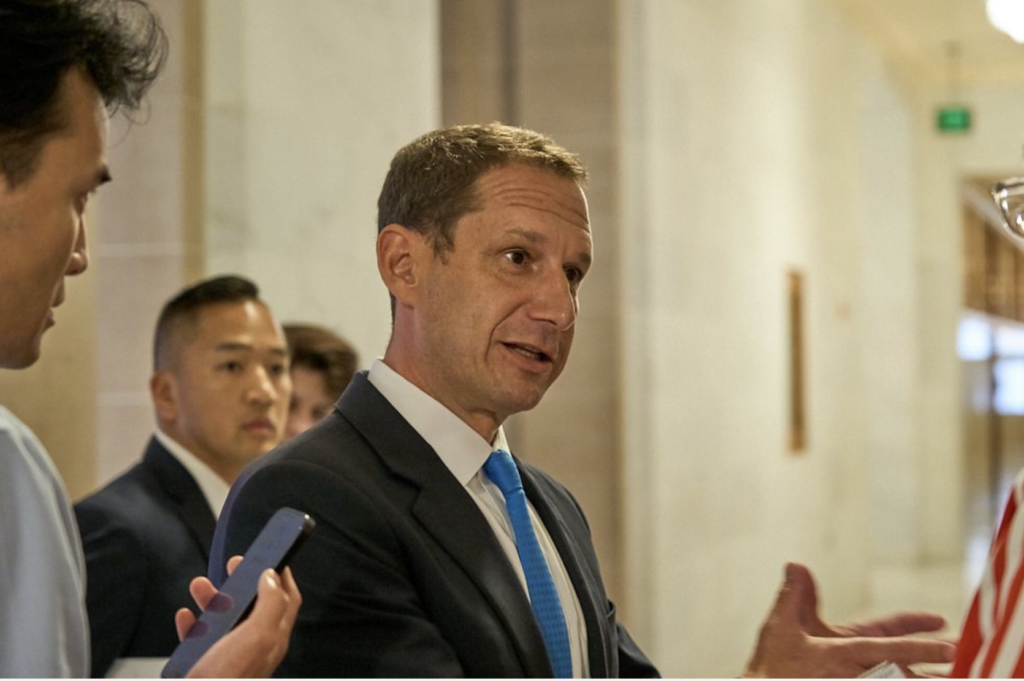 Mayor Daniel Lurie wants to cut taxes on the very rich—and his allies are putting out false information
But a mass email the group sent out contains a factually inaccurate statement that may signal the beginning of a false campaign for Lurie’s measure:
Thousands of housing projects have city approval but have been stall due to Prop. I’s prohibitive doubling of the transfer tax rate, making investment in San Francisco—by businesses especially—less appealing.
Thousands of housing units are, indeed, approved and entitled, and those projects are, indeed, stalled. But that has nothing to do with the transfer tax. They are stalled because they can’t get financing in this market, with interest rates at current levels and rents at current levels. Developers have said publicly that new housing won’t make economic sense until rents increase by 20 percent.
Trump’s war in Iran is just making things worse; inflation means higher interest rates and higher construction costs. Almost everything that goes into housing construction arrives by truck, and higher fuel prices mean higher materials cost. Higher cost of living means higher labor costs.
None of that has anything to do with the transfer tax, which is typically paid by the seller, not the buyer. These developers with their entitled projects already own the property; those taxes were paid years ago.
If the developer that won the entitlement never intended to build in the first place, and was planning the flip the entitled property (that happens, although I don’t know why we would want to encourage it), then the developer who isn’t going to build pays the tax, not the investor who might want to build.
And, of course, the vast majority of the money that Prop. I brought in has come from the sale of downtown office buildings, not hsouing.
Sponsored link

More market-rate housing won’t help the affordability crisis, but taxes on very high-end sales (including sales of mansions worth more than $10 million) will help by funding affordable housing.
The Lurie plan is nothing but a giveaway to big real estate and very rich people. And yet, I see the campaign shaping up.
Lurie and his allies also want to make it more difficult for citizens to put a measure on the local ballot. The mayor wants to eliminate the rule that allows four supes to sponsor an initiative with their signatures—and want to raise the threshold for community-based signatures.
Lurie’s office calls the current system one “thatforces San Franciscans to fill out lengthy, confusing ballots that often result in unintended consequences.”
I’ve had a lot of disagreements with Randy Shaw, director of the Tenderloin Housing Clinic, over the years, but he’s got a good argument on this one. He writes in BeyondChron:
Does the actual history of San Francisco ballot measures confirm the above account? Not by my research. To the contrary, gathering signatures under the current law has brought enormous benefits to the city’s non-wealthy residents. It’s been the primary strategy keeping the non-wealthy in San Francisco. … I encourage other media to investigate which San Francisco constituencies have benefited most from initiatives secured by signature gathering. My research says the answer is obvious: tenants have far and away gained the most.
He lists several ballot measures that qualified by volunteers gathering signatures that have saved tenants billions of dollars over the years, limited evictions, and expanding rent control. The nation’s first local minimum wage passed thanks to a ballot measure.
Many of those measures would not have qualified under the rules Lurie wants to put in place.
Shaw doesn’t mention it, but the most important progressive land-use measure in San Francisco history, Prop. M in 1986, would never have made the ballot under the new rules. The proponents gathered enough signatures, but the City Attorney’s Office, apparently bowing to Mayor Dianne Feinstein and downtown pressure, produced an utterly bogus argument at the last minute saying the signatures were invalid on a technicality. So the backers found four (and only four) supervisors—Harry Britt, Nancy Walker, Willie Kennedy and Dick Hongisto—willing to put in on the ballot instead.
That would not have happened under the mayor’s proposal.