
Overall tech employment in San Francisco declined by more than 30,000 jobs between 2023 and 2025. That’s a sharp contrast to the last tech boom, when the industry added more than 30,000 jobs in the city from 2011 to 2013.
Brontë Wittpenn/S.F. Chronicle
The inextricable link between San Francisco and its homegrown artificial intelligence sector is a source of pride for Mayor Daniel Lurie.
He made that clear in October, when he shared a social media video filmed with two of OpenAI’s top executives: CEO Sam Altman and President Greg Brockman. Altman described San Francisco as “clearly the center of the AI revolution,” and Lurie agreed.
“We appreciate the tools you’re building,” Lurie told Altman and Brockman. “We thank you all for believing and investing in San Francisco.”
Article continues below this ad
The short video demonstrated how eager Lurie was to highlight a bright spot in San Francisco’s slow economic recovery from the pandemic. While about one third of the city’s offices are still empty and tourism has yet to return to its pre-COVID peak, local AI companies are booming. San Francisco is home to some of the biggest players in the sector, including OpenAI and Anthropic, both of which are expected to launch initial public offerings as soon as this year.
For Mayor Daniel Lurie, the local AI gold rush could be a political boon if it creates jobs and attracts new companies, strengthening his argument that San Francisco is now a “city on the rise.” Yet the sector also poses risks for the city and its mayor.
Stephen Lam/S.F. Chronicle
“San Francisco is the global hub for AI innovation, and AI is helping fuel our economy,” Lurie told the Chronicle in a Thursday interview. “I want to be clear, though, that it is not the only thing … We want to build a broad-based recovery.”
San Francisco Chronicle Logo
Make us a Preferred Source to get more of our news when you search.
Add Preferred Source
For Lurie, the local AI gold rush could be a political boon if it creates jobs and attracts new companies, strengthening his argument that San Francisco is now a “city on the rise.” Yet the sector also poses risks for the city and its mayor.
Article continues below this ad
The San Francisco metro area currently has the second-fastest rent growth in the country, according to a report this month from Apartment List, which cited lucrative AI jobs as a primary reason. Should that trend continue, it could provoke a political backlash similar to what San Francisco saw in the 2010s, when residents grew alarmed by rising living costs and displacement that some blamed on an influx of highly paid tech workers.
Experts are also concerned that the AI sector has become a bubble that could burst. That would deal a particularly damaging economic blow in San Francisco, where new leases from AI companies have been a silver lining for commercial landlords in the otherwise dreary office market. San Francisco is certainly familiar with tech busts, having endured the dot-com crash in the early 2000s.
Yet AI is distinct from previous tech booms and busts. Some industry leaders and academics are sounding the alarm that the products being developed by leading AI companies could usher in massive job losses among white-collar workers as their roles become obsolete. Already, some companies are slashing their headcounts as they lean further into AI.
“The possible range of outcomes is very, very wide,” said Ted Egan, San Francisco’s chief economist. “It’s going to have a transformative effect on the tech industry, at least. And beyond that, it’s crystal ball territory.”
AI could prove to be a double-edged sword for Lurie’s political prospects. The success of major AI companies could help him realize one of his top priorities: ushering in an economic revival in the city. But if the tools those companies develop rapidly destabilize the workforce and push up the cost of living, voters may sour on City Hall incumbents — including the mayor.
Article continues below this ad
“I don’t know whether those doomsday predictions will come true, but to the extent they do, I believe San Francisco will be an epicenter of the worst, and I think the political impact of that will be huge,” said Jim Stearns, a progressive political consultant.
When Egan ponders how AI has impacted San Francisco’s economy so far, he sees both encouraging signs and cause for concern.
The industry is undeniably concentrated in the city — welcome news for local leaders, given how severely the pandemic hollowed out downtown. Major AI companies based in San Francisco are leading “an explosion of investment” as they embark on “an arms race to try and make sure they have the best AI model,” Egan said.
AI now accounts for 90% of Bay Area venture capital investment, and 60% of all AI venture capital money invested nationwide between 2023 and 2025 went to San Francisco, Egan’s research shows.
Article continues below this ad
AI now accounts for 90% of Bay Area venture capital investment, and 60% of all AI venture capital money invested nationwide between 2023 and 2025 went to San Francisco.
Brontë Wittpenn/S.F. Chronicle
But the city has yet to see those dollars translate into a tech employment uptick. In fact, joblessness has been increasing. And downtown, which generates much of the tax revenue that funds San Francisco’s $16 billion budget, remains far removed from its pre-pandemic hustle and bustle.
“It feels like the start of a tech boom, but when you look at the local economic impact over the last few years, it doesn’t look like any tech boom that we’ve seen before,” Egan said.
Despite the flood of AI investment dollars to San Francisco, layoffs have been the dominant theme among big tech companies in the city. Salesforce, the city’s largest private employer, has instituted waves of job cuts, most recently in February. Just this month, software company Atlassian laid off 252 people at its San Francisco headquarters as part of a restructuring intended to help fund investment in AI.
Overall tech employment in San Francisco declined by more than 30,000 jobs between 2023 and 2025, according to Egan. That’s a sharp contrast to the last tech boom, when the industry added more than 30,000 jobs in the city from 2011 to 2013.
Article continues below this ad
“Some of that is remote work jobs getting axed,” Egan said of the current tech layoffs. “Some of it is AI-related. And some of it just companies saying, ‘We’re moving out of S.F. or we’re reducing our headcount in S.F.’”
Even though San Francisco isn’t seeing overall job growth fueled by AI companies now doesn’t mean that won’t happen in the future.
UC Berkeley economist Enrico Moretti is optimistic that an AI jobs boom is coming. In any new sector, job growth tends to follow an S-curve: It starts slowly, then accelerates sharply and eventually plateaus, Moretti said.
“AI is following the same trajectory,” he said. “It’s in the early part of this curve, when the level is low but the rate of growth is very high.”
No city is better positioned to benefit from that job growth than San Francisco, Moretti said. He pointed to the number of AI-related startups that are hiring people in the city and taking office space. As the technology matures, those companies are poised to take off, he argued.
“That’s where most of the employment growth will come from — not necessarily inside Anthropic or OpenAI or Gemini at Google or the AI (initiatives) at Meta, but in the broader startup landscape that will use those technologies to create applications,” Moretti said.
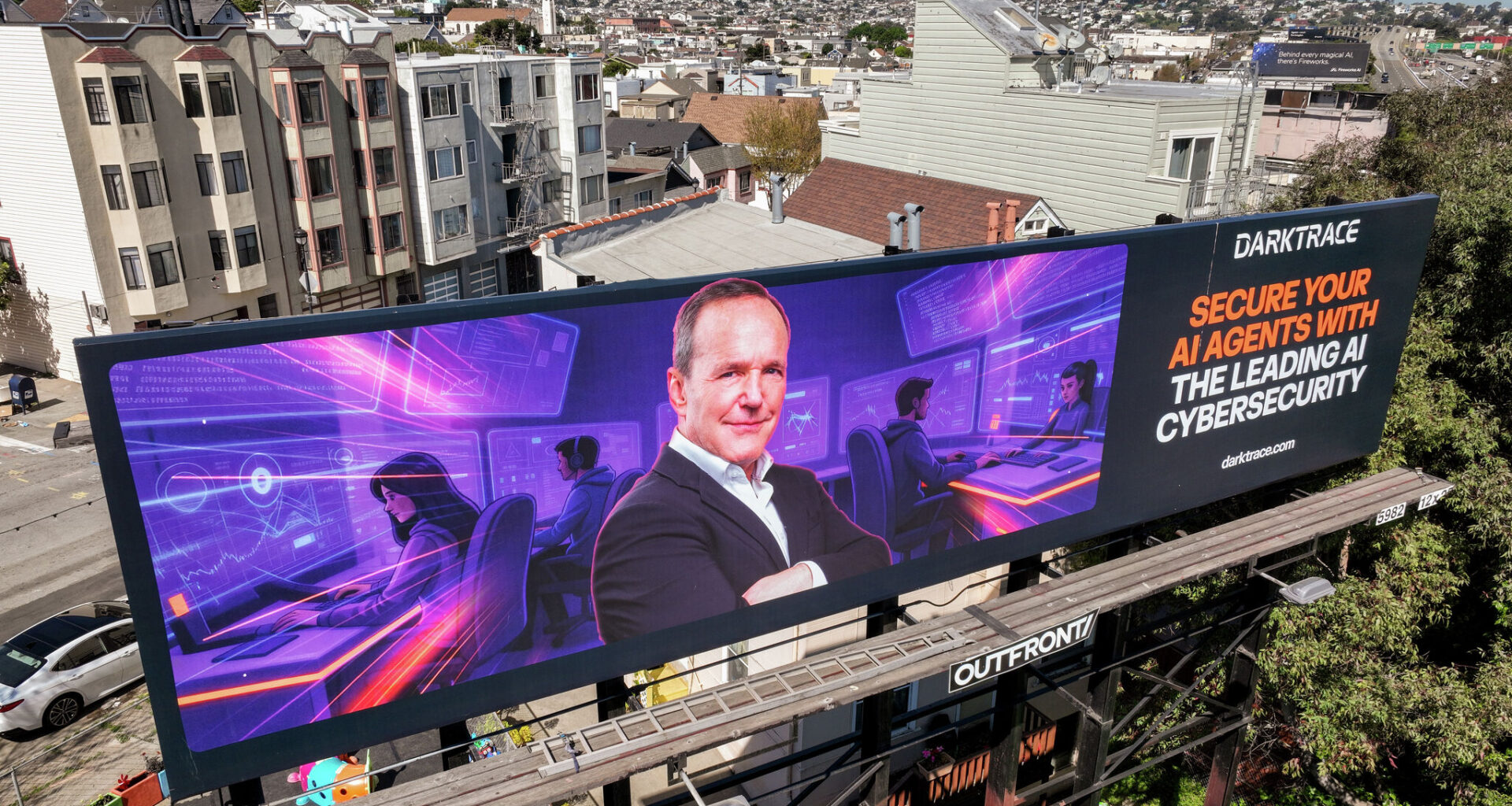
AI-related billboards can be seen along I-80 running through San Francisco.
Brontë Wittpenn/S.F. Chronicle
Still, San Francisco labor leaders are worried that the current tech industry layoffs are a harbinger of even worse job cuts as AI advances. Lurie is already facing tough fights with labor this year, including potentially axing hundreds of positions in the city budget, so AI could create another point of tension for him on that front.
Kim Tavaglione, executive director of the San Francisco Labor Council, said she’s heard “completely frightening” estimates from tech industry insiders about how the city’s unemployment rate could spike as AI develops further. She has doubts that Lurie, a Levi Strauss heir whose administration has a close relationship with the private sector, is prepared to help the city’s working class if those projections materialize.
“I have a lot of concerns about the mayor’s values on this,” Tavaglione said. “I don’t know if this mayor has the values of everyday working people.”
Lurie, in his interview with the Chronicle, defended his efforts to help the city’s working families, including by launching an affordability initiative centered around expanding access to free and subsidized child care. He also said he wants to move beyond political debates that pit businesses against residents.
“Our city has become more unaffordable over the last 20, 30 years, and so I am going to be a partner with labor, with business, to create an economy that works for everybody in our city,” he said. “Frankly, I can take critique, but I’d rather sit at the table and work with people instead of throwing barbs.”
For now, the housing market is where AI companies are having the clearest effect on the San Francisco economy.
OpenAI and Anthropic have yet to launch their expected IPOs, but each company has allowed employees to sell shares in advance. There are indications that the anticipated offerings are already fueling stronger interest among prospective home buyers.
“The way that Apple or Google or Meta made a lot of employees in the South Bay and the Peninsula wealthy, now the big AI labs are potentially going to make San Francisco-based employees join that echelon,” said San Francisco real estate agent Rohin Dhar.
The former tech founder said that in 2024, there wasn’t much competition for homes priced above $2 million. Now, for just about any home under $4 million, “a deep pool of people” are likely interested in the property, Dhar said. The demand is driven by people moving to the city for AI-related jobs and the fact that “it seems like the city is on a positive, upward trend,” he said.
The rental market is even more intense — and real estate broker Paul Griffiths has witnessed it firsthand.
Real estate broker Paul Griffiths shows an apartment to prospective tenants in San Francisco. Griffiths has no doubt how big a role AI is playing in the frenzy.
“I would say it’s 100% of what’s driving it,” he said.
Giselle Garza Lerma/S.F. Chronicle
One year ago, Griffiths could expect to get several tenant applications at the end of a 15-minute showing. Now, the timeline has tightened as workers at AI companies clamor for rental housing.
“I’m getting huge amounts of tenants who are preapplying before they even take a look at it,” said Griffiths, CEO of Vesta Asset Management, who estimated that about three-quarters of his new tenants are employed by AI companies now.
The data backs up what Griffiths is seeing: Rents in San Francisco are up 14% year over year, according to Apartment List.
Griffiths has no doubt how big a role AI is playing in the frenzy.
“I would say it’s 100% of what’s driving it,” Griffiths said.
Lurie, for his part, is hoping that his recently passed plan to rezone the north and west sides of the city helps to expand the housing supply and make the city more affordable amid the AI boom.
“We want to create the conditions for companies and businesses and workers to want to be in San Francisco again, but we also want to create the conditions for this to become a more affordable city,” Lurie said.
The last time San Francisco experienced a transformational tech boom, political blowback ensued. A similar story could play out this time.
In the 2010s, tech firms’ impact on San Francisco housing prices became a rallying cry for progressives who argued that the industry was accelerating gentrification and making the city even less affordable for low-income residents. Battles over market-rate housing in the Mission and other neighborhoods killed housing projects and pitted activists against developers and merchants.
A key to a vacant apartment rental in San Francisco.
Giselle Garza Lerma/S.F. Chronicle
If similar opposition to AI materializes, that could create a difficult political moment for Lurie, who has enjoyed resounding job approval ratings so far but whose closeness with the AI industry could be put under increasing scrutiny.
Stearns, the political consultant, said he expects Lurie to remain popular in the near term. But he warned that could change if rising costs driven by AI make life increasingly unaffordable for average residents.
“How long can there be a balancing act, where you have a halo effect of a new mayor in a honeymoon, but you have these very extreme issues simmering beneath the surface of that?” Stearns said. “2028 could be a very different landscape politically.”
Lurie told the Chronicle that he’s mindful of the potential negative impacts of AI. But ultimately, he thinks the technology will prove beneficial.
“We’ve had the printing press. We’ve had the automobile. We’ve had the internet. Everyone always said, ‘this was the end of society, this was the end of workers’ and new jobs come about that you can’t even dream of,” Lurie said. “We need to put guardrails in to protect our communities and our city, but overall I am very optimistic about what can come out of it.”