
SAN FRANCISCO — Establishment Democrats in San Francisco are scrambling to bury Saikat Chakrabarti in the race to succeed Nancy Pelosi, suddenly viewing the progressive organizer as a credible competitor.
Chakrabarti, a centimillionaire and former founding engineer at Stripe, has emerged as a top contender in the race after spending millions of his own wealth and, beyond that, with his strategy — not unlike Zohran Mamdani in New York — of tapping into populist energy on the left.
Now Chakrabarti appears to be such a force he’s spooked his rivals and their backers in San Francisco, and they are waking up to the fact they have to hit him. Longtime powerbrokers in the city, including moderates and some progressive Democrats, are working to paint Chakrabarti as more of a carpetbagger than a transformative leftist.
Chakrabarti’s chief rival in the race, state Sen. Scott Wiener and a super PAC backing him, have leveled increasing attacks over the depth of Chakrabarti’s resume in local politics and questions about how long he’s lived in the city. The super PAC is funded by several of the city’s most prolific donors, including crypto billionaire Chris Larsen and Y Combinator CEO Garry Tan.
This week, the super PAC hit Chakrabarti with a mailer that noted he previously listed a $1.6 million Maryland home as his residence.
Chakrabarti punched back in a social media video, calling the mailer “a lie” because he bought the Maryland home for his parents. He told Playbook that he inadvertently signed a 2018 mortgage deed listing the home as his principal residence (and recently corrected it).
“Here’s the truth: I moved to SF when I was 23 and I worked as an engineer,” Chakrabarti says in the video. In social media posts and campaign literature, he has often repeated a similar line, stating that he moved to San Francisco in 2009 and is proud to be raising his family here.
In the years since, Chakrabarti has moved around the country. A focal point of his campaign is touting his prior experience working as chief of staff to New York Rep. Alexandria Ocasio-Cortez and for Vermont Sen. Bernie Sanders’ 2016 presidential campaign.
Wiener argues Chakrabarti is downplaying his lack of involvement in local politics until he started angling for Pelosi’s seat. He added, “San Franciscans are very savvy, and I think people can smell a fake a mile away.”
Chakrabarti’s voter file with the city shows that he didn’t cast a ballot in San Francisco for nearly a decade. He voted in the city once in 2010, and not again until 2020. Chakrabarti said he likely didn’t vote some of those years because he was not yet politically engaged. Another public record shows he voted in New York City in 2016, and he said he also voted there again in 2018.
He also made political contributions that listed addresses in Covina (Southern California), Washington, D.C. and New York City. He said the Covina address is a digital mailbox he used in 2023 and 2024 because he did not want to receive junk mail at home. He said the New York and D.C. addresses were from when he lived there for work.
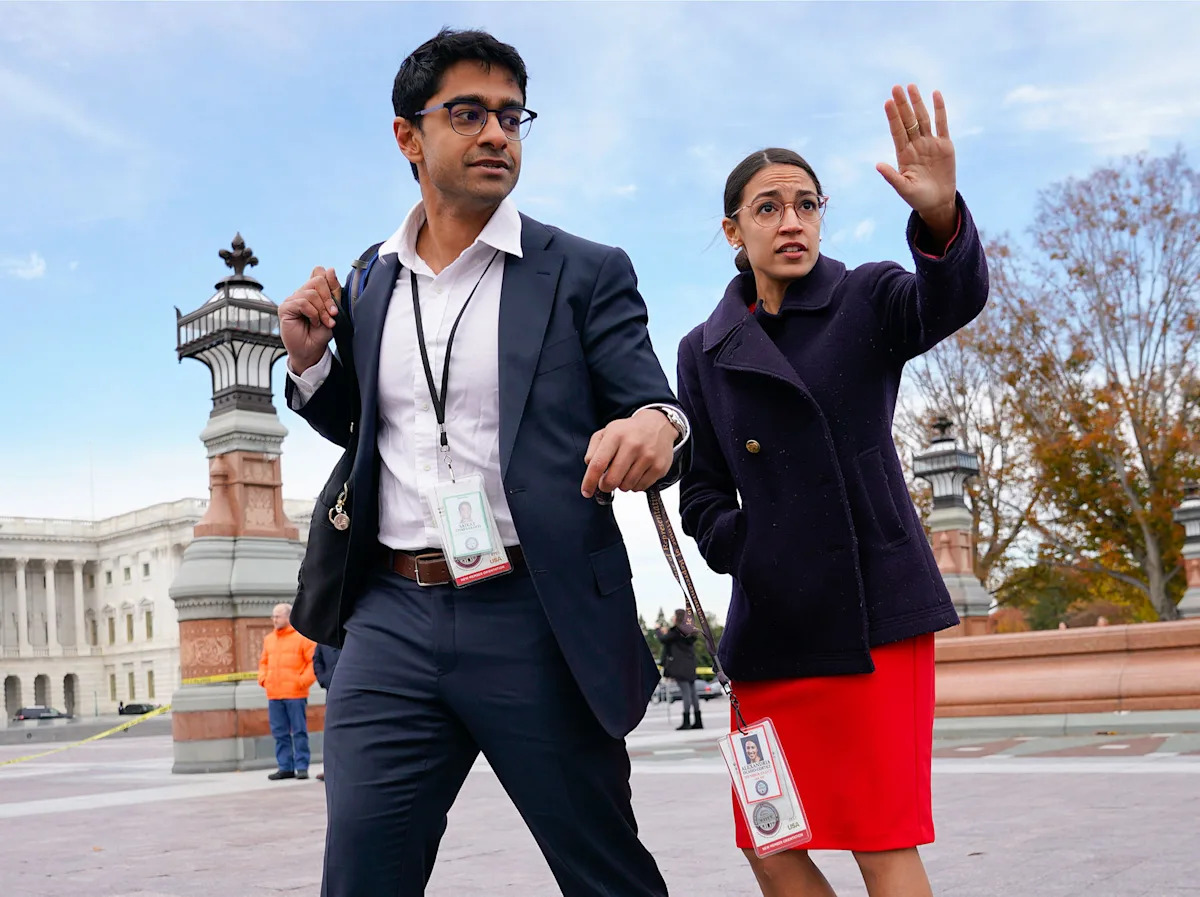
Chakrabarti told Playbook he moved around the country often as he worked on various progressive causes, but that he has continuously lived in San Francisco since the fall of 2019, shortly after he left Capitol Hill following a controversial seven-month tenure in Ocasio-Cortez’s office.
“I have considered myself a San Franciscan ever since that time (2009). But, of course, work and life have sometimes taken me out of the city,” Chakrabarti said. “I’ve never said anything dishonest in any of my tweets or any of my public statements on this.”
Chakrabarti, who grew up in Texas and is the son of Indian immigrants, said he considers attacks on the subject “nativist in a way.” He said the ethos of San Francisco is supposed to be a city that “accepts people from other places.”
Wiener, who’s repeatedly questioned Chakrabarti’s local bona fides in social media posts, dismissed the accusation as a “ridiculous argument.”
Chakrabarti is now trying to use the recent attacks to his advantage, asserting that Abundant Future, the super PAC behind the Maryland postcard mailer, is “funded by Trump donors, crypto billionaires and tech CEOs.” The argument fits into his effort to frame Wiener as the candidate of big corporate money.
Tan, a Democratic donor who supports centrist candidates, doubled down in a statement to Playbook: “In the more than five years that I’ve been actively involved in San Francisco politics, I had never heard of Saikat Chakrabarti until he decided to run for Congress.” Meanwhile, Larsen, who’s given money to Republicans and Democrats, said the city doesn’t need “ideologues parachuting in from other states chasing personal ambition.”
Political professionals in San Francisco widely see the race as a choice between Chakrabarti’s brand of disruptive liberalism and Wiener’s more institutionalist approach. The third major candidate, Supervisor Connie Chan, has the support of major labor unions but has struggled to raise money. Her campaign said in a statement that Chakrabarti “is not who he says he is.”
But it’s Chakrabarti who has local powerbrokers on edge, unsettled by his vow to back primary challenges to top Democrats like Hakeem Jeffries. He also irked many in Pelosi’s orbit by launching his campaign to oust the former House speaker many months before she announced her retirement last fall.
“There’s a populist movement happening because the politicians are completely out of touch,” Chakrabarti said. “I am calling for replacing a whole bunch of the Democratic establishment.”
This reporting first appeared in California Playbook. Sign up to receive it in your inbox every weekday.