
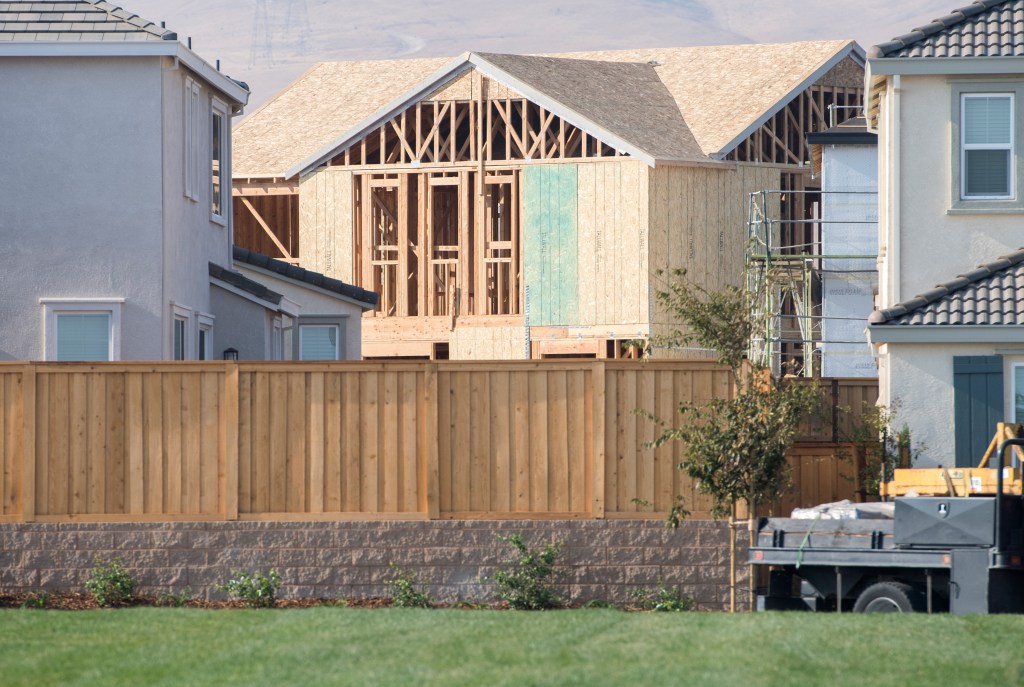
The cost of housing is arguably the most important economic and environmental issue today in California and much of the US. High prices for new homes stress household budgets, indirectly raise costs for renters and push prospective buyers to find affordable price points in outlying areas not only far from jobs and services, but also often in areas at heightened risk of climate-induced disasters like wildfires and flooding.
But new data show that these outlying homes are not truly affordable to most homebuyers when considering all consumer costs. We need policymakers to focus on policies and incentives that encourage the lowest-cost options when considering all costs to homeowners.
For too long, policymakers have failed to acknowledge the true price of homeownership, which is much more than the sale price and resulting mortgage payment. Owning a home also includes a collection of additional, often opaque costs that, taken together, can sometimes make or break a household budget – namely transportation expenses, utility bills, insurance payments and property assessments.
Taking that more honest accounting into view can dramatically shift the types and locations of homes that are truly affordable to most Californians. In a new policy brief, UC Berkeley Law’s Center for Law, Energy, and the Environment with technical support from Economic & Planning Systems analyzed economic data from three case study geographies to more accurately determine the differences in the cost of home ownership in California.
We focused first on location: urban areas with existing infrastructure services such as water, sewer and other utilities vs. exurban areas without. Then we looked at product type: single-family detached vs. single-family attached housing, such as a townhome. Although the townhomes are slightly smaller, both types feature the same number of bedrooms and bathrooms.
We then utilized available data on the full costs of home ownership, including not just home price (annual mortgage payments based on a typical downpayment) but also transportation costs and annual “carrying” costs like taxes, utilities, special assessments for infrastructure and insurance. The team used data from the City of Fresno and surrounding county, Palmdale/Lancaster and surrounding areas in Los Angeles County and the City of Beaumont and surrounding areas in Riverside County.
Based on the data, we found the following:
— New single family attached homes in existing urban areas are roughly 30% less expensive in all-in annual home ownership costs than new single family detached homes in ex-urban areas.
— New single family attached homes in existing urban areas are roughly 18% less expensive based on all-in annual costs to homeowners than new single family detached homes in existing urban areas.
— Single family attached homes in existing urban areas therefore represent a less expensive for-sale home ownership option.
Despite these findings, developers and policymakers often focus on developing land well beyond the urban edge, where the location and substantial cost of new infrastructure increase the overall cost of home ownership and residents face climate risks from flooding, wildfires, and other hazards.
Policymakers looking to address California’s housing crisis should instead encourage developers to build the lowest-cost market-rate home ownership development, such as more townhomes in urban areas. State policy should also recognize that “least-cost” home ownership options must reflect all costs to homeowners, particularly the annual costs of owning the home beyond the initial purchase price and mortgage payment.
With all the political debate around cost-of-living, policymakers need to tell the whole story about housing costs. And we need our leaders to promote the kind of new homes that make the California dream truly accessible to all.
Ethan Elkind is the director of the Climate Program at UC Berkeley Law’s Center for Law, Energy & the Environment and the author of the new report “Affording the California Dream: Optimal Locations and Product Types to Increase Home Ownership Opportunities.”