
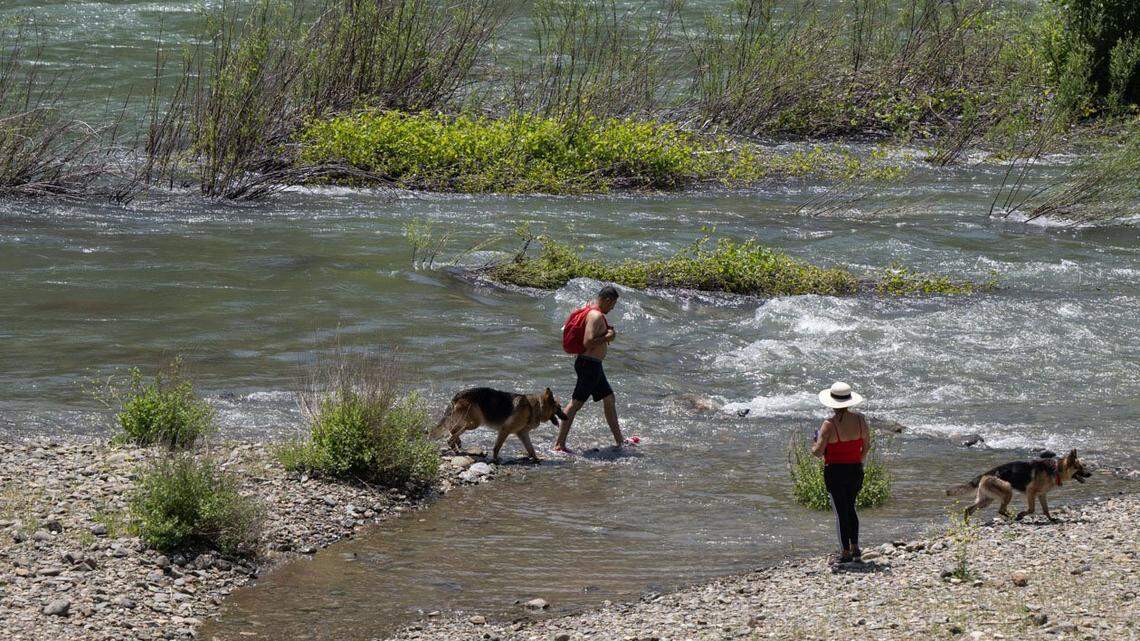
Visitors walk with their dogs near the confluence American River’s north and middle forks in the Auburn State Recreation Area on Wednesday, May 24, 2023.
Hector Amezcua
hamezcua@sacbee.com
Get there first and get there fast. Camping season is on its way for the Spring and Summer and these California State Parks are ready for the rush of campers looking for that wonderful nature escape.
California parks have a variety of campsites on a “first come, first served” basis. We made a list of campsites from all over the Golden State and listed amenities such as water, types of site and whether flushable restrooms are available.
Campsites usually fill up by early Friday before a holiday weekend. All parks have piped drinking water and no shower facilities unless otherwise specified.
Camp at California’s North CoastHumboldt Lagoons State Park
This state park is located on the land of the Ner’-er’nerh/Coastal Yurok People and lies on the sandy edge of ocean and forest, according to the California State Parks website.
Humboldt Lagoons State Park is home to the largest lagoon system in the United States and is about 30 miles north of Eureka.
What campers should know:
TablesFire ringsPit toiletsEnvironmental sitesNo waterManchester State Park
The park is named after the village of Manchester and has rich grazing lands, flocks of sheep and herds of cattle.
Manchester State Park features a beach, sand dunes and flat grasslands, with nearly 18,000 feet of ocean frontage, according to the park’s website.
What campers should know:
10 environmental sites18 primitive sitesChemical toiletsFire grillsCampers up to 30 feetTrailers up to 22 feetNavarro River Redwoods State Park
The park features picnicking, swimming and camping and is popular with anglers, canoeists and kayakers, according to Navarro River Redwoods State Park’s website.
What campers should know:
25 developed sitesToiletsFire grillsCampers up to 30 feetTrailers up to 24 feetVisit the Shasta CascadeAhjumawi Lava Springs State Park
The state park’s name translates to “where the waters come together…” used by the band of Pit River of Indians who still inhabit the area.
Ahjumawi Lava Springs State Park is known for wilderness with extremely rugged lava rock.
What campers should know:
Environmental boat-in sitesNo land accessSpend the night at Gold CountryAuburn State Recreation Area
The park is located in the heart of California’s gold country. Major recreational uses include hiking, river access, boating, fishing, camping, mountain biking and limited hiking.
What campers should know visiting Auburn State Recreation Area:
100 primitive sitesTablesNo drinking waterSan Francisco Bay AreaCastle Rock State Park
The park is known for its sculpted sandstone, lush forests and sweeping vistas. Campers can enjoy hiking, backpacking and horseback riding, according to Castle Rock State Park’s website.
What campers should know:
23 primitive hike-in sitesNo drinking waterThe Forest of Nisene Marks State Park
Looking to get away from the busy city? This park welcomes visitors to picnic near the Aptos Creek or hike, jog or bike on the 30 miles of trails at this beautiful park.
What campers should know visiting the Forest of Nisene Marks State Park:
Environmental sitesNo waterMount Tamalpais State Park
This beautiful park rises from the heart of Marin County and includes deep canyons and sweeping hillsides are covered with cool redwood forests, open grasslands and sturdy chaparral.
Mount Tamalpais State Park offers hiking, picnicking and wildlife watching.
What campers should know:
Developed, environmental sitesHike and bike sitesFlush toiletsTablesCalifornia’s Central CoastAndrew Molera State Park
The park encompasses almost 5,000 acres of largely undeveloped coast range terrain with 15 miles of trails. Andrew Molera State Park offers visitors great hiking and beachcombing as well as panoramic views of the Monterey Bay National Marine Sanctuary.
What campers should know:
Primitive hike-in (about a third of a mile) sitesFlush toiletsTablesHollister Hills State Vehicular Recreation Area
The park is located in the Gavilan Mountains and features over 6,800 acres and nearly 200 miles of trails in scenic and varied terrain, according to Hollister Hills State Vehicular Recreation Area’s website.
What campers should know:
125 primitive sitesWaterShowers at one campgroundCalifornia’s Central ValleyGeorge J. Hatfield State Recreation Area
The 46.5-acre park is home to various wildlife species. It’s offers activities for visitors including camping, picnicking, bird watching, swimming, river wading and kayaking.
What campers should know visiting the George J. Hatfield State Recreation Area:
21 developed sites1 group siteTablesCampers up to 32 feetTrailers up to 31 feetCamping in Los Angeles CountyHungry Valley State Vehicular Recreation Area
Hungry Valley is the state’s third-largest unit of off-highway motor vehicle recreation area. The park offers 19,000 acres and more than 130 miles of scenic trails for motorcycle, All-Terrain Vehicles, dune buggies and 4×4 recreation.
What campers should know when visiting the Hungry Valley State Vehicular Recreation Area:
Primitive sitesTablesFlush toiletsNo drinking waterSaddleback Butte State Park
Whether you are looking for desert, hiking or day-use facilities. The state park includes a table, BBQ grill and a fire ring for the 37 campsites.
What campers should know visiting Saddleback Butte State Park:
50 primitive sitesFlush toiletsTablesCampers up to 30 feetTrailers up to 30 feetCamping in California’s desertsOcotillo Wells State Vehicular Recreation Area
This park’s desert terrain is a motorcycle, four-wheel drive, all-terrain vehicle and dune buggy use area. The wash-and-ridge terrain includes dunes and a sand bowl.
What campers should know when visiting the Ocotillo Wells State Vehicular Recreation Area:
Primitive sitesNo drinking waterNo limit on camper/trailer sizePay showersPicnic tablesPicacho State Recreation Area
The Picacho State Recreation Area is located along the Colorado River on California’s southeastern border and is a beautiful location for year-round fishing and water sports.
What campers should know:
Primitive sitesNo drinking waterNo limit on camper/trailer size Have a question about life in California?
How to California — a guide to help you live, work and enjoy life in the Golden State, is here to help.
We’ll answer your questions — big and small — about state laws, history, culture, recreation and travel.
Ask your questions in the form below (can’t see it? Click here) or email howtocalifornia@mcclatchy.com.
Related Stories from Sacramento Bee

The Sacramento Bee
Veronica Fernandez-Alvarado is a service journalism reporter at The Sacramento Bee. She previously worked at the Star Democrat in Annapolis, Maryland. Veronica graduated from Georgetown University with a master’s degree in journalism.