
In less than five days, the Artemis II mission is scheduled to launch from Kennedy Space Center in Florida. As of Friday afternoon, the targeted launch was set for Wednesday, April 1 for no earlier than 6:24 p.m. EDT (that’s 3:24 p.m. PST, our time).
“We’re ready, the rocket is ready, we are ready, NASA is ready, this vehicle is definitely ready to go,” NASA Astronaut Reid Wiseman said at a press conference Friday. “We went through the flight readiness review, we are ready to launch, but we’re also humans trying to load millions of pounds of repellent onto a giant machine and send it to the moon.”
Wiseman, along with crew members, NASA astronauts Victor Glover, Christina Koch, and Canadian Space Agency astronaut Jeremy Hansen, arrived at the Kennedy Space Center ahead of next week’s scheduled launch.
Artemis II will be the first return to lunar orbit since 1972 during the Apollo 17 mission, and the furthest humans have ever flown away from the earth. A NASA spokesperson told NBC 7 the crewed Orion capsule is scheduled to travel nearly 250,000 miles from Earth and approximately 4,700 miles beyond the far side of the moon.
It’s a mission that has been years in the making, and one that Artemis Deputy Landing Recovery Director Lisa Seiler, has been part of since the beginning.
“I’ve been working with the Orion team and our EGS operations team for almost 20 years now and really worked on this program since the spacecraft was on paper,” Seiler told NBC7.
While all eyes are on the launch and 10-day lunar orbit that will follow, there is the splashdown, the final phase of the mission.
“The mission isn’t complete until we ensure the safety and the return of the crew back home,” Seiler said.
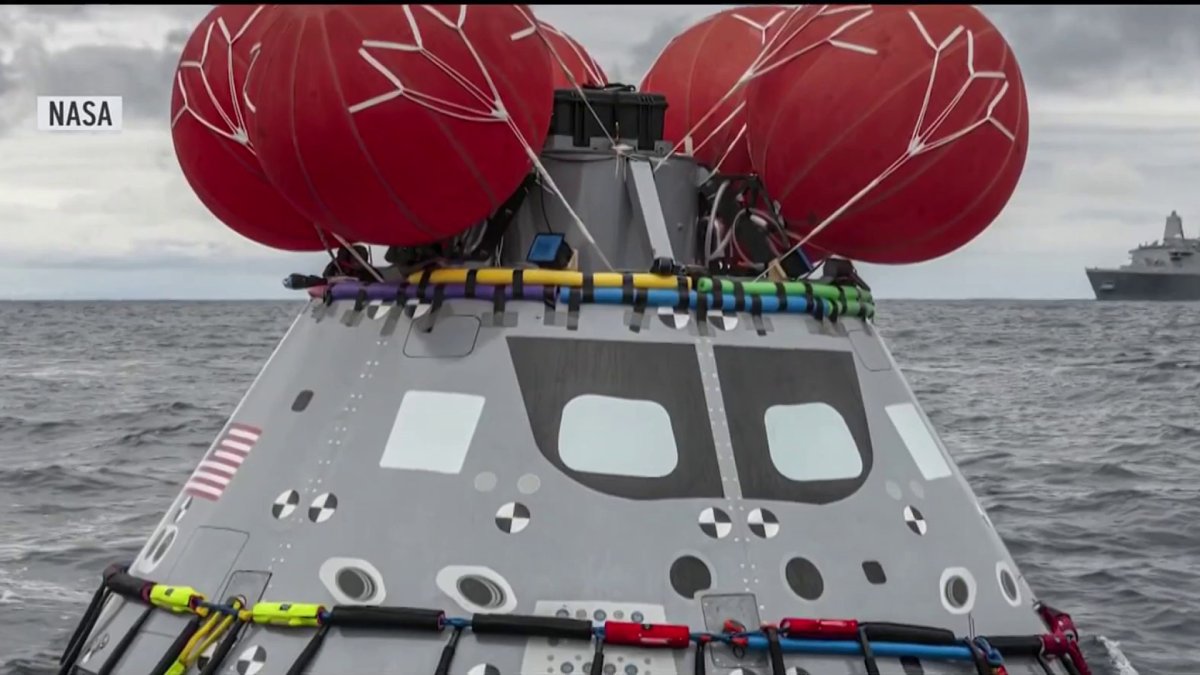
She, among 100 NASA and contractor personnel, in addition to support from the United States Navy, are already getting into place for when the Orion spacecraft splashes down in the Pacific Ocean, some 50 miles off the coast of San Diego. In the recovery operation, a naval ship will be out at sea to transport the astronauts and spacecraft after splashdown.
“We deploy from the Naval Base San Diego, approximately three to four days before splashdown. What we do is we position ourselves about what we consider our midway point, and we will be ready at the splashdown location within 24 hours just prior,” Seiler said.
They’ll be waiting for the entry interface, which is when the spacecraft and astronauts will re-enter the atmosphere. The team waiting at sea will follow the spacecraft with their imagery helicopter equipment through splashdown, monitoring any jettison debris that comes off the spacecraft once it hits the atmosphere, according to Seiler.
“Once we splash down where we allow them to perform those checklists, we establish that calm with them and make sure they’re all good,” Seiler said.
As astronauts complete the necessary steps from inside the spacecraft, Naval divers will also assess the area outside the capsule before a medical team makes entry to contact the crew.
“We’ve practiced so many times that we have a great timeline, and we don’t expect any issues, but as anybody can expect, things can happen,” Seiler said. “And we’ve had a few instances where things have kind of happened along the way, but nothing critical, and we’re prepared for everything.”
Seiler says once the astronauts are safely transported back to the ship, the plan is get them back over to North Island Air Station, where they’ll be medically evaluated once more before heading back to Johnson Space Center in a matter of hours.
The years of planning, simulations, and training to get here is hard for Seiler to put into words.
“I get very emotional about it,” Seiler said. “Just because, you know, there, there are people involved and we understand the sensitivity and you know, their families are counting on us to do everything that we can do to ensure their safety.”
In the coming days and over the next week, Seiler says her team has a few briefings scheduled with the crew to give them updates on the recovery process.
In the meantime, as she makes her way west to San Diego for the splashdown, she hopes people remember this.
“It’s been so long, and I think folks don’t realize that this is just a stepping stone for all the wonderful things to come as far as NASA’s mission is concerned, returning to the moon, establishing the base, and setting us off for return to Mars.”
And for Seiler, it’s not only a dream realized, but years of hard work and determination. After 15 years in the legal field, she went back to school to become an aerospace engineer and eventually work for NASA.
“I cried on my first day when I went through the gate. I couldn’t believe I actually had a badge, you know, that I was working there. It was so, so fulfilling,” Seiler said.
Once the Artemis II mission is complete, Seiler says the NASA team will start establishing all lessons learned and anything that they need to apply to the next mission.
“We’ll start working towards Artemis II, developing the new schedules, and especially with the acceleration that our administrator has just put forth,” Seiler said, “We’ve got a lot of work to do in a short amount of time, but we are absolutely ready. And we’re ready as soon as we get back to help working towards Artemis III, we’re super excited.”