
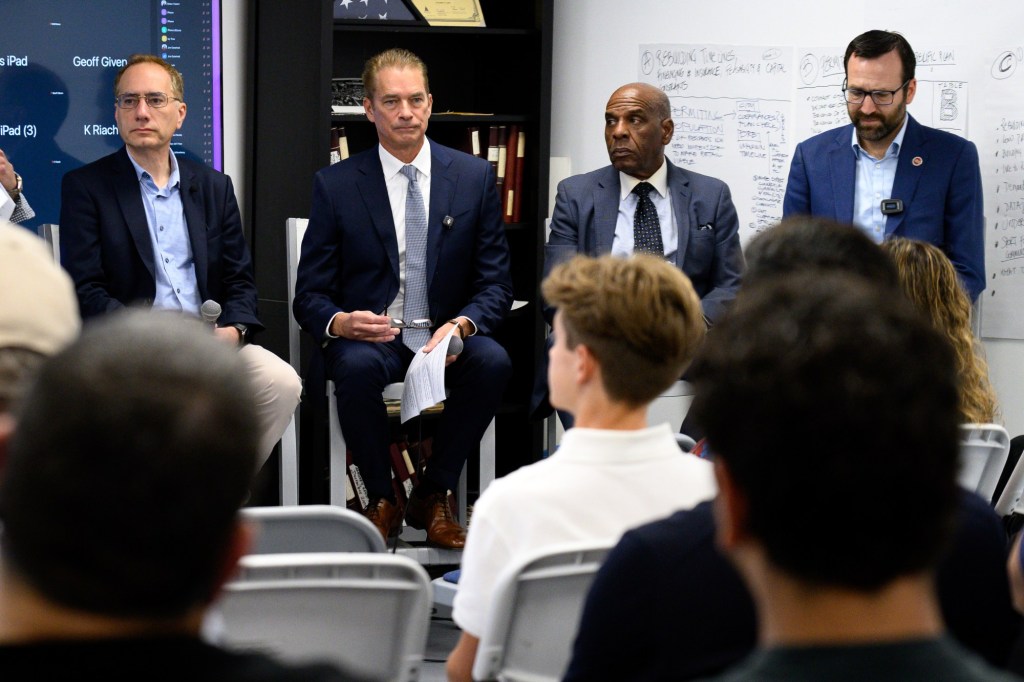
Top contenders in the state insurance commissioner’s race squared off Friday, March 27 at a Pacific Palisades forum where they discussed wildfire risks and how they would reel in soaring premiums for homeowners in the aftermath of devastating California wildfires.
For the 2026 race, a crowded field of 11 candidates is vying to replace term-limited incumbent Ricardo Lara, the eighth person in the commissioner role since it became an elected position in 1988.
The forum, sponsored by the Palisades Recovery Coalition, invited a narrow field of candidates, including three Democrats: state Sen. Benjamin Allen, a 48-year-old attorney in Santa Monica, former state Sen. Steven Bradford, 67, who grew up in Gardena where he got his political start 26 years ago with a city council post, and Patrick Wolff, a 58-year-old San Francisco financial analyst with an insurance background.
The lone Republican was Merritt Farren, a 65-year-old media and technology attorney who lost his home in last year’s Palisades fire, and became an advocate while fighting State Farm’s controversial rate hike request.
The top two finishers in the June 2 insurance commissioner’s primary, regardless of political party, will move on to the Nov. 3 general election, with the winner assuming the mantle of a job that has plenty of tough decisions to make.
Farren drew a rare round of applause from the forum’s tiny audience of 30 when he called out L.A. Mayor Karen Bass for “failed leadership” for what he described as insufficient firefighting resources at the time of last year’s fires.
“It led to the destruction of her city, and she should have resigned,” said Farren, a former Democrat who recently switched parties.
“Karen Bass Resign Now” signs are still planted along the road climbing into the hillside business district — underscoring the community’s lingering anger toward the city’s mayor.
The Jan. 7, 2025, firestorm in the seaside community and in neighboring Malibu turned to ash more than 23,448 acres, killed a dozen people, destroyed 6,837 structures and damaged nearly 1,000 others before extinguished on Jan. 31. In Altadena, the fires were so destructive that customers have been slow to return to Lake Avenue businesses because so much of its community went up in flames in the January wildfires. The conflagration turned more than 14,021 acres to ash, killed 19 people, destroyed 9,414 structures, and badly burned another 1,074.
The candidates covered a wide range of topics over two hours, including calls for modernizing firefighting technologies and more transparency for the Department of Insurance in rate adjustment cases and claims handling.
“There’s a lot of Sacramento bureaucracy that’s woefully behind with technology,” said Allen, who had a front row seat to the January 2025 fires in the coastal city where he lives. “There’s exciting things happening in the fire prevention space,” he said. “Water catapults are able to use AI to determine exactly where all hot spots are coming during an influx of a fire … to new types of drones to drop water tactically based on incoming data to control a burn.”
Bradford also said the DOI needs greater transparency.
“We are going to show why these rates are increasing,” he said. “We need a gold standard. I’ve talked to homeowners who have done everything that they were asked to do, and they still can’t get a discount.”
In order to dodge insolvency, State Farm was granted a 17% emergency rate hike for homeowners, plus other premium increases for renters, condo owners and certain property owners. DOI’s rush to give State Farm a rate hike was initially criticized by Consumer Watchdog, an advocacy group, which wanted the insurer’s parent in Illinois to kick in hundreds of millions of dollars to help keep State Farm financially viable.
With homeowners and businesses unable to find coverage in the standard market, many consumers ended up in the state’s insurer of last resort — called the Fair Access Insurance Requirements Plan, or FAIR Plan. This insurer now wants a 35.8% hike to keep it from slipping into financial trouble.
As of year-end 2025, about four in five of the plan’s more than 668,600 homeowner policies in California would get a higher bill by 5%-60% if FAIR can persuade DOI to approve its request. The number of policies it carries grew 43.8% from 464,900 in the fall of 2024 — just a few months before the Jan. 7 wildfires — and was driven by a rejection of claims from private insurers and other insurers who stopped underwriting new new policies.
“We do need to move homeowners off the FAIR Plan — and quickly,” said Farren in a recent statement provided to the Southern California News Group. If elected, Farren said at the forum that he’d eliminate the need for the FAIR Plan by implementing “CAL Reinsure,” a plan he developed that shifts community wildfire risk off insurers and onto a state-organized reinsurance authority, allowing traditional insurers to write policies statewide without fear of catastrophic losses from major fires.
A reinsurer is essentially insurance for insurance companies.
Farren believes it’s one way to get insurers to begin issuing California policies again, expand access to affordable coverage, and end the delays and denials in the claims process that consumers face today. “It is a huge problem for those who are forced on it, and is largely responsible for driving insurers out of the state,” said Farren of the FAIR Plan.
Bradford said much the same and that he would “fix this market and stabilize it.”
He said that profound change is desperately needed to right the ship as too many companies in the entertainment industry and manufacturers have already left the state — and that’s not a trend he wants to see continue with insurance. “We need greater transparency in the FAIR plan,” Bradford said.
Also see: Pacific Palisades businesses slowly return to work with ‘a lot of people gone’
“State Farm has been one of the most difficult companies to deal with,” complained Wolff. “The Department of Insurance let the market get so upside down.”
Others contenders
Jane Kim, a former San Francisco supervisor from Lakeport, is the only Democratic candidate who did not attend the forum.
Republican contenders not at the forum include:
—Stacy Korsgaden, a Grover Beach insurance and financial services agency owner who advocated a return to free markets, citing overregulation and insufficient wildfire prevention and mitgation as the root of the system’s woes
—Robert Howell, a San Jose cybersecurity equipment manufacturer who ran for commmissioner in 2022
—Sean Lee, a financial services executive from Irvine
—Eric Thor Aarnio, a contractor from the Sacramento area
Eduardo “Lalo” Vargas, a Socialist candidate with the Peace and Feedom Party and high school environmental science teacher in the Los Angeles Unified School District, has called for a public insurance system paid for through a tax on those who are responsible for the climate crisis and the state’s wildfire disaster —- the fossil fuel industry, utility companies and their billionaire owners, according to a candidate statement.
Keith Davis, 40, an insurance agent from Winchester, is with the American Independent Party.
None of the Democratic candidates secured an endorsement at the party’s convention in late February. Allen won just over 41% of the ballots cast, followed closely by Kim.
The Republican Party holds its convention in April.
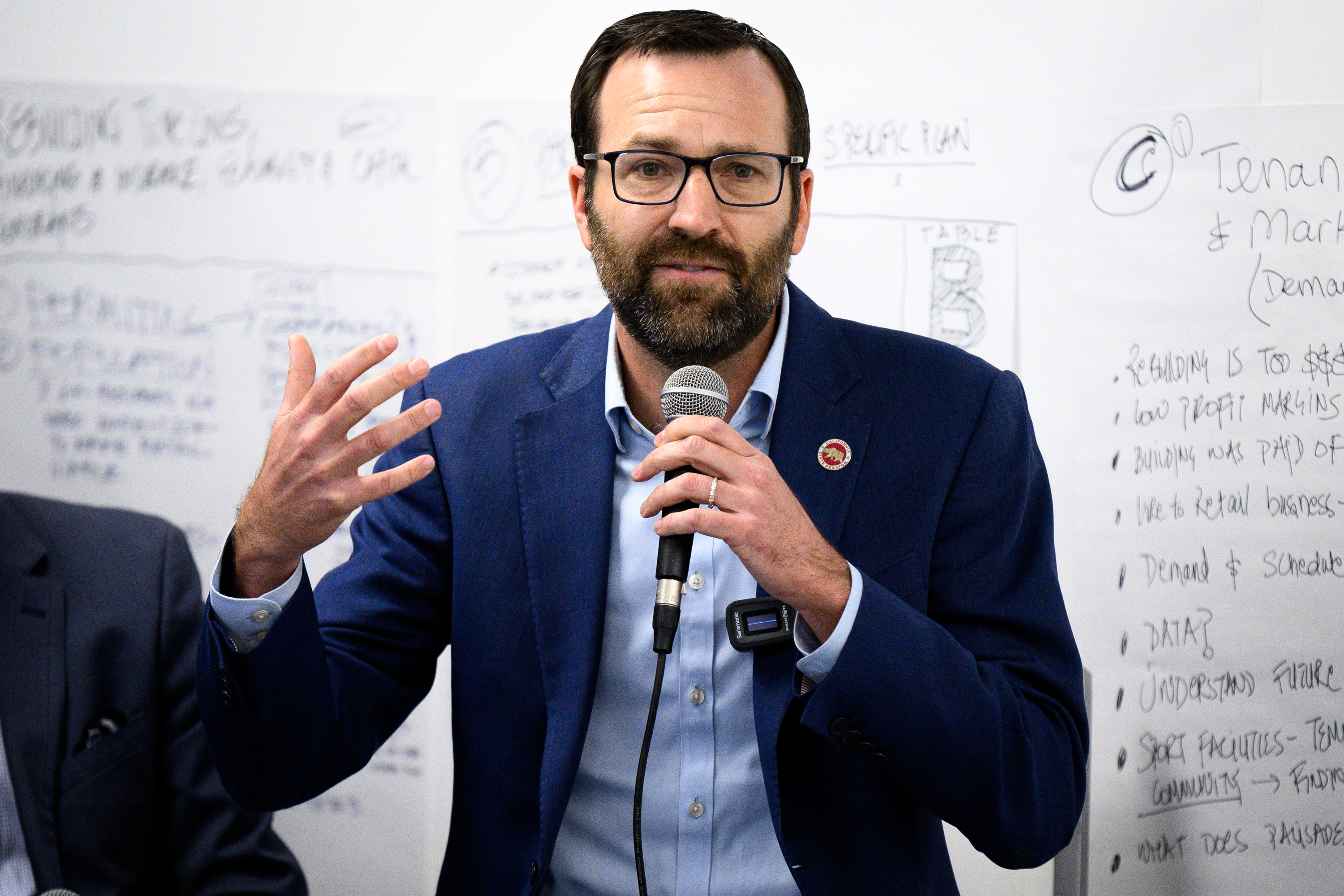
State Senator Benjamin Allen speaks at a forum for state insurance commisioner candidates held by the Palisades Recovery Coalition on Friday, March 27. 2026. (Photo by Jacob Lewis, Contributing Photographer)
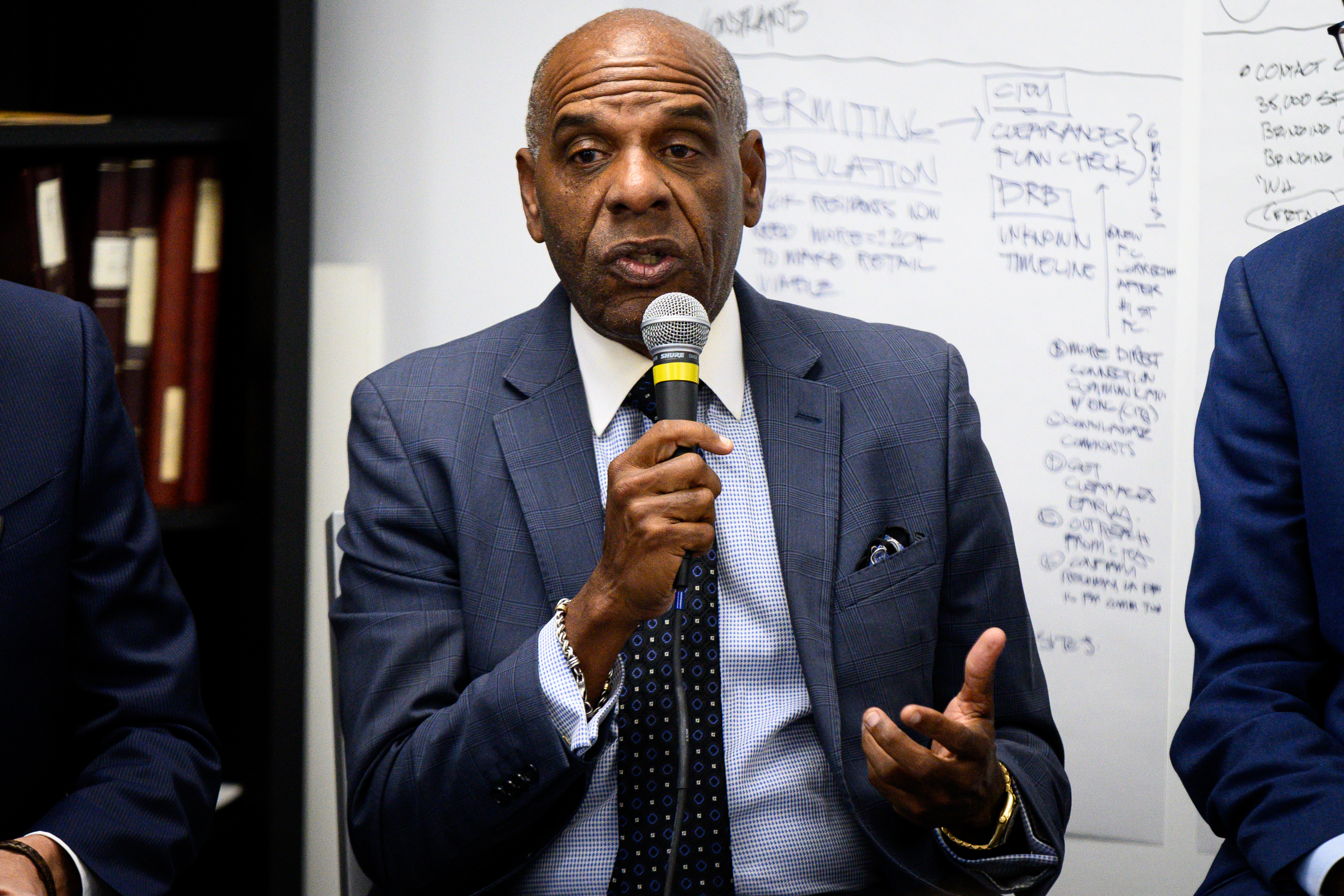
Former State Senator Steven Bradford speaks at a forum for state insurance commisioner candidates held by the Palisades Recovery Coalition on Friday, March 27. 2026. (Photo by Jacob Lewis, Contributing Photographer)
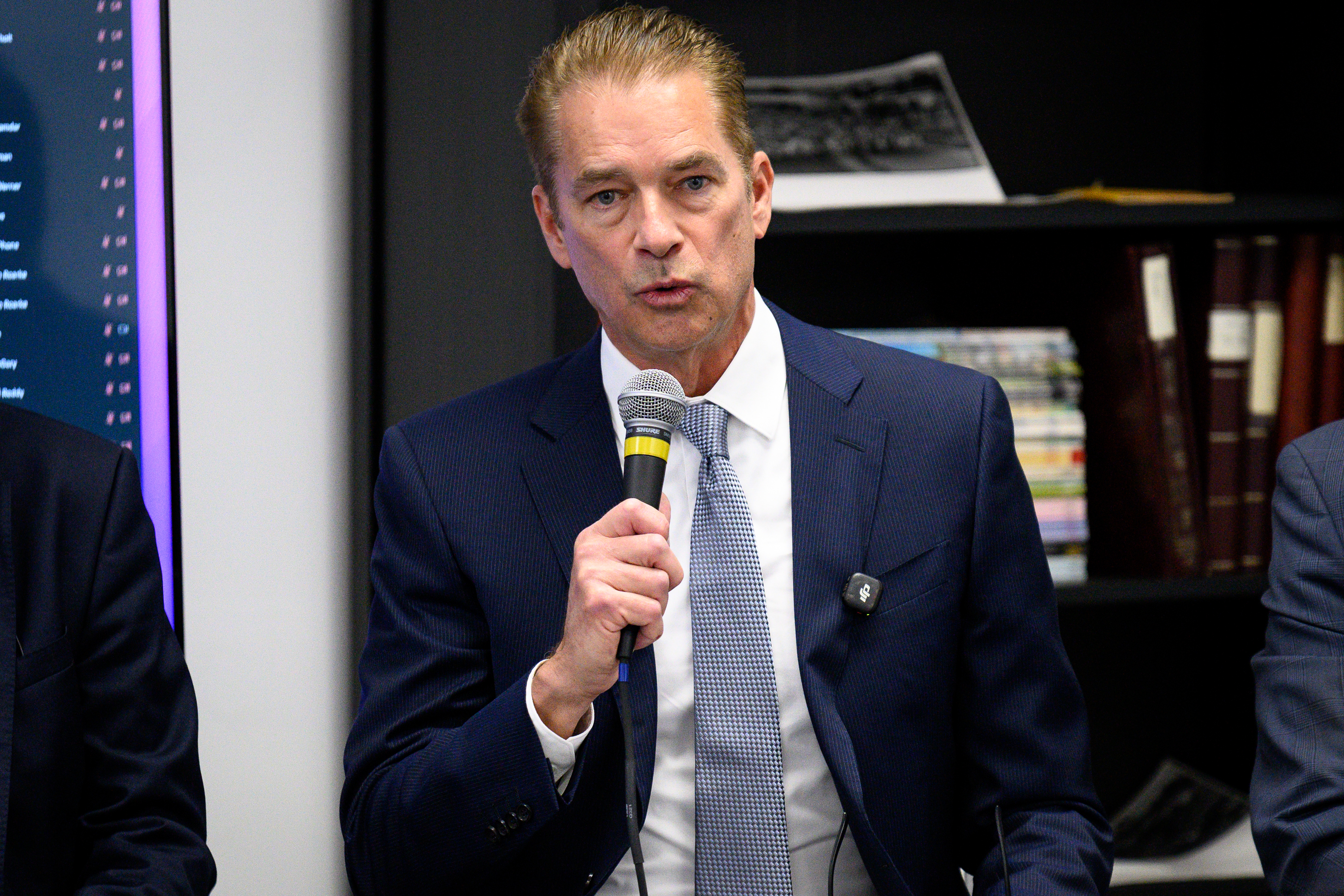
Media and technology attorney Merritt Farren speaks at a forum for state insurance commisioner candidates held by the Palisades Recovery Coalition on Friday, March 27. 2026. (Photo by Jacob Lewis, Contributing Photographer)
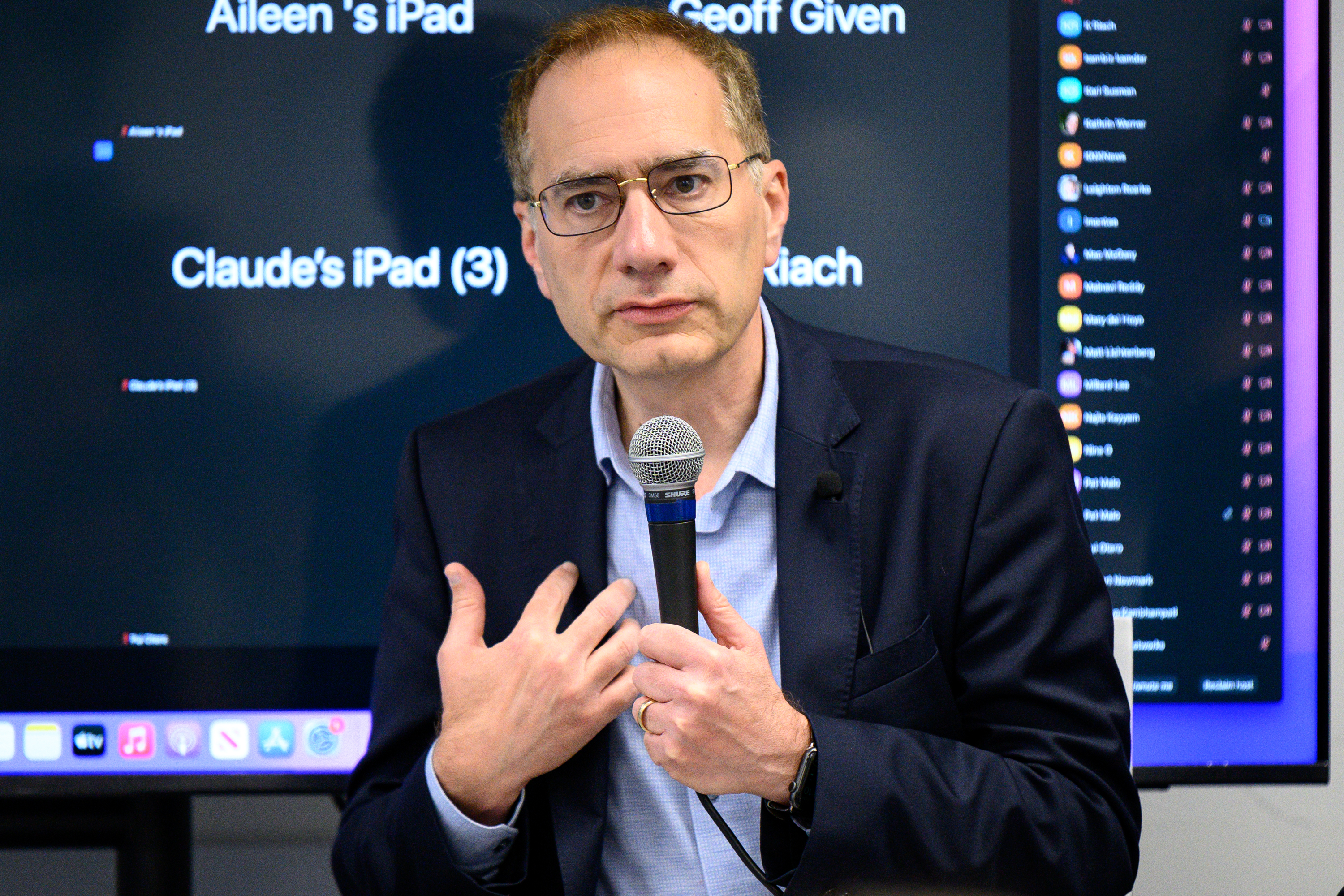
Financial analyst Patrick Wolff speaks at a forum for state insurance commisioner candidates held by the Palisades Recovery Coalition on Friday, March 27. 2026. (Photo by Jacob Lewis, Contributing Photographer)
Show Caption
1 of 4
State Senator Benjamin Allen speaks at a forum for state insurance commisioner candidates held by the Palisades Recovery Coalition on Friday, March 27. 2026. (Photo by Jacob Lewis, Contributing Photographer)